

Choosing the Perfect Living Room Rug Size for Your Space
August 6, 2026The Ultimate Layering Rugs Guide: Expert Tips and Tricks for a Polished Look
August 10, 2026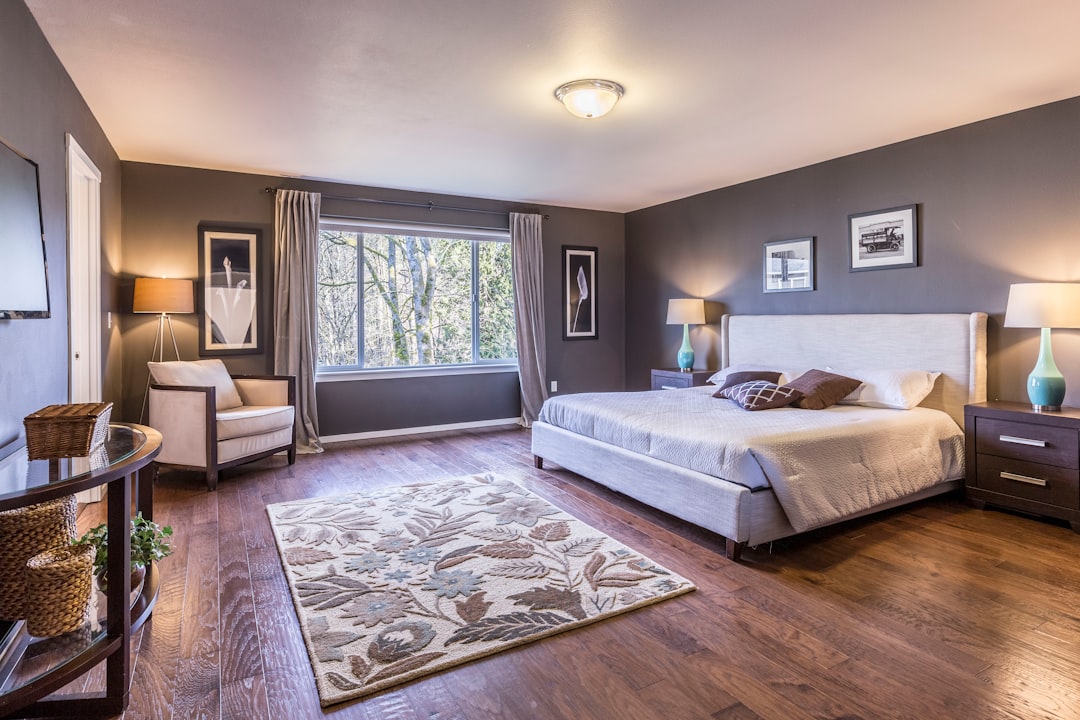
Bedroom rug placement is one of those design details that quietly makes or breaks a room. Get it right and the space feels grounded, warm, and pulled together; get it wrong and even an expensive rug can look like an afterthought thrown down on the floor. Mastering bedroom rug placement is less about following one rigid formula and more about understanding proportion, traffic patterns, and how a rug interacts with the furniture around it. After years of measuring rooms, repositioning rugs for clients, and repairing the wear patterns that bad placement causes, I’ve learned that the small decisions – how far a rug extends past the bed frame, which pad sits underneath it, which fiber it’s woven from – matter just as much as the rug itself.
What Determines Correct Bedroom Rug Placement?
Correct placement comes down to three variables working together: the dimensions of the room, the footprint of the furniture, and the traffic paths people actually walk. A rug that ignores any one of these will look mismatched even if the color and pattern are perfect. Start by measuring the floor space from wall to wall, then map out where the bed, dresser, nightstands, and any seating currently sit, because the rug needs to relate to all of them, not just the bed alone.
For a bed under bed rules, the general standard used by interior designers is to leave 6 to 12 inches (roughly 15 to 30 cm) of rug visible beyond each side of the bed frame, with the foot of the bed getting slightly more exposed rug, often 18 to 24 inches, to create a landing pad you step onto when getting up. In a standard 12×12 foot bedroom, this typically calls for an 8×10 or 9×12 rug; in a smaller 10×10 room, a 6×9 or 8×10 often reads better without crowding the walkway. If the room is oddly shaped or includes a reading nook, treat that zone as a secondary furniture grouping rather than trying to stretch one oversized rug to cover everything.
How Should Bedroom Area Rug Size Be Calculated?
Bedroom area rug size should be calculated by adding the width of the bed, plus the width of any nightstands on either side, plus a minimum of 6 inches of exposed floor overlap on each side. For a queen bed (60 inches wide) flanked by two 24-inch nightstands, that math lands you at roughly 108 to 120 inches of total rug width, which explains why 9×12 rugs are so common in queen and king bedrooms. A king bed, at 76 inches wide, often pushes the calculation toward a full 9×12 or even 10×14 if the nightstands are oversized.
It helps to physically test the size before buying. I’ve had clients tape off the proposed rug dimensions on the floor with painter’s tape and live with it for a day or two, walking the usual path from bed to closet to bathroom, before committing. This low-cost test catches sizing mistakes that measurements on paper sometimes miss, especially in rooms with an unusual door swing or an attached sitting area.
How Does Furniture Layout Affect Rug Placement in a Bedroom?
Furniture layout dictates where the rug’s edges should logically fall, since a rug that stops mid-furniture-leg looks unintentional rather than styled. The cleanest approach is either full coverage, where all furniture legs sit on the rug, or a partial “frame” approach, where only the front legs of the dresser and nightstands touch the rug while the bed sits centered on top of it. Both are correct as long as the transition line reads as deliberate rather than accidental.
In a bedroom with a bed, two nightstands, and a dresser, I typically recommend placing the rug so it extends under the entire bed and at least the front third of the nightstands, roughly 8 to 10 inches of each nightstand’s footprint. The dresser, if it sits against a wall away from the bed, usually looks best left off the rug entirely, since forcing it onto the same rug often demands a size so large it swallows the walking space. For rooms furnished with more ornate case pieces, a rug with a bolder pattern, such as those found in Classic & Traditional Rugs, tends to hold its own visually next to carved wood or heavy upholstery, while simpler furniture pairs well with the cleaner lines of Contemporary & Modern Rugs.
What Rug Placement Strategies Work Best for Small or Awkward Bedrooms?
In small or awkward bedrooms, the best strategy is usually two runners flanking the bed instead of one large area rug, since this avoids the expense and bulk of a rug sized for a room that can’t comfortably fit one. Two 2×6 or 2.5×8 runners placed parallel to each side of the bed give you the same soft landing underfoot without requiring 60+ square feet of floor coverage a single large rug would demand.
Rooms with sloped ceilings, built-in window seats, or an attached closet doorway also benefit from this runner approach, because it sidesteps the awkward cutting or overlap that occurs when a large rectangular rug meets an irregular wall line. I’ve handled more than a few restoration jobs where a rug had been folded under furniture for years just to fit a cramped room, and the crease lines from that kind of forced fit are extremely difficult to steam or block back out once they’ve set into the foundation for several seasons.
Why Does a Rug Pad Matter for Bedroom Rug Placement?
A rug pad matters because it stabilizes the rug against the floor, absorbs foot traffic impact, and prevents the kind of surface abrasion that shortens a rug’s working life. Without one, a rug placed on hardwood or tile tends to creep several inches a month from foot traffic and vacuuming, while a rug on carpet without a pad will flatten and mat far faster than the same rug cushioned properly underneath.
A quality felt-and-rubber pad, typically 1/4 inch thick and weighing between 40 and 80 ounces per square yard, adds noticeable cushioning underfoot, which matters more in a bedroom than almost any other room, since it’s often the first surface bare feet touch each morning. Pads also reduce the friction that causes fringe fraying and edge wear along a rug’s perimeter, one of the most common repair requests I see in rugs that have gone five years or more without any cushioning underneath. For anyone unsure which pad thickness or material suits their flooring, a rug specialist offering Rug Padding can match the pad to both the rug’s construction and the subfloor material.
What Are the Practical Benefits of Adding a Pad Beneath a Bedroom Rug?
The practical benefits include slip prevention, noise reduction, floor protection, and extended rug lifespan, each of which solves a distinct problem rather than being purely cosmetic. Slip prevention alone is worth the investment in a bedroom, where getting out of bed half-asleep onto a rug that shifts underfoot is a real fall risk, particularly for older adults.
Beyond safety, a pad also protects the finish on hardwood floors by preventing dye transfer and scratching from the rug’s woven backing, an issue that shows up frequently in humid climates where natural-fiber backings can react with sealed wood finishes over time. Here’s a fuller breakdown of what a correctly chosen pad accomplishes:
- Keeps the rug anchored, cutting down on shifting and bunching underfoot
- Cushions footsteps and dampens sound transfer to rooms below
- Shields hardwood or tile finishes from dye transfer and scratching
- Reduces fringe and edge wear caused by direct friction against the floor
- Adds 2 to 3 years, on average, to a rug’s usable lifespan under normal foot traffic
How Does Rug Material Influence Placement Decisions in a Bedroom?
Rug material influences placement because fiber content determines how well a rug tolerates direct sunlight, moisture, and repeated foot traffic in specific zones of the room. A hand-knotted silk rug, for instance, is best kept away from a sunlit window or the direct path from bed to bathroom, since silk fibers lose their sheen and weaken structurally after sustained UV exposure, typically showing fading within 1 to 2 years in a south-facing room.
Wool, by contrast, is naturally resilient, resists soiling due to its lanolin content, and can handle the moderate daily traffic of a bedroom for 15 to 20 years or more with proper cleaning. Synthetic fibers like nylon and polypropylene, often found in machine-made rugs, resist staining and fading effectively but tend to flatten under heavy furniture legs faster than wool, so they’re better suited to open floor areas than directly beneath a bed frame’s full weight.
Which Maintenance Practices Keep a Bedroom Rug in Good Condition Long-Term?
The maintenance practices that matter most are routine vacuuming, prompt spot treatment, periodic deep cleaning, and rotating the rug every 6 to 12 months to even out sun exposure and traffic wear. Vacuuming twice a week with a suction-only or beater-bar-off setting on wool and silk rugs prevents pile crushing while still lifting embedded dust and skin cells, which accumulate heavily in bedroom rugs given how much time is spent in that room.
Beyond routine upkeep, a professional deep cleaning every 12 to 18 months removes the ground-in soil and allergens that vacuuming alone can’t reach, particularly in wool and silk piles where dust settles below the visible surface. A service offering Rug Cleaning uses pH-balanced solutions and controlled water temperatures suited to the specific fiber, which matters because household carpet shampoos and high heat can strip natural wool oils or cause silk to lose its characteristic luster permanently.
My Experience with Mastering Bedroom Rug Placement
Over years of working in clients’ homes, the bedroom is where I see the widest gap between what people think they should do with a rug and what actually works day to day. I’ve walked into rooms where a gorgeous 10×14 hand-knotted Persian rug was crammed into a 11×12 bedroom, leaving barely 4 inches of clearance on either side, which not only looked cramped but caused the rug’s edges to catch on the closet door every time it opened. Resizing that rug down to a 9×12 with our Rug Resizing service solved both the visual imbalance and the physical damage that had already started along one selvedge.
One pattern I’ve noticed repeatedly: rugs placed without a pad in bedrooms develop a very specific wear signature, a worn strip roughly 18 to 24 inches wide running from the foot of the bed to the doorway, tracing the exact path someone walks every morning and night. That strip flattens years before the rest of the rug, and by the time a client calls me about it, the pile is often crushed too deep to fully revive even with steaming and grooming. I’ve also fielded plenty of calls from people convinced their rug is “shrinking” toward one side of the room, when in fact it’s simply crept there gradually because there was never a pad gripping it to the floor in the first place. Once I explain the traffic-strip pattern and the creep issue, most clients are surprised how much a $40-80 pad could have prevented in repair costs down the line.
Here’s a comparison of the fiber types I encounter most often in bedroom settings, along with how they tend to hold up over time:
| Rug Material | Characteristics | Maintenance Requirements |
|---|---|---|
| Wool | Durable, naturally stain-resistant, resilient pile that bounces back from crushing | Vacuum 2x weekly, professional cleaning every 12-18 months |
| Silk | Delicate, high sheen, sensitive to sunlight and moisture | Gentle suction-only vacuuming, professional hand-washing only, avoid direct sun |
| Nylon/Polypropylene | Durable, stain-resistant, budget-friendly, prone to flattening under heavy furniture | Regular vacuuming, occasional spot cleaning, rotate to even out wear |
Frequently Asked Questions About Bedroom Rug Placement
What is the ideal rug size for a standard bedroom?
For a standard queen or king bedroom, an 8×10 or 9×12 rug is typically ideal, leaving 6 to 12 inches of visible rug on three sides of the bed and slightly more at the foot. Room dimensions and nightstand size can shift this up or down, so measuring the actual furniture footprint before buying is always worth the extra ten minutes. For comparable sizing logic in a different room type, see this guide on choosing the perfect living room rug size for your space.
How often should a bedroom rug be cleaned?
A bedroom rug should be vacuumed at least twice a week and professionally cleaned every 12 to 18 months, with spot treatment applied to any spill or stain within minutes of it happening. Wool and silk rugs benefit from gentler, less frequent vacuuming with suction-only settings, while synthetic rugs can typically handle a standard beater-bar vacuum without issue.
Can a rug be placed under a bed frame with a footboard or platform base?
Yes, a rug can sit under a platform bed or a frame with a footboard, provided it’s sized generously enough to extend past the entire frame, including the footboard, by at least 6 inches on each visible side. Heavier platform frames may also benefit from furniture coasters between the frame legs and the rug pad to prevent permanent indentation over time.
How can slipping or sliding be prevented once a bedroom rug is placed?
Slipping is best prevented with a properly sized rug pad matched to both the rug’s backing and the floor material underneath, whether that’s hardwood, tile, or existing carpet. Double-sided grip pads work well on hard flooring, while a thinner non-slip mesh pad is usually the better choice when placing a rug over wall-to-wall carpet.
Sources:
International Organization for Standardization (ISO)
ASTM International
