

-
Old Persian Heriz 9.2 x 5.1
Original price was: $4,800.00.$2,900.00Current price is: $2,900.00.
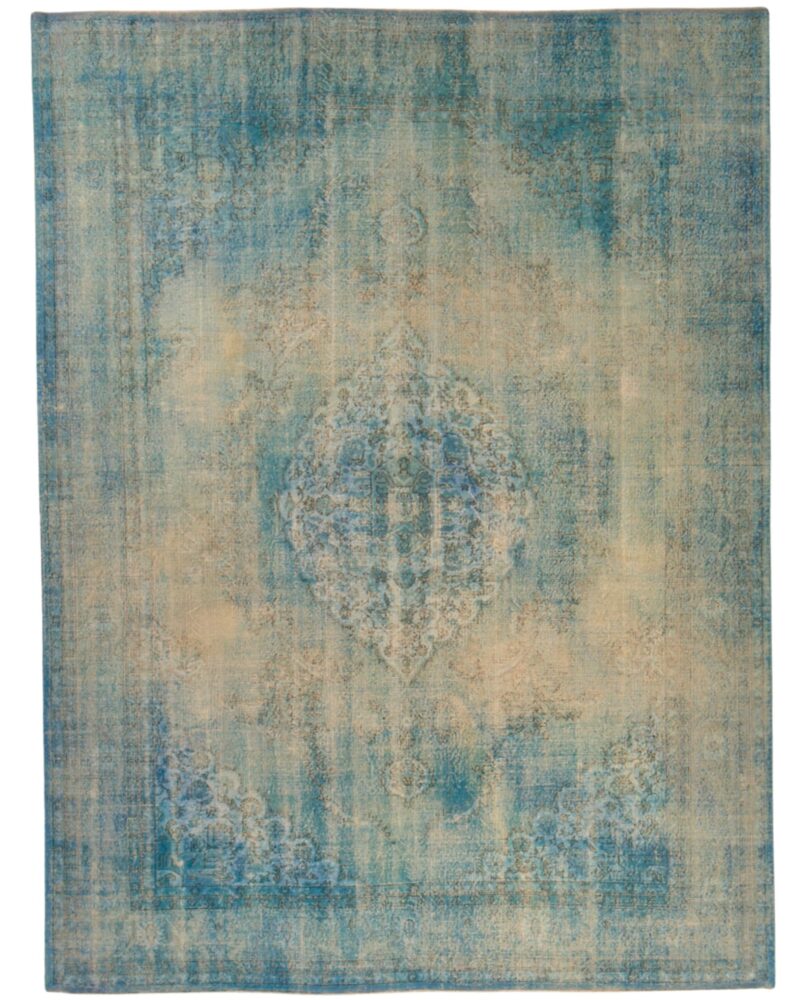
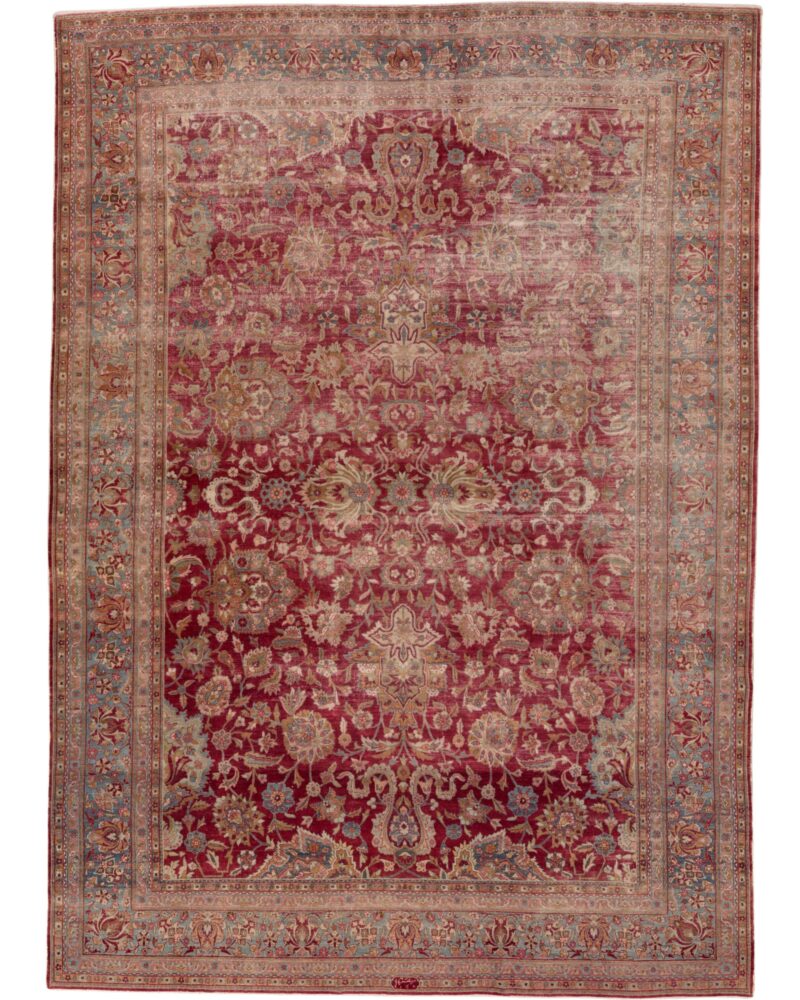
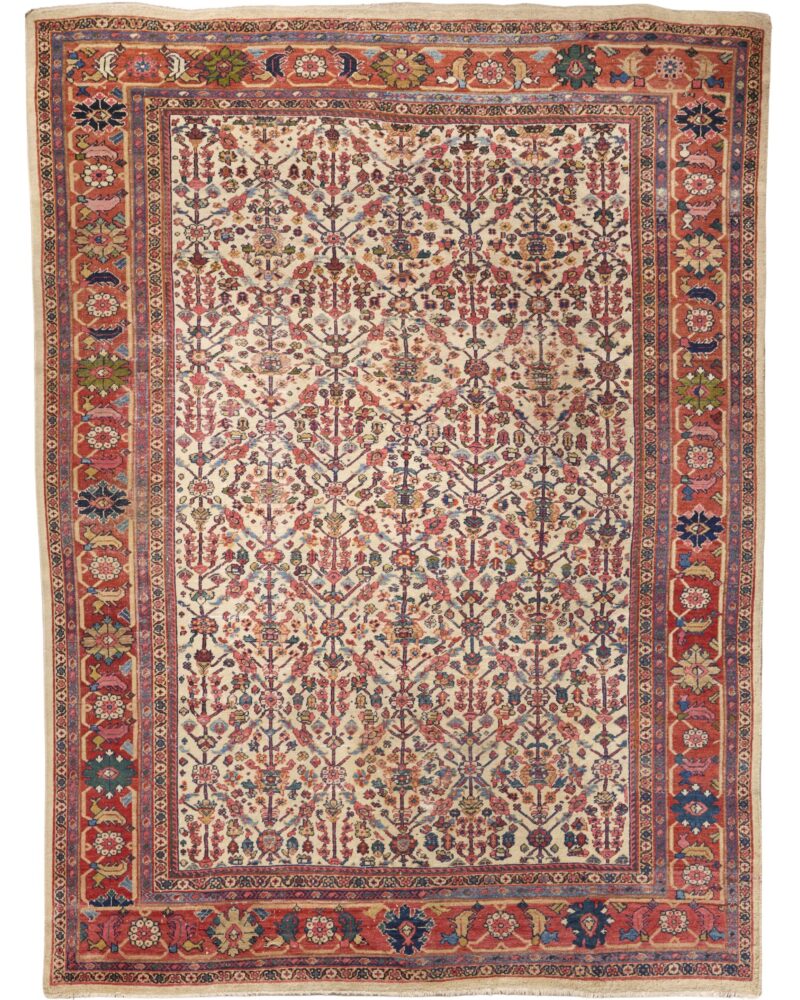
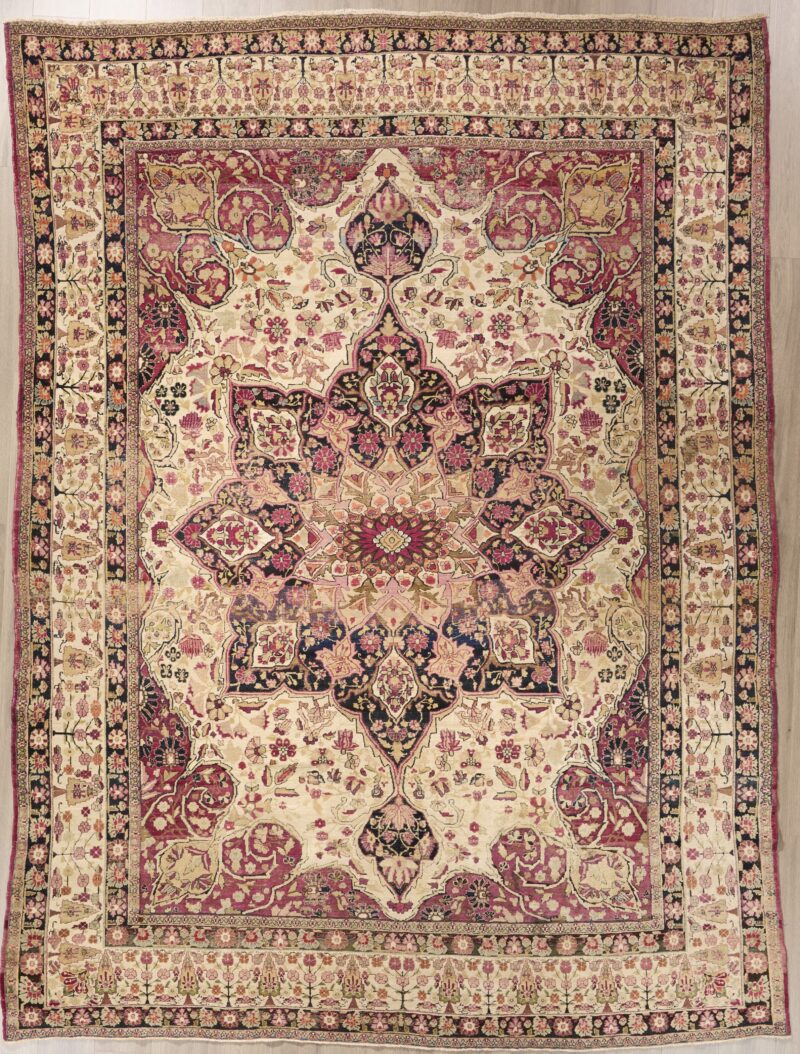


Few rugs carry a room the way a genuine antique or vintage piece does. We’re talking about hand-knotted rugs that have lived a real life – woven anywhere from the 1880s through the 1980s, often in villages across Persia, the Caucasus, Turkey, or Central Asia, where weaving techniques passed from mother to daughter for generations. Shoppers gravitate toward this collection for the softened, sun-faded color palettes that no new rug can fake, the irregularities that prove human hands made every knot, and the simple fact that a well-kept piece from 1920 will likely outlast a rug bought last year. These are investment pieces with history baked into the wool.
What Defines Antique & Vintage Rugs
Construction is everything in this category. Most pieces in our collection are hand-knotted on vertical looms using either the symmetrical Turkish (Ghiordes) knot or the asymmetrical Persian (Senneh) knot, with knot densities ranging anywhere from 80 to over 300 knots per square inch depending on region and era – a finely woven Tabriz or Kashan will sit at the higher end, while tribal Shiraz or Qashqai weavings run looser and heavier, often 6 to 8 ounces of wool per square foot. Pile height typically falls between 1/4 inch and 1/2 inch on city workshop pieces, with tribal rugs sometimes clipped shorter for durability. Foundation threads are almost always cotton or wool, occasionally goat hair in older nomadic weavings from the Caucasus.
Wool dyed with natural pigments – madder root for reds, indigo for blues, pomegranate rind for yellows – dominates the antique market, giving these rugs the muted, slightly uneven coloration collectors look for. Silk appears as highlight threads in finer Persian and Turkish city rugs, and occasionally as full pile in pieces from Qum or Hereke. Motifs run from the medallion-and-corner layouts of Persian court design to the angular botehs, latch hooks, and stylized animal forms found in Caucasian and tribal weavings. Color palettes shift with age too – what left the loom as brick red often mellows to a soft terracotta after 80 years of light exposure, which is part of the appeal.
Key Features to Look For
Before buying, pay attention to the details that separate a genuinely valuable antique from a decorative reproduction.
- Hand-knotted construction with visible knot irregularity on the back, not a uniform machine-printed pattern
- Natural dye variation (abrash) showing as subtle horizontal striping within a single color field
- Wool or wool-silk pile with a pile height between 1/4 and 1/2 inch, worn evenly rather than threadbare in isolated spots
- Sizes typically running smaller than modern production – 3×5 and 4×6 are common, while large 9×12 antique room sizes are rare and priced accordingly
- Price positioning generally between $800 for a modest tribal piece and $15,000+ for a documented city workshop antique in excellent condition
- A higher care requirement than new rugs – these need professional handling rather than home carpet shampooers or rental steam cleaners
Styling Antique & Vintage Rugs in Your Home
A worn Persian or Caucasian rug grounds a room precisely because it doesn’t match anything too perfectly. Pair a faded Heriz or Bijar in a living room with mid-century furniture, linen upholstery, or even industrial-loft elements – the contrast between old wool and clean modern lines reads as intentional rather than mismatched. In more traditional interiors, a Tabriz or Kashan with a defined medallion works as the anchor piece under a dining table, letting the rest of the room stay simple since the rug already carries visual weight. Smaller tribal weavings, like a 3×5 Baluch or Shiraz, do well as entry runners or layered over a larger jute or sisal rug in a bedroom.
Color palette matters less than people assume – a muted madder-red Persian rug sits comfortably next to navy, sage, charcoal, or camel upholstery because the natural dyes have already softened toward neutral. Avoid placing a delicate antique in a high-traffic mudroom or directly in a sunbeam that hits the same three feet of rug every afternoon, since further fading will be uneven rather than attractive. If the piece is a true investment – silk Hereke, fine Qum, or a documented 19th-century Caucasian – consider a formal living room or study where foot traffic is lighter, and talk to us about rug padding to reduce wear from below as much as foot traffic does from above.
Frequently Asked Questions
How do I know if an antique rug is handmade or machine-made?
Flip the rug over – hand-knotted pieces show slight irregularities in knot spacing and the pattern on the back is as clear as the front. Machine-made rugs have a uniform, almost printed look on the reverse with a visible backing material. Fringe is another tell: on a hand-knotted rug, the fringe is an extension of the foundation warp threads, not sewn on separately.
What sizes are available in antique and vintage rugs?
Sizes skew smaller than contemporary production because looms and living spaces were smaller historically – common sizes run 2×3 for mats, 3×5 and 4×6 for accent pieces, and 6×9 for a moderate room size. Large format antiques at 9×12 or bigger exist but are far less common and priced at a premium. If you need a specific size that doesn’t exist in the antique market, our rug resizing team can carefully adjust a piece without compromising the weave.
How should I clean and maintain an antique rug?
Vacuum gently with suction only, no beater bar, and rotate the rug every six months to even out wear and sun exposure. Deep cleaning should go to a specialist who understands natural dyes and aged fibers – our rug cleaning process is built specifically around antique wool and silk, since standard carpet cleaning equipment and chemicals can strip natural dyes or damage brittle foundation threads.
Are antique rugs durable enough for everyday use?
Wool rugs that have already survived 80 to 150 years have proven their durability, and a properly knotted antique can often outlast a modern machine-made rug. That said, areas with existing wear, dry rot, or foundation damage need professional repair before they’re put in high-traffic spots – our rug repair and restoration service handles reweaving, fringe repair, and edge binding to get a worn piece back to functional strength.