
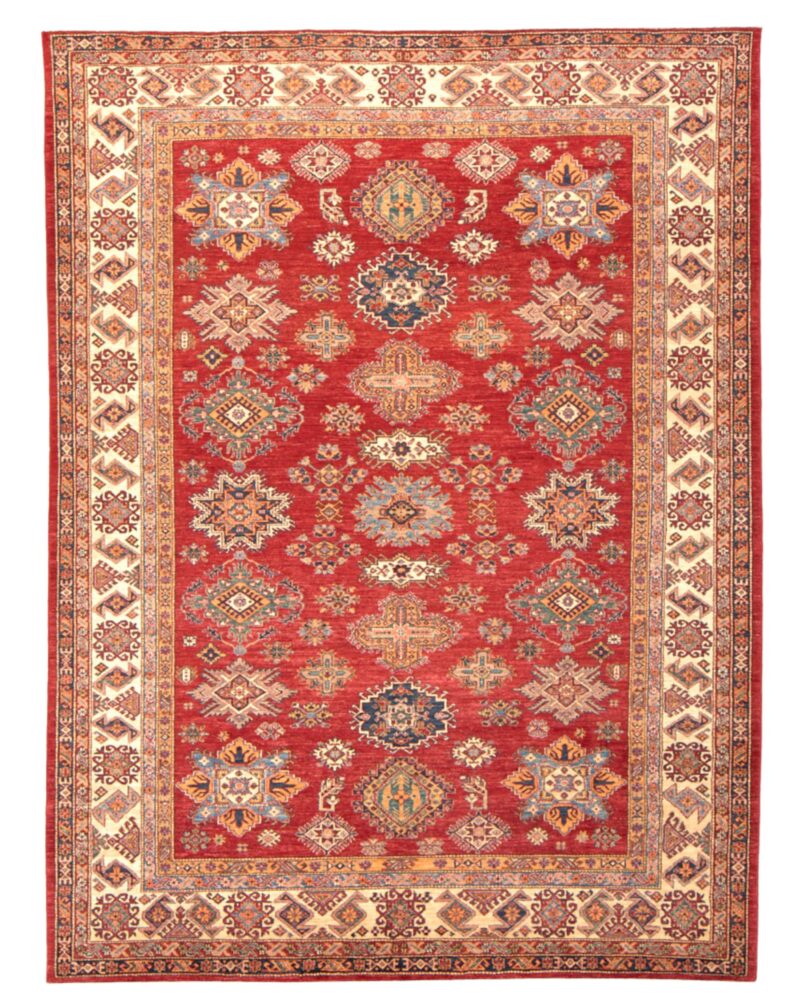


Walk into any room anchored by a Classic Traditional rug and you understand the appeal immediately: these are the patterns that have furnished palaces, libraries, and family dining rooms for well over a century. Rooted in Persian, Turkish, and Caucasian weaving traditions, this collection draws on medallion layouts, palmette borders, and vine-and-blossom motifs that trace back to 16th-century court workshops. Shoppers gravitate toward this style because it doesn’t chase trends. A well-made piece from this category will outlast the furniture around it and still look correct in the room after a dozen years of foot traffic.
What Defines Classic Traditional Rugs
Most rugs in this category are hand-knotted using the Persian (asymmetrical) or Turkish (symmetrical) knot, with knot counts ranging from 80 to over 300 per square inch depending on origin and quality tier. A rug from Tabriz or Kashan might run 250-400 KPSI with a correspondingly fine pile height of 1/4 to 3/8 inch, while a heavier village piece from Hamadan or Bijar sits closer to 1/2 to 5/8 inch pile and carries noticeably more weight underfoot – Bijars in particular are known for a dense, almost rigid hand that can weigh 8-10 pounds for an 8×10. Weaving a single 9×12 rug at 150 KPSI takes an experienced weaver somewhere between 8 and 14 months, which explains the price difference between a genuine hand-knotted piece and a power-loomed reproduction that takes a machine a few hours.
Wool remains the dominant material for the pile, prized for its natural luster, soil resistance, and ability to hold dye saturation for decades; many pieces pair wool pile over a cotton foundation (warp and weft) for structural stability, since cotton doesn’t stretch the way wool does. Higher-end pieces introduce silk, either as the entire pile for a lustrous, finer-scaled rug or as highlighting threads worked into the pattern to catch light across the medallion and border. Color palettes lean on madder red, indigo, ivory, and deep forest green, built from motifs like the Herati fish pattern, the Boteh (paisley precursor), and the Shah Abbasi palmette – all recurring vocabulary from Persian garden design meant to suggest abundance and symmetry.
Key Features to Look For
Not every rug labeled “traditional” is built the same way, so it helps to know what separates the pieces that last from the ones that won’t:
- Hand-knotted wool construction on a cotton foundation for pieces meant to last 50+ years with proper care
- Knot density of at least 120 KPSI for finer detail resolution in curved motifs and border work
- Pile height between 1/4 and 5/8 inch depending on region – thinner piles show pattern detail more crisply
- Available in room-defining sizes from 2×3 accent pieces up to 12×18 palace-size formats
- Price positioning that ranges from $800-$2,000 for machine-made reproductions to $5,000-$30,000+ for genuine hand-knotted antiques or new production
- Moderate to low care demands – wool naturally resists staining, though these rugs benefit from professional cleaning every 12-18 months rather than home shampooing
Styling Classic Traditional Rugs in Your Home
Formal living rooms and dining rooms are the natural home for this collection, particularly in spaces with dark wood furniture, leather upholstery, or built-in millwork where the rug’s saturated reds and blues ground the room rather than compete with it. In a dining room, size the rug so it extends at least 24 inches beyond the table on all sides, giving chairs room to slide out without catching the fringe. These rugs also work well in entry halls and libraries, where a tighter, more ornate border pattern reads well in a narrower sightline.
Pairing is more flexible than people expect – traditional medallion rugs sit comfortably under mid-century modern furniture or in a transitional space with neutral linen sofas, since the rug does the pattern work and everything else can stay plain. Stick to one dominant accent color pulled from the rug’s field or border for pillows and drapery rather than trying to match every hue. In a bedroom, a traditional rug with a lighter ivory or camel ground softens the room without the heaviness of a deep red palette underfoot.
Frequently Asked Questions
What size Classic Traditional rug should I buy for my living room?
For most living rooms, choose a rug large enough that at least the front legs of all major furniture pieces sit on it, typically an 8×10 or 9×12 for a standard-sized room. Measure your seating area first and leave 12-18 inches of bare floor between the rug’s edge and the walls. If you’re unsure which size will scale correctly with your furniture layout, a rug specialist can walk you through the measurements before you buy.
How do I clean and maintain a hand-knotted traditional rug?
Vacuum weekly without the beater bar attachment, since brush rollers can fray wool fibers and loosen knots over time. Blot spills immediately with a clean cloth rather than rubbing, and have the rug professionally washed every 12-18 months through a service built for rug cleaning rather than a standard carpet cleaning company, since hand-knotted wool requires different water temperatures and drying methods than synthetic carpet.
Are hand-knotted traditional rugs more durable than machine-made ones?
Yes, significantly. A well-maintained hand-knotted wool rug can last 50 to 100+ years and often improves in appearance as the wool develops a natural patina, while machine-made reproductions typically show wear, flattening, and color fading within 5 to 10 years of regular use. The knotted construction also means a hand-knotted rug can be repaired almost indefinitely, whereas a machine-made rug usually can’t be rewoven once the backing fails.
How can I tell if a traditional rug is authentic and hand-knotted?
Flip the rug over – a hand-knotted piece shows the same pattern on the back as the front, with visible individual knots and slight irregularities in the weave. Machine-made rugs have a uniform, mesh-like backing and the pattern on the reverse looks blurred or absent. If you’re purchasing a higher-value piece or inherited rug and want documentation of authenticity and value, a professional rug appraisal will confirm origin, age, and construction in writing.