
-
Persian Vintage 8 x 2.5
Original price was: $850.00.$425.00Current price is: $425.00.
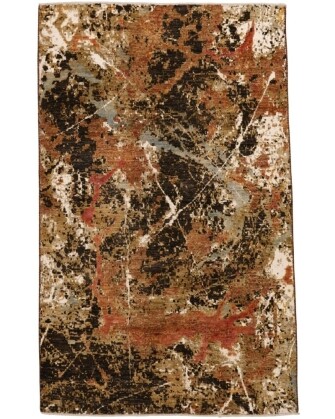


Abstract rugs broke from tradition in the mid-20th century, when weavers in Iran, India, and Nepal began translating modern art movements onto the loom instead of repeating the medallions and vine scrolls their grandparents used. What you get is a rug that behaves like a painting underfoot: bold fields of color, asymmetrical shapes, sometimes nothing more than a gradient or a single sweep of texture. Shoppers gravitate toward this collection when their furniture is already settled and traditional patterns feel too busy or too formal. An abstract piece lets the room breathe while still anchoring it with real presence.
What Defines Abstract Rugs
Construction varies more here than in almost any other category we sell. Hand-knotted pieces from Iran and Pakistan typically run 100 to 150 knots per square inch, which is lower than a classic Persian Tabriz but intentional – a looser knot count lets the weaver render large, smooth color fields without the visual noise that fine knotting introduces. Hand-tufted versions, common out of India, use a tufting gun to punch wool or wool-silk blends through a cotton backing, finished with a latex adhesive layer and a cotton scrim. Pile height on tufted abstracts usually sits between 0.5 and 0.75 inches, giving a plush, sculpted hand-feel that suits the bold, blocky designs typical of the style.
Wool remains the dominant material, often 100% New Zealand or Indian wool in the 30-40 oz per square yard range for tufted construction, prized for how well it hides footprints and holds color saturation. Viscose and silk get blended in, usually at 10-20% of the pile, to add sheen and a subtle color shift depending on viewing angle – a technique weavers use deliberately to make flat color fields look less static. Cotton shows up mainly in the foundation and backing rather than the face. Palettes lean toward charcoal, ivory, rust, indigo, and sage in large uninterrupted fields, sometimes layered with ikat-inspired streaks or erosion-style fading that mimics watercolor bleed.
Key Features to Look For
Not every abstract rug is built the same way, so it helps to know what separates a piece that holds up for fifteen years from one that flattens in two.
- Hand-knotted wool construction for high-traffic rooms, versus hand-tufted for lower-traffic, budget-conscious spaces
- Pile height between 0.5 and 0.75 inches for a plush feel without excessive shedding during the first year
- Wool-viscose blends (80/20 or 90/10) for added sheen without sacrificing wool’s resilience
- Sizes ranging from 2×3 accent pieces up to 9×12 and custom oversized formats for open-concept living rooms
- Price positioning typically $400-$1,200 for tufted pieces and $2,000-$6,000+ for hand-knotted
- Latex-free or low-VOC backing on tufted rugs, which matters for households with allergy concerns
Styling Abstract Rugs in Your Home
Living rooms and primary bedrooms are where this collection earns its keep, especially in spaces furnished with mid-century, Scandinavian, or minimalist pieces that need a graphic anchor without competing patterns. A charcoal-and-rust abstract under a walnut coffee table and a leather sofa reads intentional rather than trendy, and it tends to age better stylistically than a seasonal pattern would. In dining rooms, choose a design with a tighter, lower-contrast palette so the piece doesn’t fight with place settings and glassware reflections.
Pair cooler-toned abstracts (indigo, sage, slate) with warm wood furniture to balance the room, and reserve the high-contrast black-and-ivory designs for spaces with simpler furniture lines where the rug can act as the visual centerpiece. If you’re layering over an existing neutral rug or jute base, keep the abstract piece smaller – a 5×7 over an 8×10 jute – so the texture underneath still reads as intentional rather than accidental. Because many of these rugs carry real wool weight, a quality pad underneath isn’t optional if you want the colors to stay flat and the pile to wear evenly; our rug padding team can match pad thickness to your specific pile height.
Frequently Asked Questions
What size abstract rug should I buy for my living room?
For most living rooms, an 8×10 or 9×12 works best so all furniture legs – or at least the front legs of sofas and chairs – sit on the rug. Smaller rooms under 12×14 feet usually do fine with a 6×9. Measure your seating arrangement first, since abstract patterns show awkward cropping more visibly than small repeating patterns do.
How do I clean an abstract wool rug without damaging the colors?
Vacuum weekly without a beater bar, which can pull at tufted pile and loosen fibers over time. Blot spills immediately with a clean cloth rather than rubbing, since rubbing pushes dye and liquid deeper into the wool. For anything beyond a light spill, professional rug cleaning every 12-18 months protects the dye lots and prevents the gradual dulling that at-home shampooing often causes.
Are hand-tufted abstract rugs as durable as hand-knotted ones?
No. Hand-tufted rugs typically last 7-10 years with normal use before the latex backing starts to degrade and shedding increases, while hand-knotted wool rugs regularly last 25-plus years and can be rewoven if damaged. Tufted rugs are the better choice for budget and lower-traffic rooms; hand-knotted is the better long-term investment for entryways, hallways, and family rooms.
How can I tell if an abstract rug is handmade or machine-made?
Flip the rug over – hand-knotted pieces show the pattern mirrored clearly on the back, with slight irregularities in knot spacing, while machine-made rugs show a uniform, mesh-like backing with no visible knot structure. Hand-tufted rugs sit between the two, with a canvas backing and visible glue layer rather than knots. If you’re buying a significant investment piece, a formal rug appraisal will confirm construction and value in writing.