


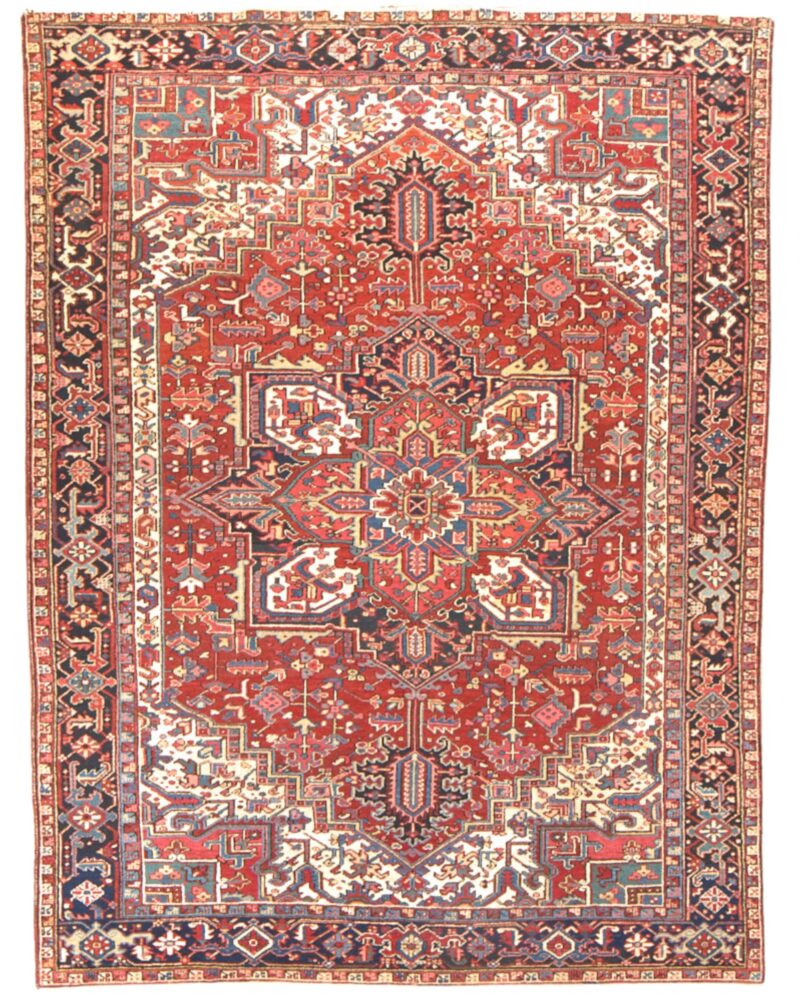
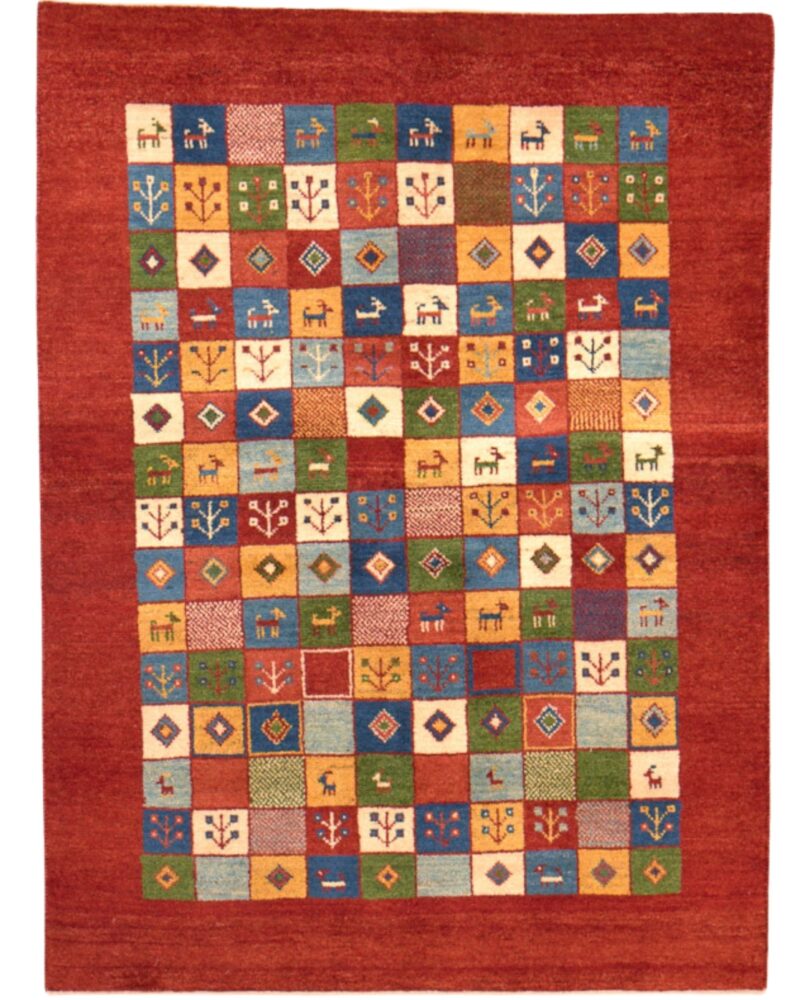
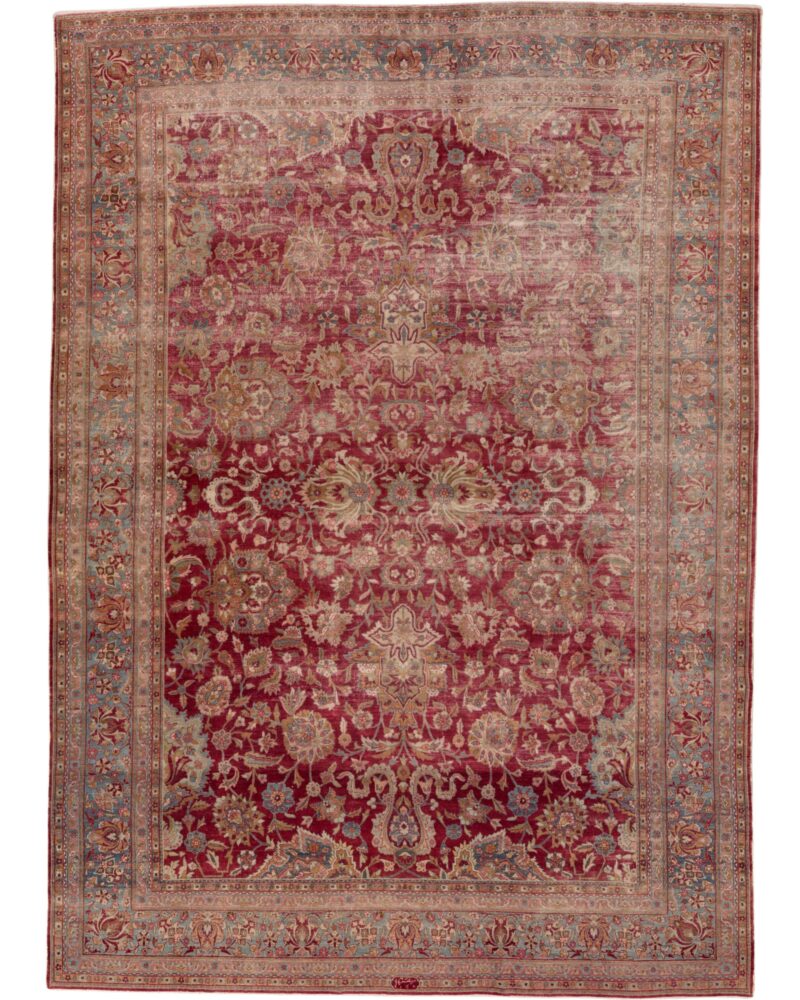
Antique Traditional rugs are hand-knotted pieces woven in classic Persian designs, often decades or generations ago. Their medallions, floral vines, and rich dyed wool define the style. The tradition grew from village looms and city workshops across Iran, where weavers refined each pattern over centuries. These rugs suit homeowners who value craftsmanship, lasting structure, and a patina that machine-made rugs cannot copy. Collectors, families, and designers all choose them for formal and relaxed rooms alike.
What Defines Antique Traditional Rugs?
Antique Traditional rugs use the symmetrical Turkish knot or the asymmetrical Persian knot, tied by hand around cotton warps. Wool pile is standard, and the pile usually measures about 0.25 to 0.5 inch. Heriz rugs from northwest Iran carry bold geometric medallions and sturdy, slightly coarse wool. Kerman rugs, including Lavar Kerman (Osseim) weavings, use finer knotting and softer, more curved floral designs.
Color palettes lean on madder red, indigo blue, ivory, and warm camel, with accents of green and gold. Common motifs include central medallions, corner spandrels, palmettes, and layered borders. Gabbeh rugs such as the Fine Persian Zolanvari Gabbeh follow a looser path. Gabbeh weavers use thicker pile, open fields, and simple figures. Age shows in softened dyes, a smoother handle, and a gentle, even wear across the pile.
Which Features Matter Most in Antique Traditional Rugs?
Five features separate a sound antique rug from a problem piece, and each deserves a careful look before purchase.
- Material: Hand-spun wool pile on a cotton foundation, sometimes with silk highlights.
- Pile height: Typically 0.25 to 0.5 inch, with Gabbeh weaves running thicker.
- Durability: Well-made examples often last many decades with regular care and rotation.
- Size range: Typically from 3 x 5 feet up to oversized palace formats near 13 x 10 feet.
- Care level: Moderate, with periodic professional washing and prompt attention to edge or fringe damage.
Antique Traditional Rug Quick Facts
| Attribute | Typical value | Why it matters |
|---|---|---|
| Knot type | Typically Persian or Turkish hand knots | Knot density shapes pattern detail and strength. |
| Pile height | Typically 0.25 to 0.5 inch | Low pile resists crushing and cleans more thoroughly. |
| Foundation | Typically cotton warp and weft | A firm base keeps the rug flat and stable. |
| Common sizes | Typically 5 x 7 to 10 x 14 feet | Size decides whether a rug anchors a room properly. |
| Cleaning cycle | Typically every 1 to 3 years | Regular washing removes grit that cuts wool fibers. |
How Do You Style Antique Traditional Rugs at Home?
Antique Traditional rugs work best in living rooms, dining rooms, studies, and entry halls. They pair well with classic, transitional, and even modern interiors. Deep reds and blues look striking against neutral walls, leather seating, and dark wood. Soft ivory and camel fields calm a bright space. Our Antique & Vintage Rugs collection offers more weathered pieces for similar rooms.
Sizing rules keep the layout balanced. In a living room, place at least the front legs of every sofa and chair on the rug. Under a dining table, leave 24 to 30 inches beyond each edge so chairs stay on the pile. A quality pad protects the foundation and stops slipping, and our rug padding service covers the right fit for each rug.
Frequently Asked Questions
What size Antique Traditional rug should I buy for my room?
Antique Traditional rugs should fit the furniture grouping, not just the floor. In living rooms, choose a size that holds at least the front legs of all seating. Common choices are 8 x 10 or 9 x 12 feet. Dining rooms need 24 to 30 inches of rug beyond the table.
How do you clean an antique Persian rug?
Antique Persian rugs need gentle, professional washing with pH-balanced soap and thorough rinsing. Home steam cleaners and harsh detergents can bleed old dyes and weaken fibers. Vacuum without a beater bar between washes. Most rugs benefit from professional rug cleaning every one to three years, depending on foot traffic.
Are antique rugs durable enough for daily use?
Antique Traditional rugs handle daily use well when the wool and foundation remain sound. Their low, dense pile resists crushing, and many have served households for generations. Rotate the rug yearly, use a pad, and repair fringe or edge wear early. Avoid direct sun to protect the dyes.
How can I tell a handmade rug from a machine-made one?
Handmade Antique Traditional rugs show knots on the back, and the design appears clearly on both sides. Small irregularities in line and color are normal and expected. Machine-made rugs show a uniform, mechanical weave with a glued or stitched backing. Fringe on a handmade rug is an extension of the warps, not sewn on.