


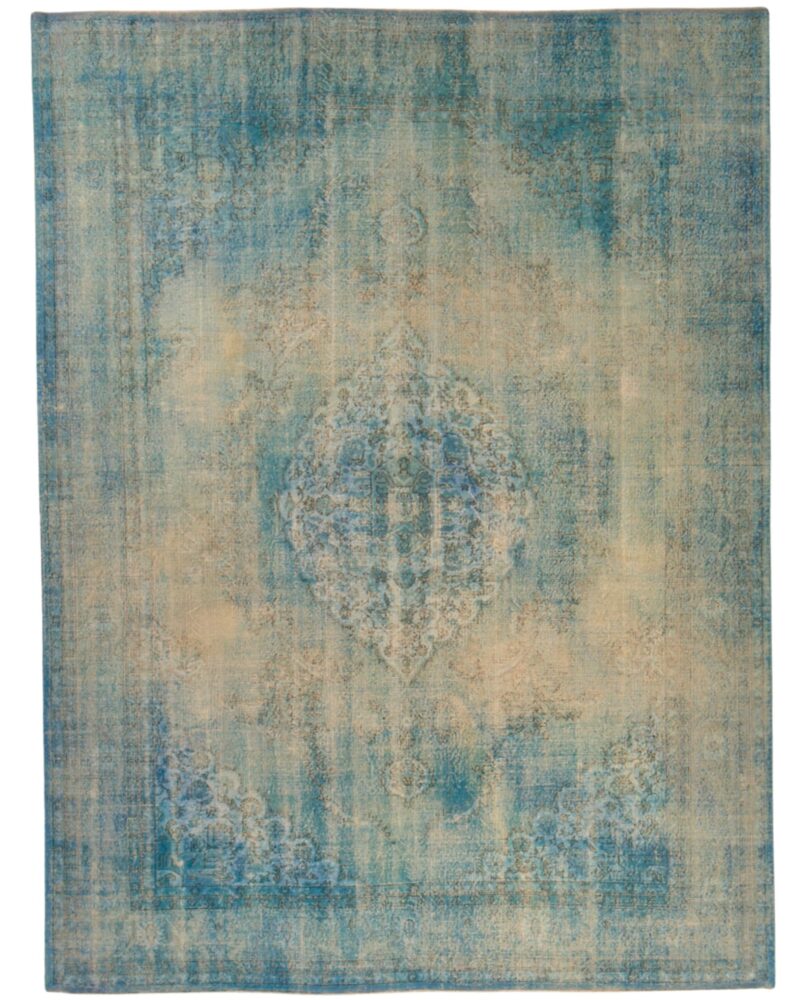
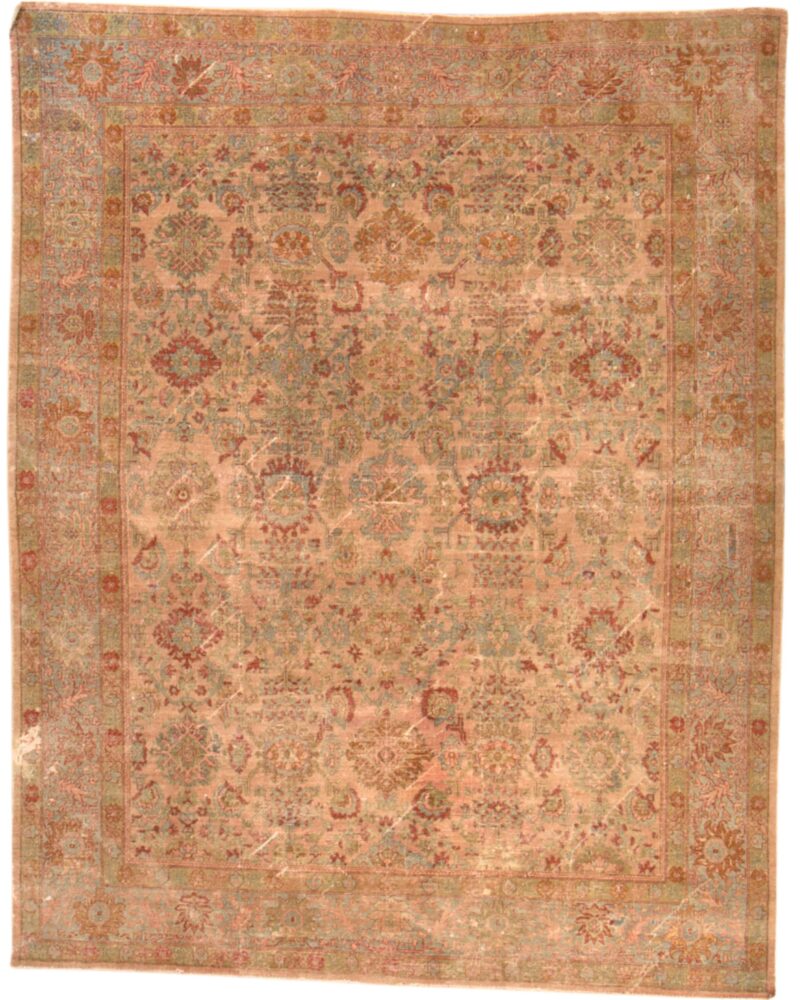
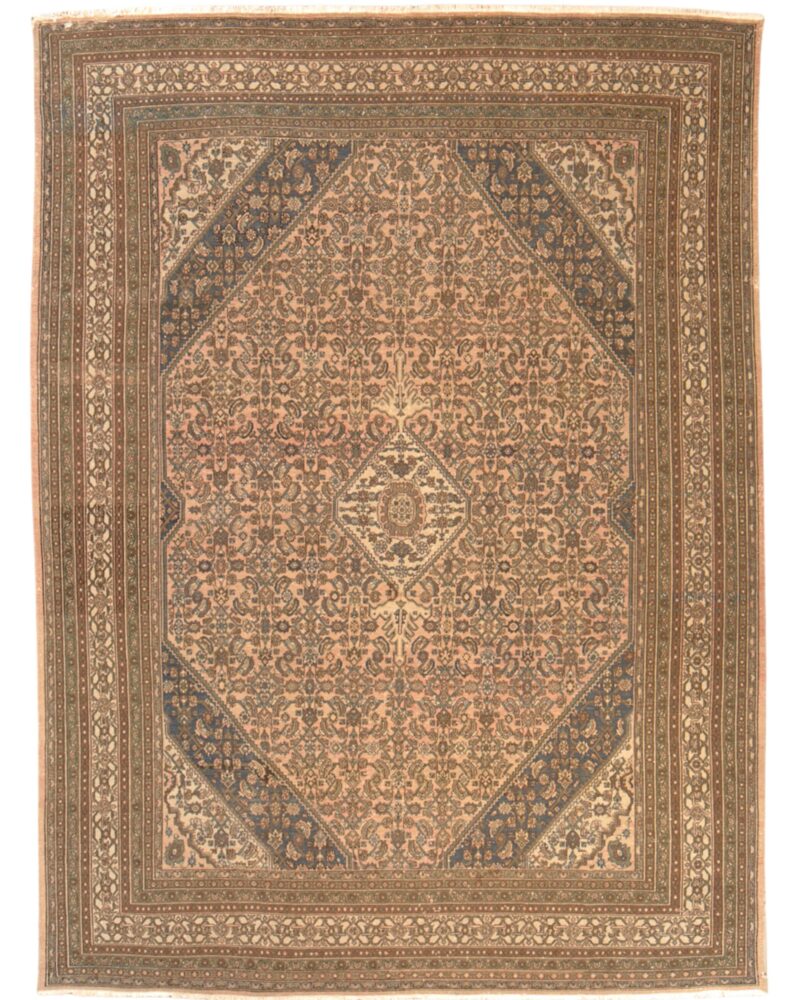
Antique Vintage rugs are hand-knotted pieces with decades of age and softly settled color. Their designs come from Persian weaving centers such as Mahal, Sultanabad, and Tabriz. Weavers worked in wool on cotton foundations, and time has mellowed the dyes into subtle, layered tones. Antique Vintage rugs suit collectors, traditional homes, and anyone who wants a worn-in, character-rich floor piece that holds its value and improves a room.
What Defines Antique Vintage Rugs?
Antique Vintage rugs from Persia are typically hand-knotted with the symmetrical Turkish knot or the asymmetrical Persian knot. Wool pile sits on a cotton warp and weft foundation. Pile height usually measures 1/4 to 1/2 inch, and age often wears it lower. Mahal and Ziegler Mahal rugs come from the Arak region of northwestern Iran, where weavers made large, loosely woven carpets for export.
Antique Vintage designs favor open, spacious layouts. Ziegler Mahal rugs often show large-scale floral palmettes, vines, and wide borders in soft rose, sage, ivory, and indigo. Tabriz rugs from the northwest use finer knotting and medallion or allover patterns. Overdyed Tabriz pieces have been chemically or naturally re-colored, which gives them a muted, modern-leaning palette. Natural dyes soften with age and develop gentle tonal shifts called abrash.
Which Features Matter Most in Antique Vintage Rugs?
Antique Vintage rugs reward buyers who check a few construction details before choosing a piece.
- Material: Hand-spun wool pile on a cotton foundation, sometimes with silk highlights.
- Pile height: Typically 1/4 to 3/8 inch, with a flat, supple hand after decades of use.
- Durability: Well-made examples often last for generations when cleaned and repaired on schedule.
- Size range: Common from 3 x 5 feet to palace sizes beyond 10 x 14 feet.
- Care level: Moderate; professional washing every few years and prompt repair of edge or fringe damage.
Antique Vintage Rug Quick Facts
| Attribute | Typical value | Why it matters |
|---|---|---|
| Construction | Typically hand-knotted wool on cotton | Hand knotting gives strength and allows repair. |
| Pile height | Typically 1/4 to 1/2 inch | Low pile resists crushing and suits high-traffic rooms. |
| Age | Typically 50 to 150 years old | Age shapes color depth, wear patterns, and collector interest. |
| Common sizes | Typically 8 x 10 to 12 x 15 feet in Mahal weaves | Large formats anchor living and dining areas. |
| Cleaning interval | Typically every 2 to 4 years | Regular washing removes grit that cuts wool fibers. |
How Do You Style Antique Vintage Rugs at Home?
Antique Vintage rugs work well in living rooms, dining rooms, libraries, and bedrooms. Their faded florals pair with traditional, transitional, and even modern interiors. Muted rose and indigo tones sit comfortably beside walnut furniture, linen upholstery, and plaster walls. A neutral sofa lets the rug carry the pattern. Collectors can also browse our Antique & Vintage Rugs for related pieces.
Sizing rules keep the layout balanced. In a living room, place at least the front legs of every seat on the rug. In a dining room, extend the rug 24 to 30 inches past the table edge so chairs stay on it when pulled out. Use a quality pad to prevent slipping and cushion the foundation. Our rug padding service matches pad thickness to each rug’s weave.
Frequently Asked Questions
What size Antique Vintage rug should I buy for a living room?
Antique Vintage rugs for living rooms should be large enough for the front legs of sofas and chairs to rest on them. An 8 x 10 or 9 x 12 foot rug fits most layouts. Leave 12 to 18 inches of bare floor around the edges.
How do you clean an Antique Vintage rug?
Antique Vintage rugs need gentle, professional cleaning because aged dyes and cotton foundations react to harsh products. Vacuum without a beater bar, blot spills quickly, and avoid home steam cleaners. A specialist can wash the rug by hand, as in our rug cleaning service, every few years.
Are Antique Vintage rugs durable enough for daily use?
Antique Vintage rugs handle daily use well when the foundation is sound. Tightly knotted wool resists crushing and stains better than most synthetic fibers. Check for dry rot, loose fringe, and worn edges first. Rotate the rug yearly so sunlight and foot traffic wear it evenly.
Are Antique Vintage rugs handmade or machine-made?
Antique Vintage rugs from Persia are handmade, with each knot tied individually on a loom. Machine-made copies have uniform backs and printed or glued fringe. Turn the rug over and look for visible knots and slight irregularities in the pattern, which signal hand work.