


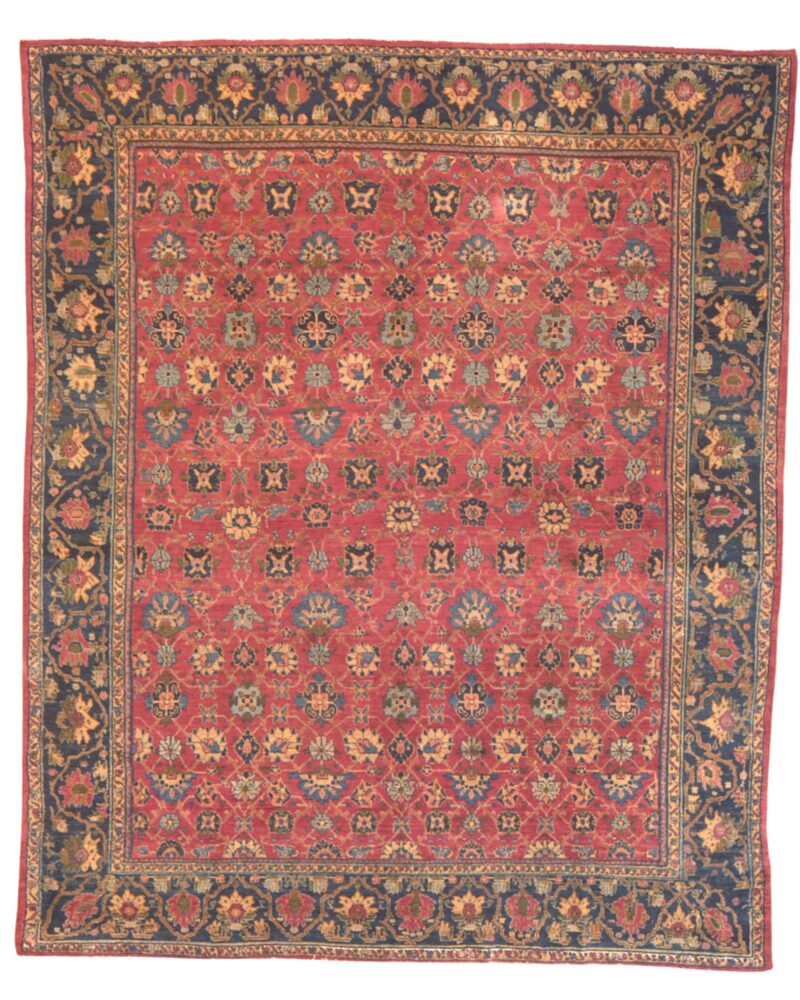
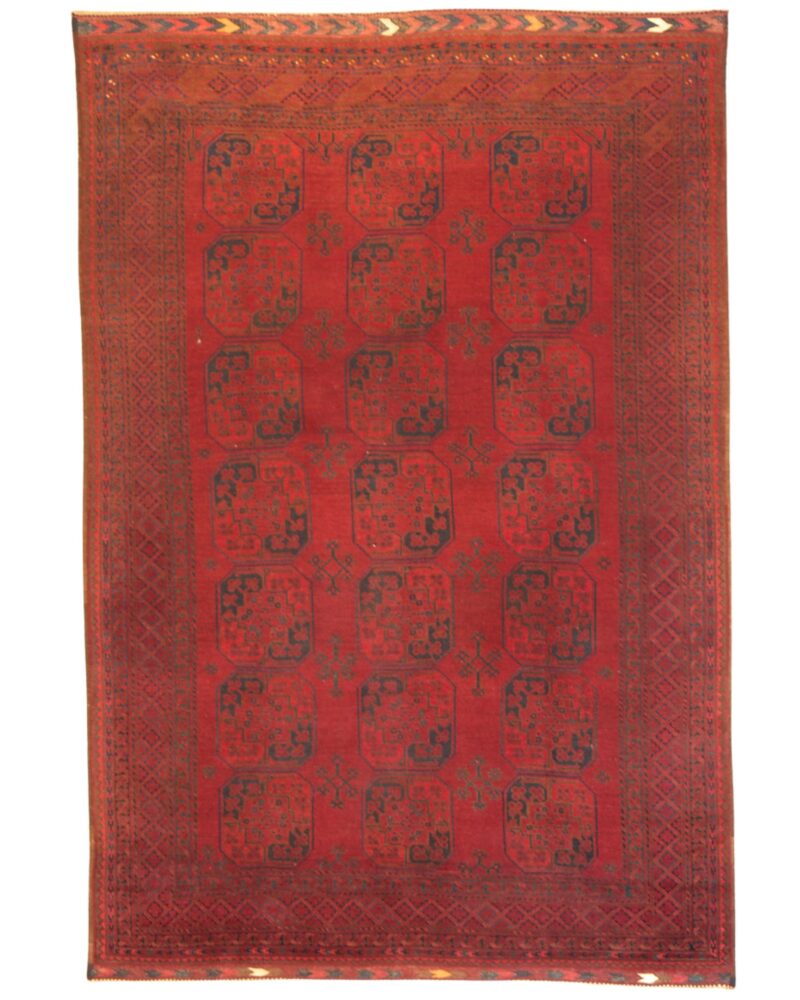
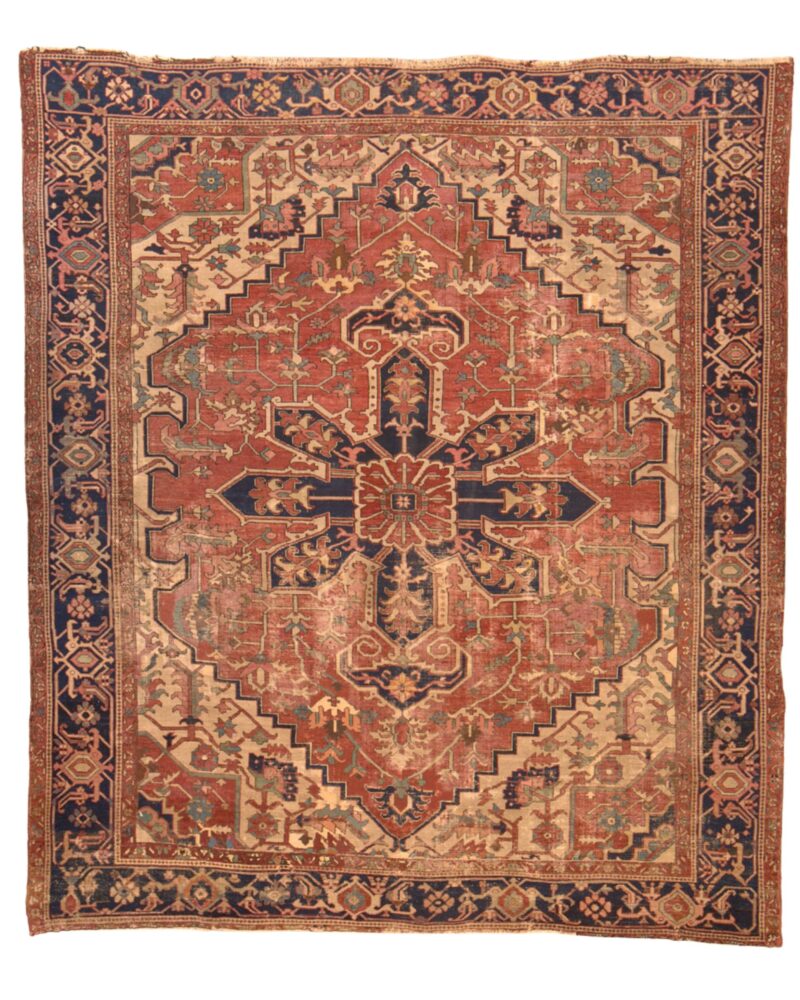
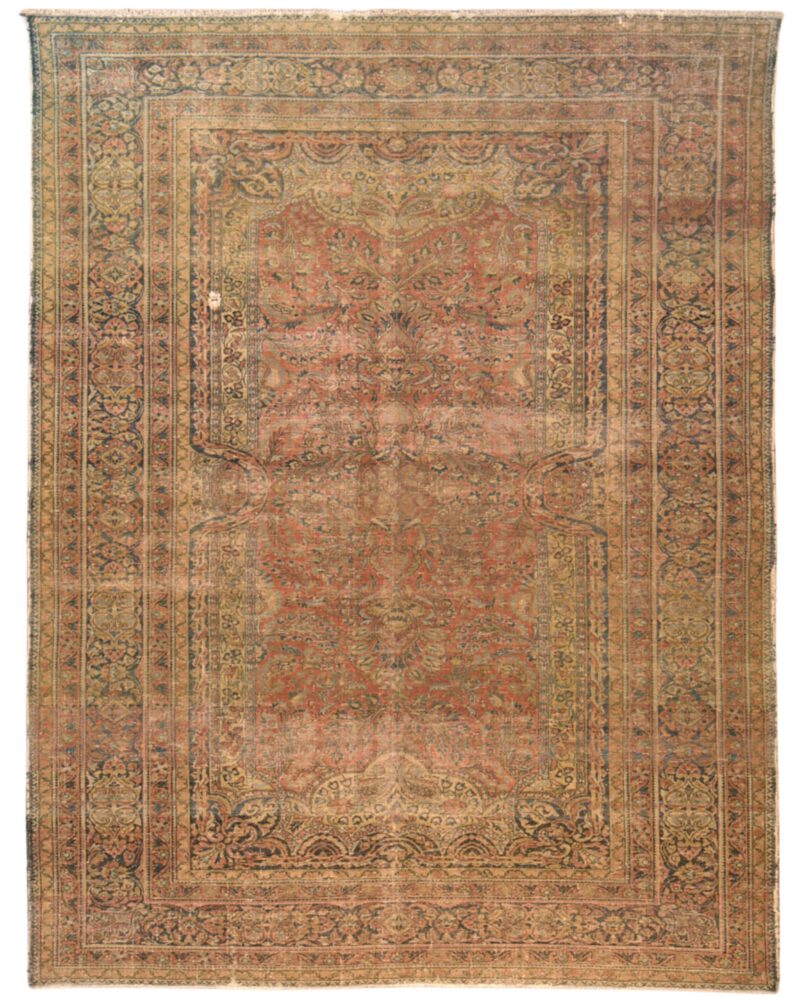
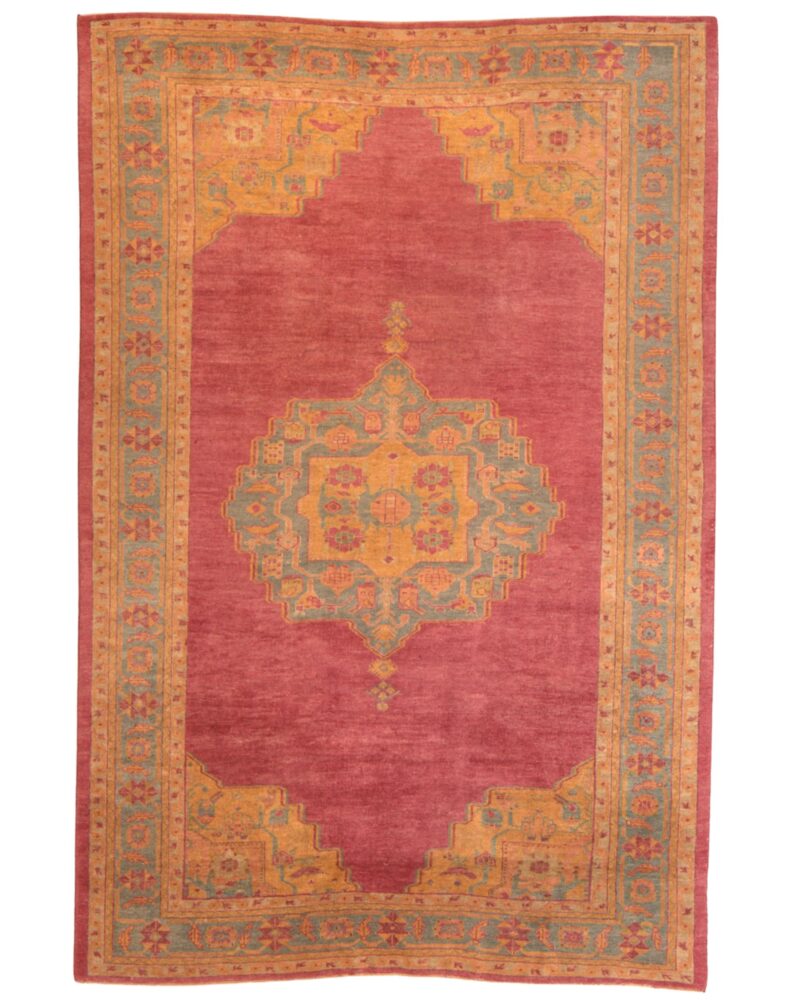
Antique rugs are handmade pieces woven at least 70 to 100 years ago, mostly in Persia, Anatolia, and the Caucasus. Antique rugs carry hand-spun wool, natural dyes, and the softened patina that only decades of use can create. The tradition grew from village looms and city workshops where weavers passed patterns between generations. Antique rugs suit collectors, traditional and eclectic homeowners, and anyone who wants a floor piece with real history. This collection features large room-size rugs, including Oushak, Lilihan, Serapi, Ersari, and Mahal designs.
What Defines Antique Rugs?
Antique rugs use hand-knotted construction on a cotton or wool foundation. Weavers tie each knot by hand, most often with the Persian (asymmetrical) knot or the Turkish (symmetrical) knot. Wool pile is usually clipped to about 1/8 to 3/8 inch. Turkish Oushak rugs typically have a looser weave and a slightly longer, silkier pile. Persian Serapi, Mahal, and Lilihan rugs usually show tighter knotting and more detailed drawing.
Antique rugs get their color from natural dyes such as madder root for red, indigo for blue, and walnut or weld for brown and yellow. Those dyes age into soft, uneven tones, a effect rug people call abrash. Common motifs include central medallions, Herati repeats, floral sprays, and bold geometric guls in Ersari designs. Serapi rugs lean toward large-scale, open geometry in brick red and ivory, while Oushak rugs favor muted terracotta, sage, and gold.
Which Features Matter Most in Antique Rugs?
Antique rugs reward buyers who check a few key features before choosing a piece. Use this list as a practical checklist.
- Material: hand-spun wool pile on a cotton or wool foundation, sometimes with silk highlights
- Pile height: typically 1/8 to 3/8 inch, often worn lower in high-traffic areas
- Durability: dense wool and hand-knotted construction often last for generations with sound care
- Size range: room-size formats are common, roughly 8 x 10 to 10 x 14 feet in this collection
- Care level: moderate to high, with periodic professional washing and condition checks
Antique Rug Quick Facts
| Attribute | Typical value | Why it matters |
|---|---|---|
| Age | Typically 70 to 150+ years old | Age drives patina, rarity, and collector interest |
| Knot type | Typically Persian or Turkish hand knots | Knot type signals region and weaving tradition |
| Pile height | Typically 1/8 to 3/8 inch | Lower pile shows age and suits busy rooms |
| Dyes | Typically natural plant and mineral dyes | Natural dyes age softly and need gentle cleaning |
| Foundation | Typically cotton or wool warps and wefts | Foundation strength affects repair options |
How Do You Style Antique Rugs at Home?
Antique rugs anchor living rooms, dining rooms, and primary bedrooms especially well. Large formats like the 11 x 9 sizes in this collection let every front furniture leg sit on the rug. In dining rooms, leave at least 24 inches beyond the table edge so chairs stay on the pile when pulled out. Hallways and entries suit smaller pieces, but runners are not part of this group.
Antique rugs pair well with traditional, transitional, farmhouse, and modern interiors. A faded terracotta Oushak warms gray sofas and white walls. A deep red Serapi or Mahal works with walnut wood, leather, and navy upholstery. Keep surrounding colors quiet so the rug leads the room. For related looks, browse our Antique & Vintage Rugs collection. Add a quality pad from our rug padding service to protect the foundation and stop slipping.
Frequently Asked Questions
How do I clean an antique rug safely?
Antique rugs need gentle, professional cleaning because natural dyes can bleed and old fibers can weaken. Vacuum without a beater bar every week or two. Schedule hand washing every few years through a rug cleaning specialist, and blot spills immediately with plain water.
Are antique rugs durable enough for daily use?
Antique rugs hold up well in living rooms, dining rooms, and bedrooms when their foundation is sound. Dense wool and hand knots resist wear for decades. Rotate the rug yearly, use a good pad, and avoid placing it where direct sun or heavy shoe traffic hits constantly.
What size antique rug fits a living room or dining room?
Antique rugs in the 9 x 12 range suit most living rooms and dining rooms. Choose a size that leaves 6 to 12 inches of floor visible around the walls in a living room. In a dining room, extend the rug 24 inches past the table on every side.
How can I tell a handmade antique rug from a machine-made rug?
Antique rugs are handmade, so you can see slight irregularities in knotting and drawing. Flip the rug over. A handmade piece shows the pattern clearly on the back with uneven knots, while a machine-made rug shows uniform rows and often a glued or stitched backing.