
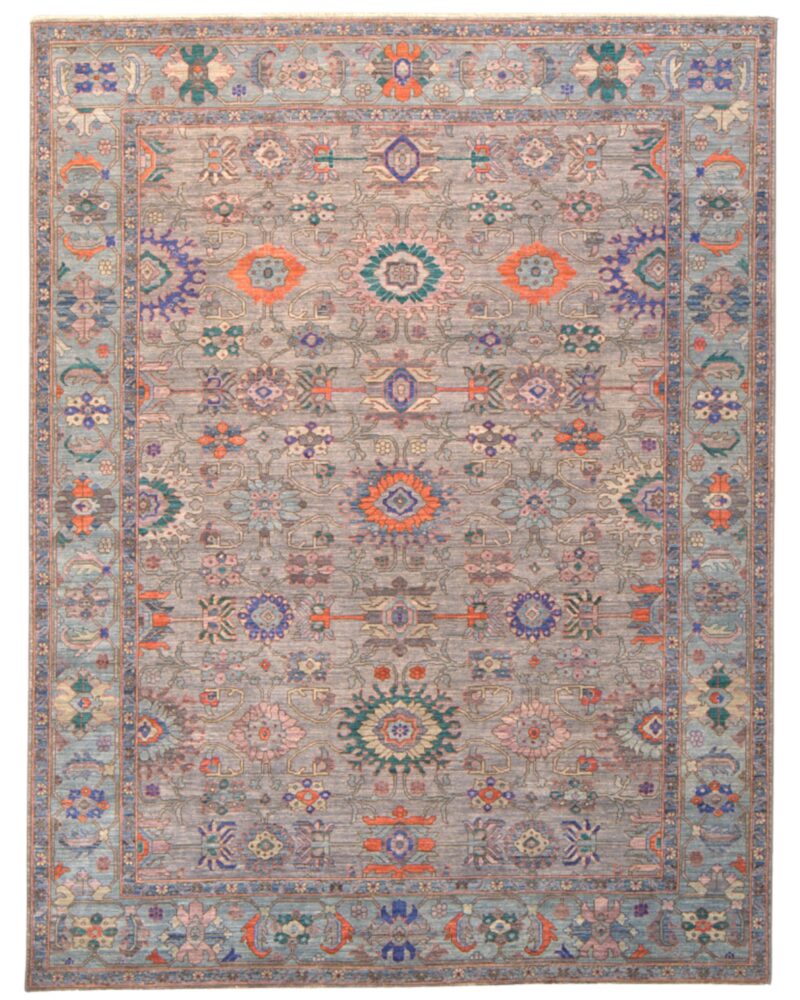


Every rug buyer eventually asks for “something like what I saw in that design magazine” — and that request usually lands on a piece from this collection. Designer Favorite rugs draw from classic Persian, Turkish, and Oushak weaving traditions but get reworked with the softer, more muted palettes that interior designers have leaned on for the past two decades. They bridge old-world construction with a color sensibility built for modern homes. Shoppers choose this line because it reads as curated and intentional in a room without the visual weight of a traditional jewel-tone antique, and because the quality underneath the fashionable surface actually holds up to daily foot traffic.
What Defines Designer Favorite Rugs
The construction varies by piece, but most rugs in this line fall into two camps: genuine hand-knotted wool rugs running 80 to 150 knots per square inch, woven in Turkey, India, or Pakistan, or hand-tufted versions made faster with a tufting gun and a latex-backed canvas base. Pile height typically sits between 3/8 inch and 5/8 inch, with wool weights averaging 30 to 40 ounces per square yard depending on density. You’ll also find flatweave Kilim-style pieces in this category, usually under 1/4 inch thick, built from 100% wool or wool-cotton blends on a cotton warp. Silk highlighting shows up in the higher-end hand-knotted pieces, usually 10-15% silk blended into the pile to catch light and create that subtle sheen designers look for in photography.
Color stories lean heavily on washed-out neutrals — camel, ivory, charcoal, dusty blue, blush — often achieved through an overdyeing or distressing process applied after the rug is woven, which softens the original saturated dyes. Motifs borrow from Oushak medallions, Heriz geometric patterns, and tribal Persian boteh designs, but the drawing is simplified and the scale enlarged compared to a traditional antique reproduction. Cotton foundations are standard on tufted pieces for dimensional stability, while hand-knotted construction uses cotton warp and weft with a wool or wool-silk pile, which is why the better pieces in this collection carry real investment value rather than just decorative appeal.
Key Features to Look For
Not every rug marketed under this style label is built the same way, so look past the photo and check these specifics before buying:
- Hand-knotted vs. hand-tufted construction — flip the rug and check for a woven knot structure versus a latex-coated canvas backing, since this affects both price and lifespan by a factor of 10-15 years
- Wool pile weight of at least 30 oz per square yard for durability in living rooms and hallways
- Pile height between 3/8 and 1/2 inch for the best balance of softness underfoot and resistance to crushing under furniture
- Sizes commonly available from 2×3 accent pieces up through 9×12 and 10×14 room-size rugs, with 8×10 the most requested
- Price positioning typically $800-$4,500 for hand-knotted wool pieces in standard room sizes, with tufted versions running $300-$1,200
- Care level — overdyed and distressed wool rugs require gentler cleaning agents than standard wool, since the fading process can make the fiber more porous
Styling Designer Favorite Rugs in Your Home
These rugs work hardest in living rooms, dining rooms, and primary bedrooms where the muted palette can anchor a space without fighting the furniture. In a living room, size the rug so the front legs of your sofa and chairs sit on it — for an 8×10, that usually means the rug extends at least 12-18 inches past the sofa on either side. Mid-century, Scandinavian, transitional, and modern farmhouse interiors all pair well with the washed-out color story, since the faded tones read as neutral rather than competing with wood furniture or patterned textiles elsewhere in the room.
In dining rooms, pick a flatter pile — the Kilim-style options under 1/4 inch — so chairs slide easily and the rug doesn’t trap crumbs in a deep pile. Layer a smaller 3×5 Designer Favorite piece over a larger jute or sisal rug in an entryway for texture contrast, a trick many designers use to add pattern without overwhelming a small space. If you’re mixing this style with existing antique or traditional pieces in adjoining rooms, keep the color temperature consistent — cool grays with cool grays, warm camels with warm wood tones — so the transition between spaces feels planned rather than accidental.
Frequently Asked Questions
What size Designer Favorite rug do I need for my living room?
For most living rooms, an 8×10 or 9×12 rug works best, sized so all furniture legs sit on the rug or at minimum the front legs of sofas and chairs. A 5×8 fits a smaller seating area or works as a layering piece under a coffee table arrangement. Measure your furniture footprint first and add 18-24 inches on each side for the rug to look intentional rather than undersized.
How do I clean an overdyed or distressed wool rug?
Vacuum weekly without a beater bar attachment, since the distressed finish can be more fragile than standard wool pile, and blot spills immediately rather than scrubbing. Because the overdyeing process alters the fiber’s natural protective coating, these rugs do better with professional rug cleaning every 12-18 months rather than DIY shampooing, which can strip color unevenly. Avoid steam cleaners entirely, as excess heat and moisture can cause the dye to bleed.
Are these rugs handmade or machine-made?
Both exist within this collection, and the difference matters for price and longevity. Hand-knotted pieces from Turkey, India, or Pakistan take 3-8 months to weave depending on size and knot density and will outlast a machine-made rug by decades; hand-tufted pieces are made in days using a tufting gun and typically last 5-10 years with moderate traffic before the latex backing begins to degrade. Check the label or ask the retailer directly, since “designer” styling doesn’t indicate construction method.
Will a Designer Favorite rug hold up with kids and pets?
Hand-knotted wool pieces handle daily wear well — wool is naturally stain-resistant and the dense knot structure resists matting under regular foot traffic. Tufted versions are more vulnerable since the latex backing can crack or shed over time with heavy use, so for high-traffic households I generally steer people toward the hand-knotted option even at a higher price point. Either construction benefits from a quality rug pad underneath, which also prevents slipping and reduces wear on the backing.