


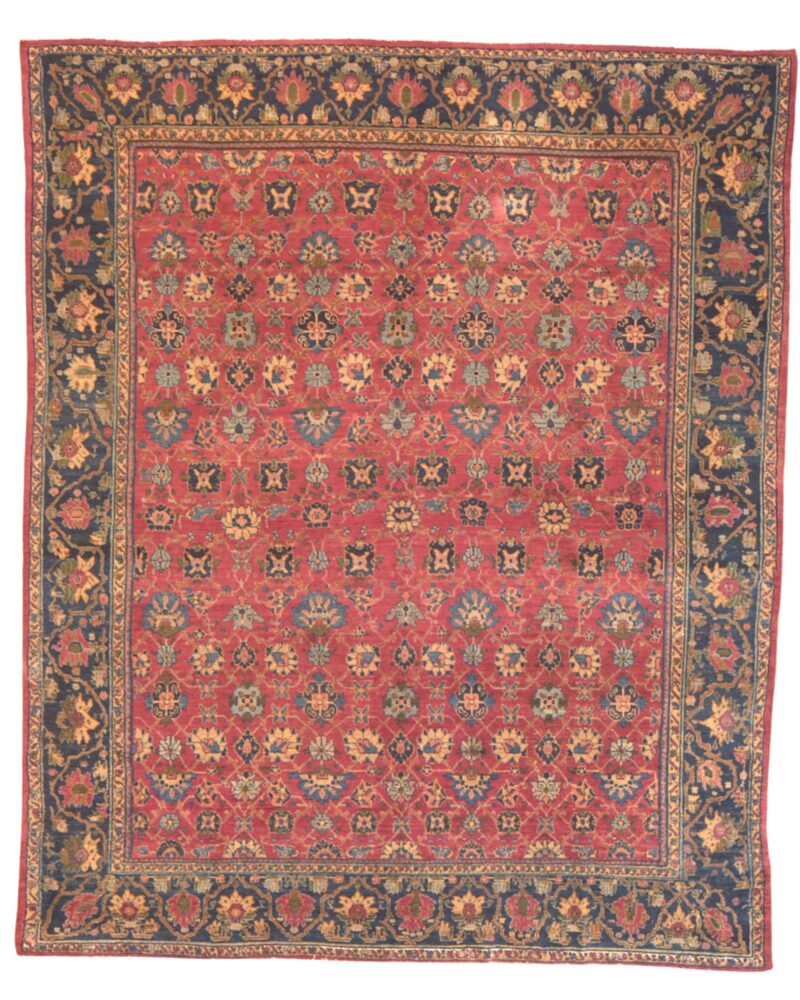
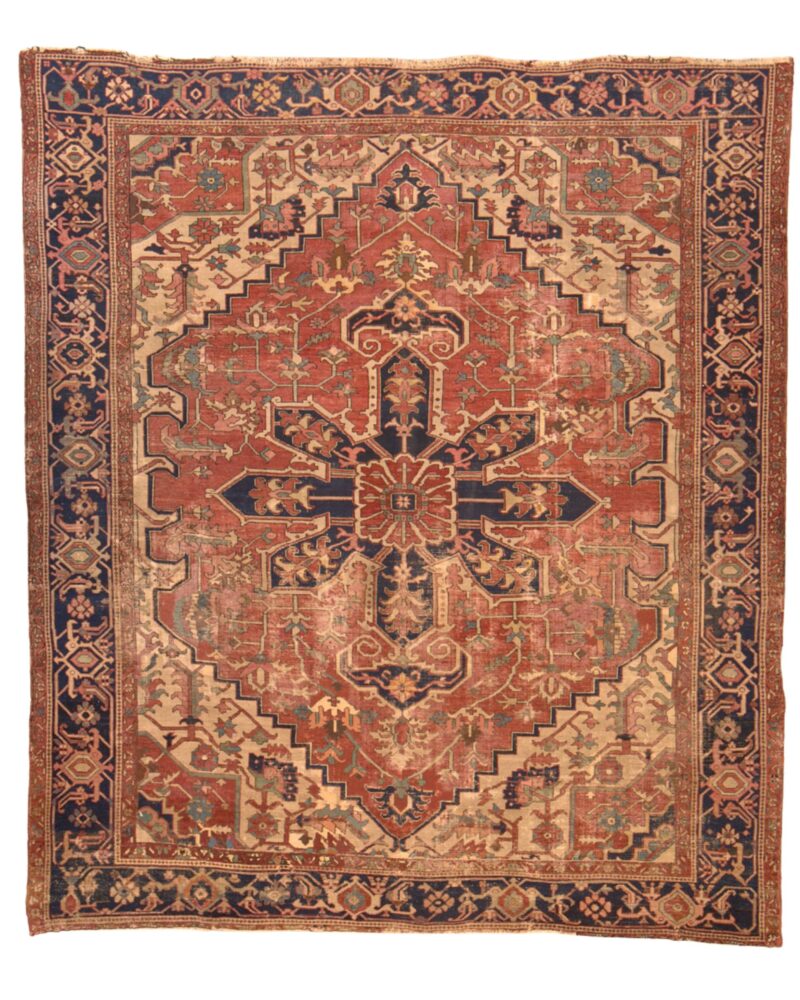
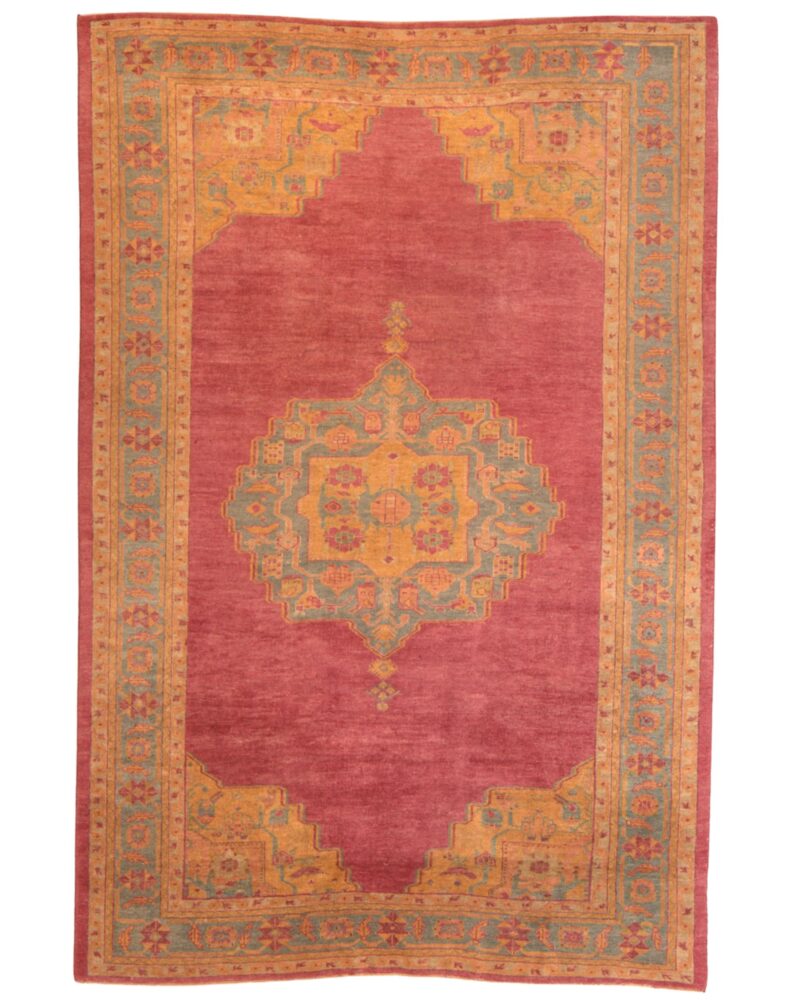
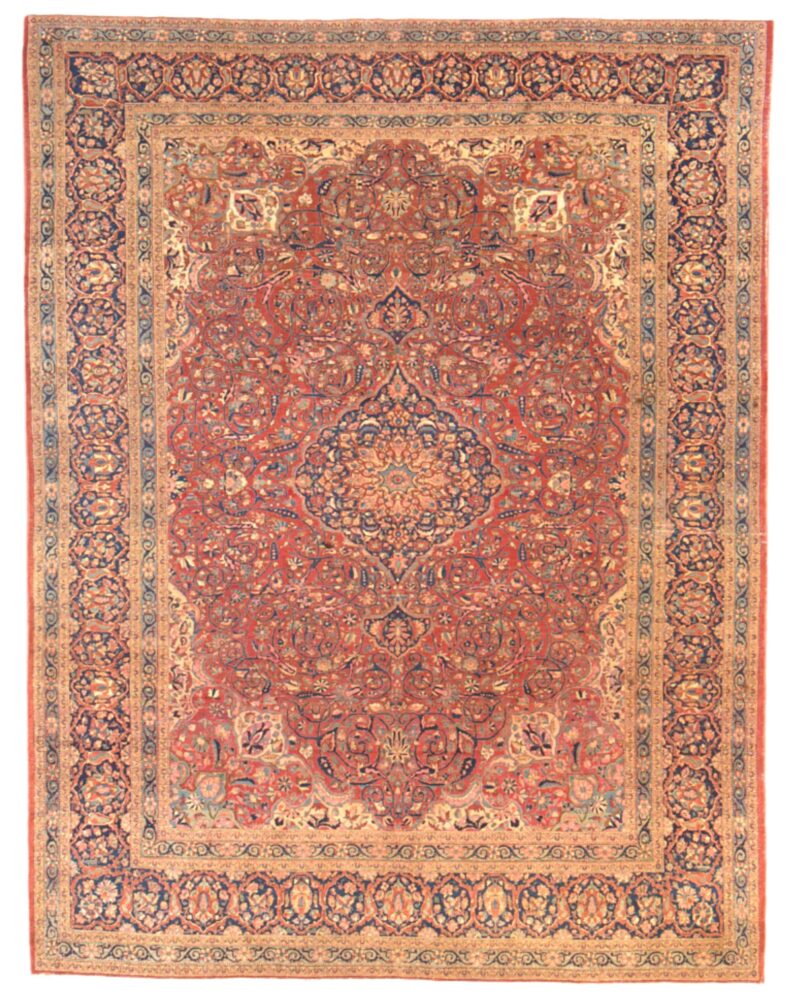
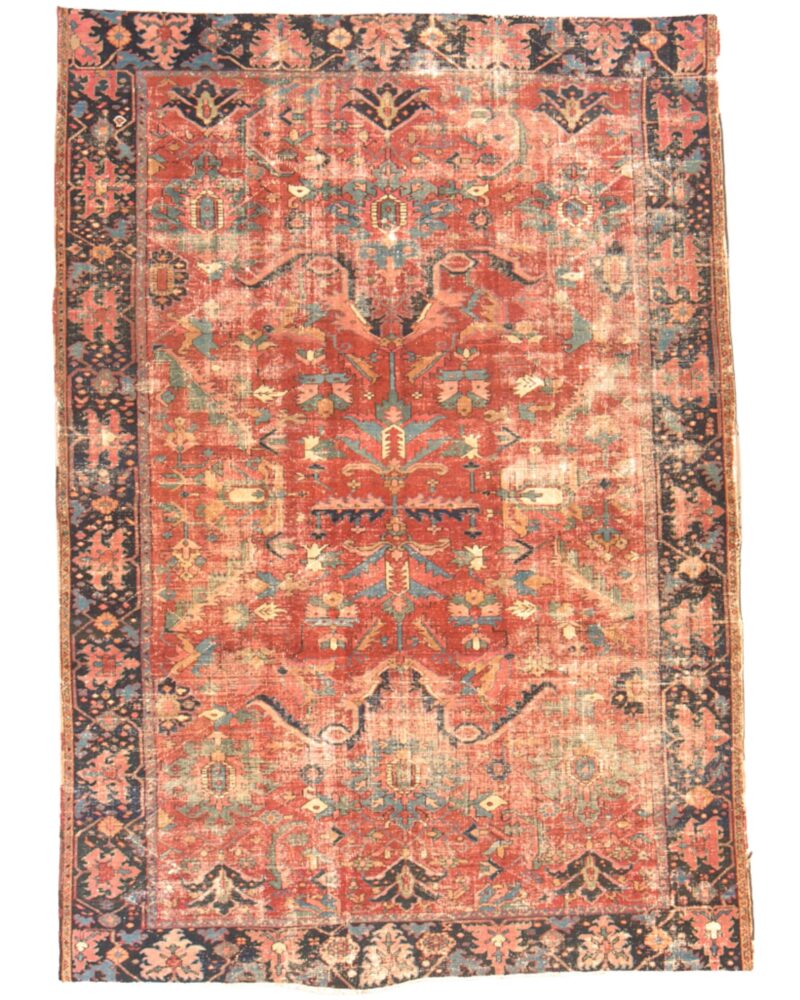
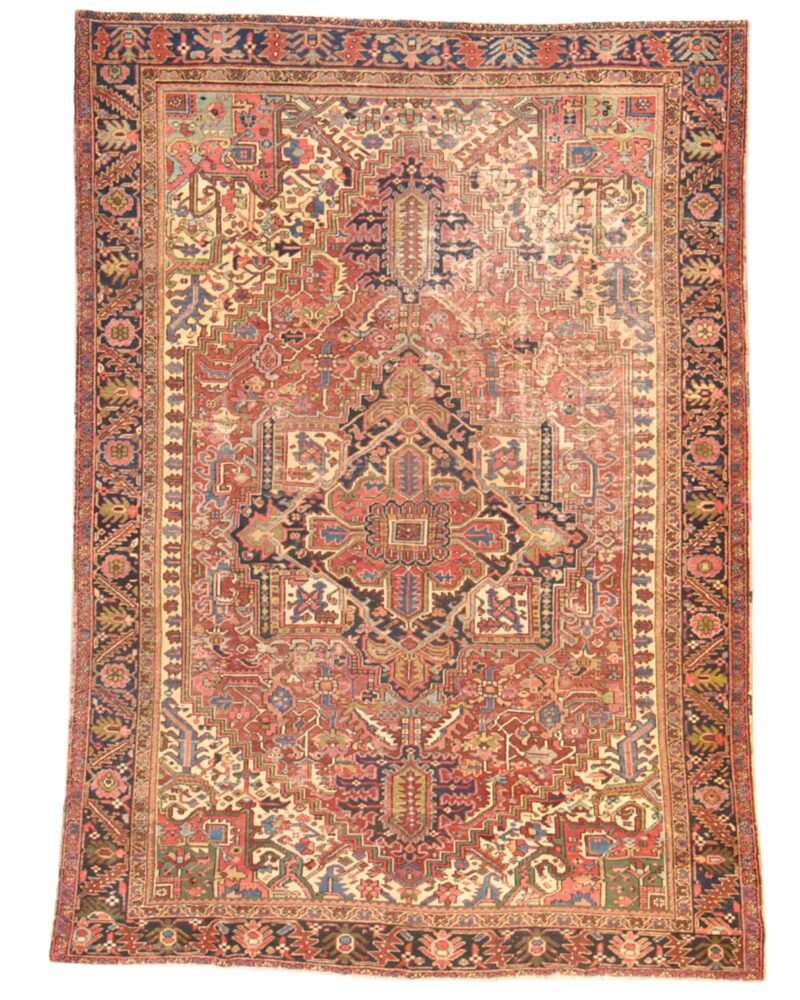
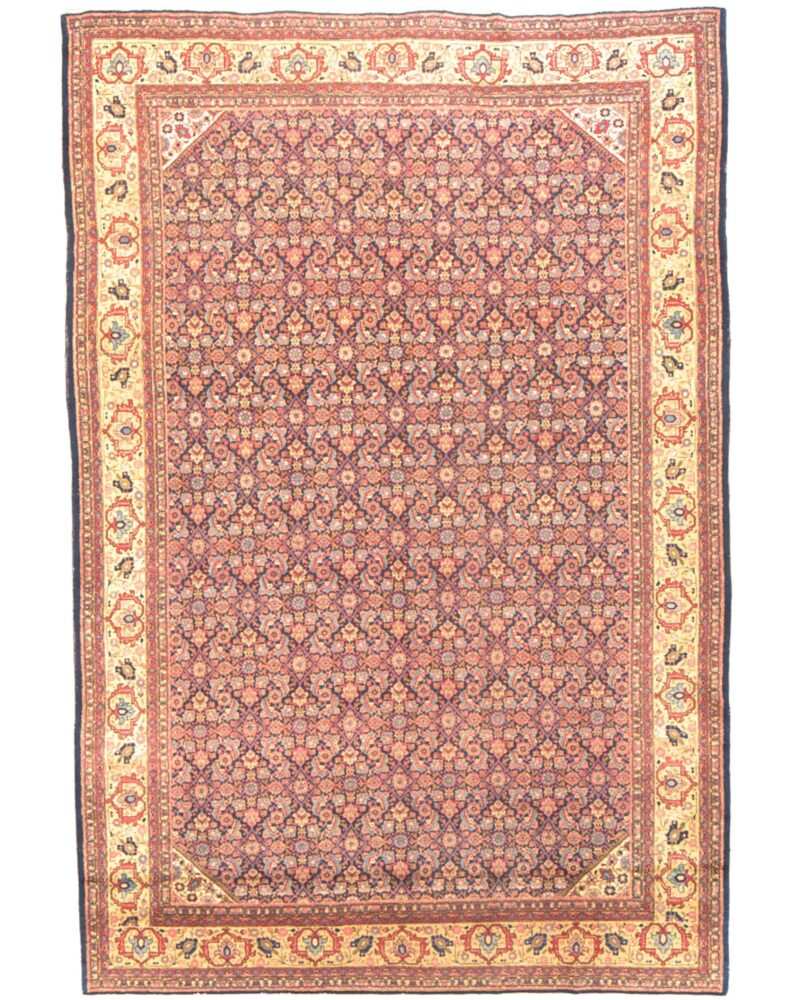
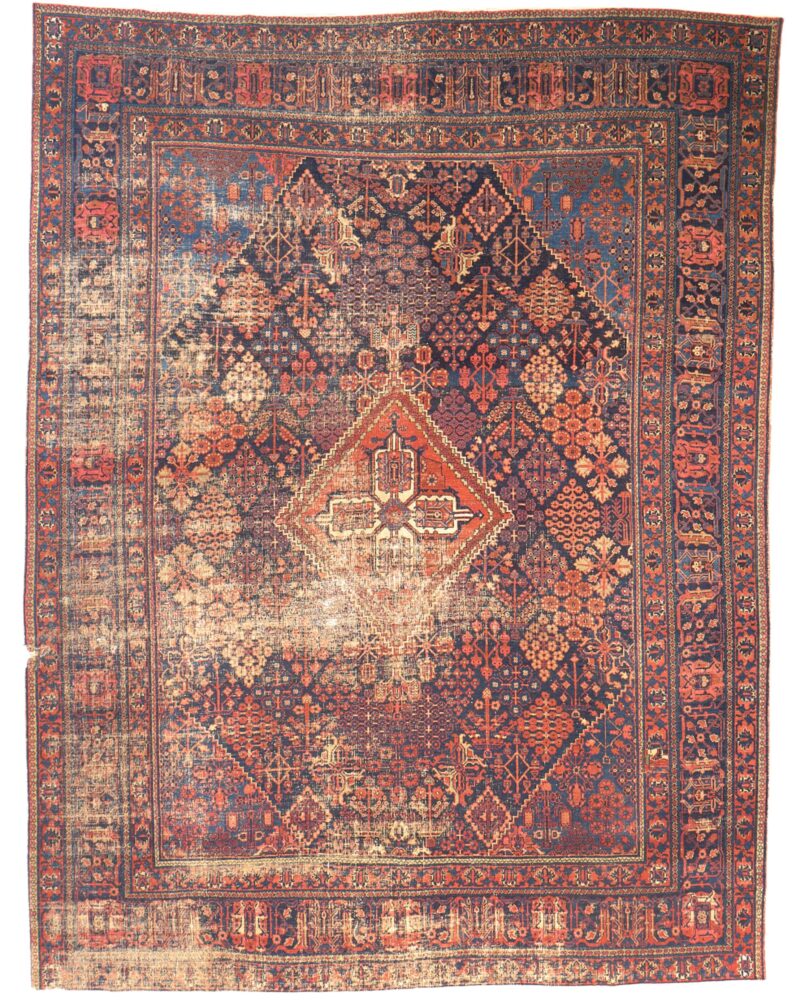
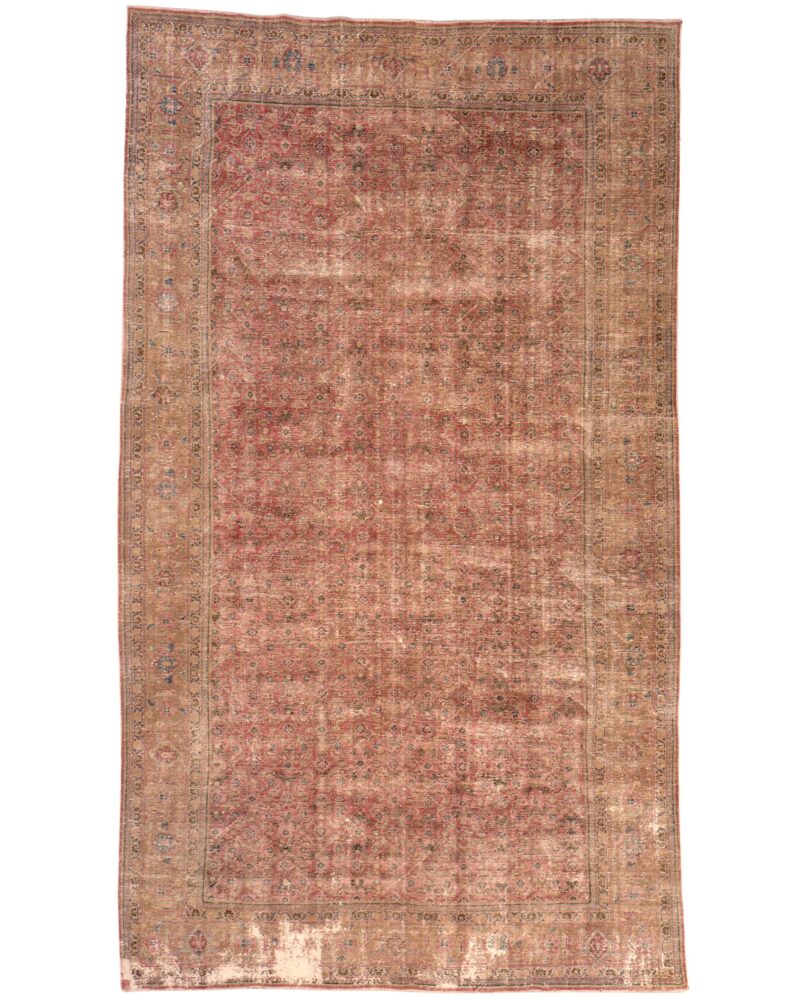
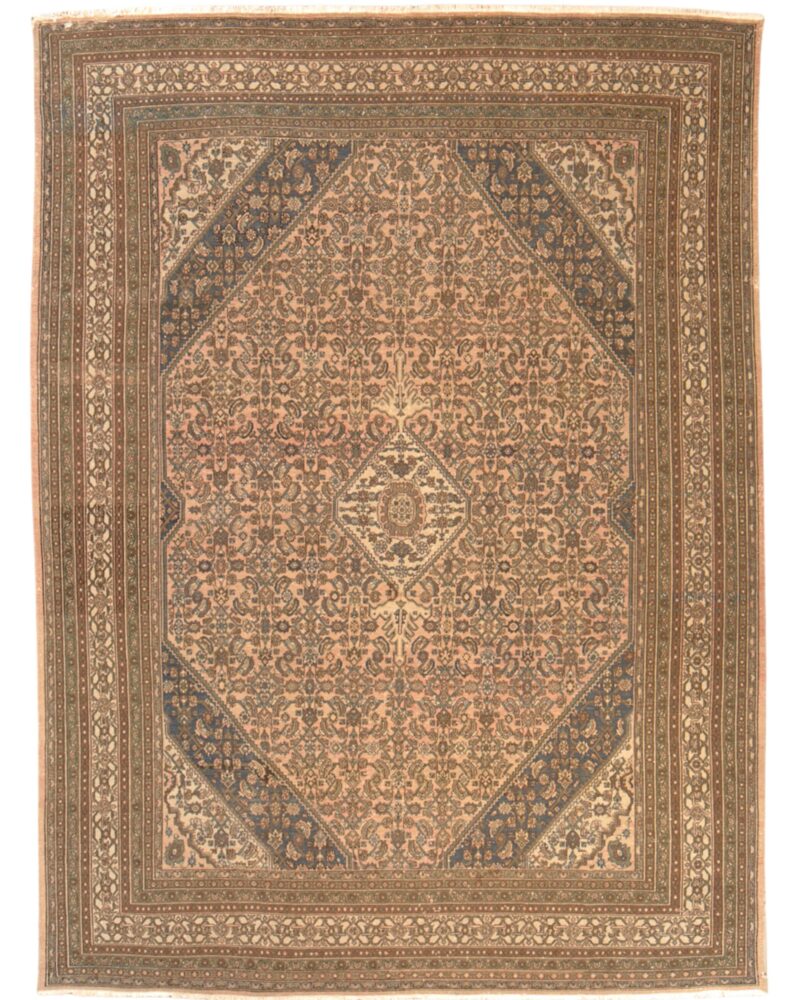
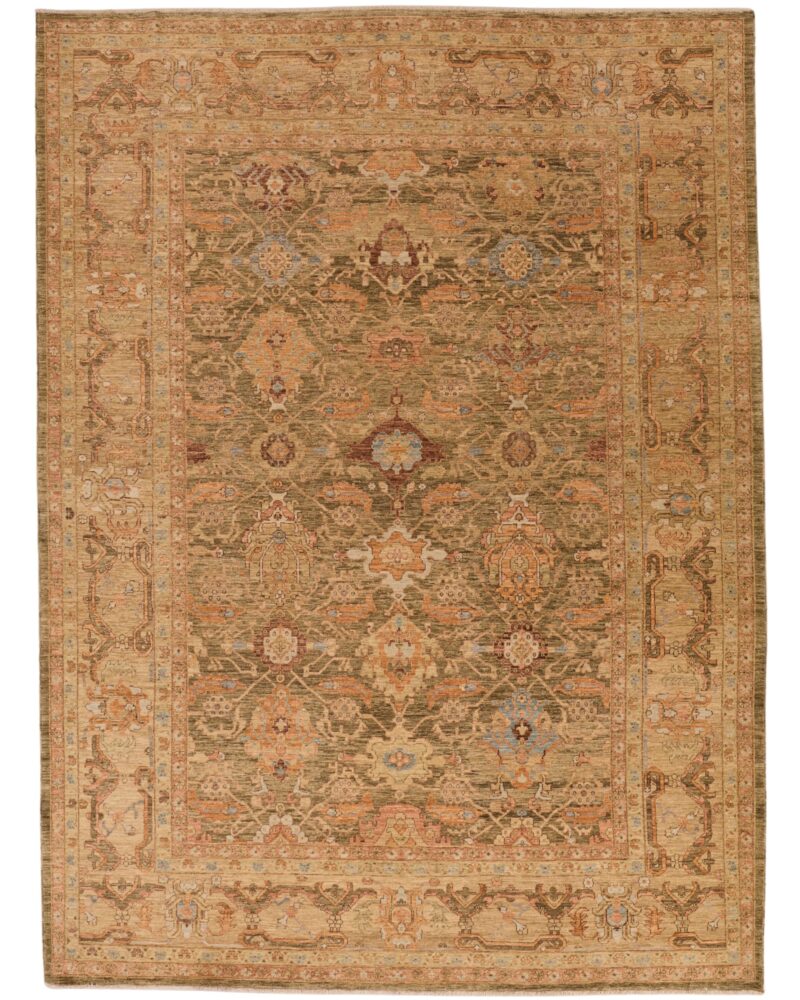
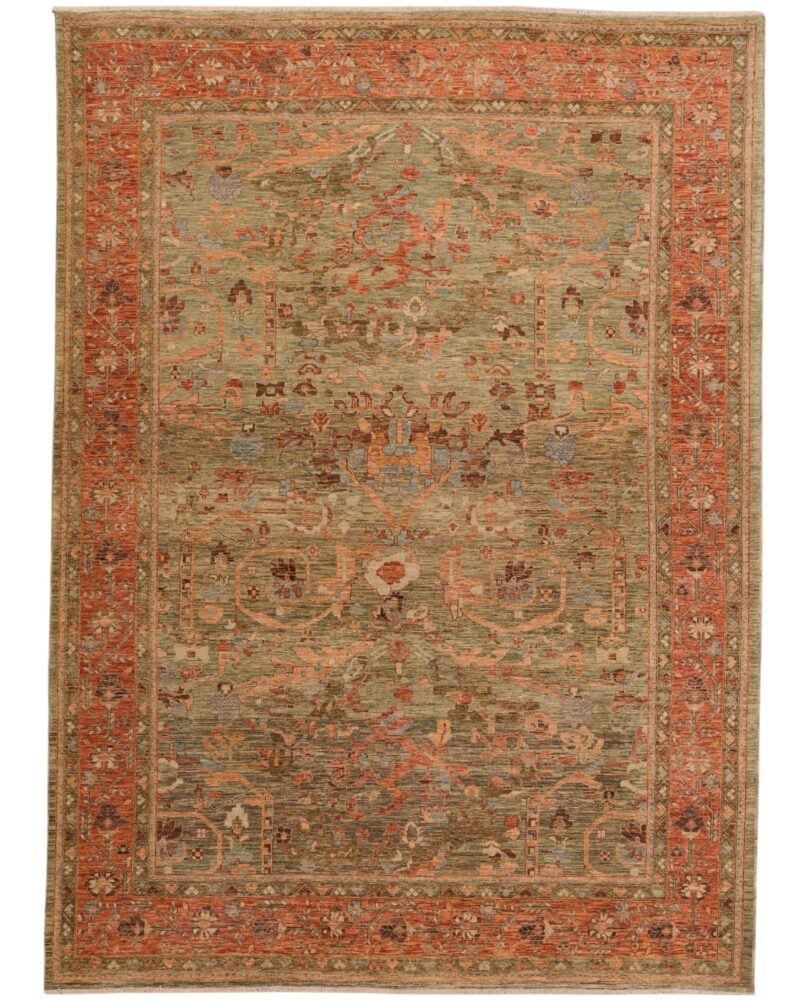
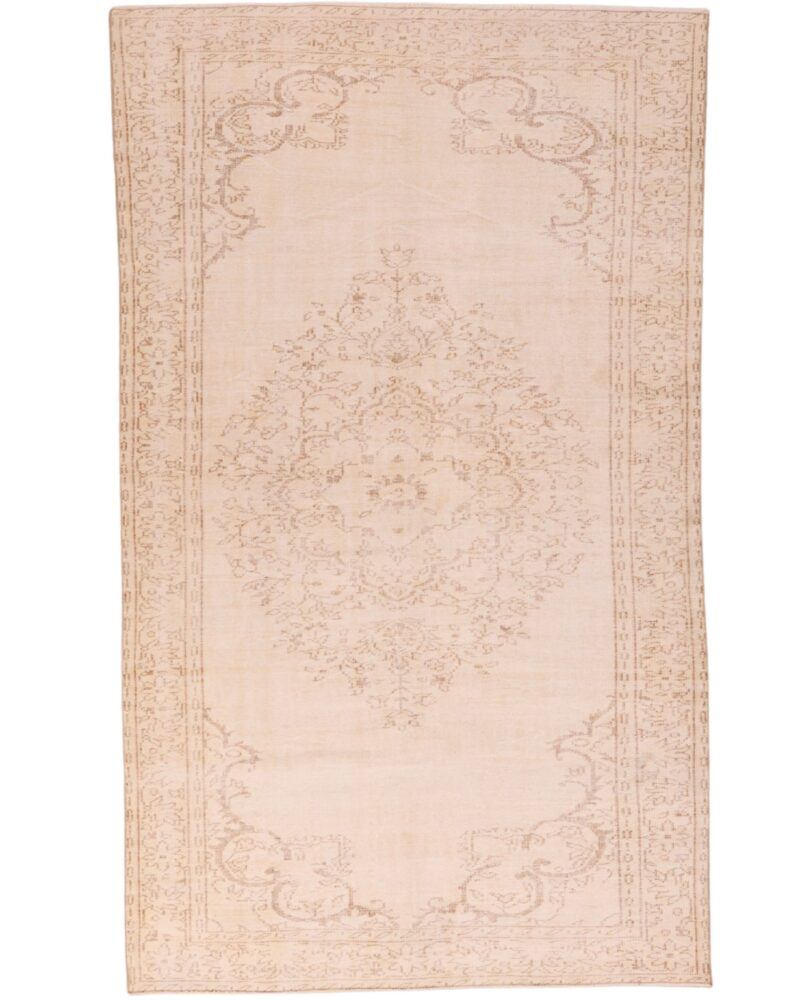
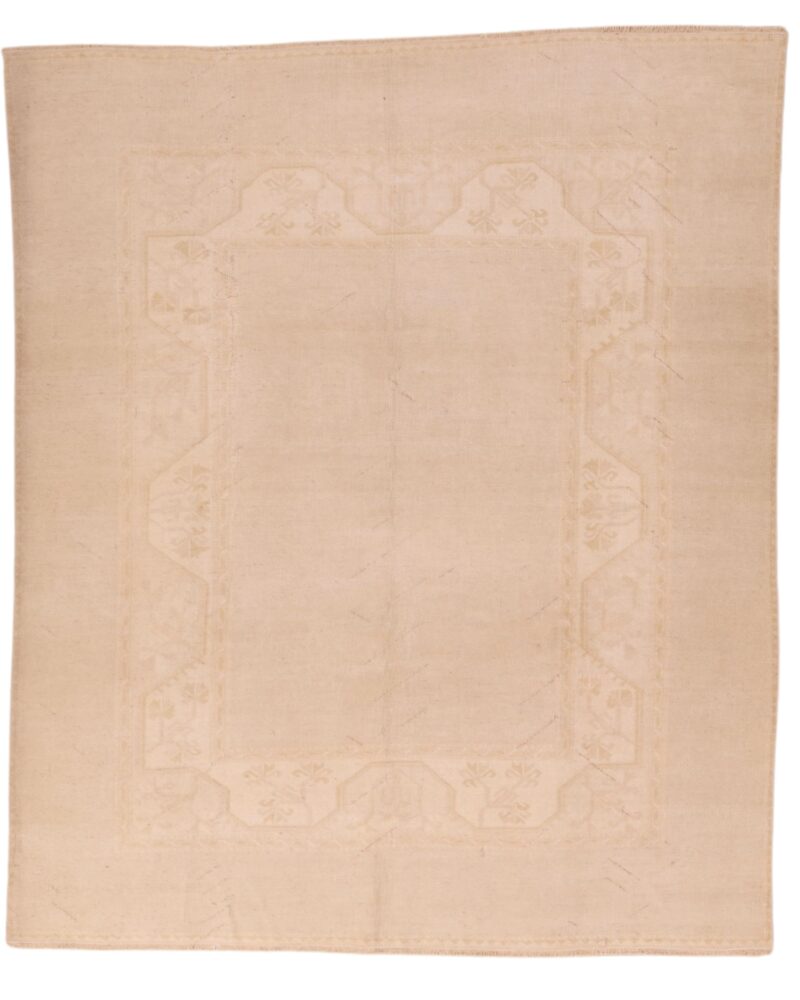
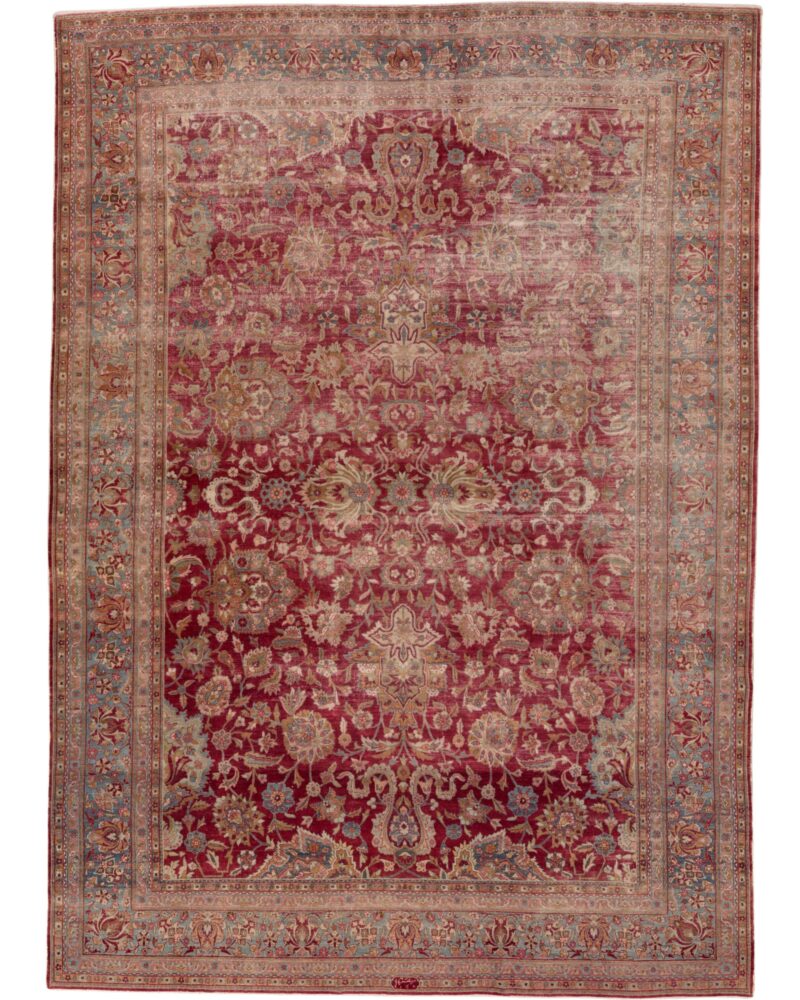
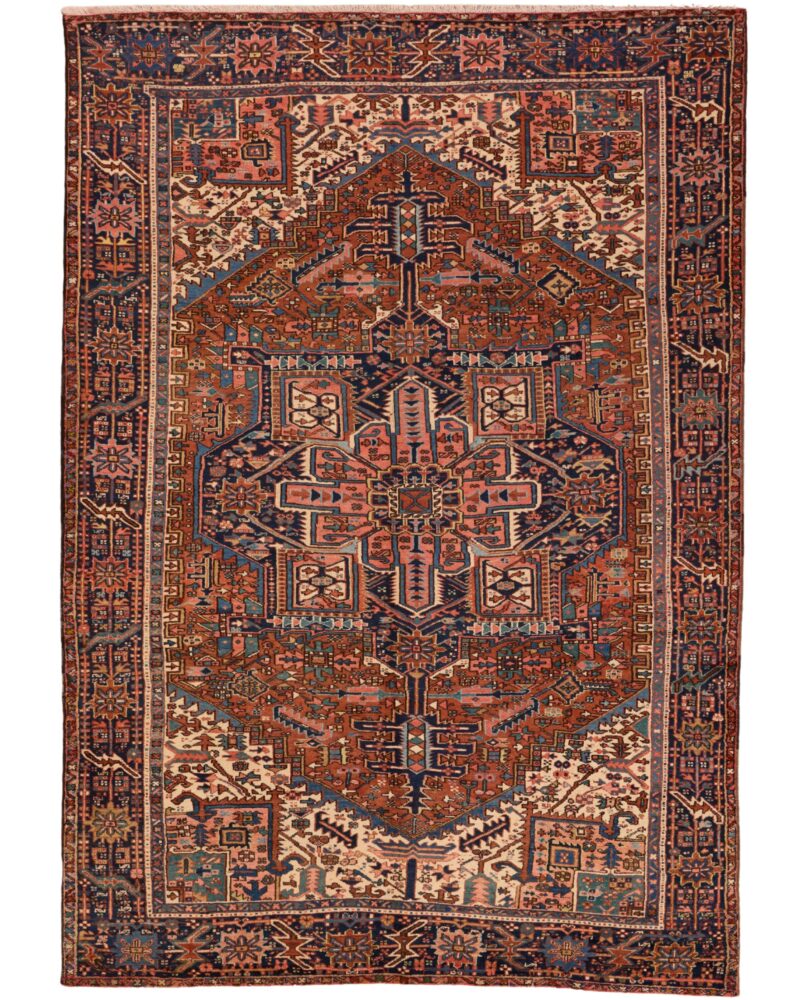
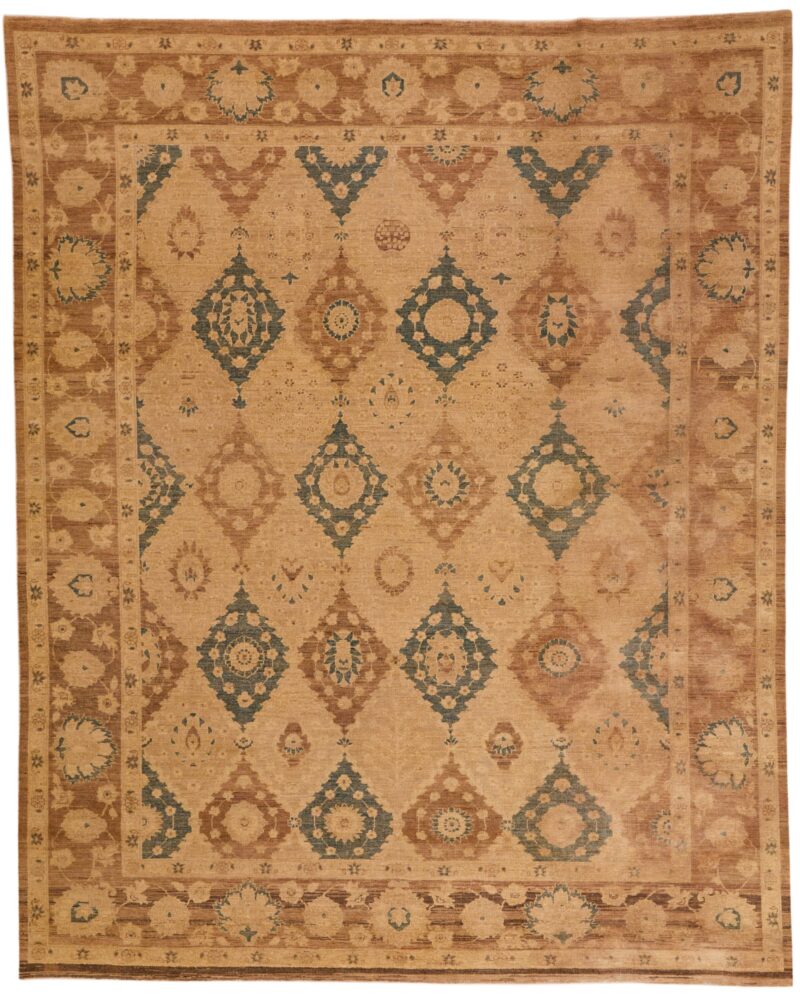
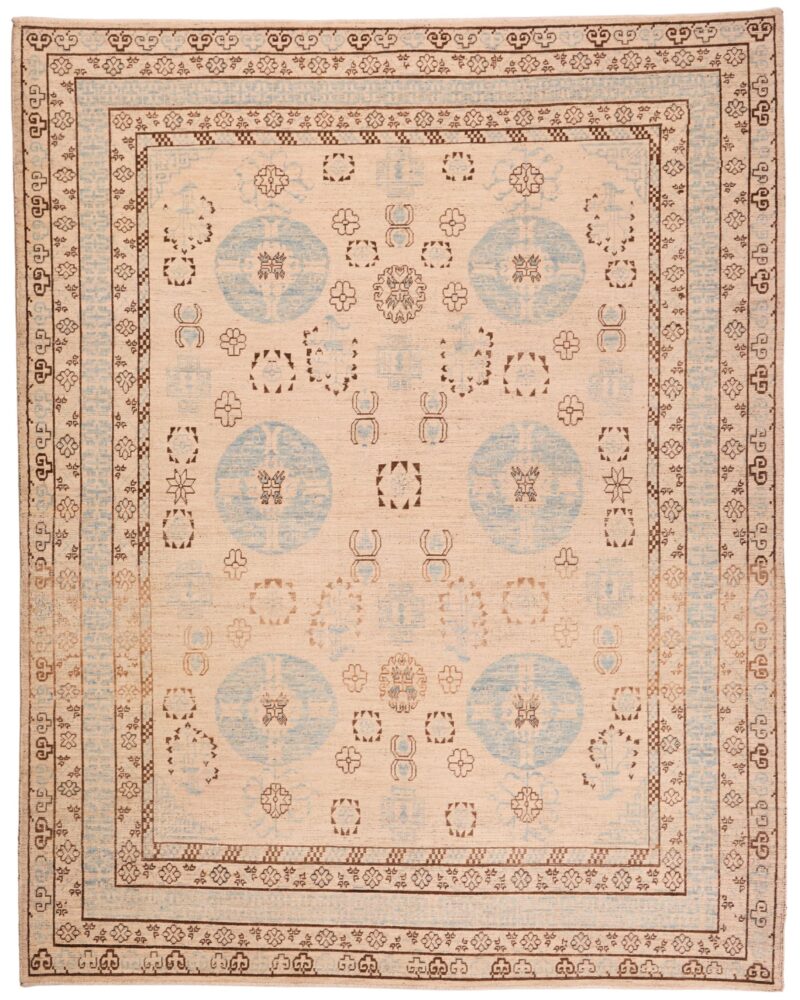
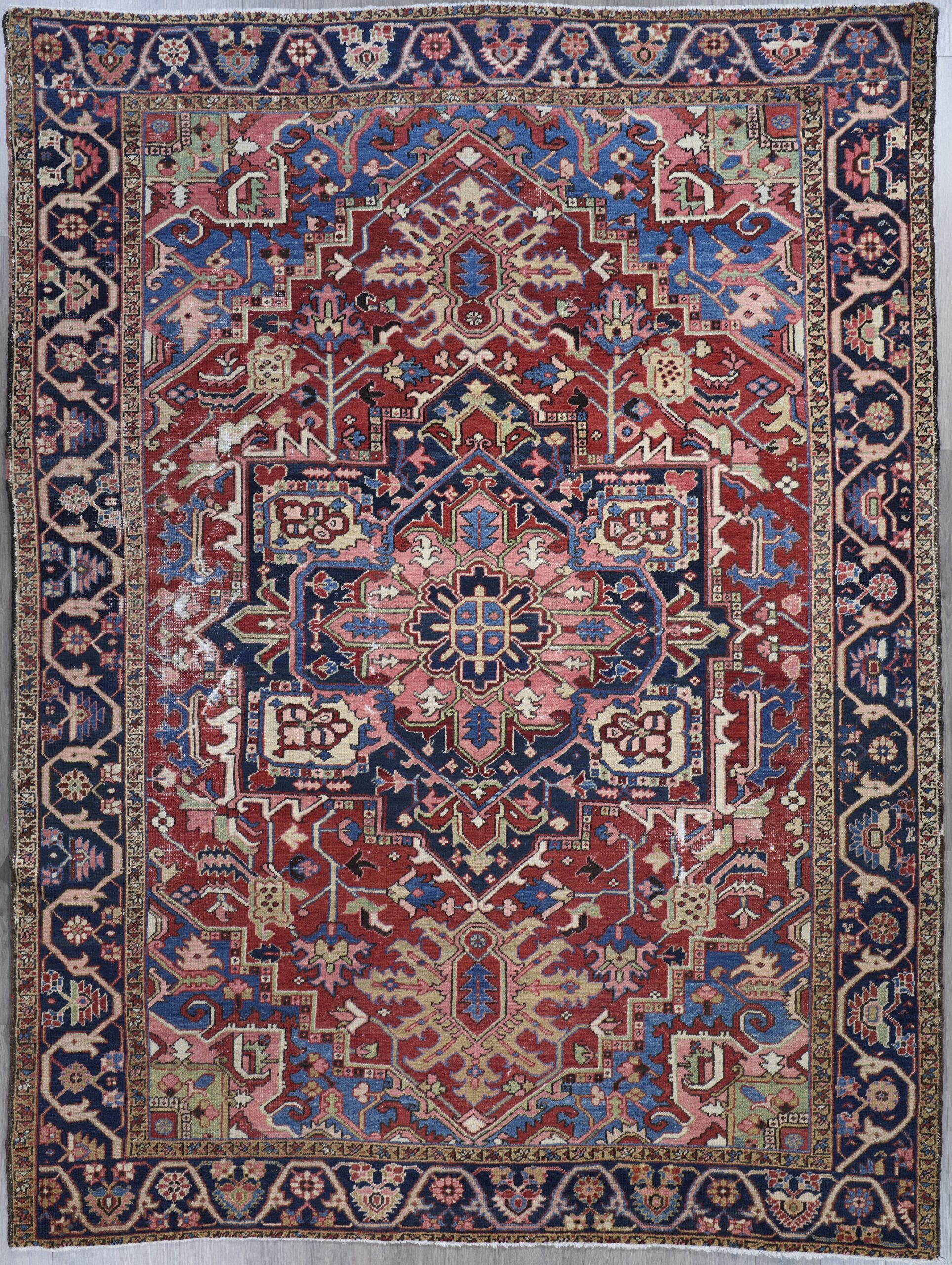
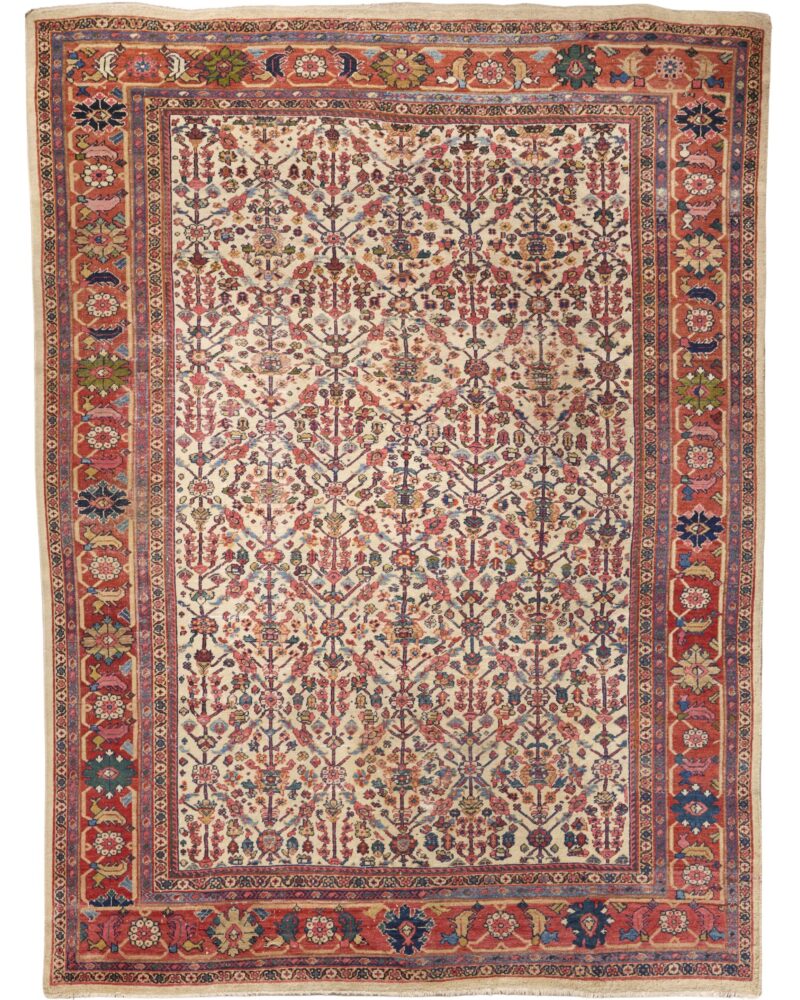
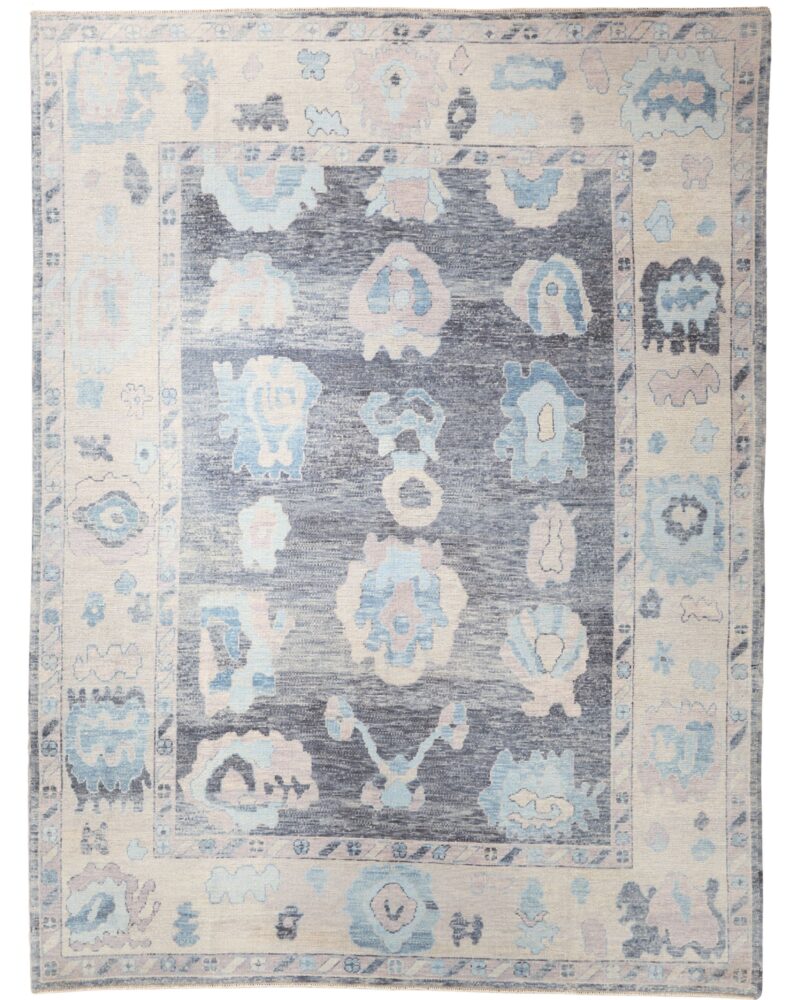
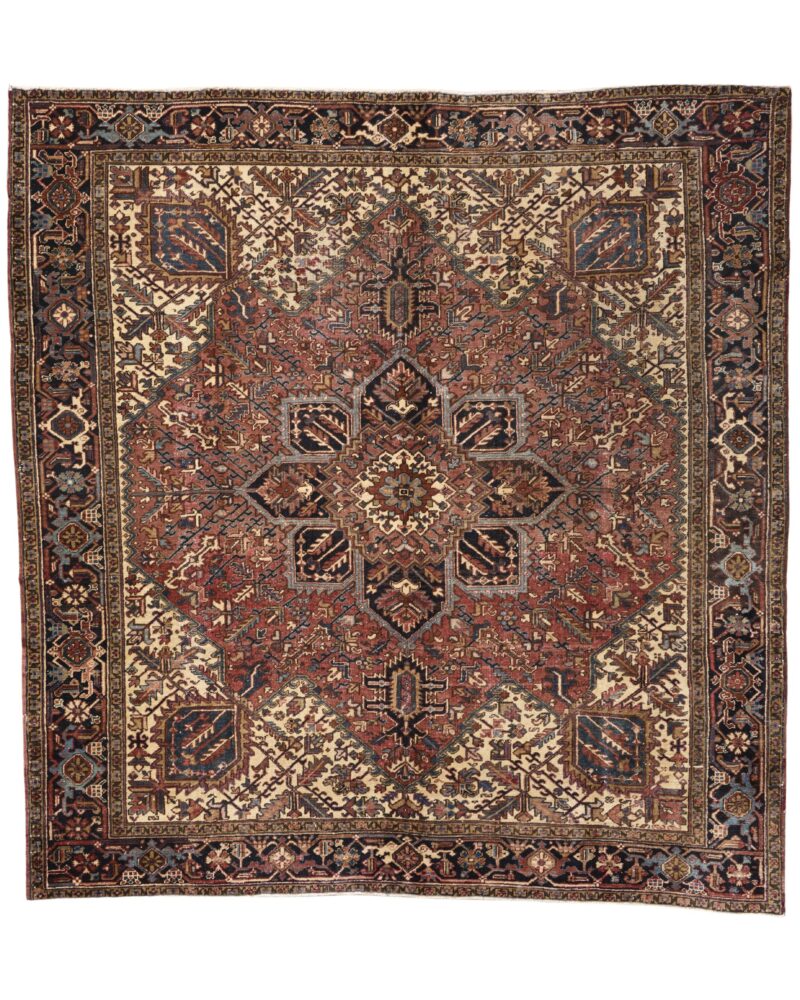
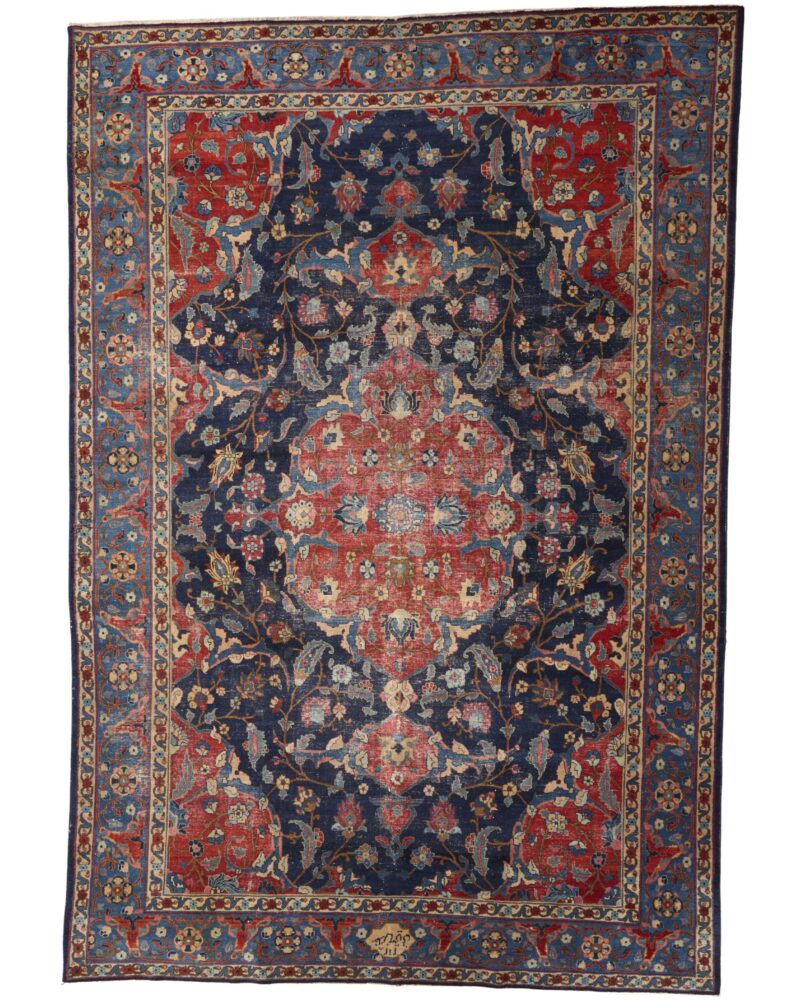
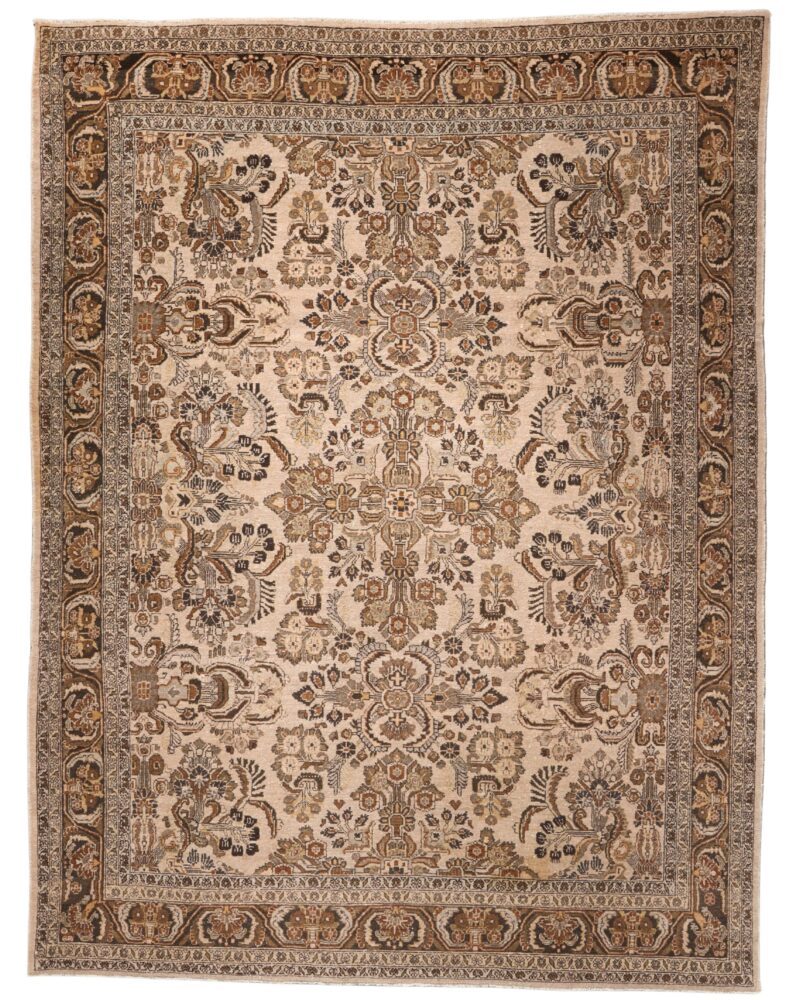
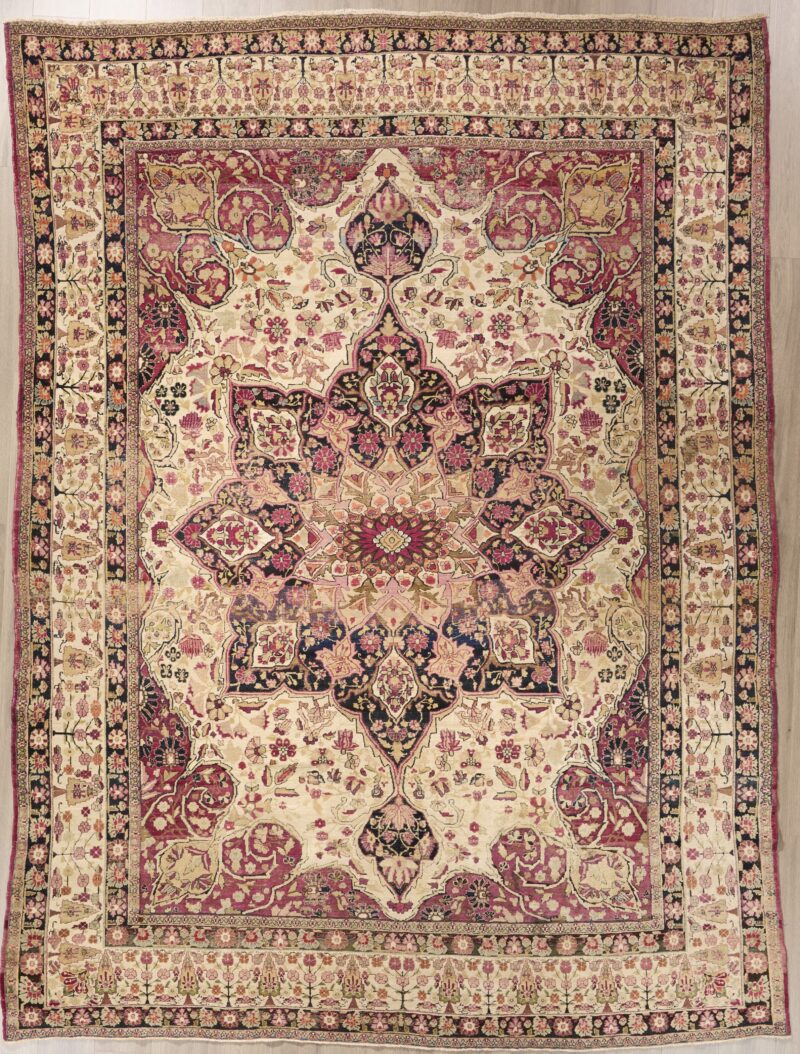
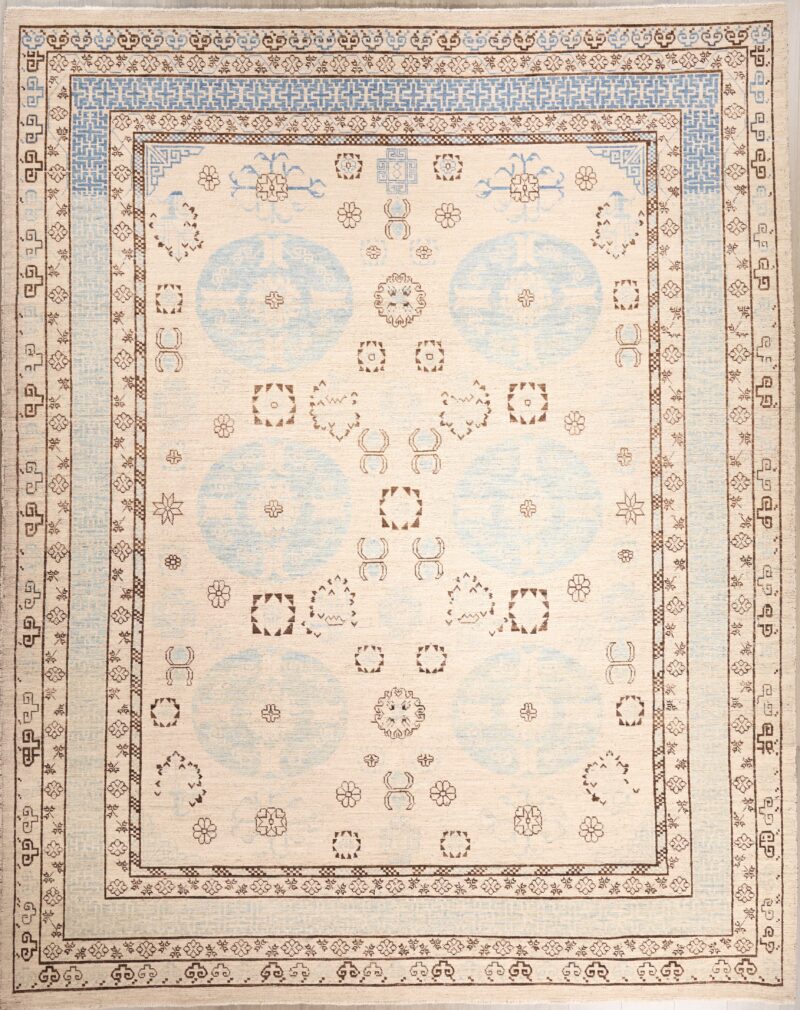
Traditional & Vintage rugs bring hand-knotted artistry from Persia, Turkey, and Central Asia into the modern home. Weavers built these rugs around medallions, floral vines, and rich dyed wool. Their designs have lasted for centuries. Antique Heriz, Kashan, Lavar Kerman, and Oushak pieces anchor this collection. Homeowners who value craftsmanship, patina, and long wear choose them. Collectors, traditional-room decorators, and buyers who want one durable rug for decades will find a fit here.
What Defines Traditional & Vintage Rugs?
Traditional & Vintage rugs are hand-knotted on cotton or wool foundations. Persian weavers typically use the asymmetrical knot, while Turkish weavers favor the symmetrical Ghiordes knot. Wool pile usually measures a quarter to half an inch. Heriz and Serapi rugs come from northwest Persia and carry bold geometric medallions. Kashan and Kerman rugs come from central and southeastern Persia and show finer curvilinear detail.
Color separates these rugs from modern production. Natural and early synthetic dyes give madder reds, indigo blues, ivory fields, and soft sage tones. Oushak rugs lean toward faded gold, apricot, and muted green. Floral palmettes, corner spandrels, and layered borders frame each field. Age softens the dyes, and a well-kept pile develops a lustrous sheen that new rugs lack.
Which Features Matter Most in Traditional & Vintage Rugs?
Traditional & Vintage rugs reward buyers who check a few construction details before choosing. Use this list as a practical guide.
- Material: hand-spun wool pile on a cotton or wool foundation, sometimes with silk highlights.
- Pile height: typically 0.25 to 0.5 inch, lower on antique pieces worn by decades of use.
- Durability: high, since quality hand-knotted wool commonly lasts for generations with proper care.
- Size range: from small accent rugs to large room-size carpets, such as 8 x 10 and 9 x 12 formats.
- Care level: moderate, with regular vacuuming, rotation, and professional washing every few years.
Traditional & Vintage Rug Quick Facts
| Attribute | Typical value | Why it matters |
|---|---|---|
| Construction | Hand-knotted, typically wool on cotton | Knotting gives strength and allows repair. |
| Pile height | Typically 0.25 to 0.5 inch | Low pile cleans easily and suits furniture. |
| Origin | Typically Persia, Turkey, or Central Asia | Region shapes pattern, palette, and collector interest. |
| Age | Typically 40 to 120+ years for vintage and antique | Age affects patina, wear, and appraisal value. |
| Room sizes | Typically 5 x 8 up to 10 x 14 feet | Correct size anchors furniture and defines the space. |
How Do You Style Traditional & Vintage Rugs at Home?
Traditional & Vintage rugs suit living rooms, dining rooms, libraries, and bedrooms. Pair a red Heriz with navy, walnut, and leather for a classic look. Set a faded Oushak beside linen, white oak, and pale walls for a relaxed feel. These rugs also work in modern spaces, where one patterned piece warms clean-lined furniture. Match one rug color to a pillow or drapery panel.
Size drives the layout. In a living room, place at least the front legs of every seating piece on the rug. Under a dining table, leave 24 inches beyond each edge so chairs stay on the pile. In a bedroom, extend the rug 18 to 24 inches past both sides of the bed. Use a quality rug pad, and consider our rug padding options to prevent slipping and protect the foundation.
Frequently Asked Questions
What size Traditional & Vintage rug should I buy for my room?
Traditional & Vintage rugs should fit the furniture layout first. For living rooms, an 8 x 10 or 9 x 12 lets front sofa legs rest on the rug. Dining rooms need 24 inches beyond the table edge. Measure the space, then tape the outline on the floor before you decide.
How do you clean an antique or vintage handmade rug?
Antique and vintage handmade rugs need gentle, specialist cleaning. Vacuum without a beater bar every week, and blot spills immediately with a white cloth. Wash the rug professionally every three to five years, depending on traffic. Dye stability matters, so a specialist tests colors first. Our rug cleaning service follows this approach.
Are Traditional & Vintage rugs durable enough for high-traffic areas?
Traditional & Vintage rugs handle high traffic well when they have sound wool and a solid foundation. Hand-knotted wool resists crushing and wears evenly. Check antique pieces for thin spots, loose fringe, and frayed edges before placing them in hallways. Rotate the rug yearly to spread wear across the pile.
How can I tell a handmade rug from a machine-made rug?
A handmade rug shows its construction on the back. Hand-knotted rugs display individual knots, slight pattern irregularities, and fringe that continues from the warp threads. Machine-made rugs show a uniform grid, glued or sewn fringe, and a latex backing. Run your fingers across the back, and look closely at the pattern lines.
Explore related styles in our Antique & Vintage Rugs collection.