


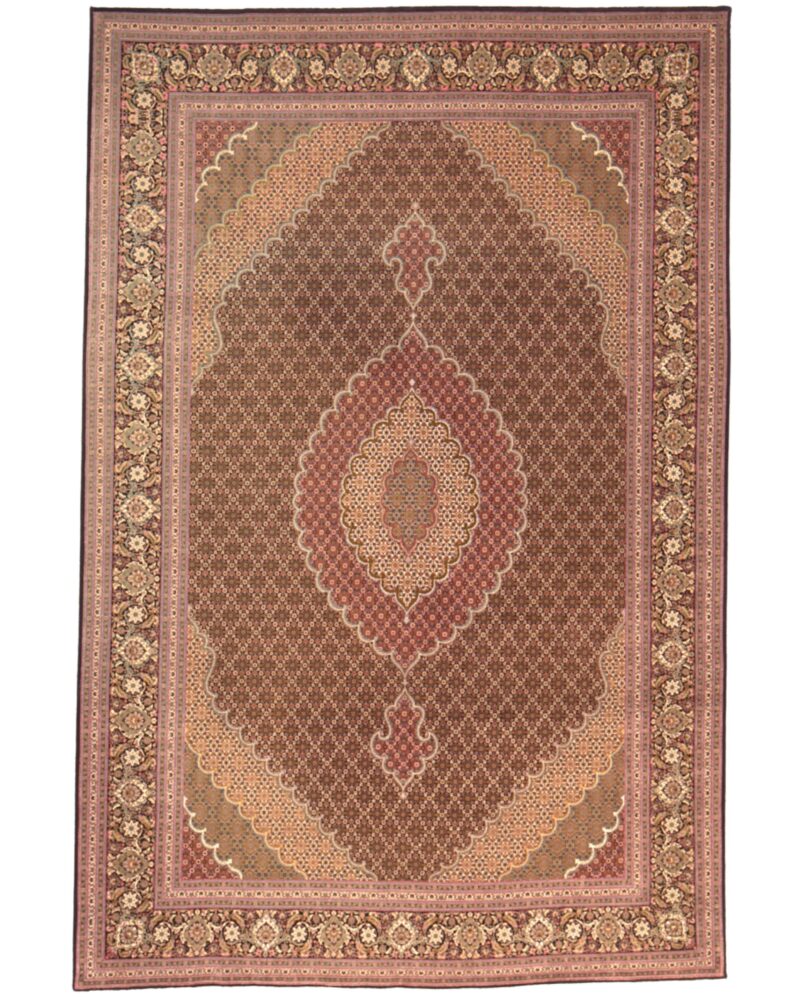
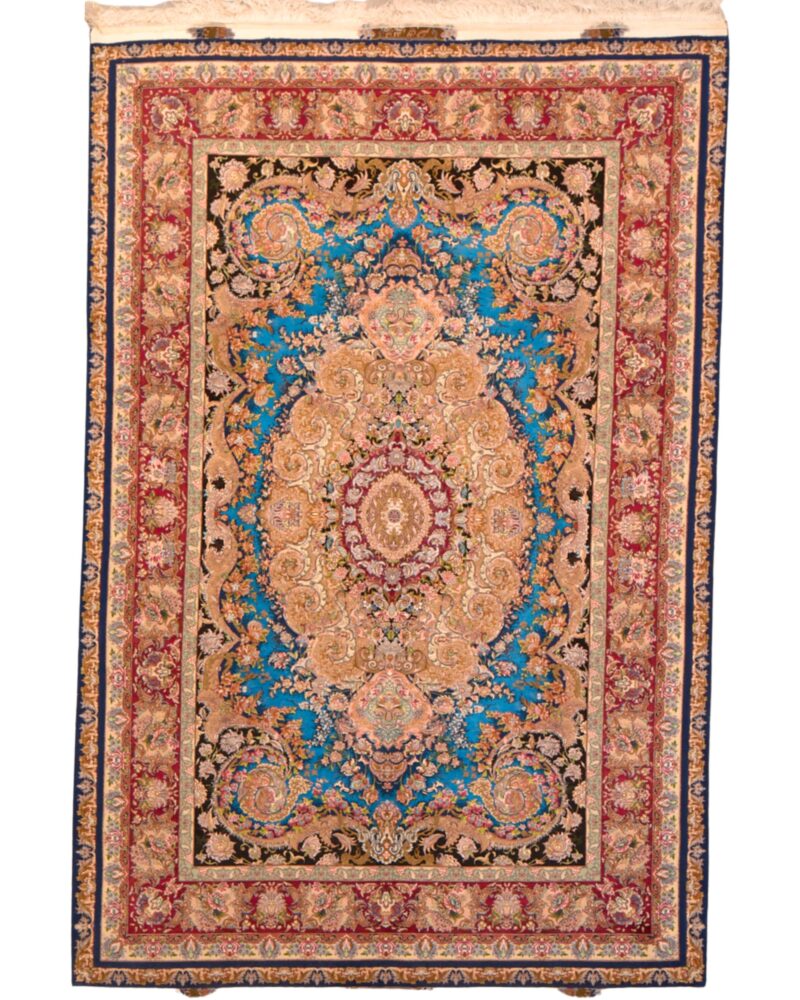
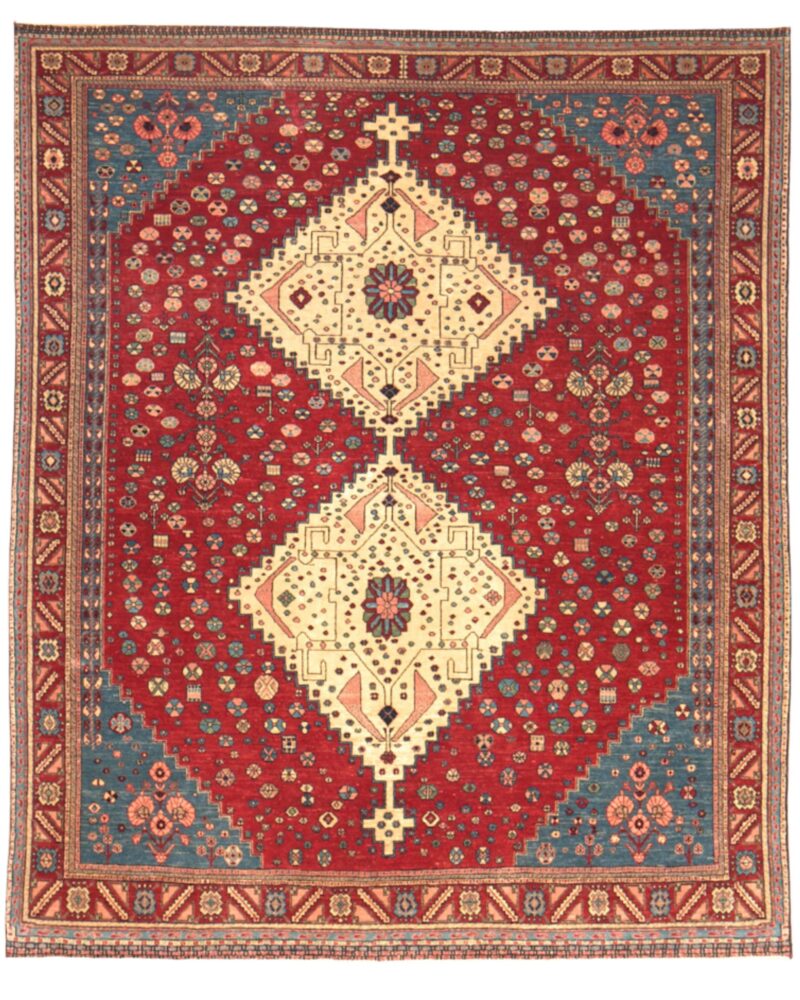
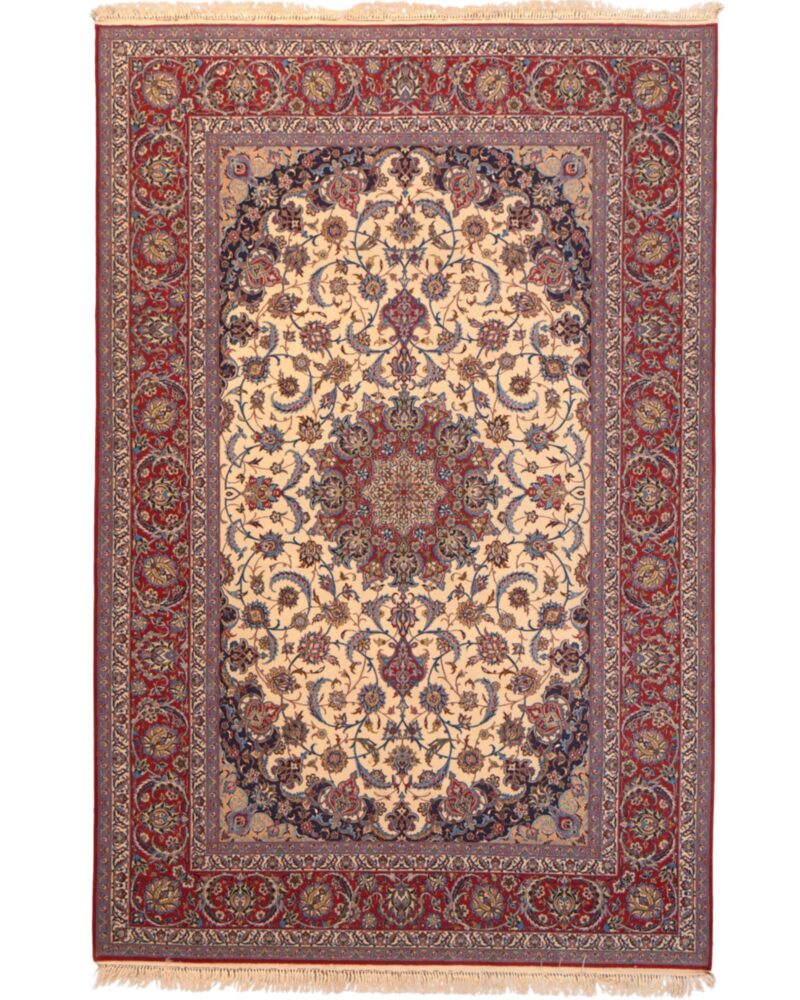
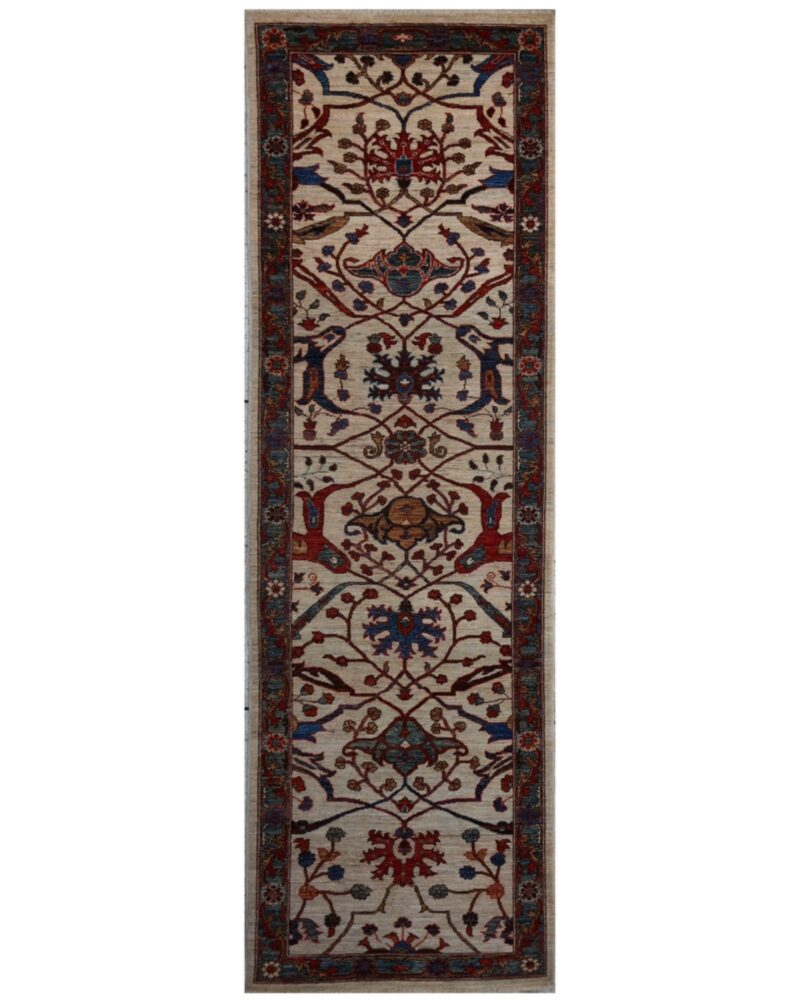
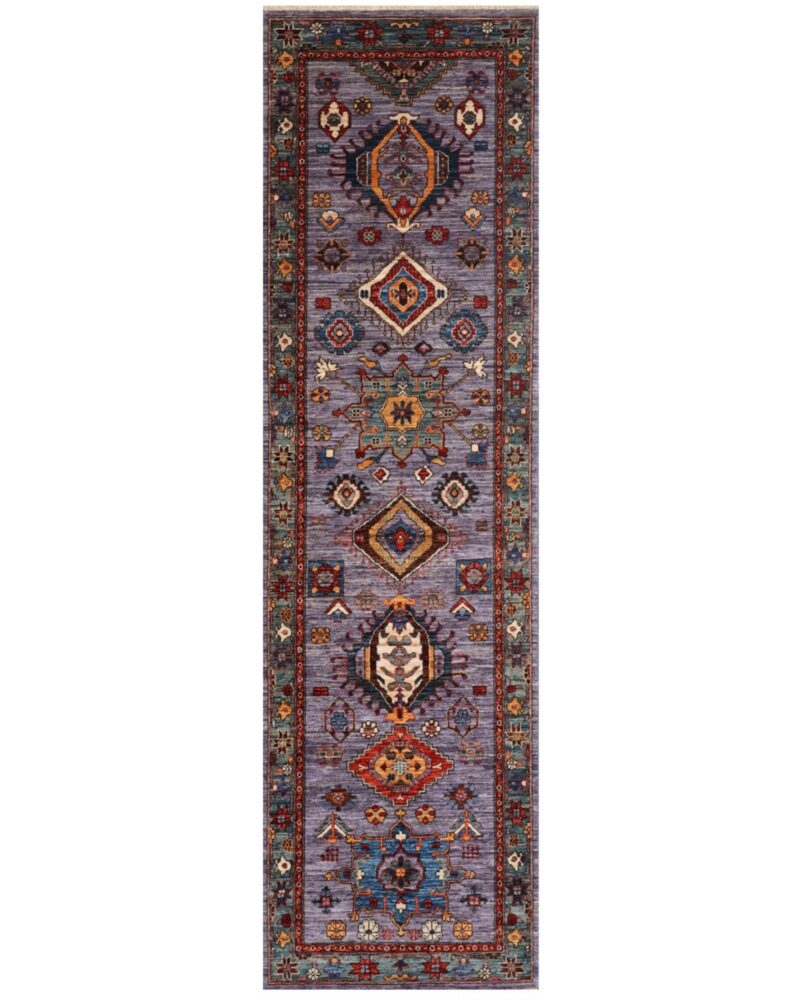
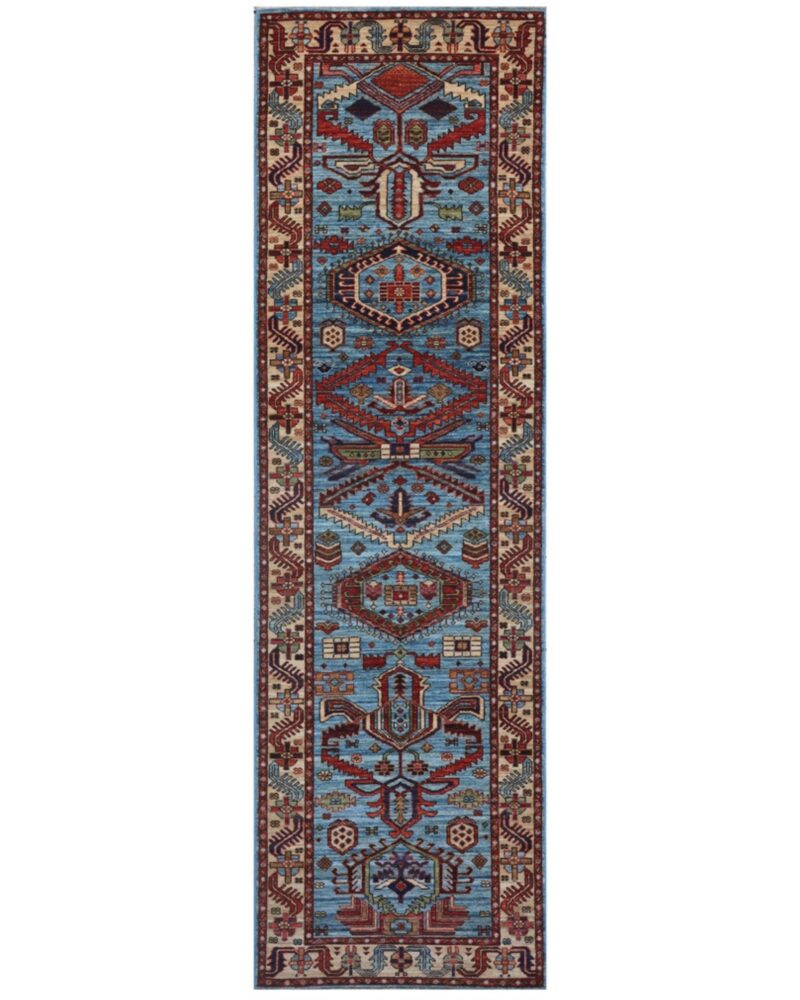
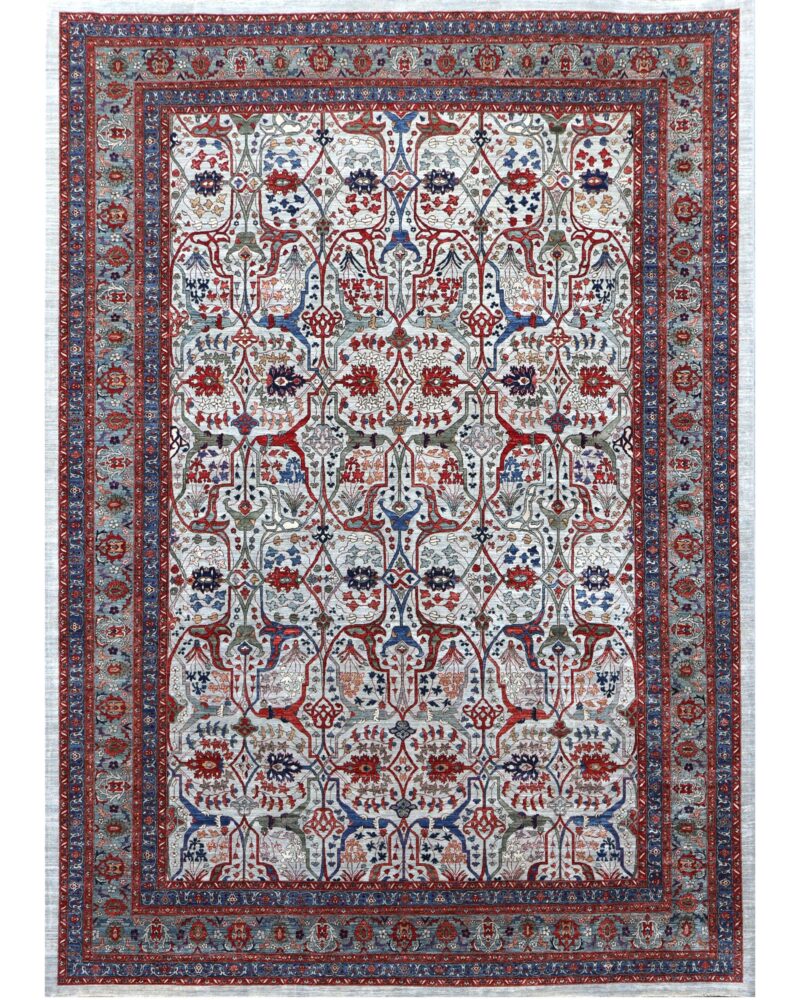
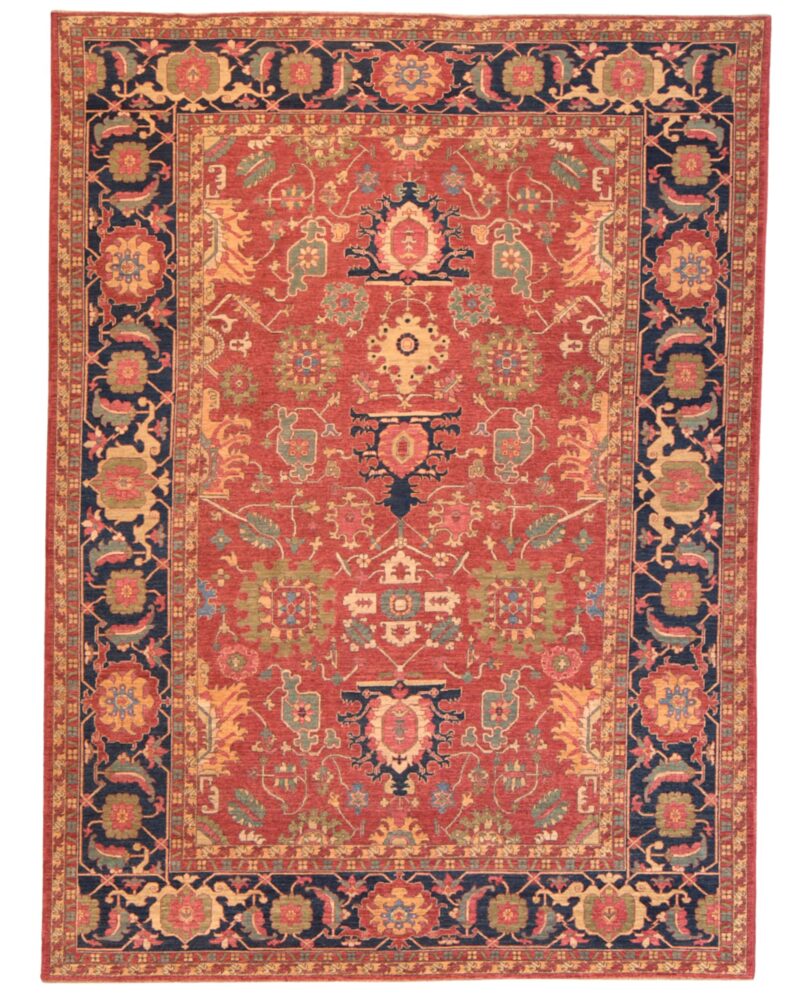
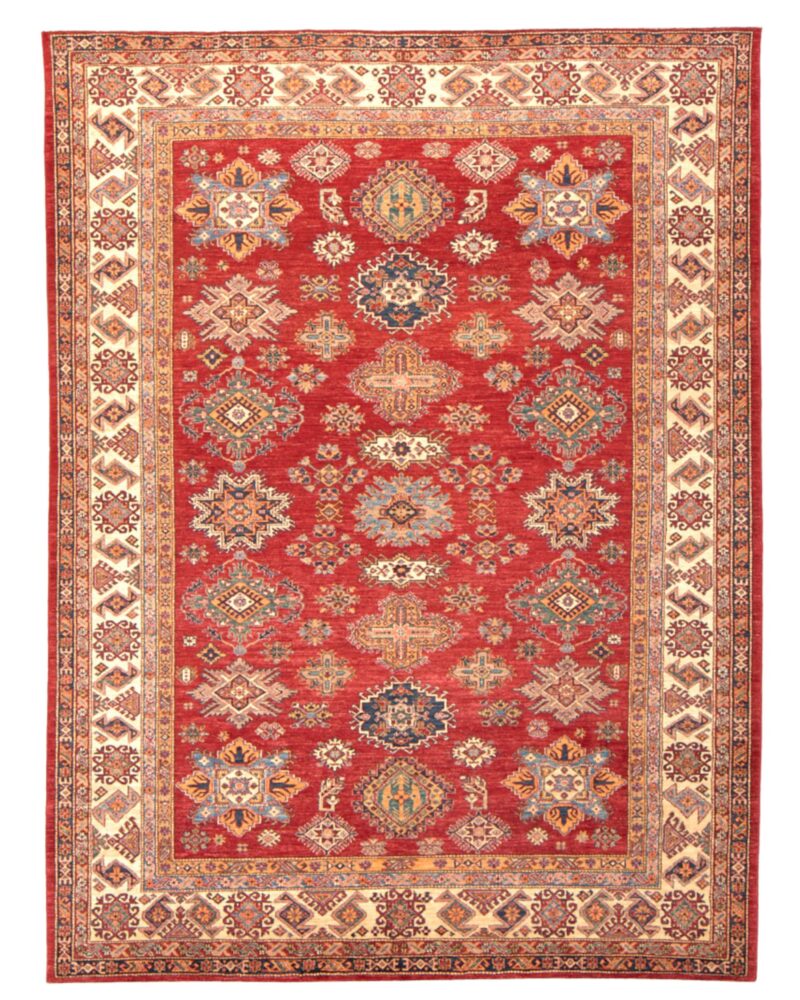
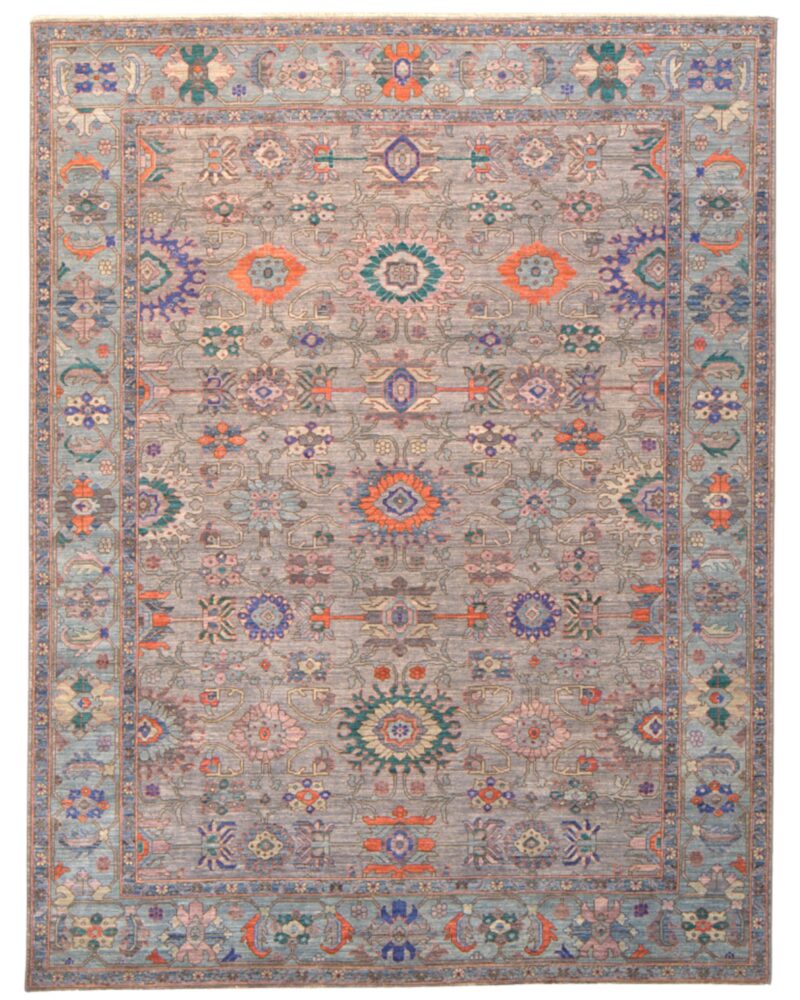
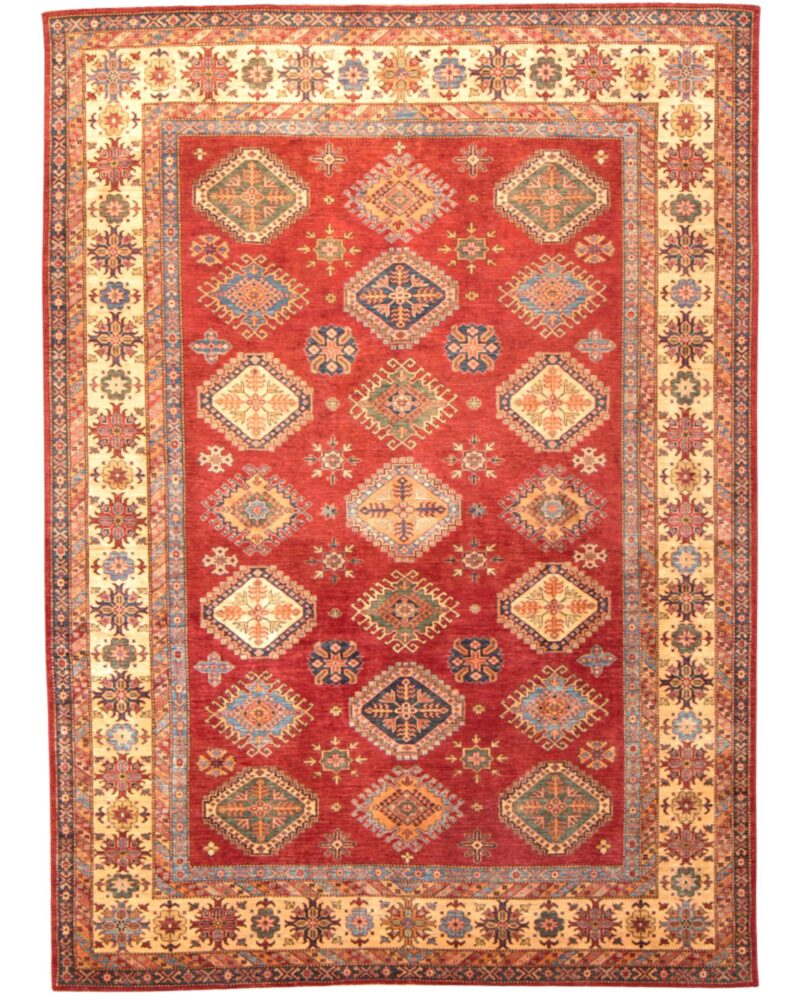
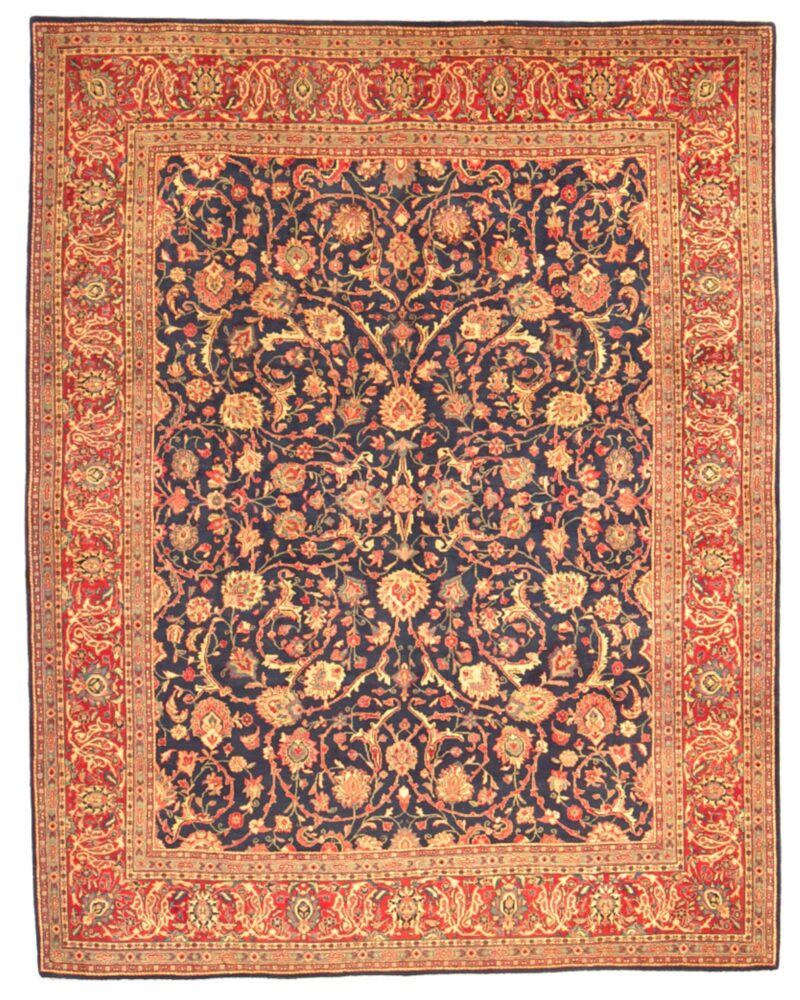
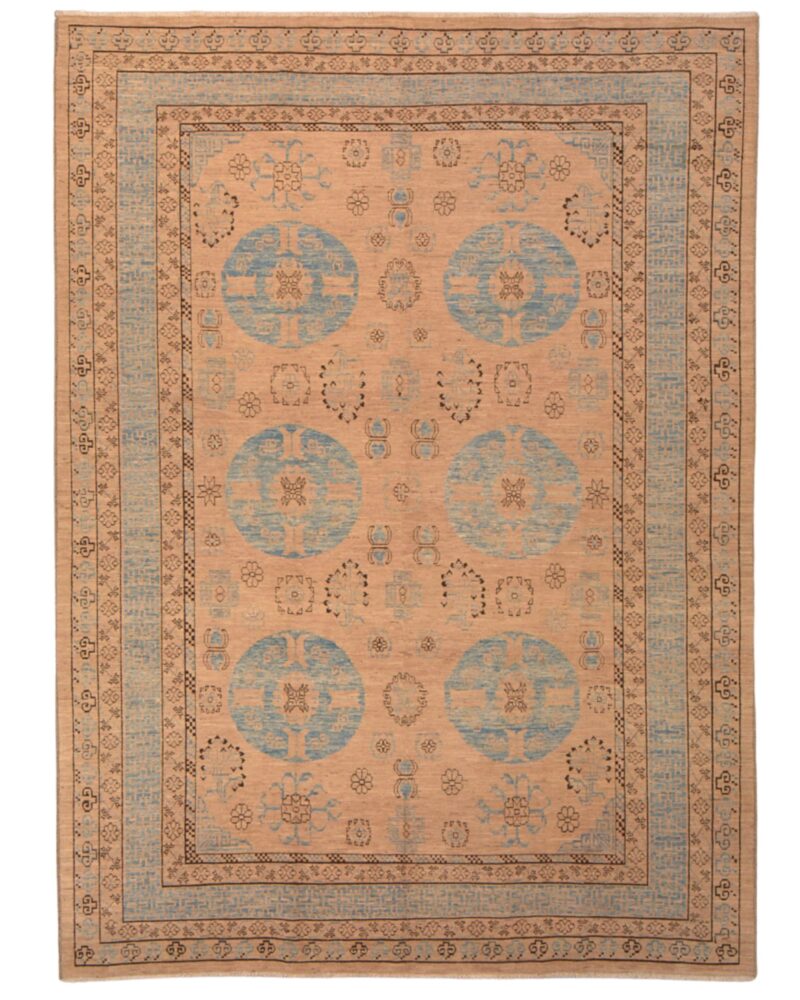
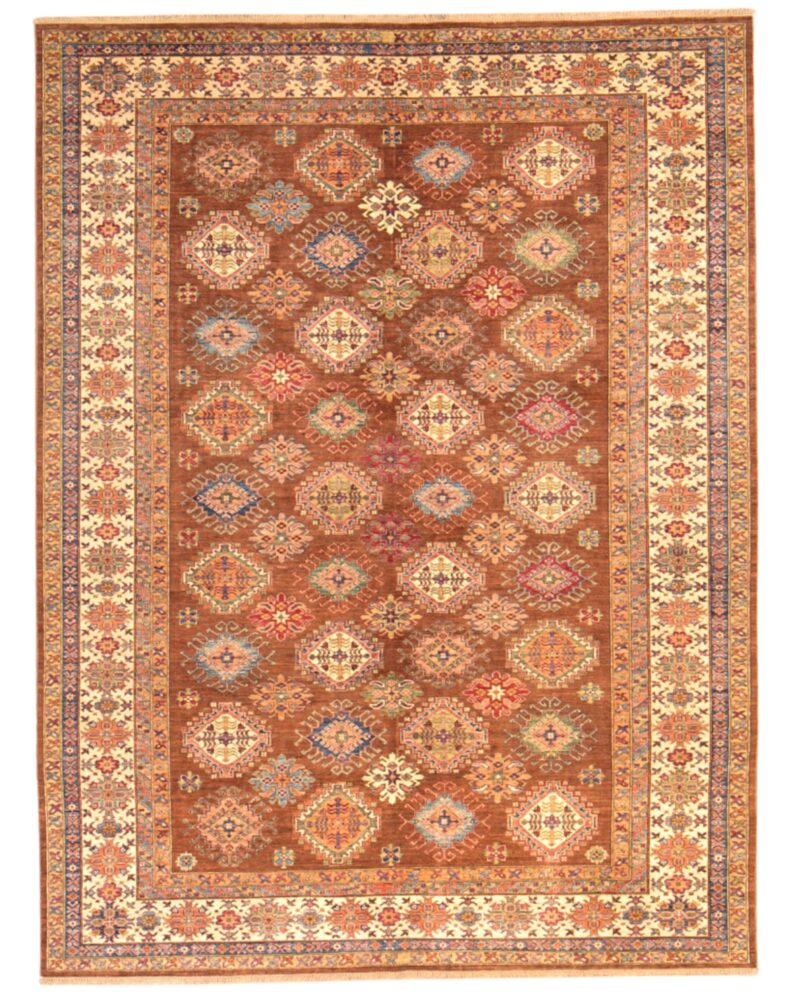
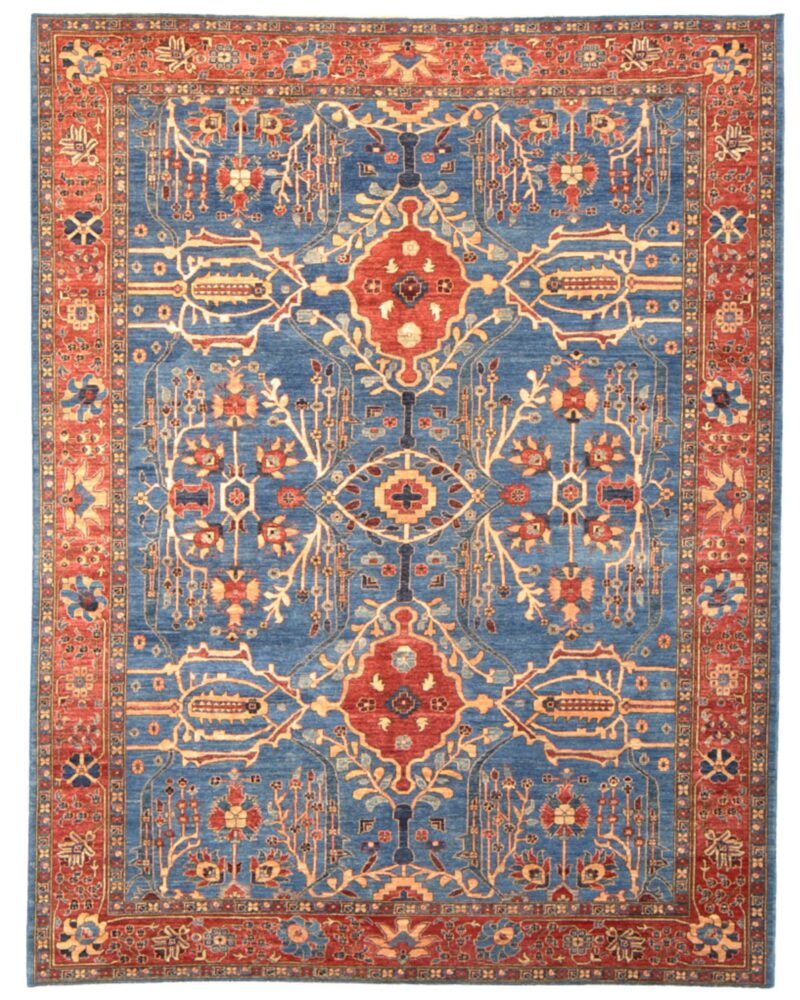
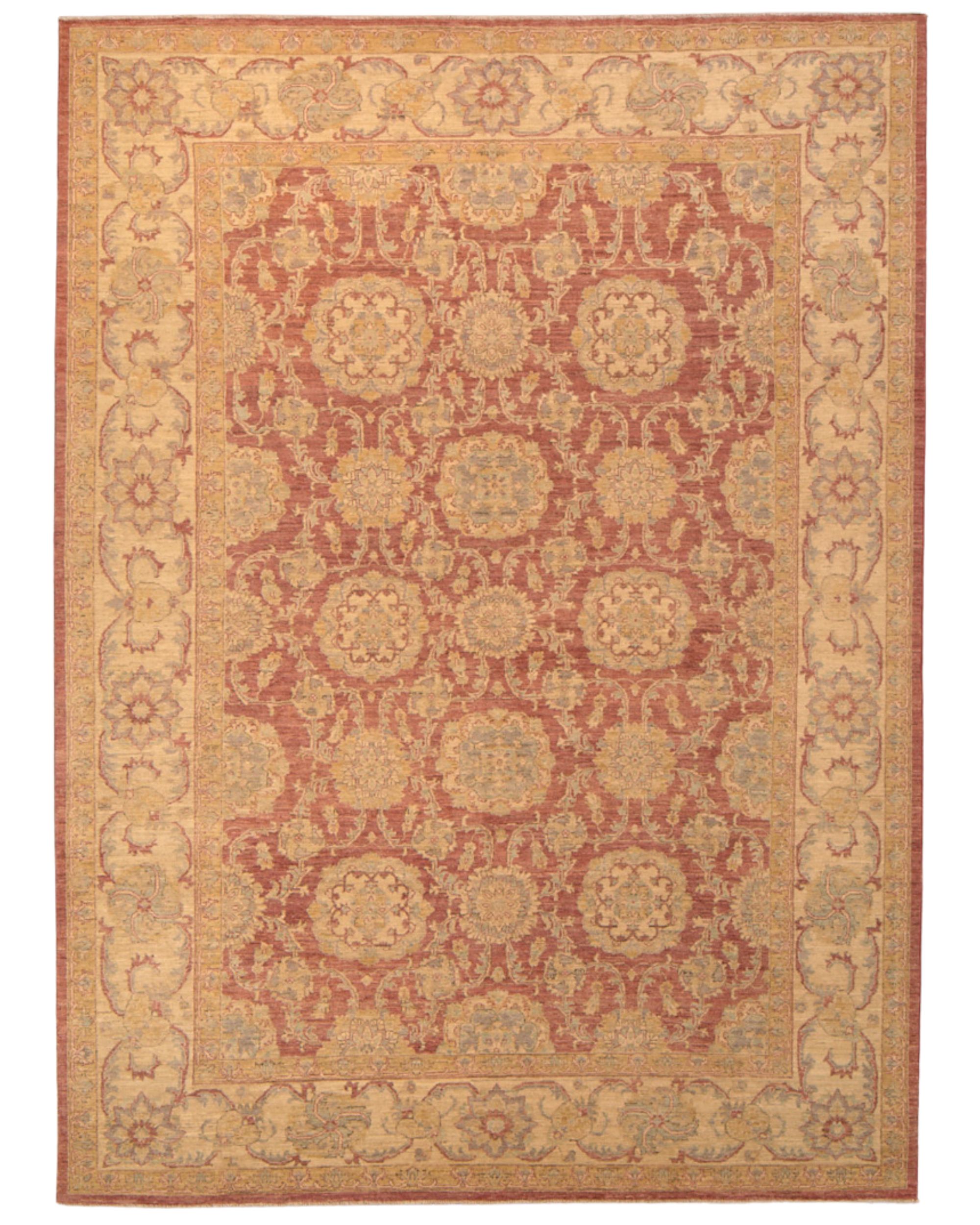
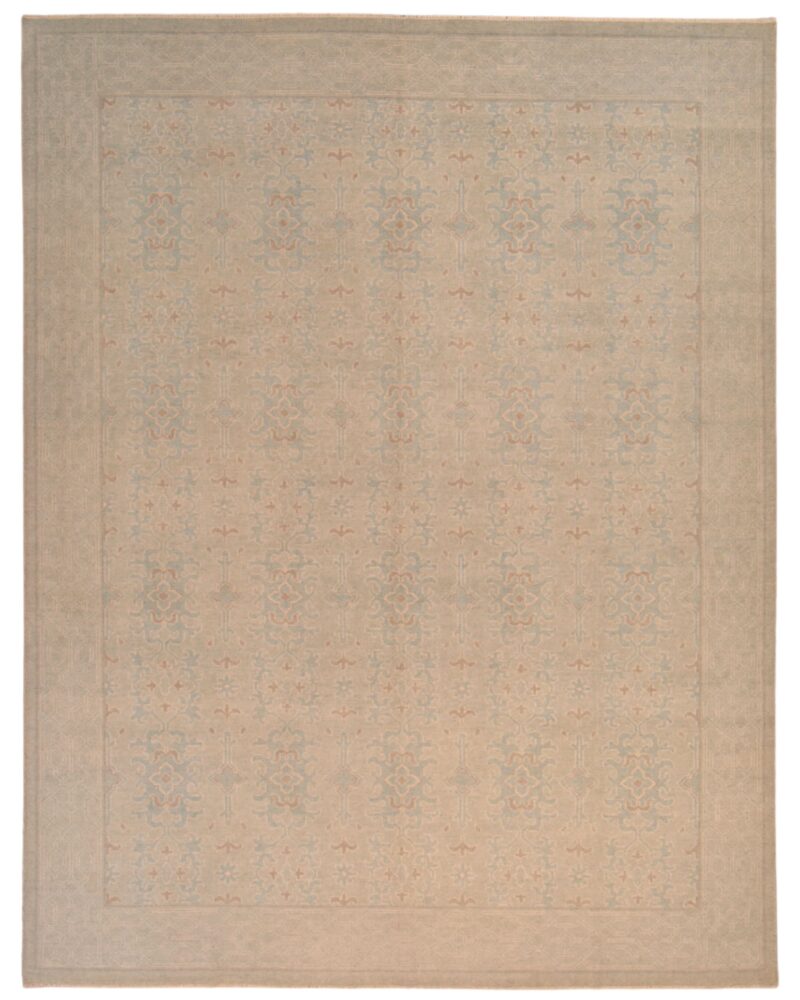
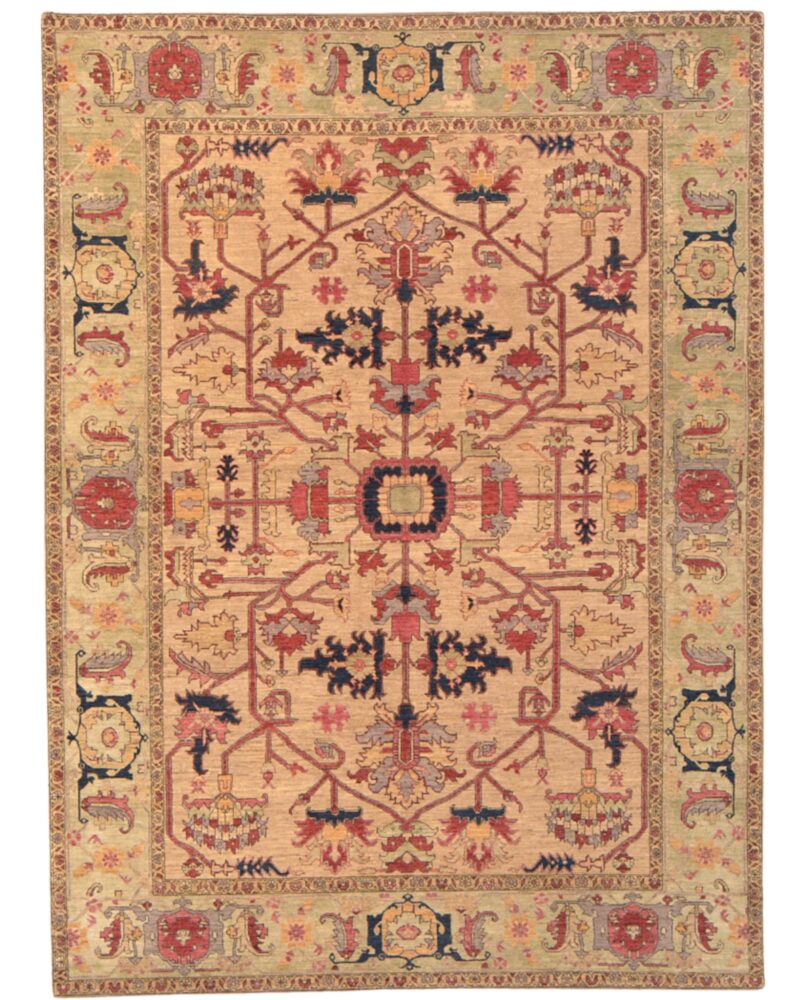
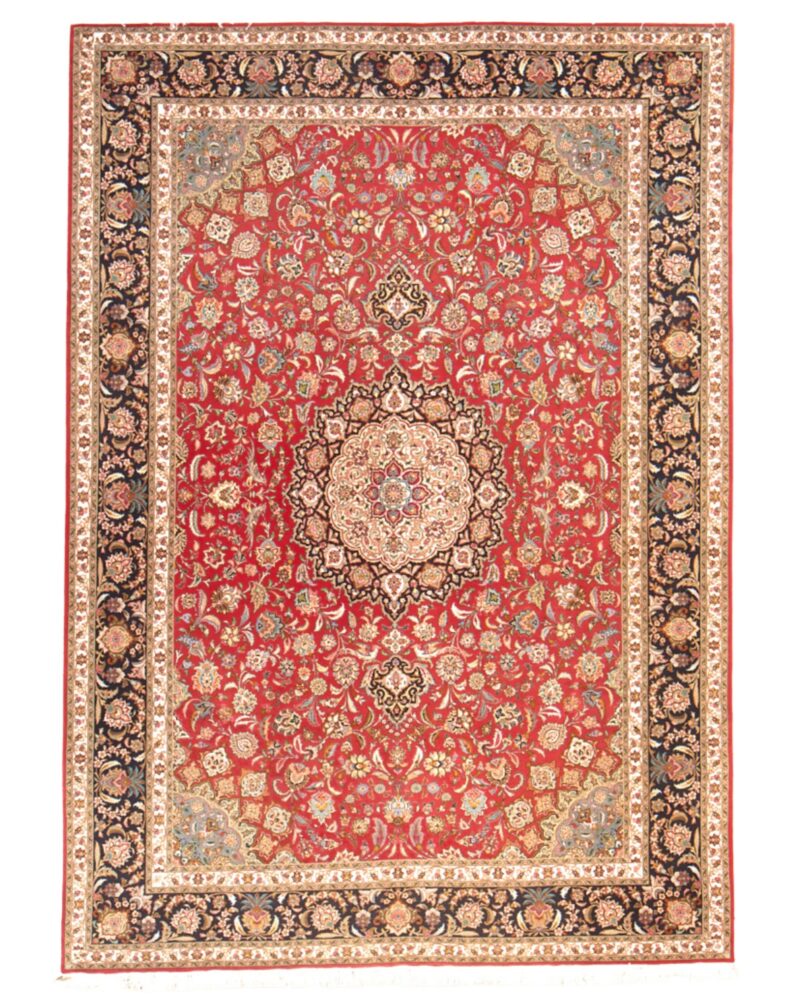
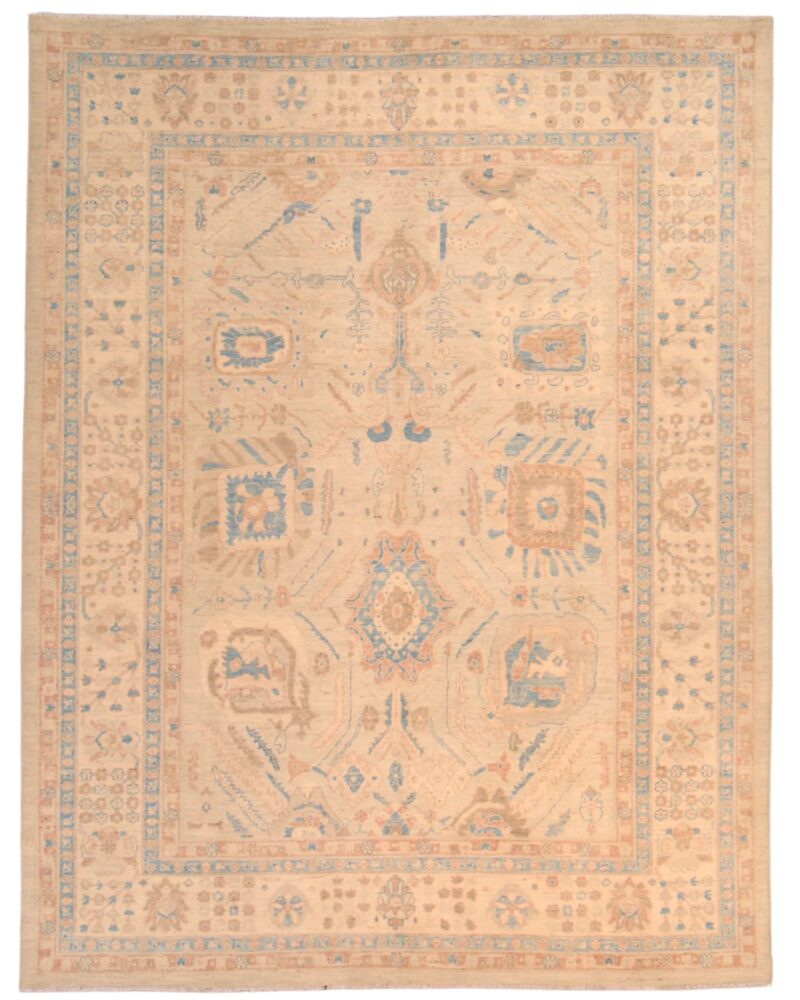
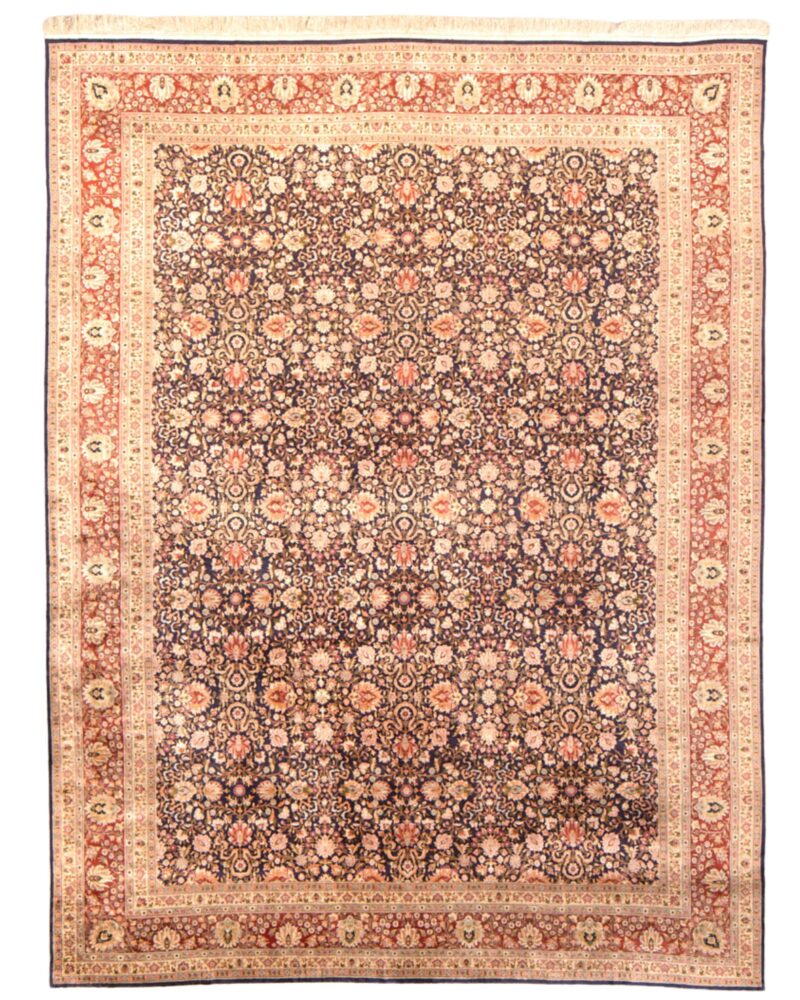
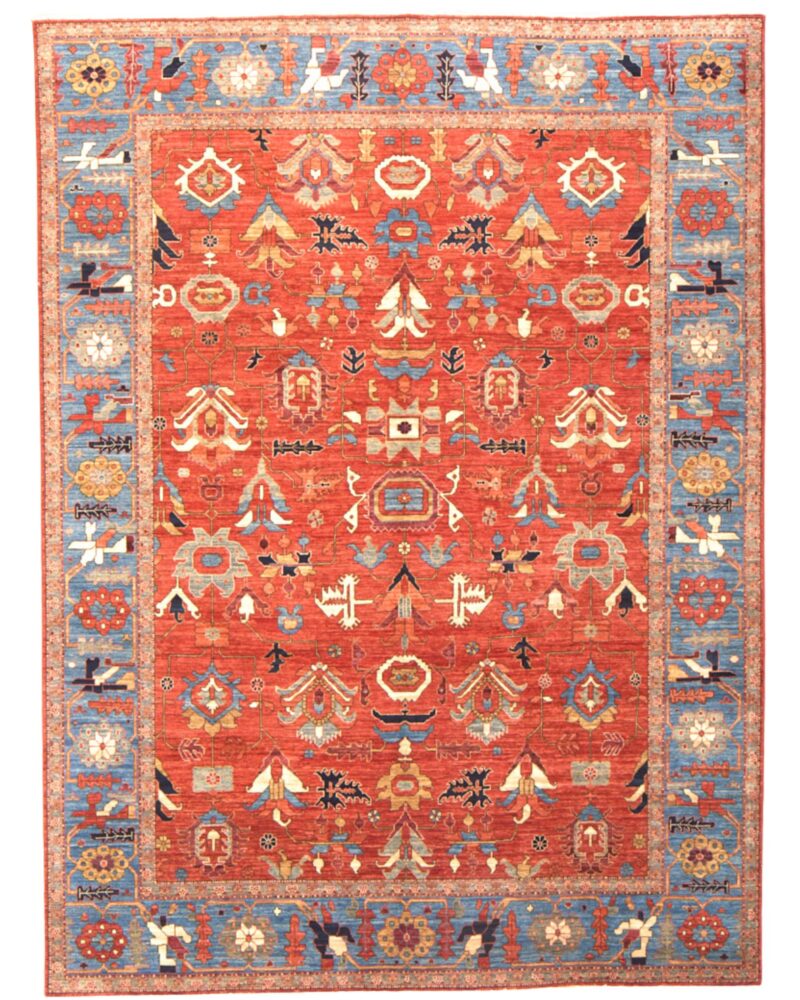
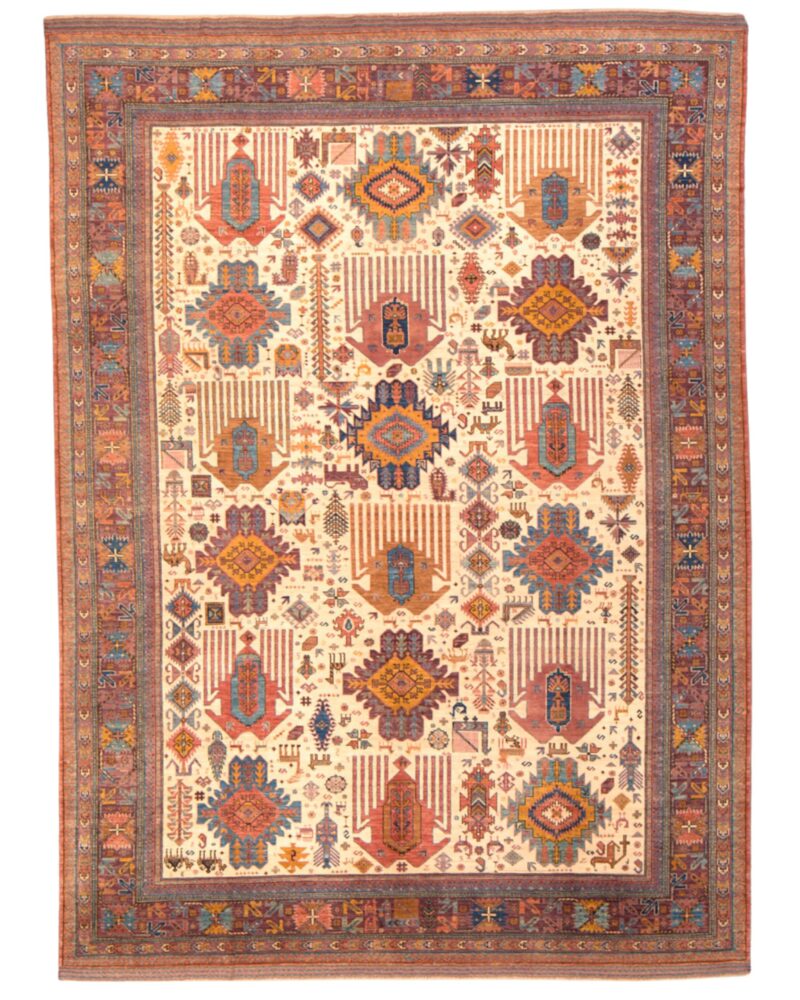
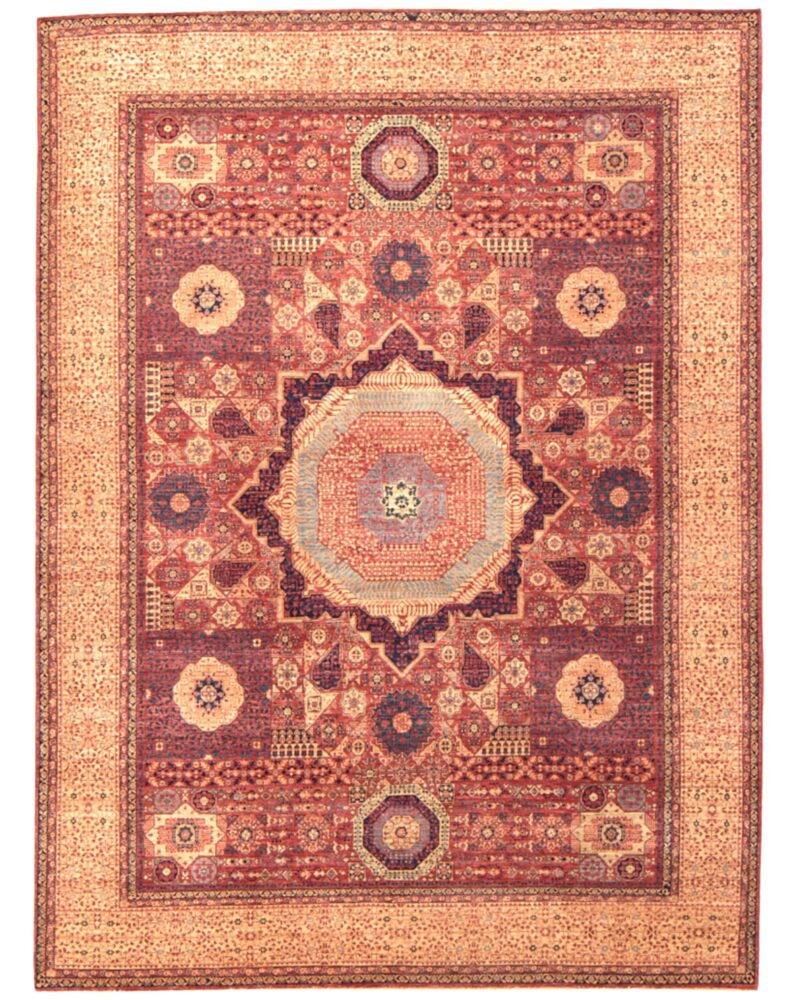
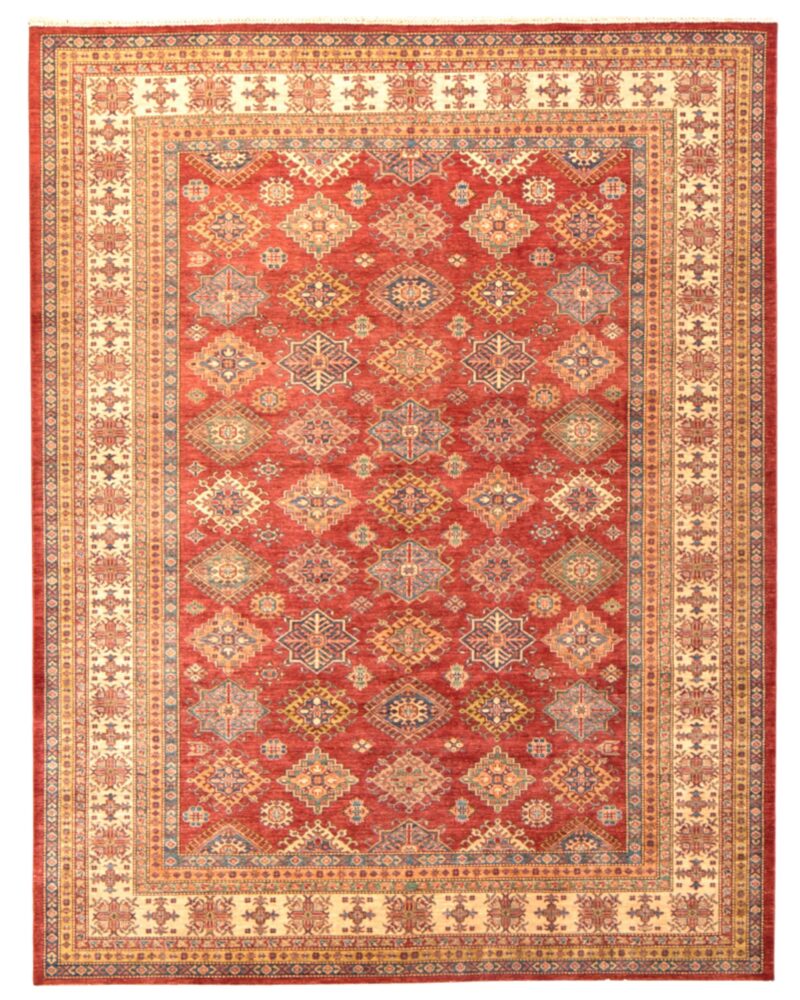
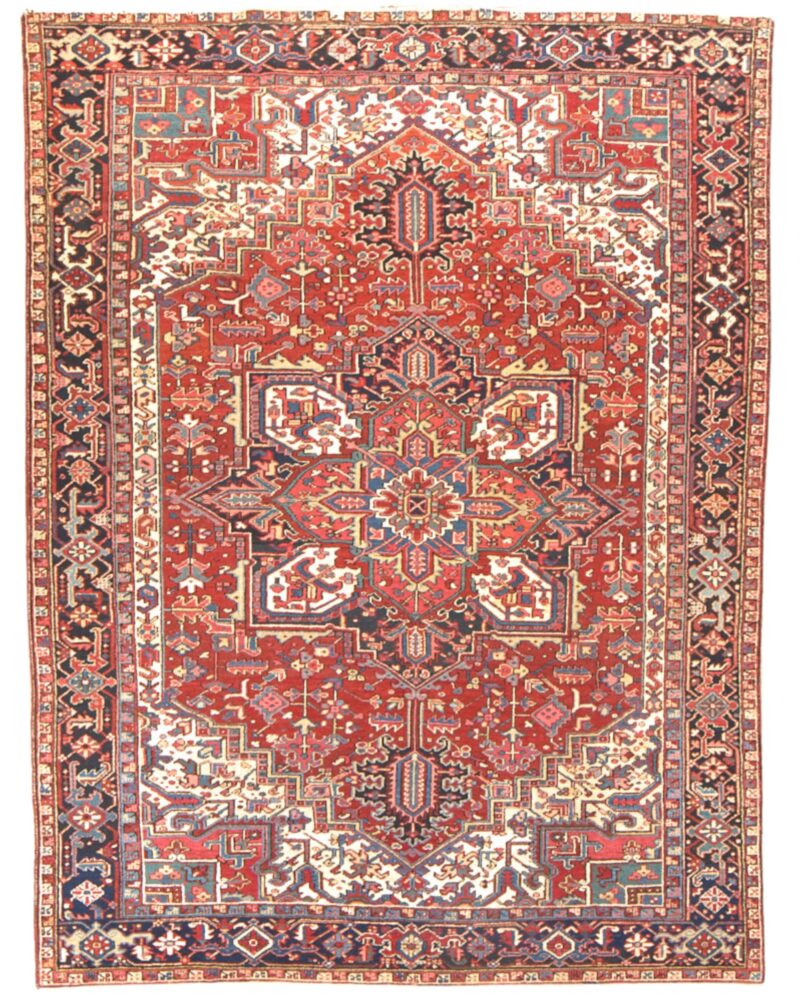
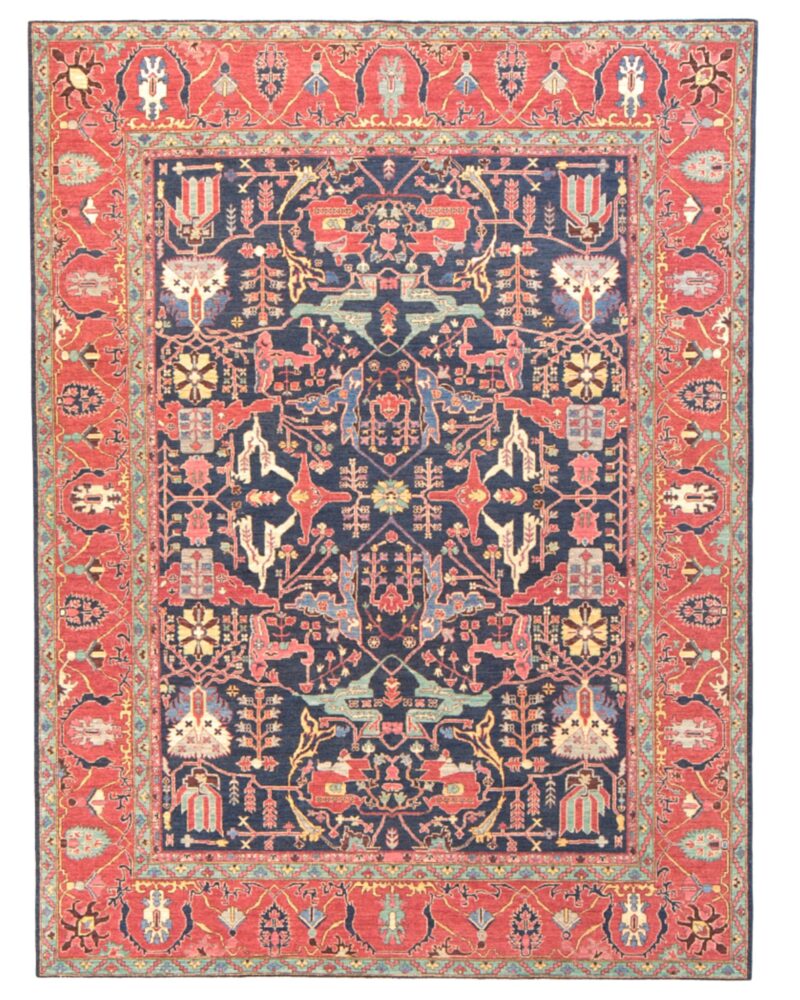
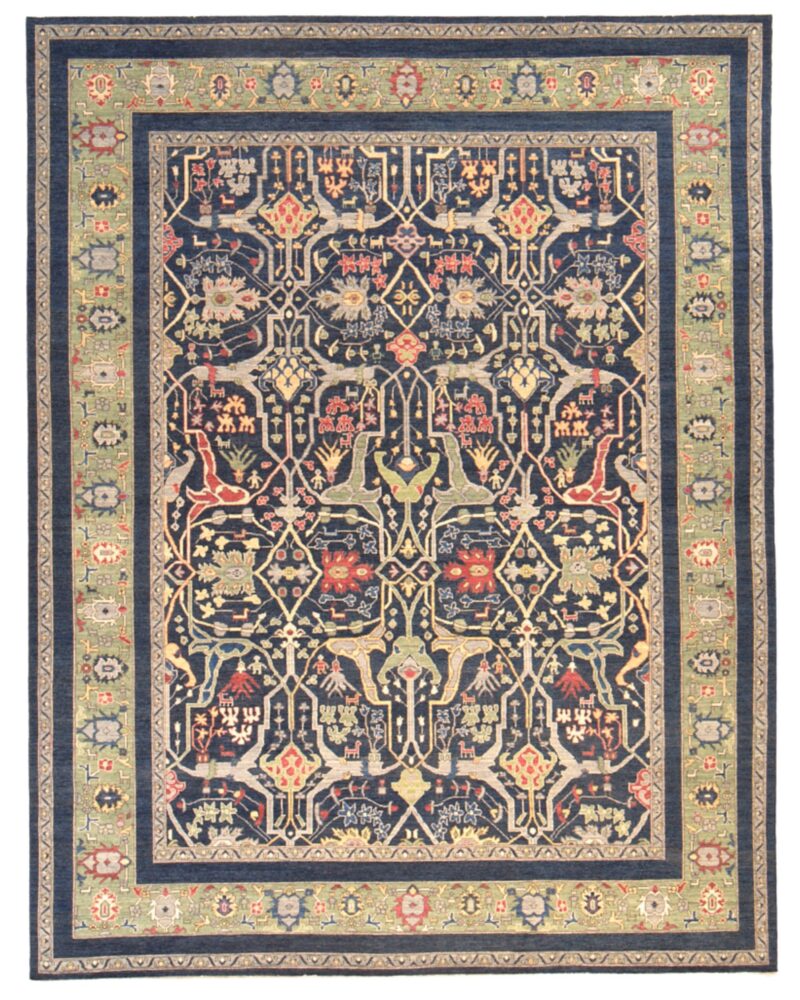
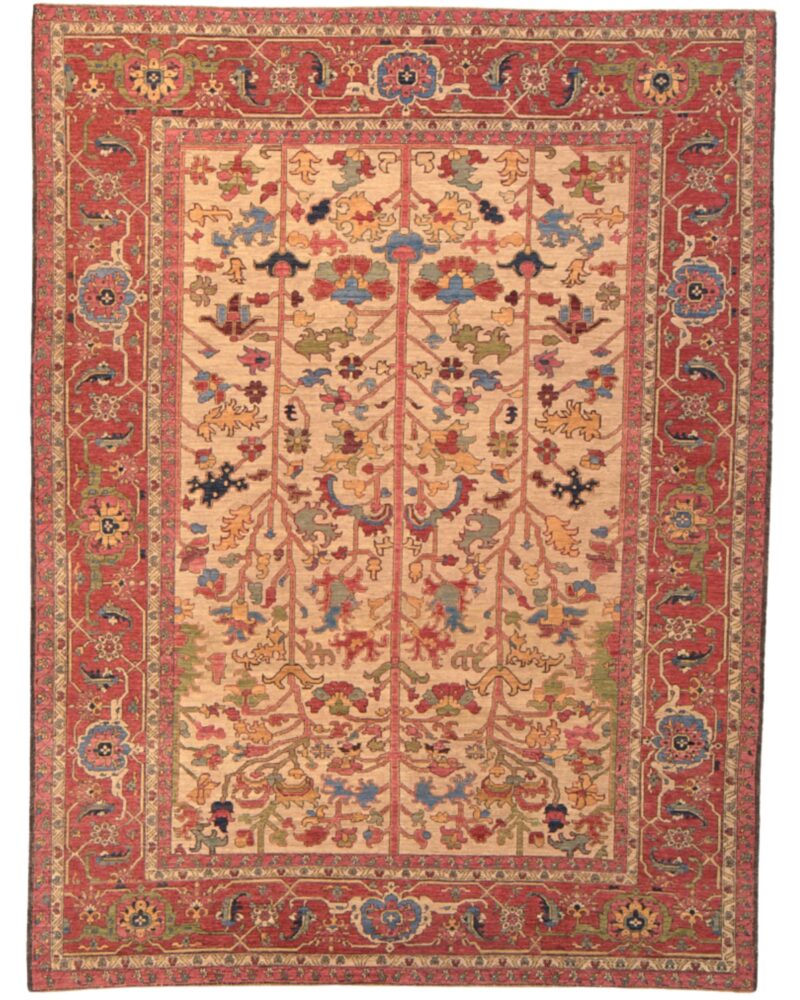
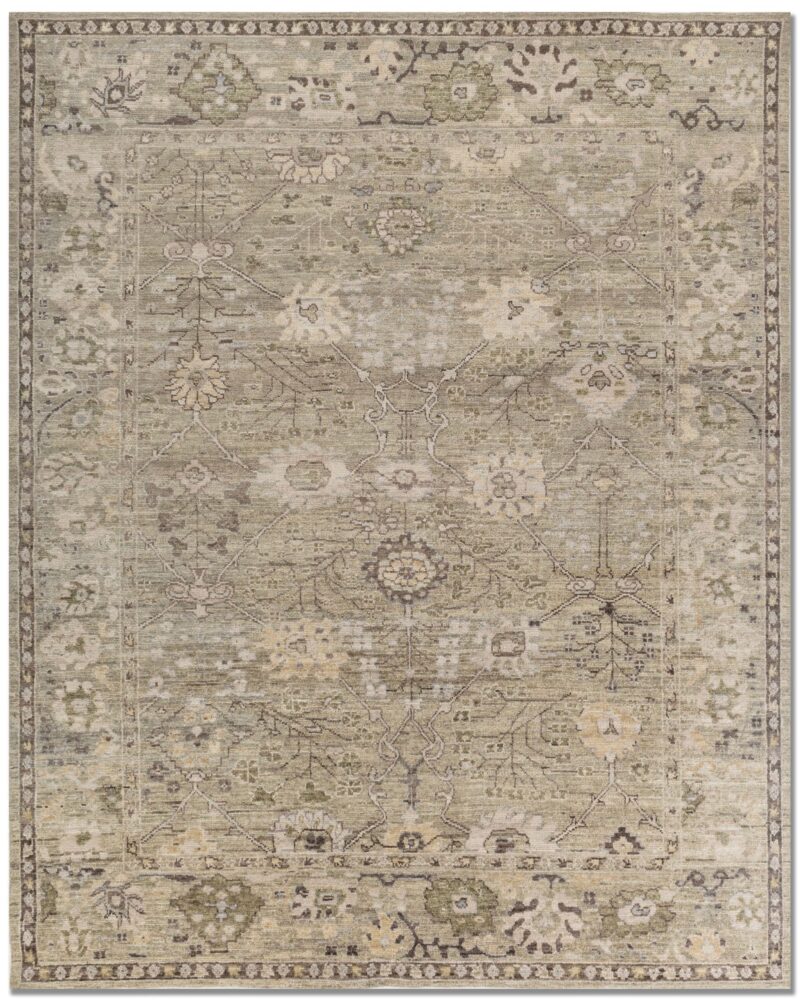
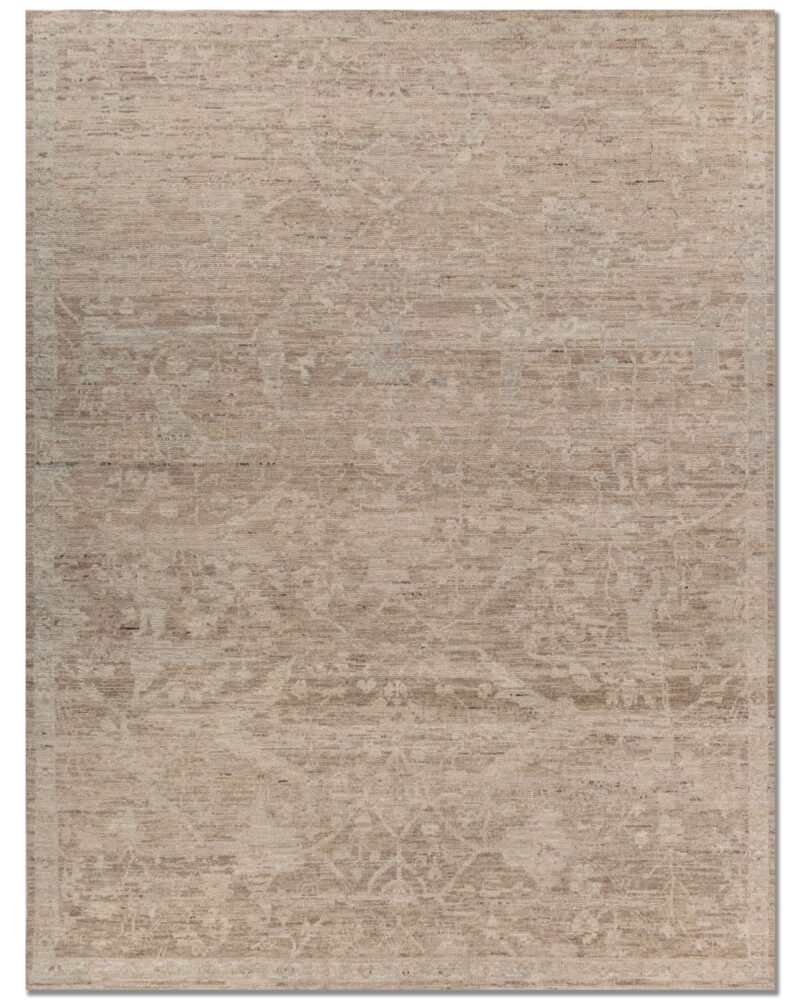
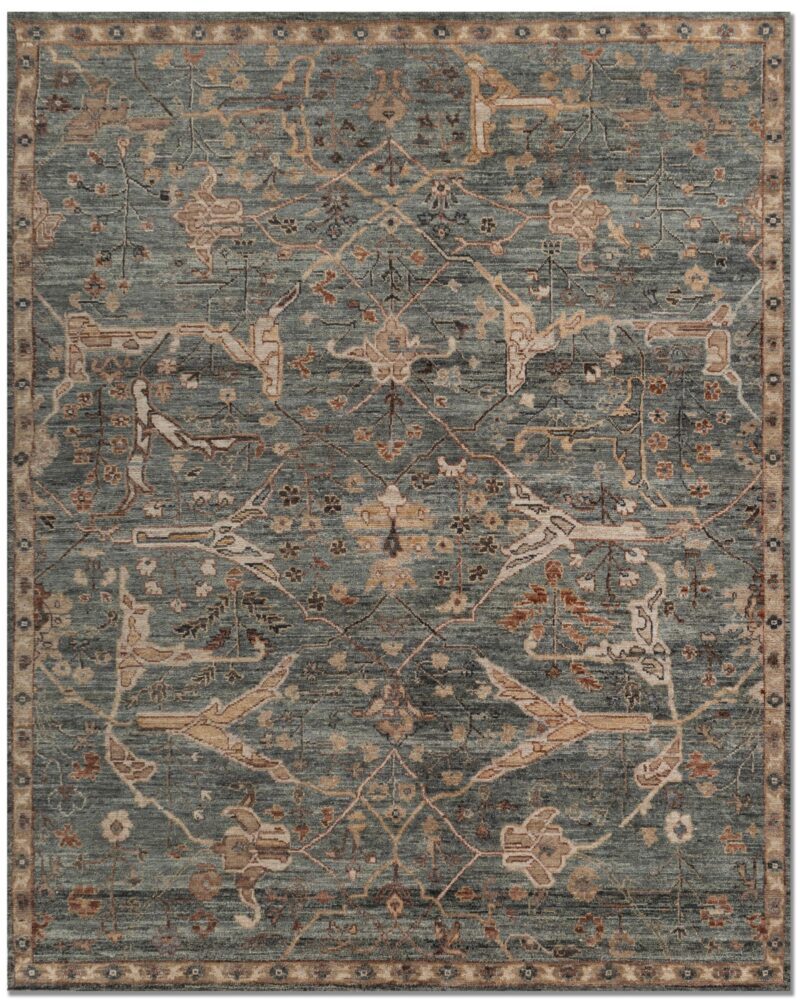
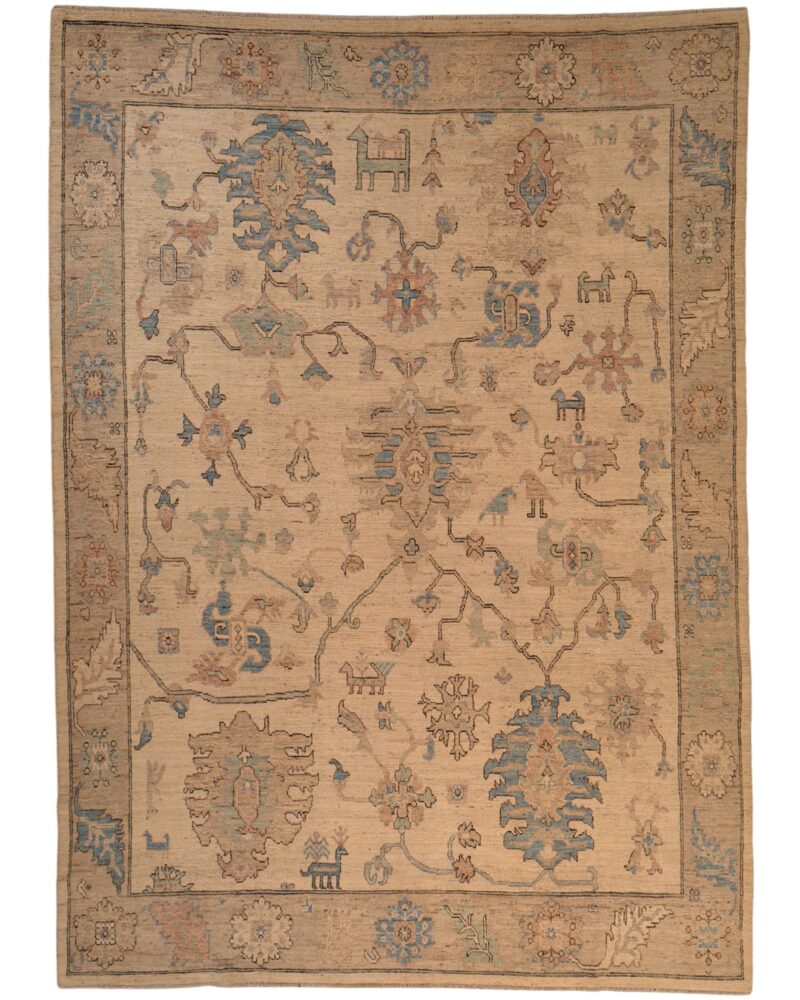
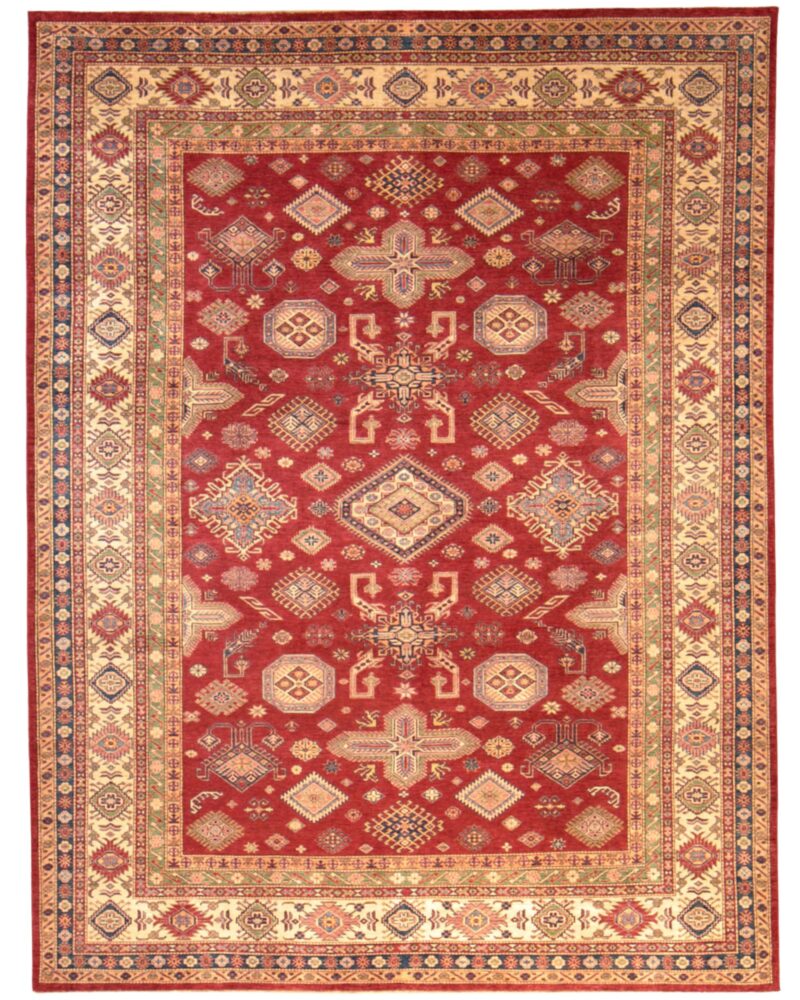
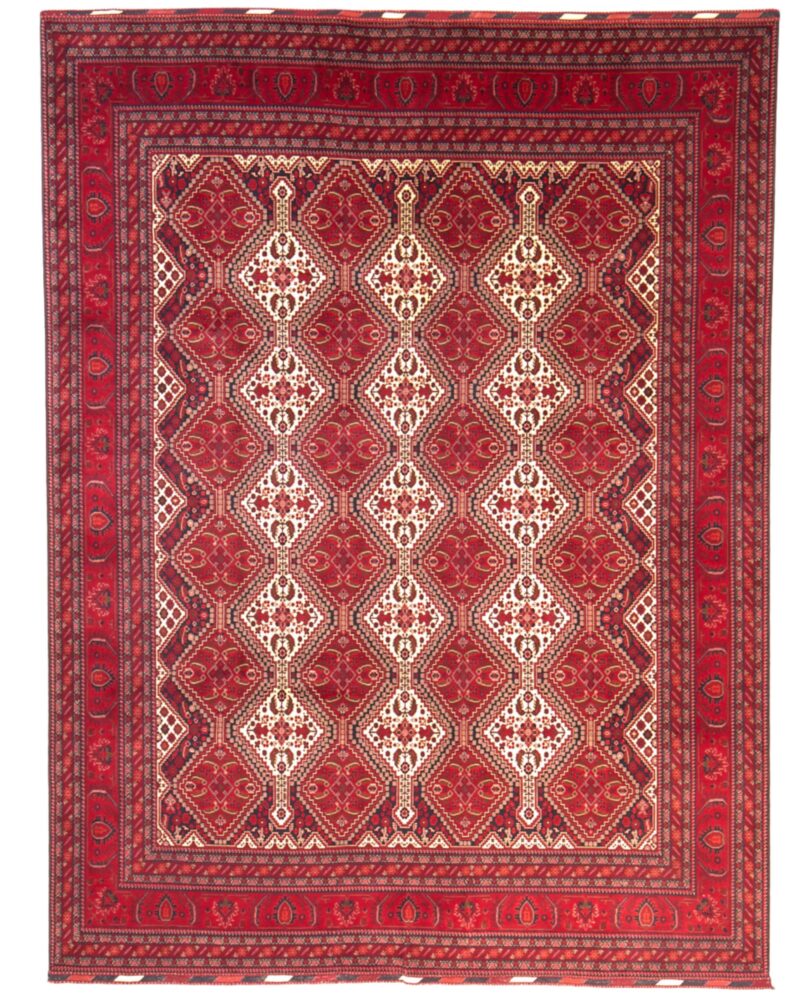
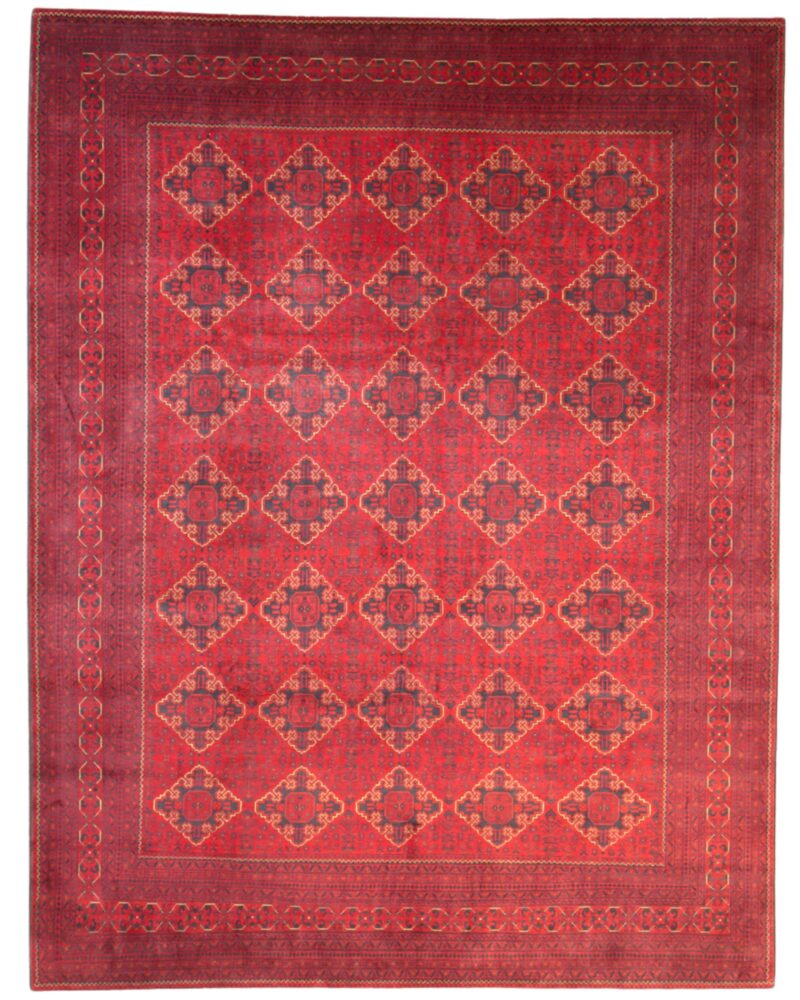
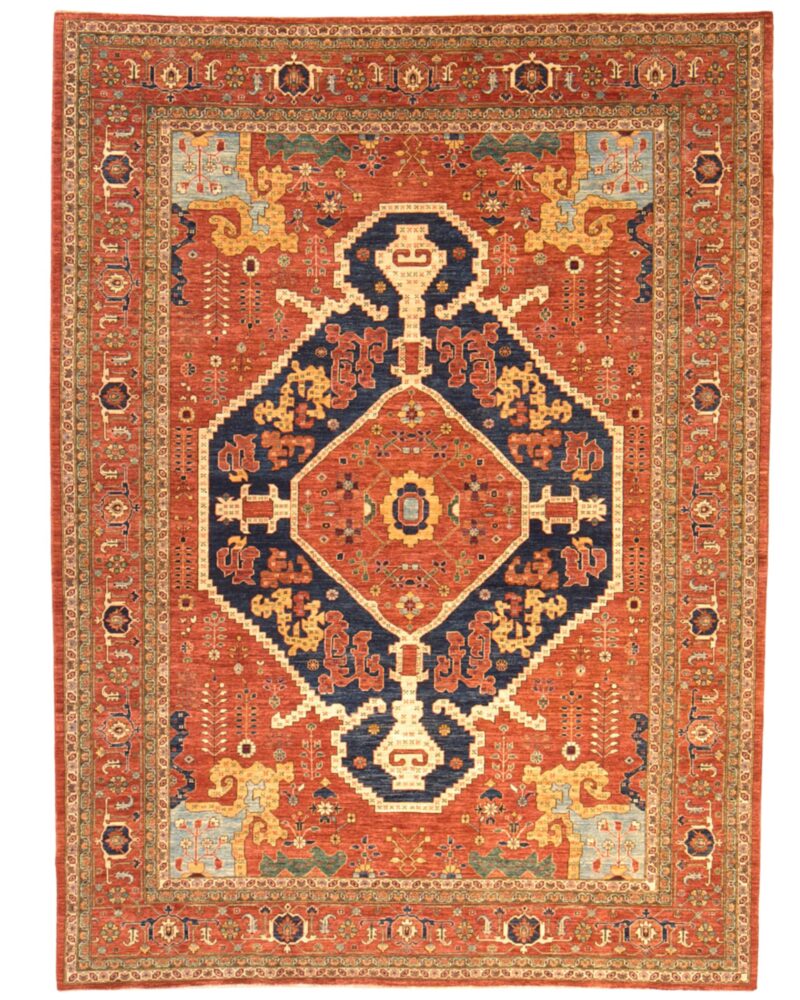
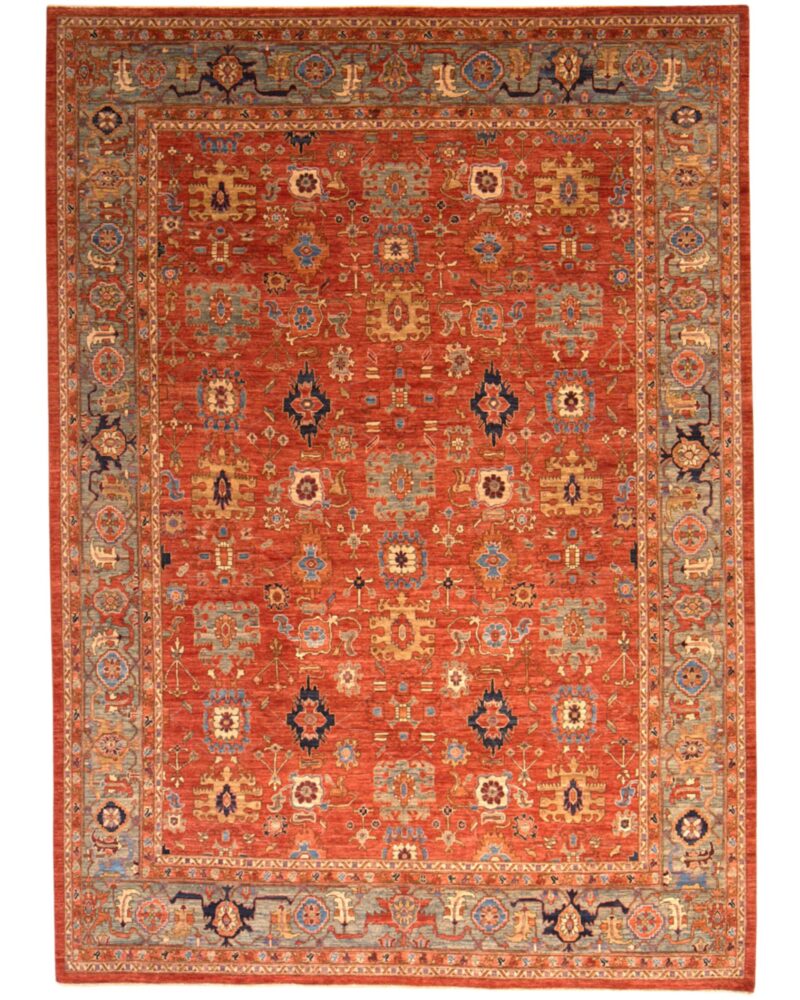
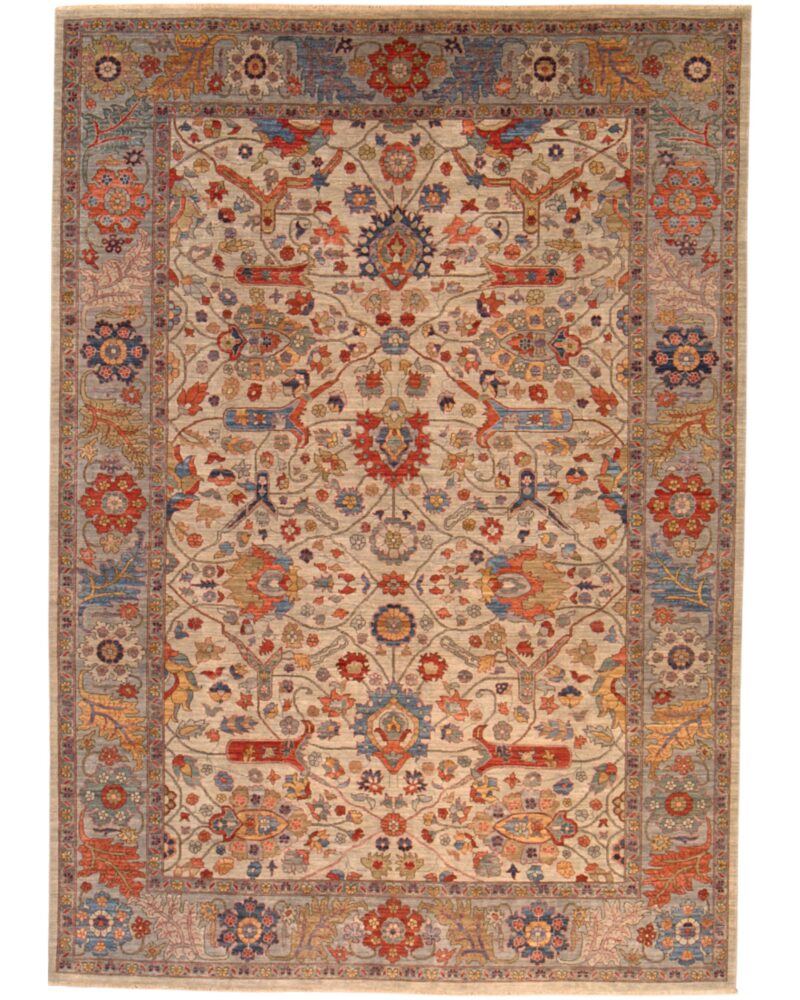
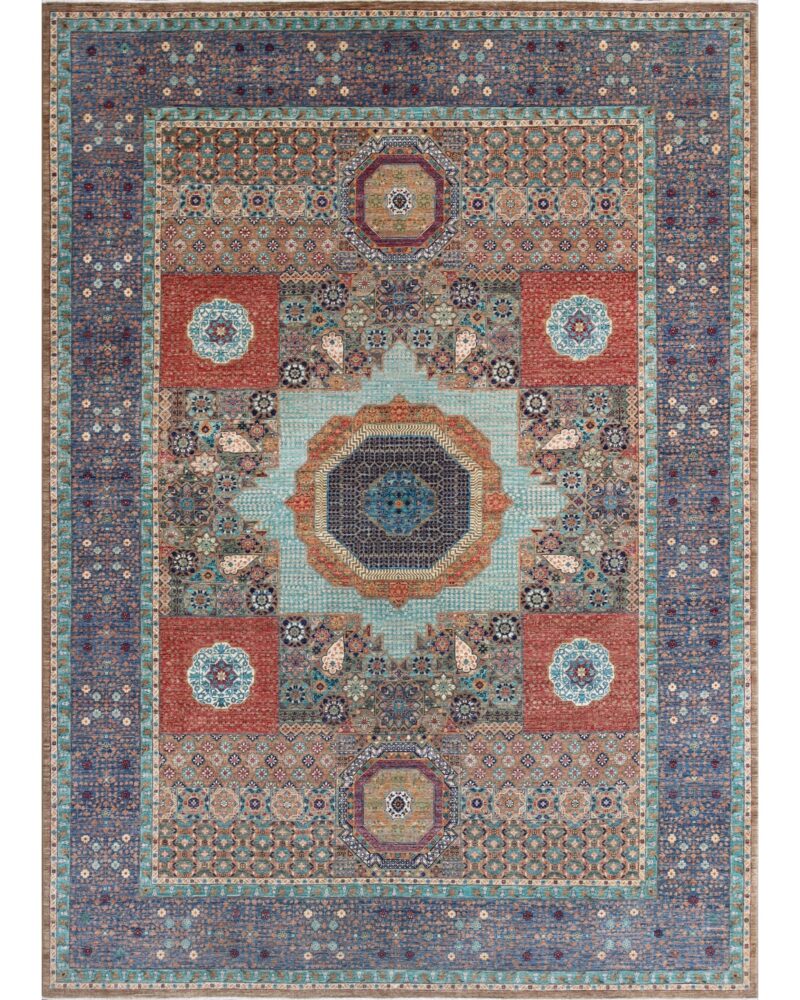
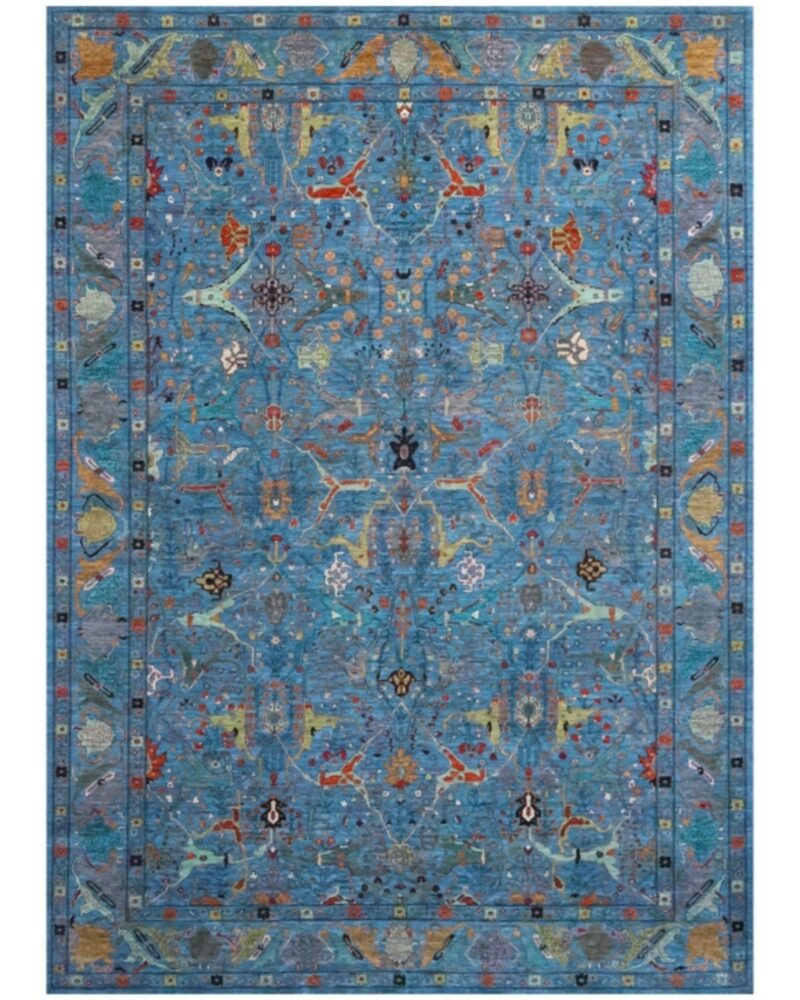
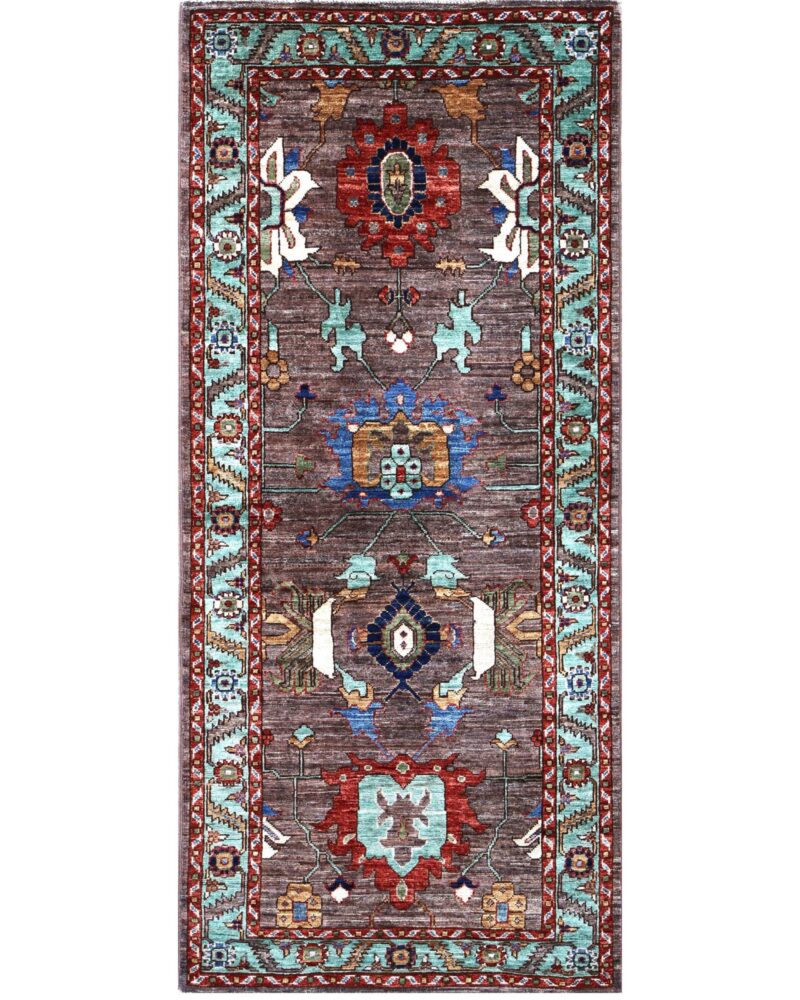
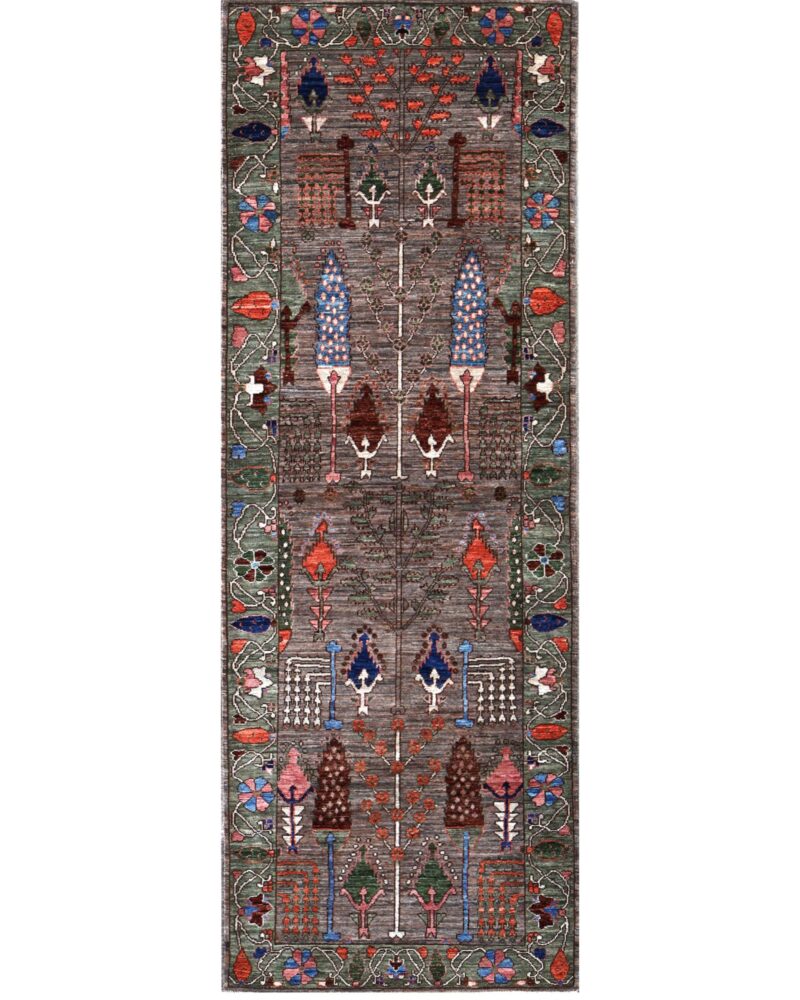
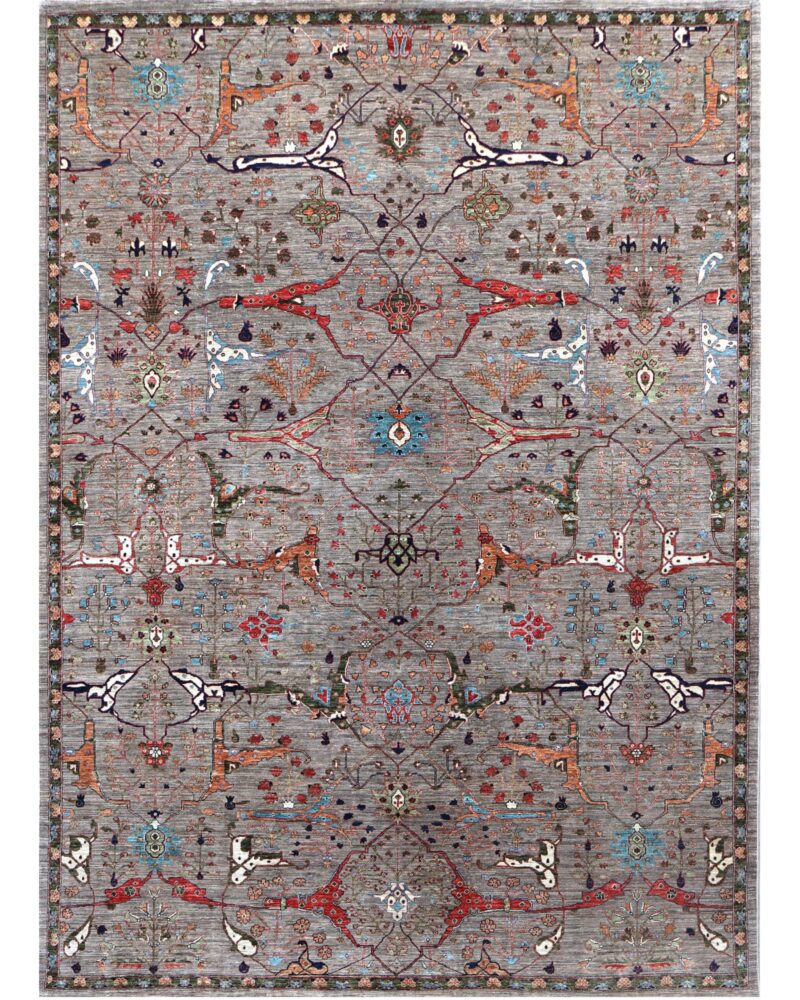
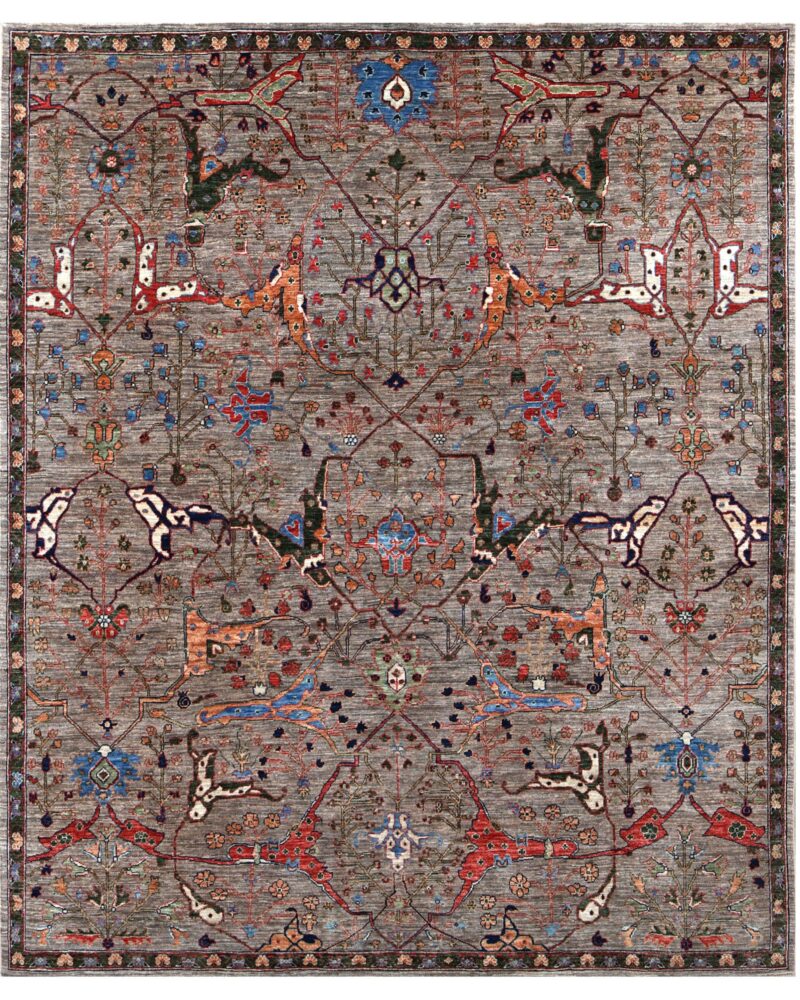
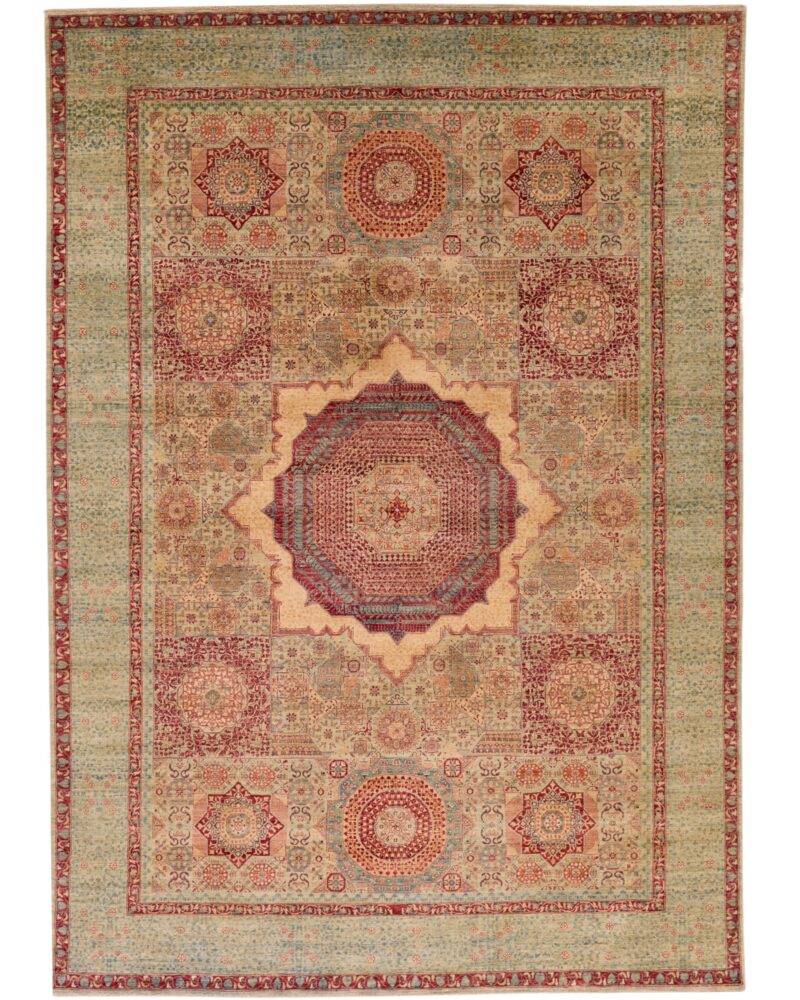
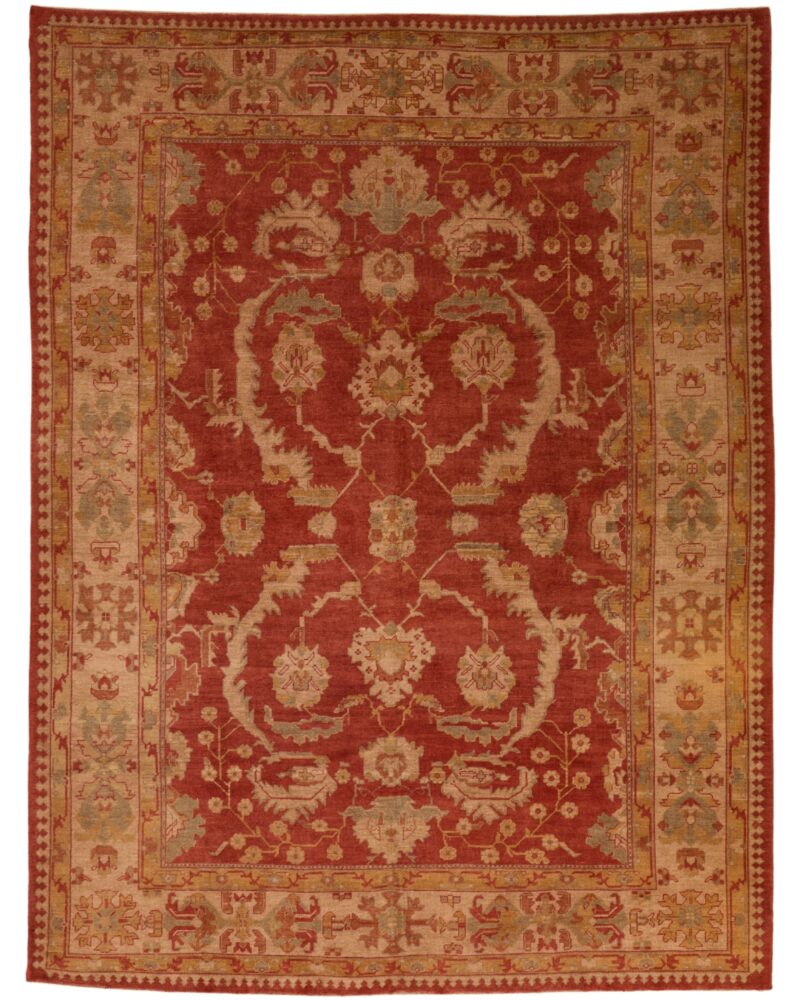
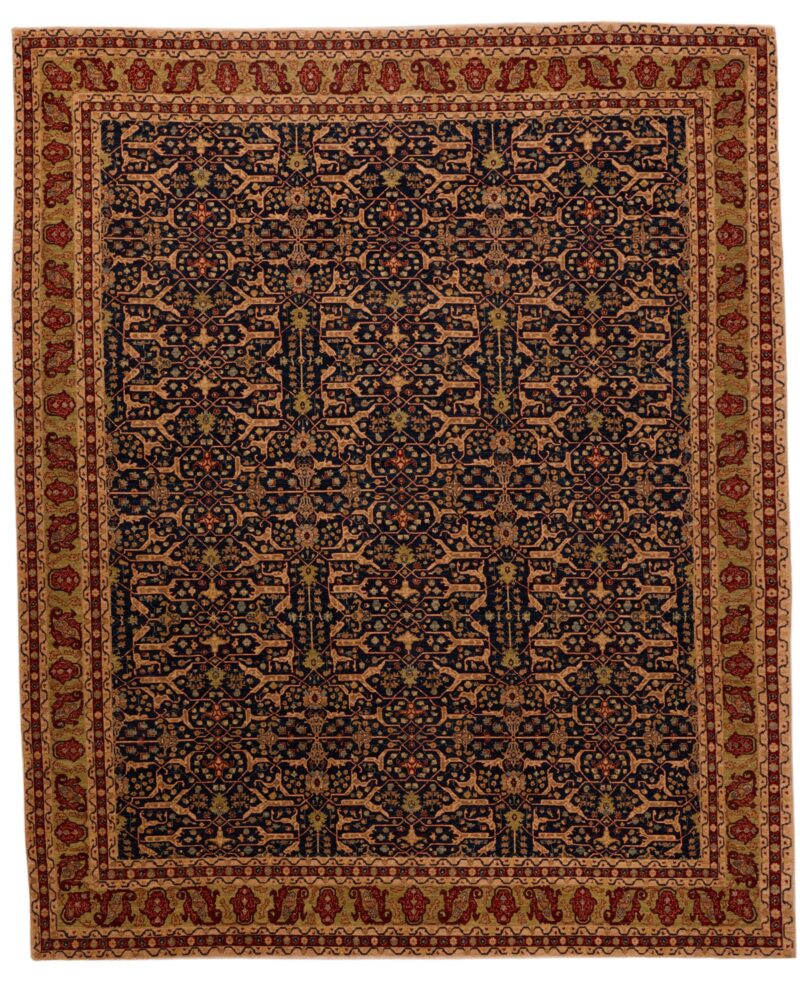
Traditional rugs bring centuries of Persian, Caucasian, and Turkmen design into the modern home. Weavers knot wool or silk by hand into medallions, florals, and repeating motifs. Traditional rugs suit buyers who want lasting craftsmanship, rich color, and a pattern that anchors a room. Homeowners with classic, transitional, or eclectic interiors choose them most. Our Colorado collection spans Heriz, Tabriz, Bidjar, Kazak, and Bokhara designs in sizes from runners to room-filling carpets.
What Defines Traditional Rugs?
Traditional rugs rely on hand-knotted construction. Weavers tie individual knots around warp threads on a loom, usually with the symmetrical Turkish knot or the asymmetrical Persian knot. Fine pieces pack 100 to 400 knots per square inch. Pile height typically measures 1/4 to 1/2 inch, which shows pattern detail clearly.
Wool remains the standard pile material, set on a cotton or wool foundation. Silk appears in finer city workshops such as Tabriz. Palettes center on deep reds, indigo blues, ivory, and soft gold. Motifs include central medallions, the boteh (paisley) in Saruk designs, geometric Kazak shapes, and the dense floral Bidjar layouts of Kurdistan. Heriz rugs favor bold, angular medallions, while Bokhara designs repeat rows of guls across the field.
Which Features Matter Most in Traditional Rugs?
Traditional rugs reward buyers who check a few construction details before choosing. Use this list as a quick guide.
- Material: hand-spun wool pile on a cotton foundation, with silk accents on finer pieces.
- Pile height: typically 1/4 to 1/2 inch, dense and even.
- Durability: often decades of use with regular care, and many last generations.
- Size range: runners near 2.7 x 13 feet up to large carpets of 14 x 10 feet.
- Care level: moderate, with routine vacuuming and professional washing every few years.
Traditional Rug Quick Facts
| Attribute | Typical value | Why it matters |
|---|---|---|
| Construction | Hand-knotted, typically 100 to 400 knots per square inch | Higher density gives sharper pattern detail and longer wear. |
| Pile material | Wool, typically with silk highlights on fine pieces | Wool resists soil and crushing in busy rooms. |
| Pile height | Typically 1/4 to 1/2 inch | Low pile cleans easily and sits flat under furniture. |
| Common sizes | Typically 2.7 x 6 feet to 10 x 14 feet | Size determines layout options for halls, dining rooms, and living rooms. |
| Cleaning interval | Typically every 2 to 3 years for professional washing | Regular washing removes embedded grit that cuts wool fibers. |
How Do You Style Traditional Rugs at Home?
Traditional rugs work in living rooms, dining rooms, bedrooms, and entryways. A Heriz or Tabriz anchors a formal sitting area. A Kazak or Bokhara adds warmth to a study or library. Runners such as a Karajeh suit hallways and galleries. Pair deep red and indigo rugs with neutral walls, walnut or mahogany furniture, and brass accents. Ivory and soft blue Bidjar designs lighten a room with painted trim and linen upholstery.
Sizing rules keep the layout balanced. In a living room, place at least the front legs of every seating piece on the rug. Under a dining table, leave 24 to 30 inches beyond each edge so chairs stay on the pile. In bedrooms, extend the rug 18 to 24 inches past both sides of the bed. Our rug padding service adds grip and cushioning beneath each piece. Buyers who like a softer, more relaxed look can also browse our Gabbeh rugs.
Frequently Asked Questions
What size traditional rug should I buy for my living room?
Traditional rug sizing starts with your seating layout. An 8 x 10 foot rug fits most living rooms, with front furniture legs resting on the pile. Larger rooms suit 9 x 12 feet or bigger. Leave 12 to 18 inches of bare floor around the edges.
How do you clean a traditional wool rug?
Traditional wool rugs need vacuuming weekly without the beater bar, plus prompt blotting of spills. Professional washing every two to three years removes embedded grit and restores color. Our rug cleaning service handles natural dyes and fine fringes with gentle, rug-specific methods.
Are traditional rugs durable enough for high-traffic areas?
Traditional hand-knotted rugs handle high traffic well because wool is resilient and the dense knotting resists crushing. Hallways, dining rooms, and entryways suit them. Rotate the rug yearly, use a quality pad, and clean it regularly to keep wear even across the pile.
How can I tell a handmade traditional rug from a machine-made one?
Handmade traditional rugs show slight irregularities in the pattern, and the design appears on the back as clearly as the front. Fringe is part of the foundation, not sewn on. Machine-made rugs look uniform, with a glued or stitched fringe and a flat, stiff back.