


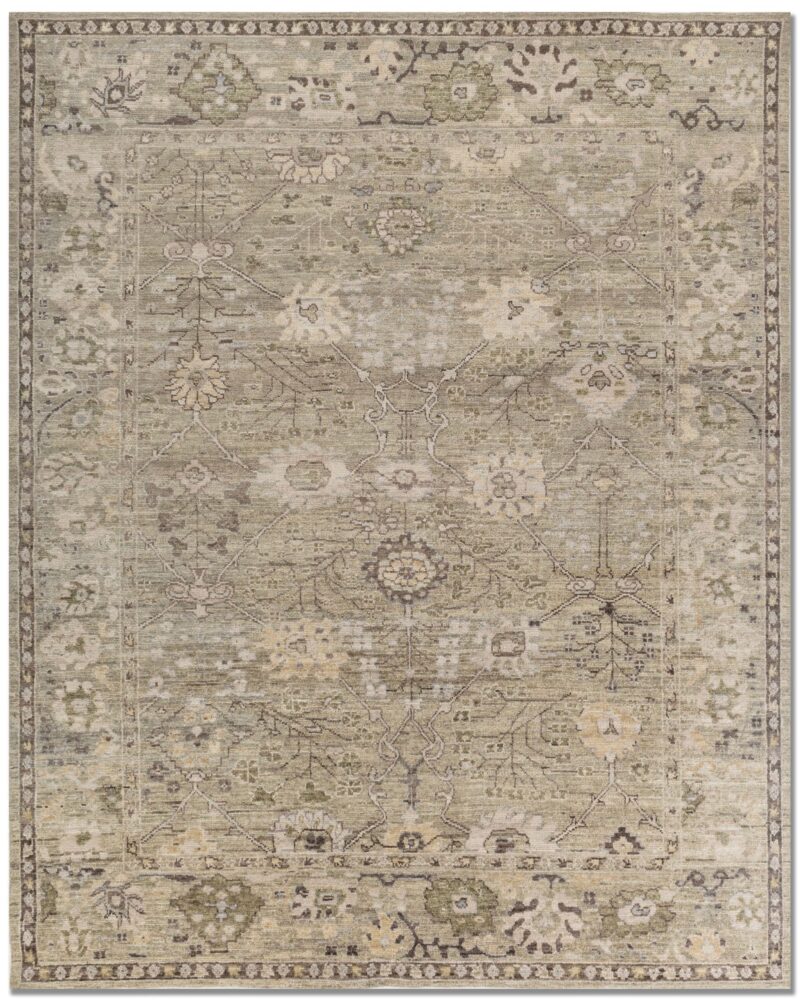
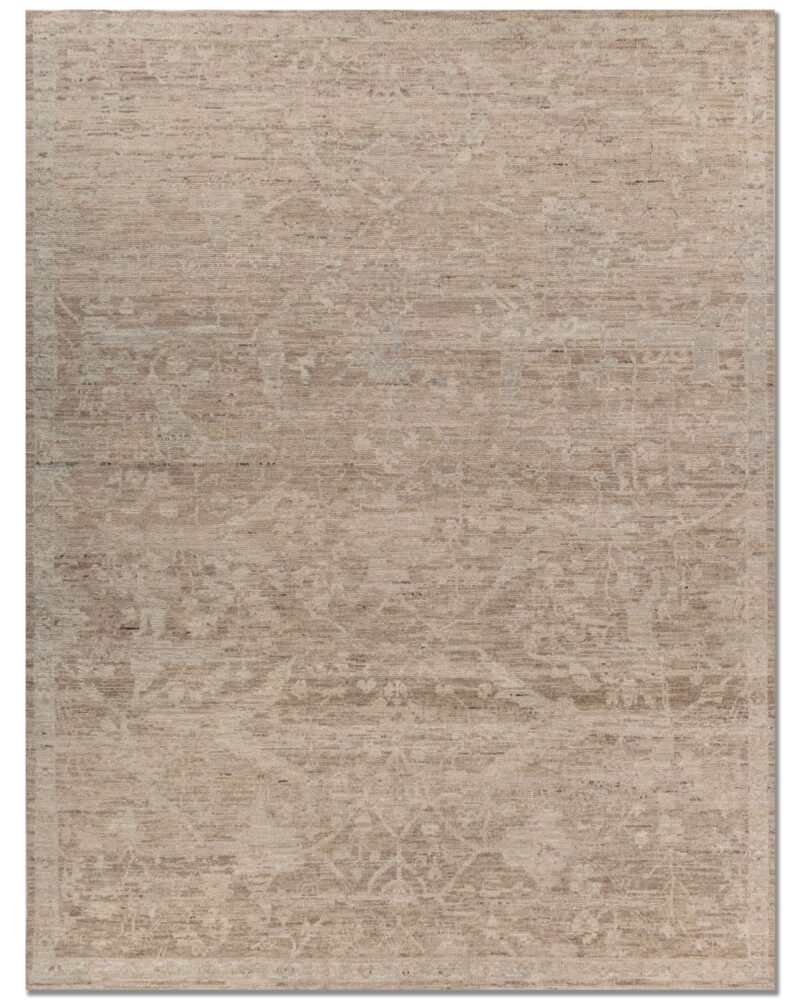
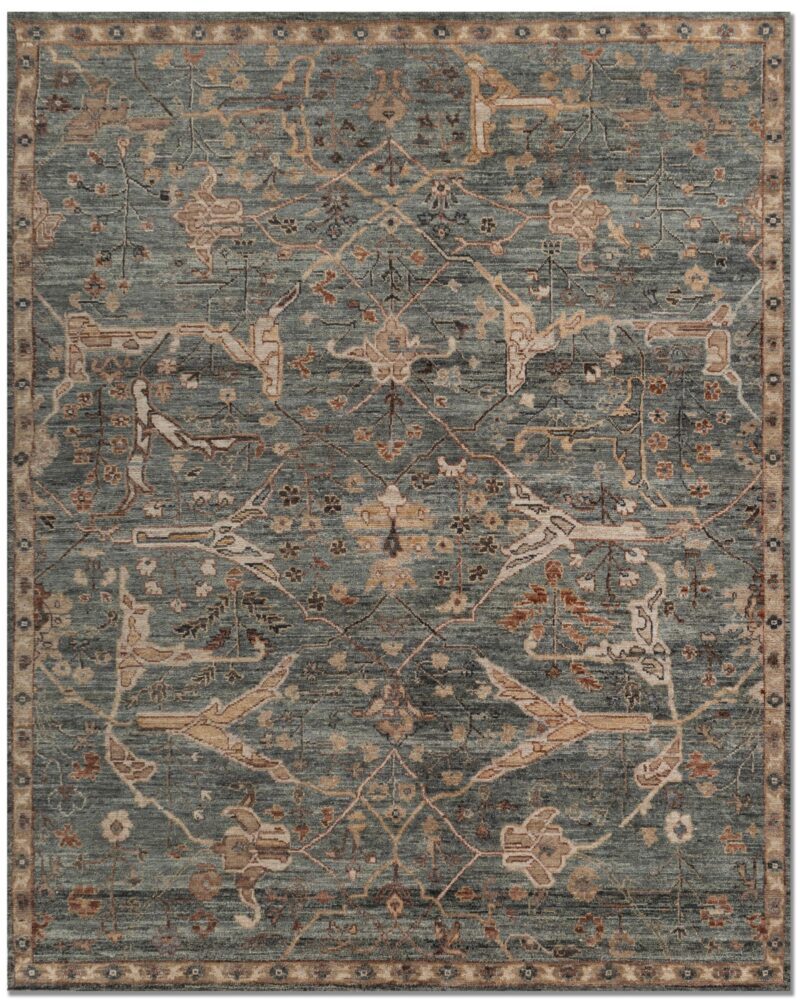
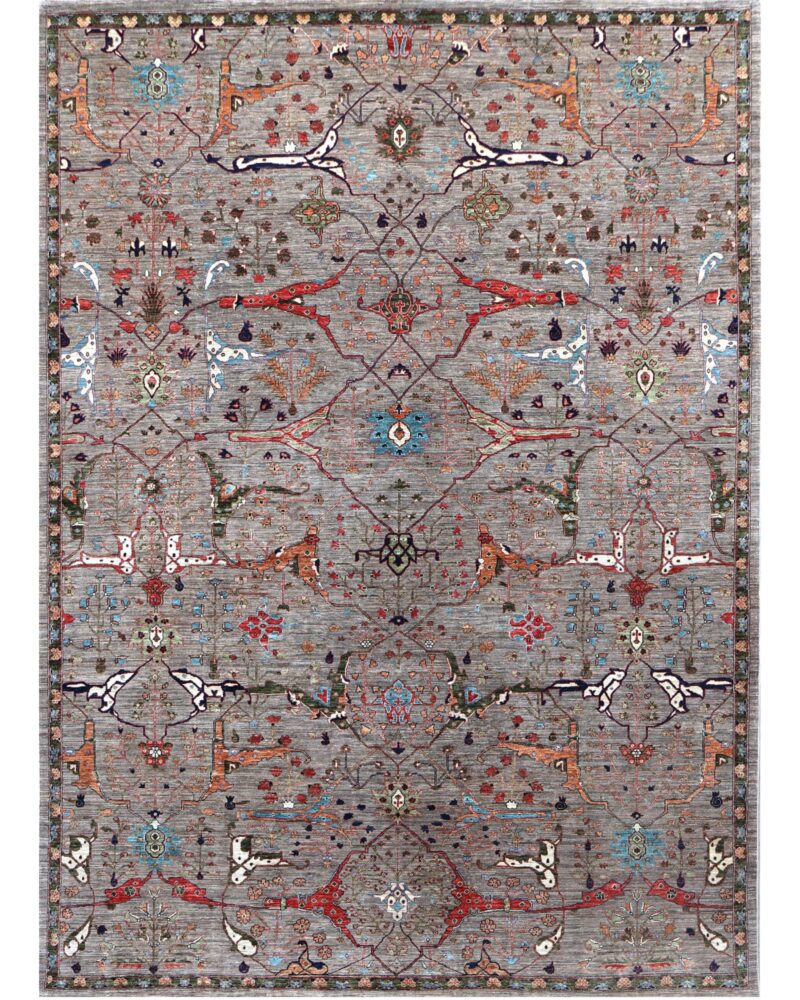
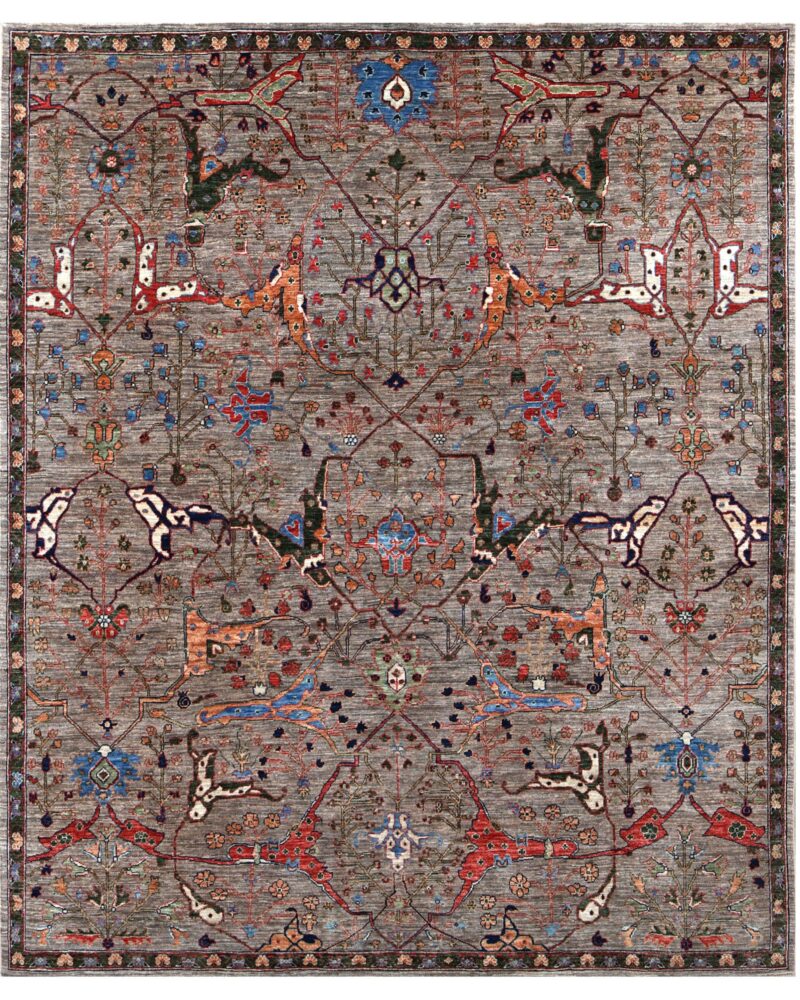
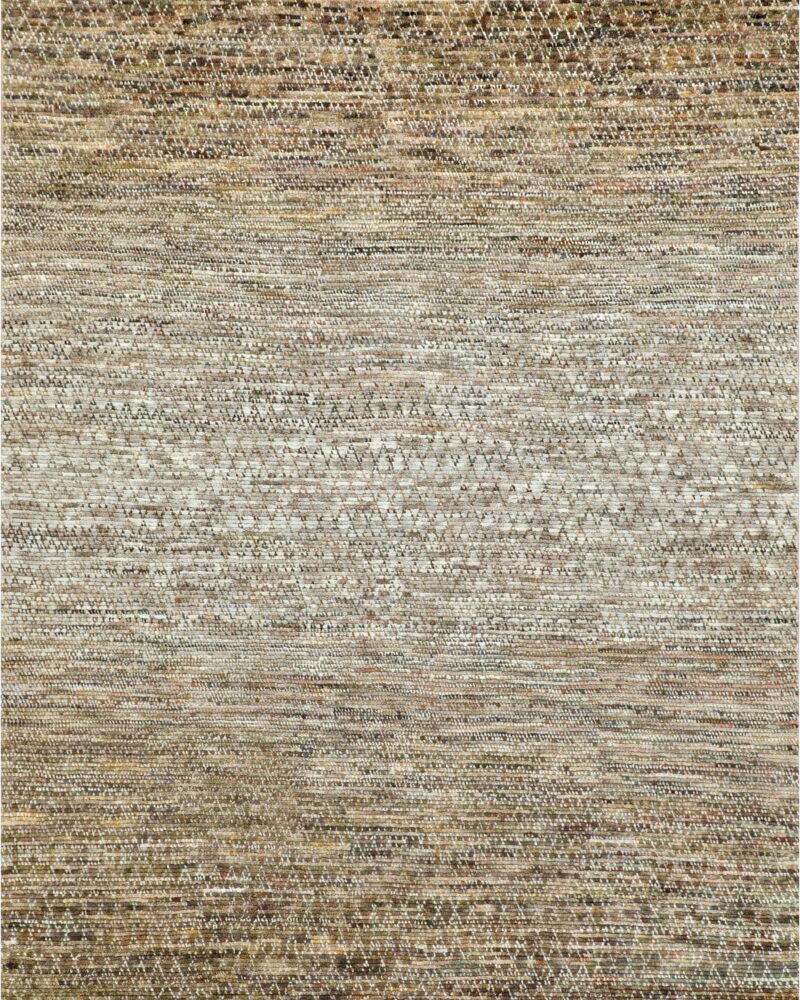
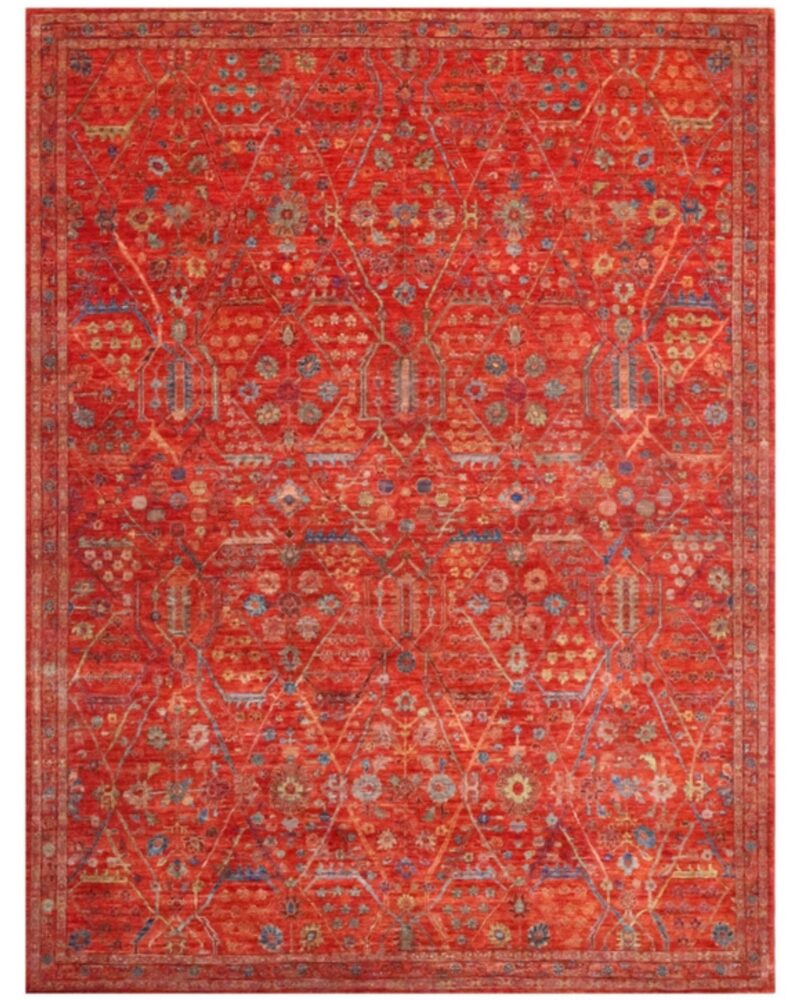
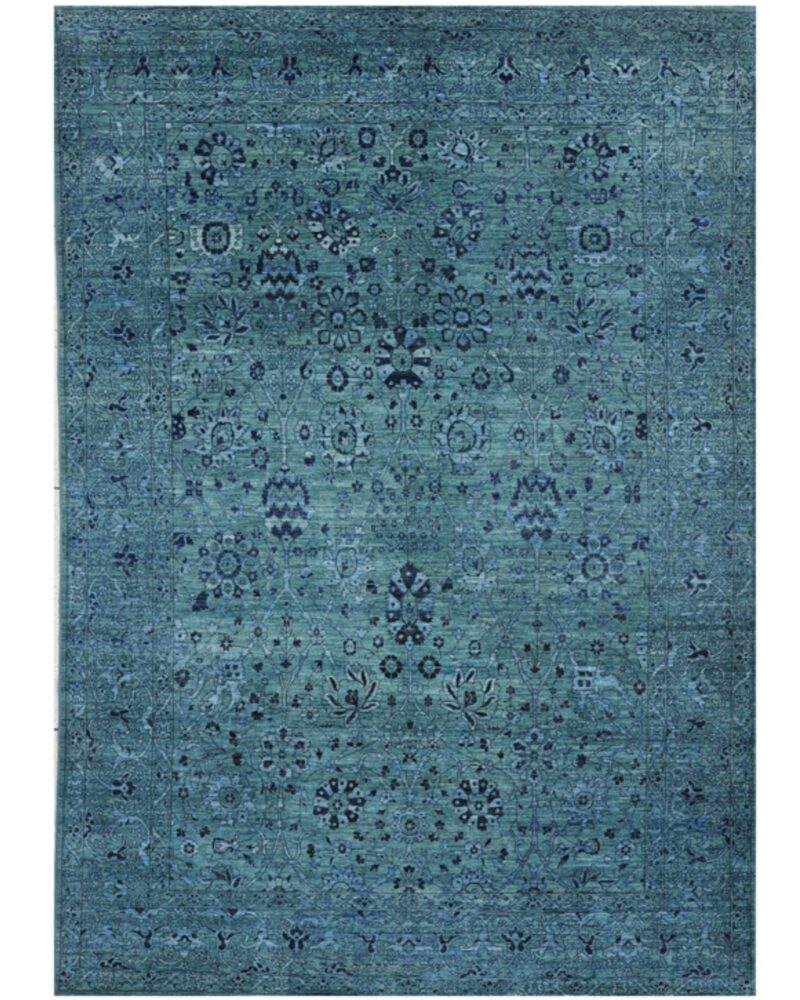
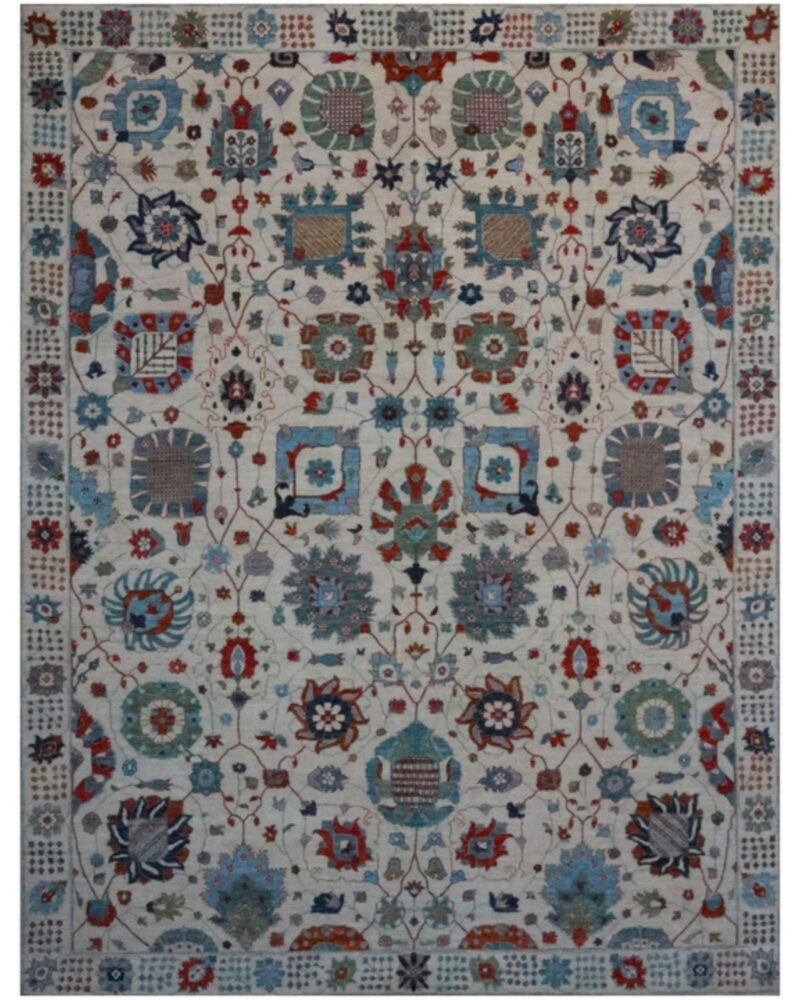
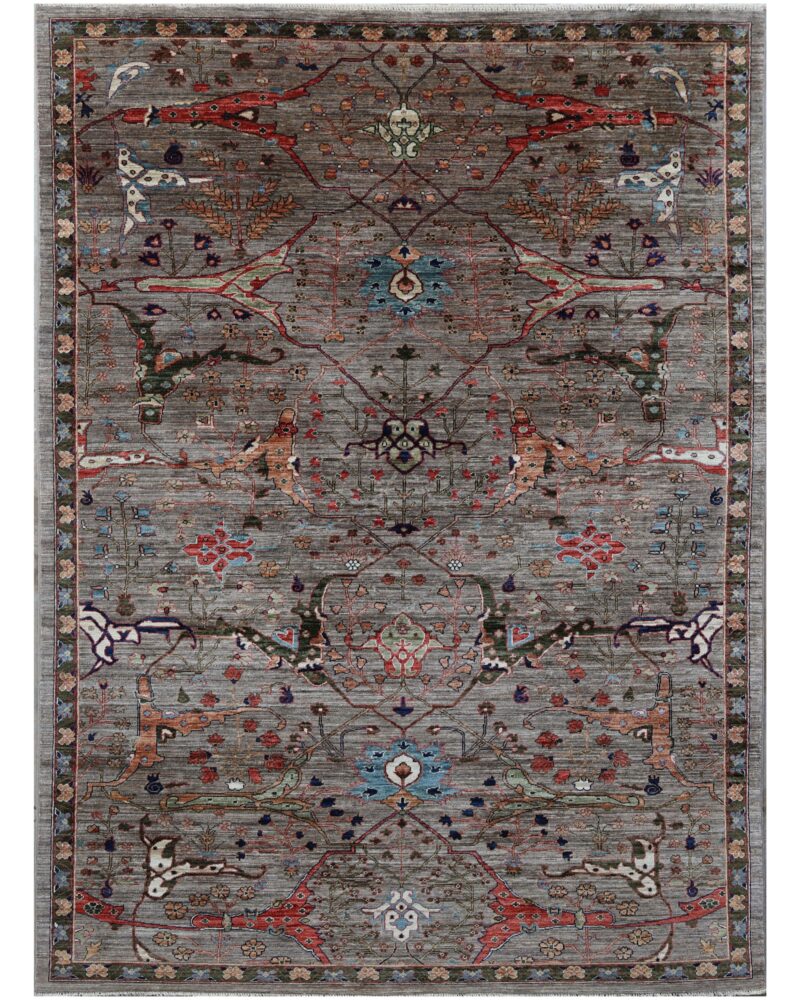
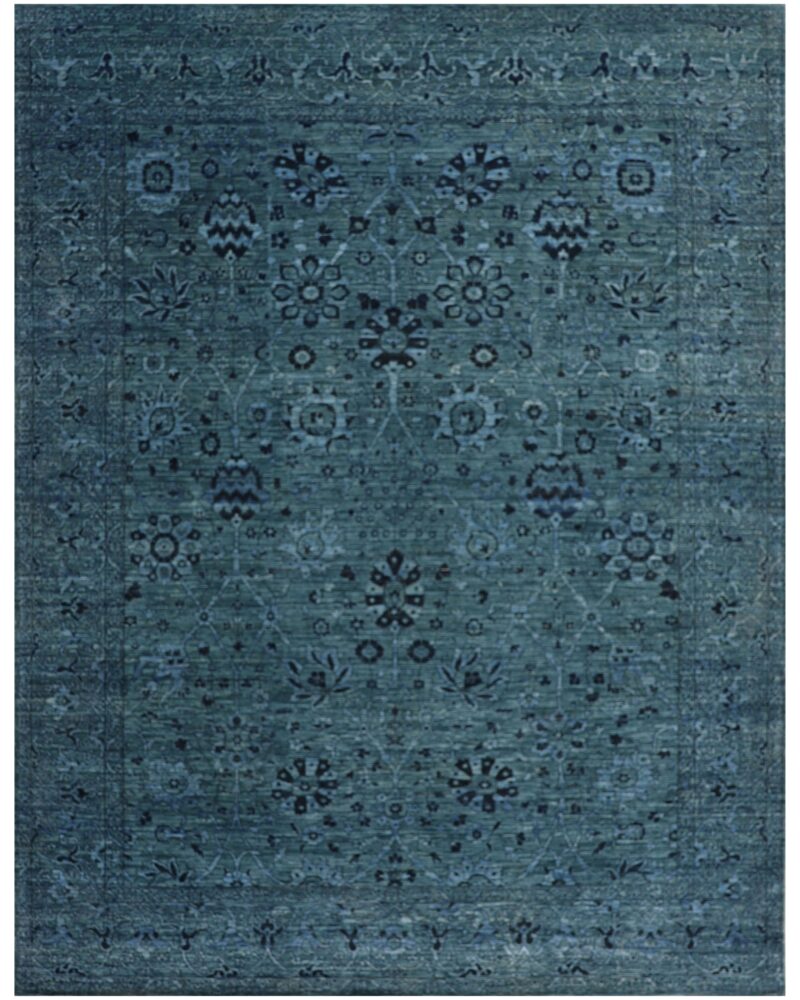
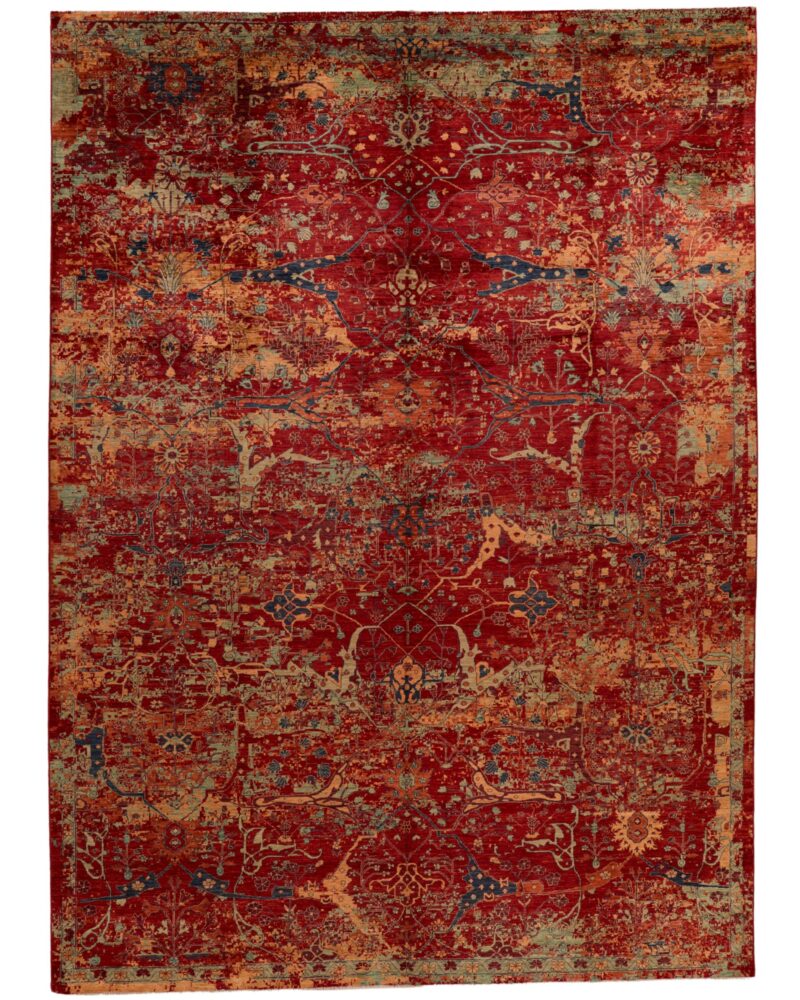
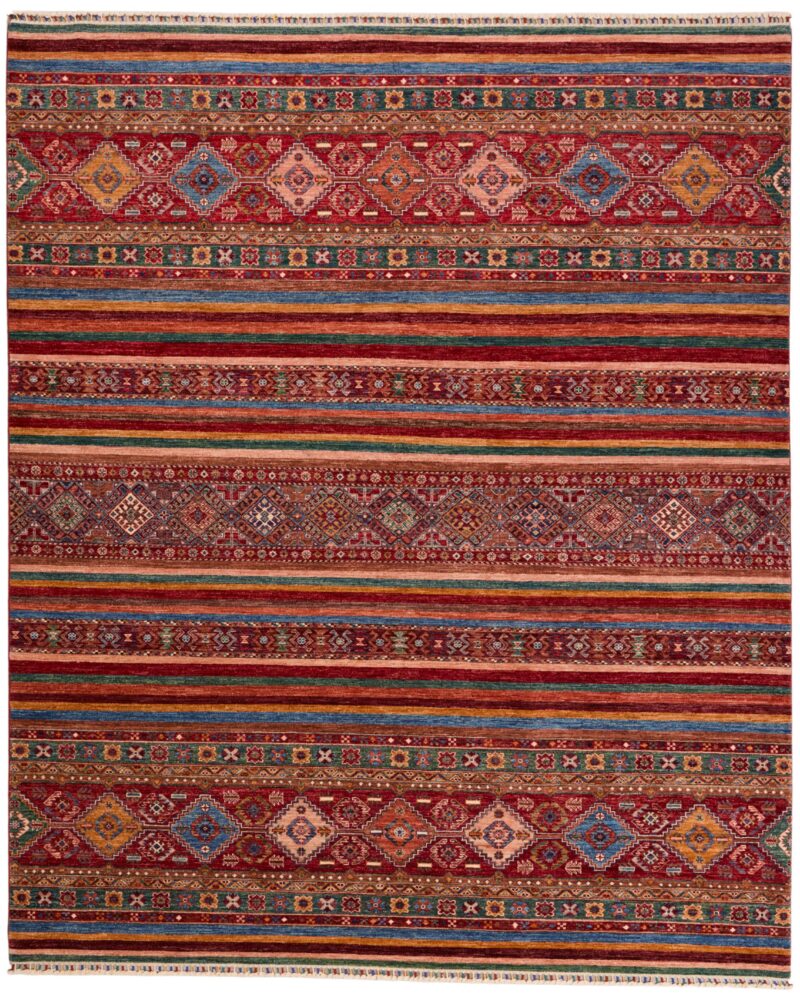
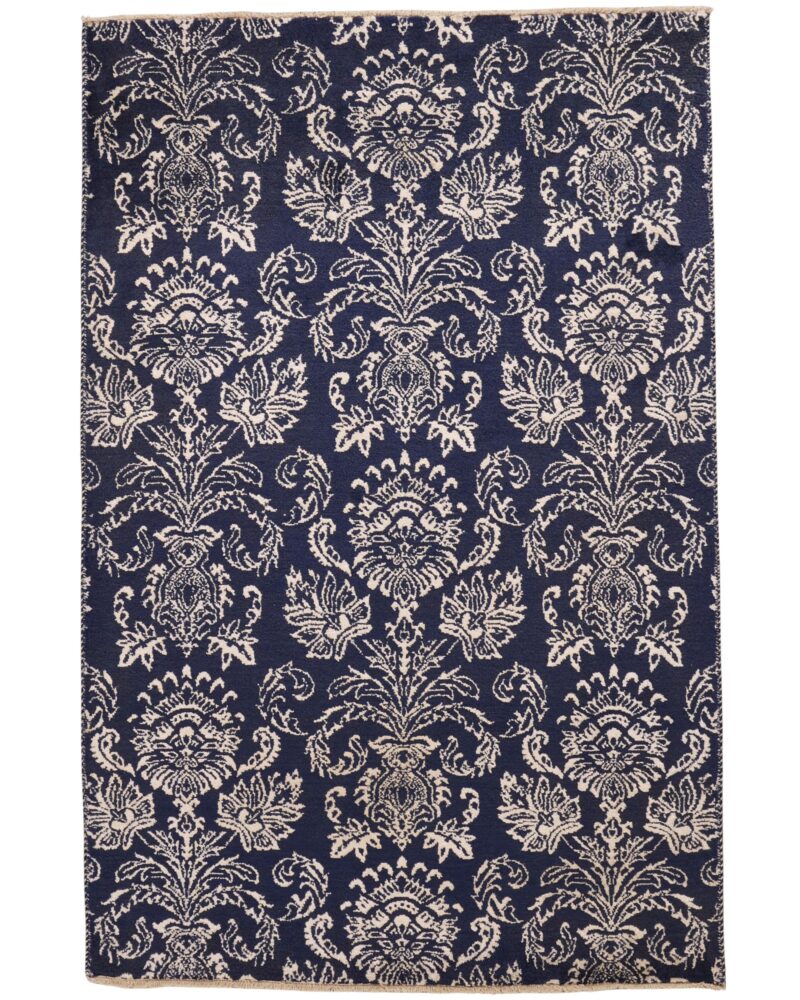
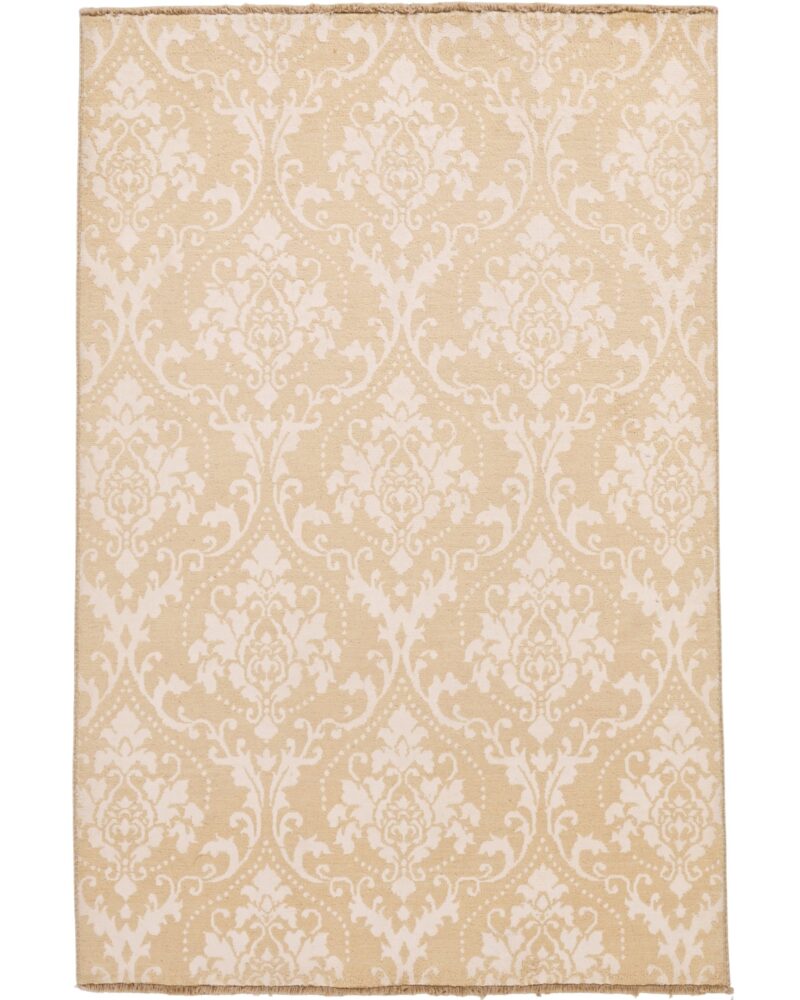
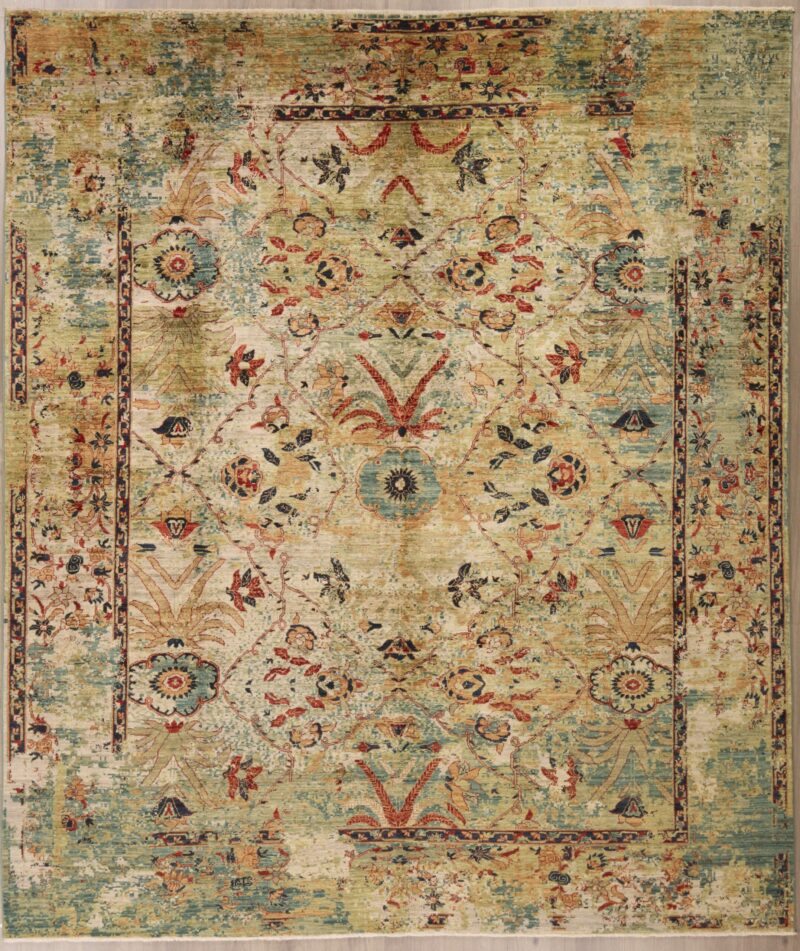
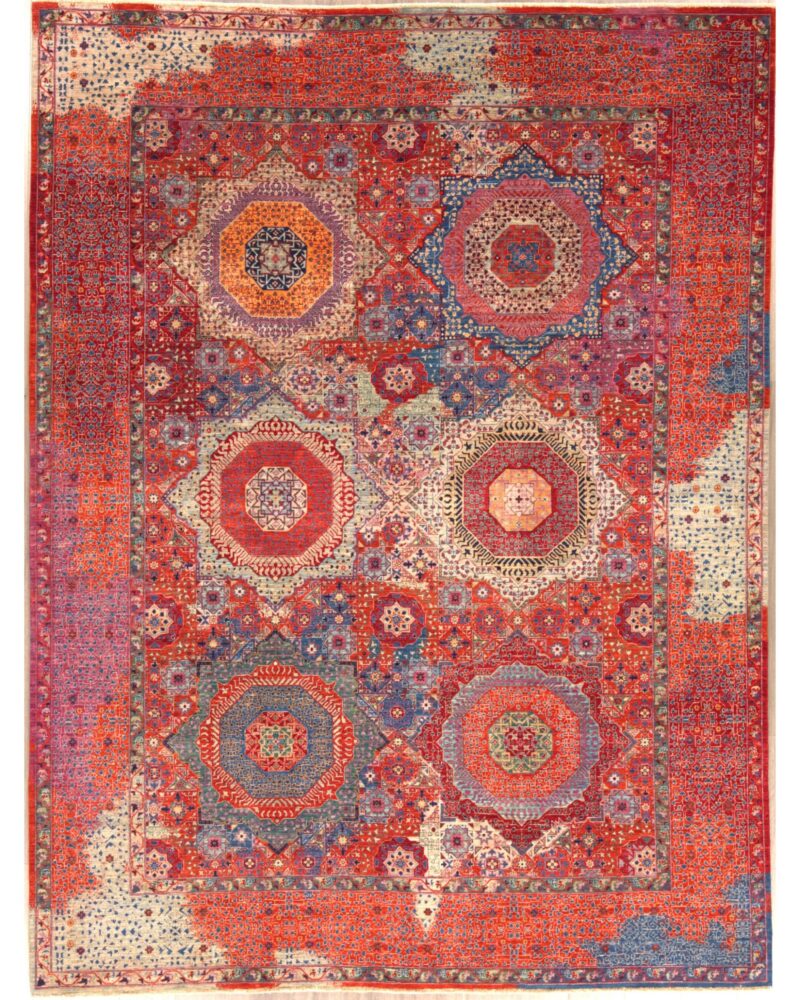
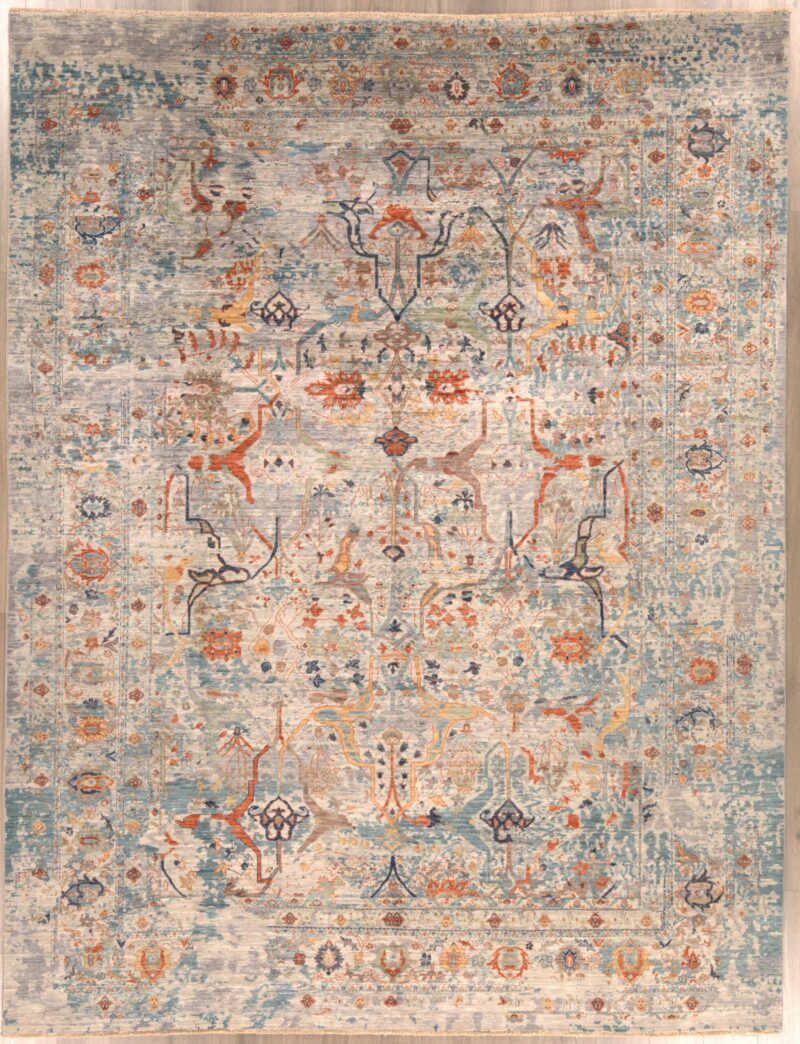
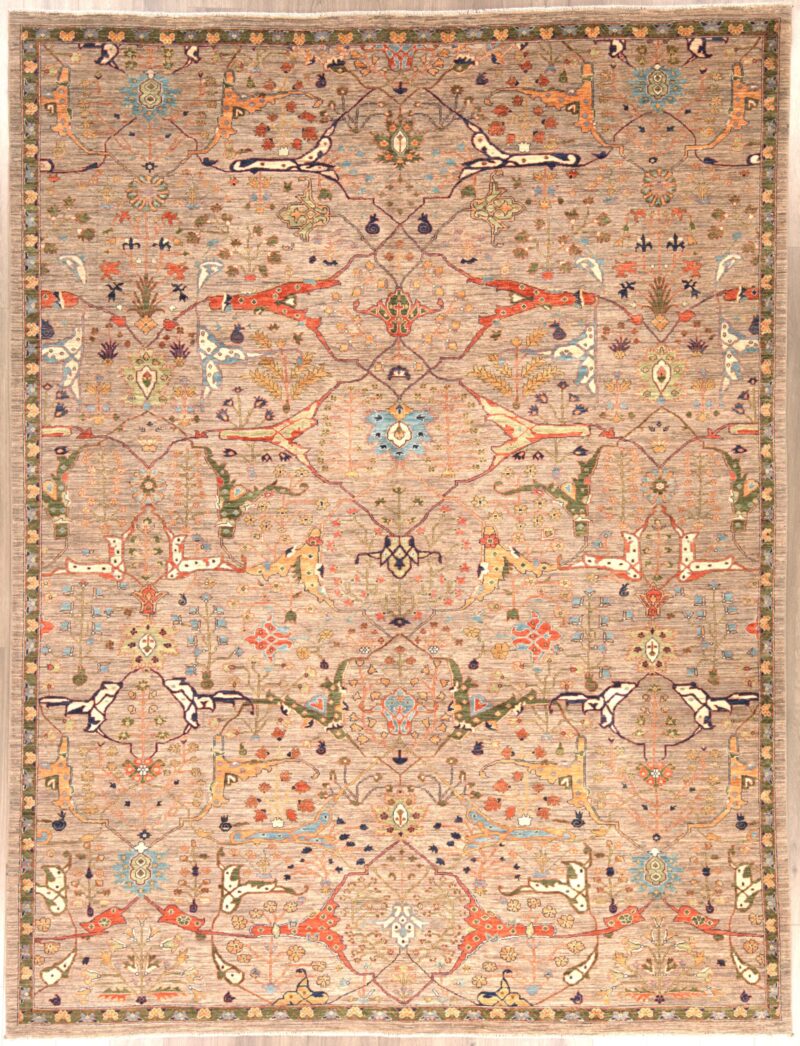
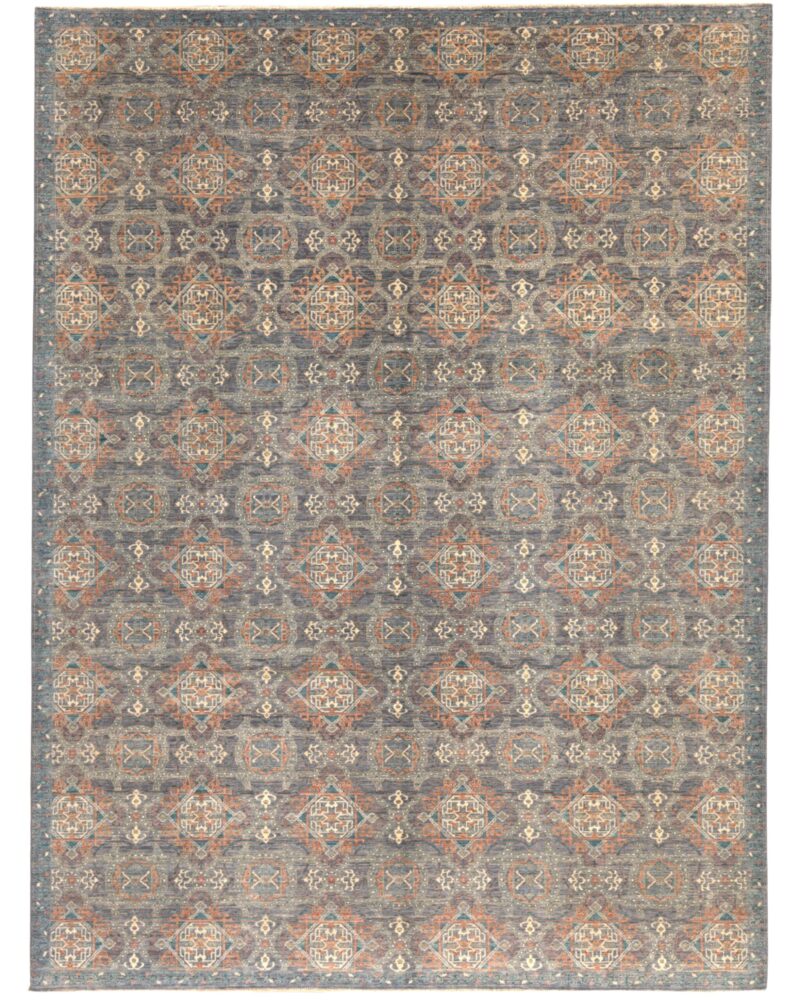
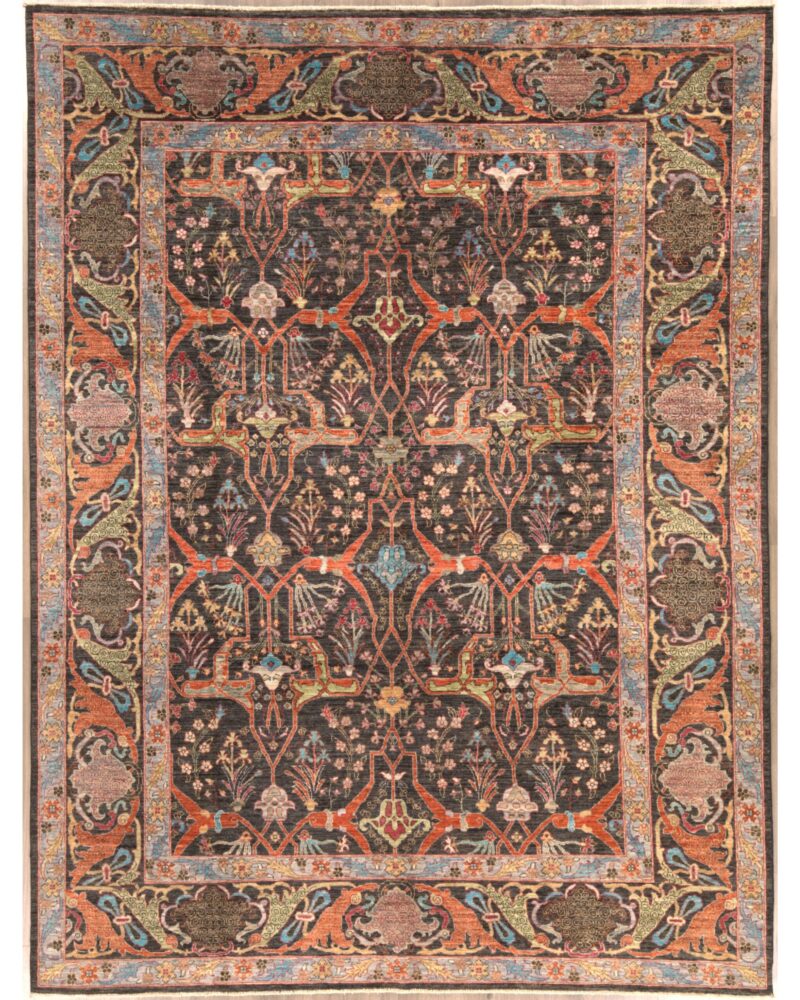
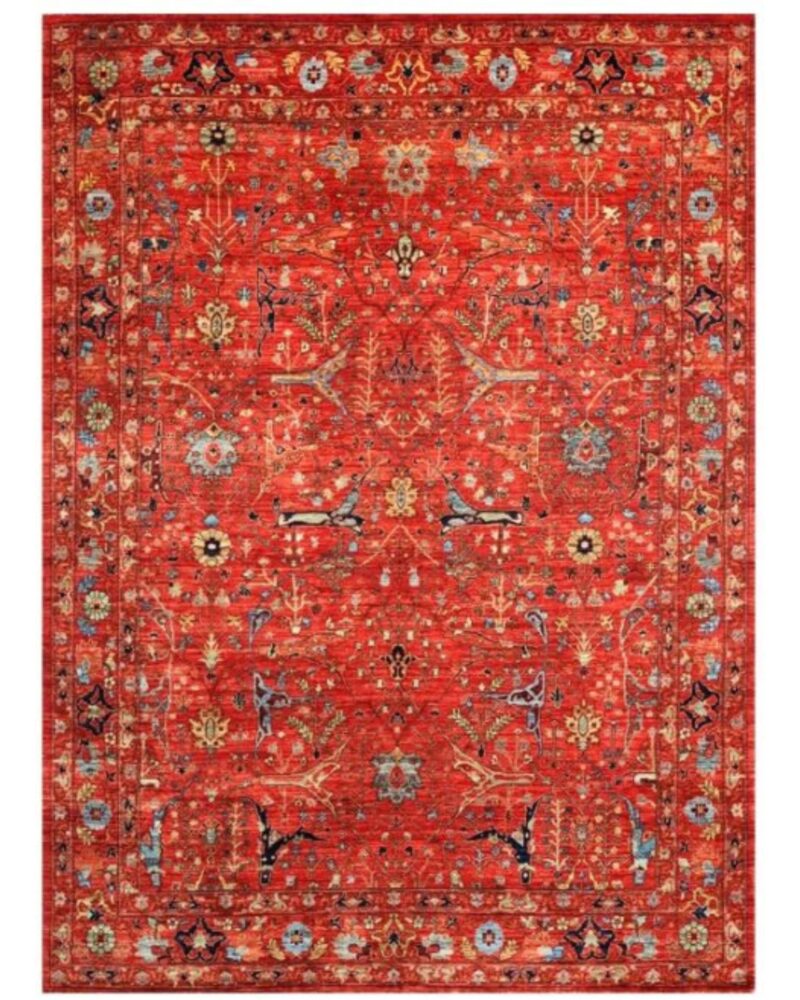
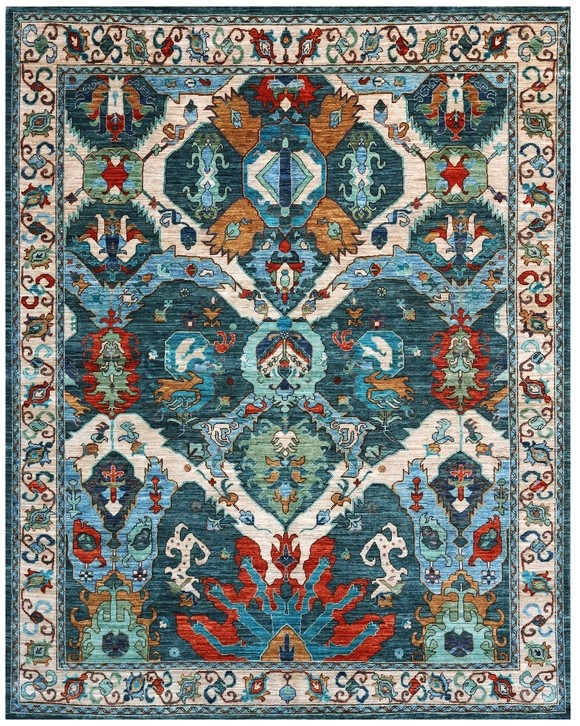
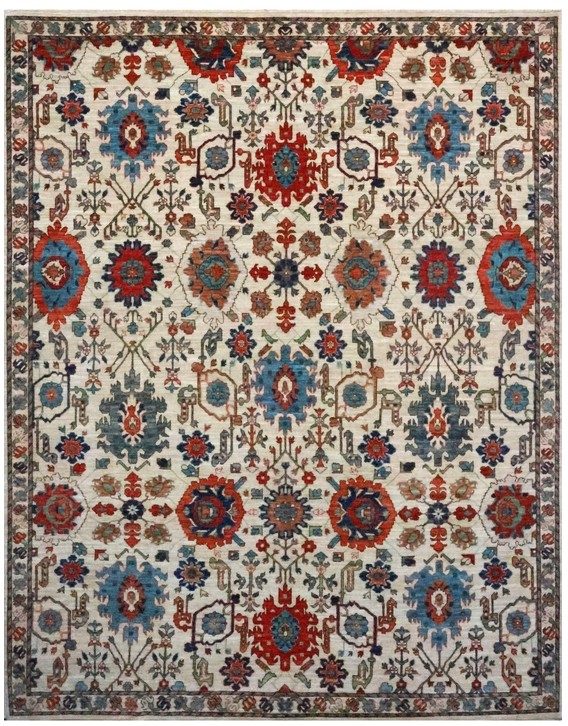
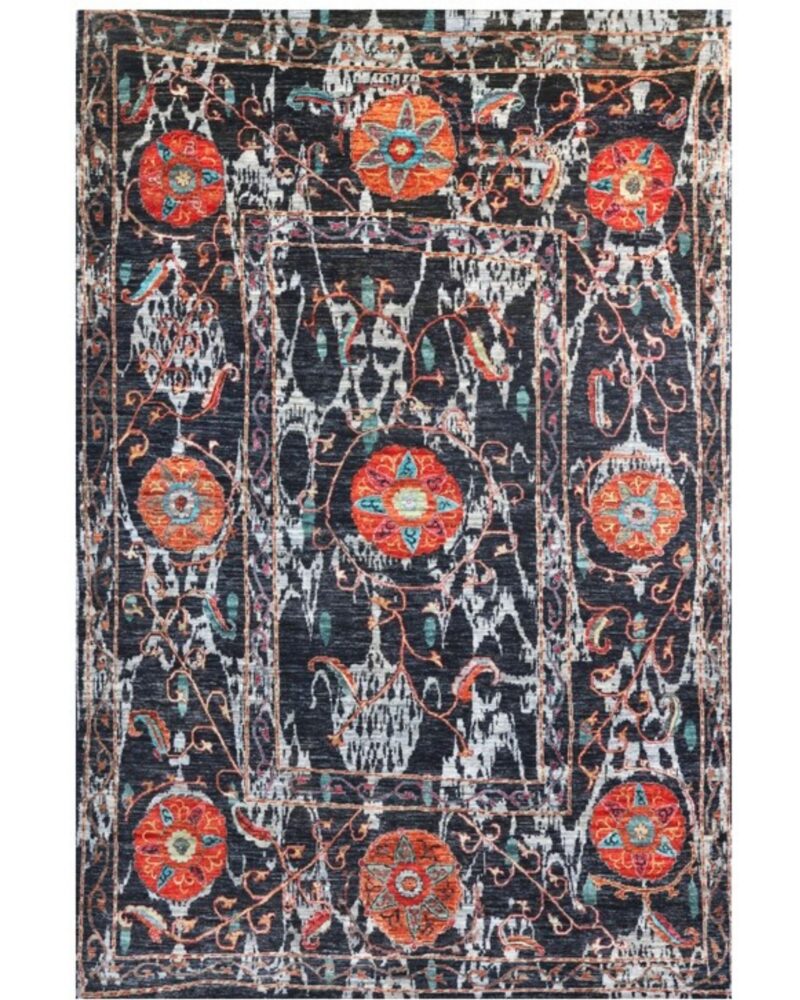
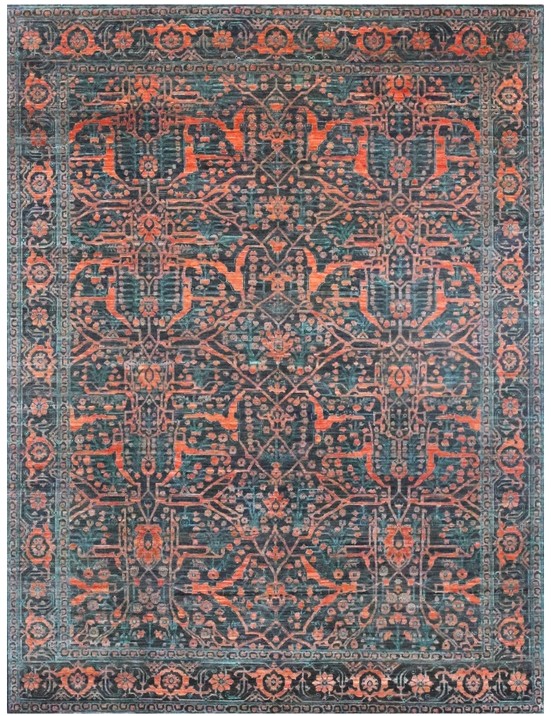
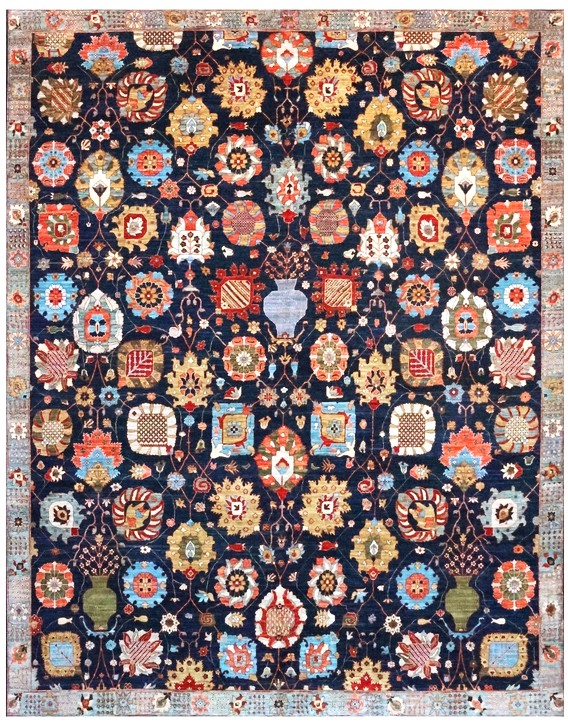
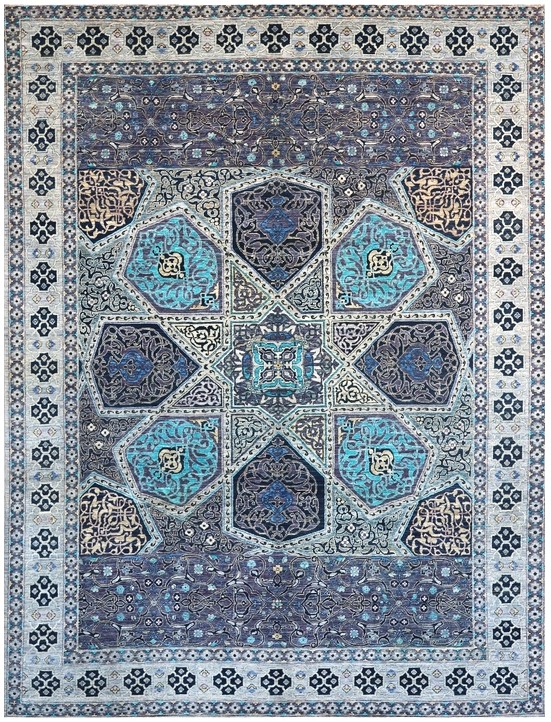
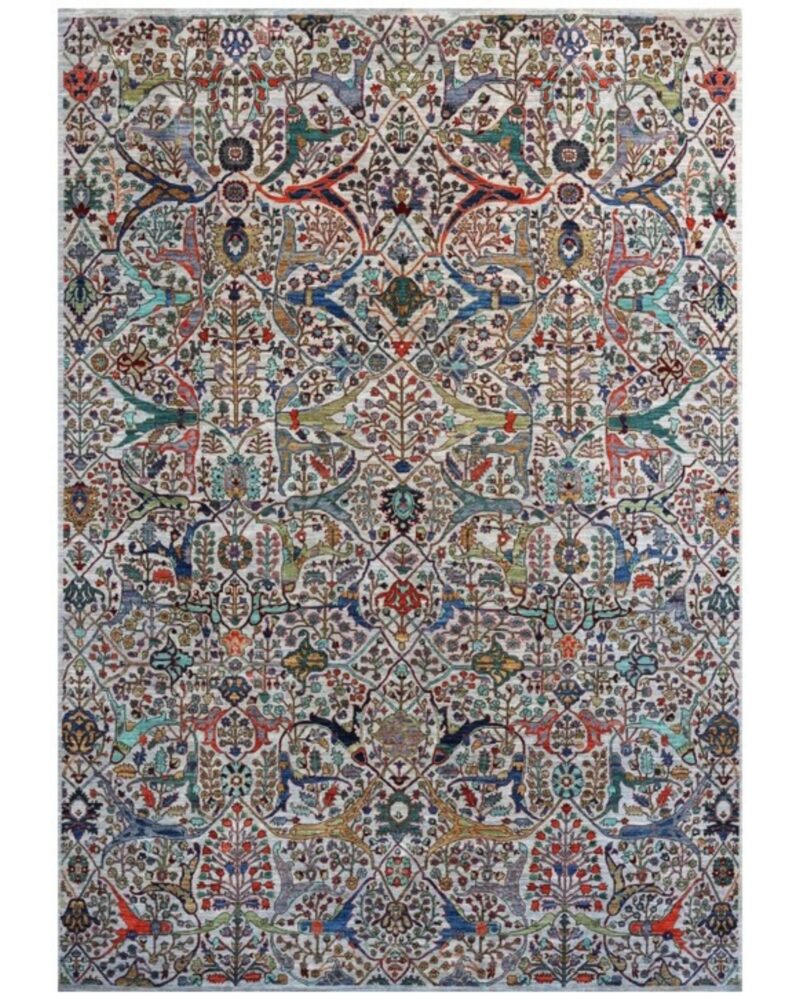
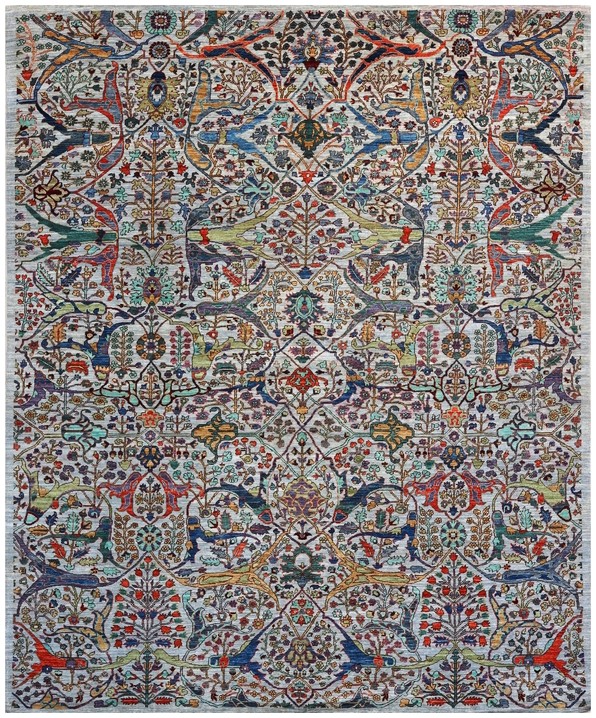
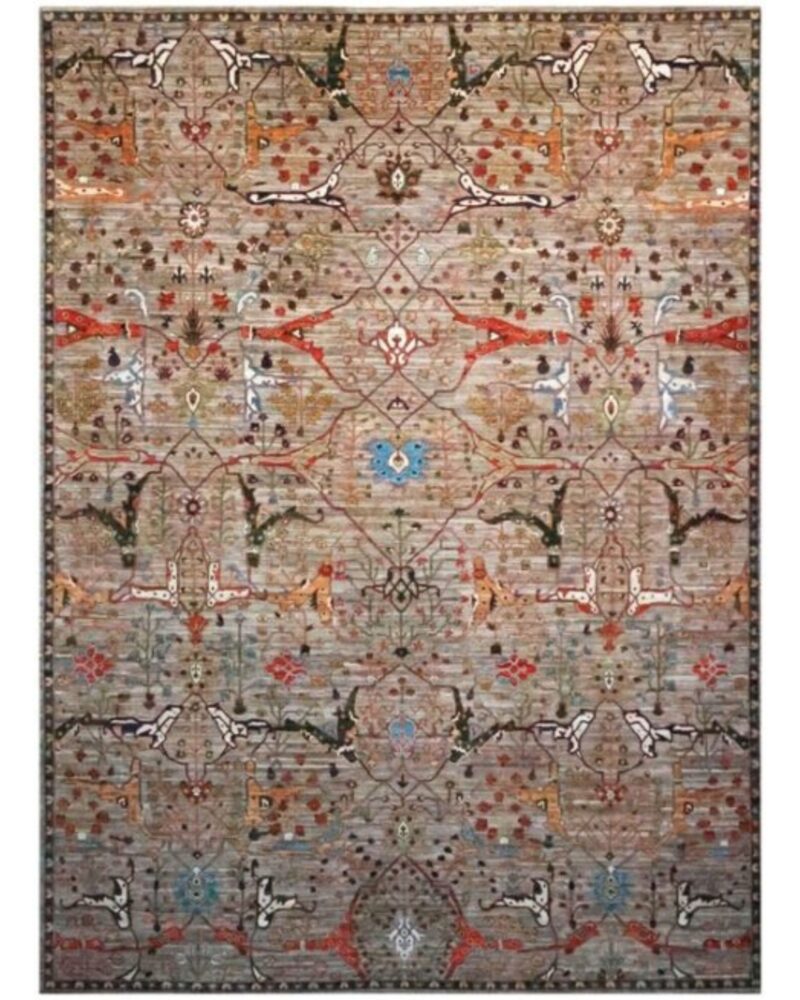
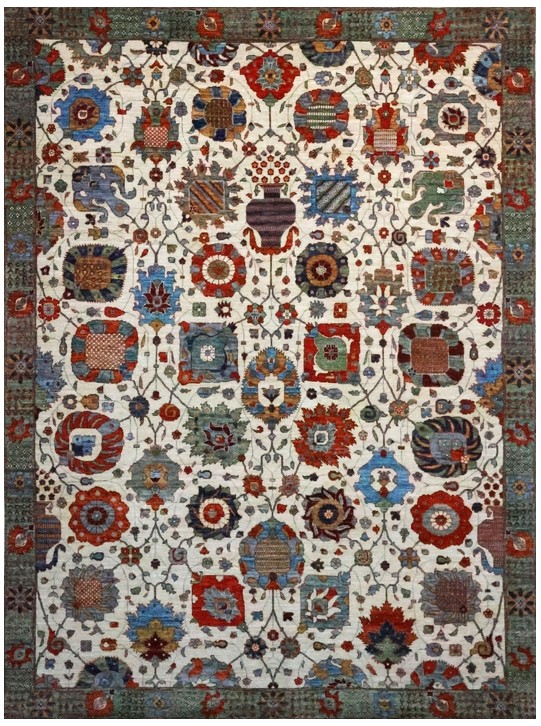
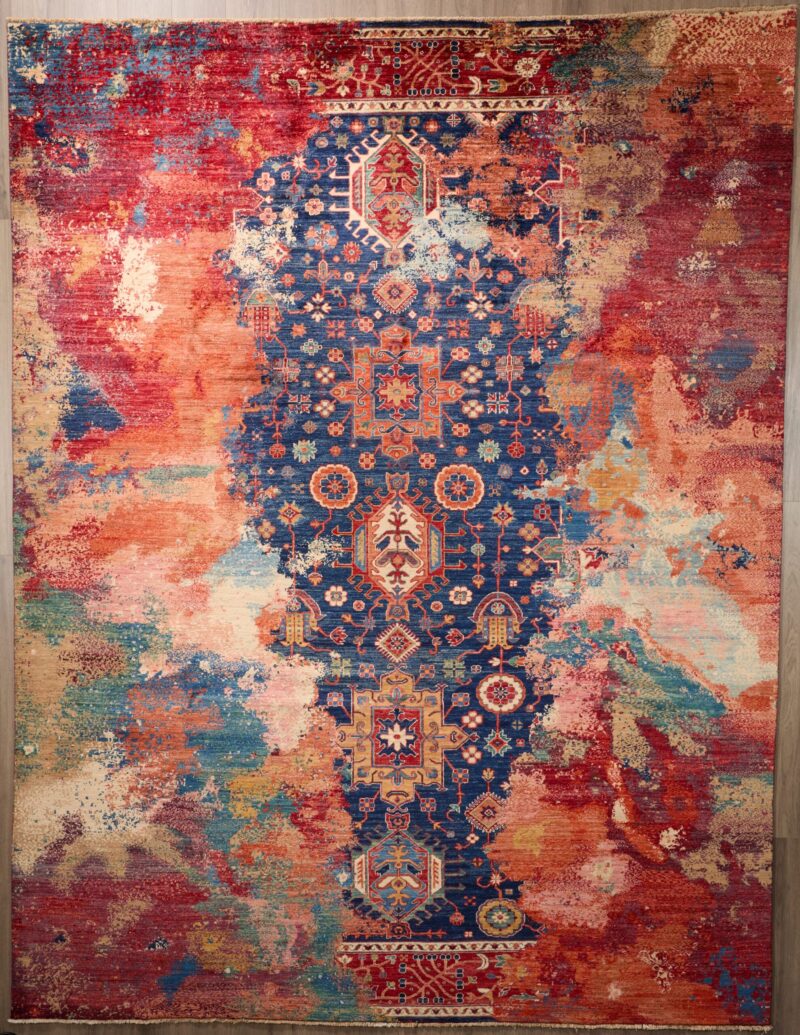
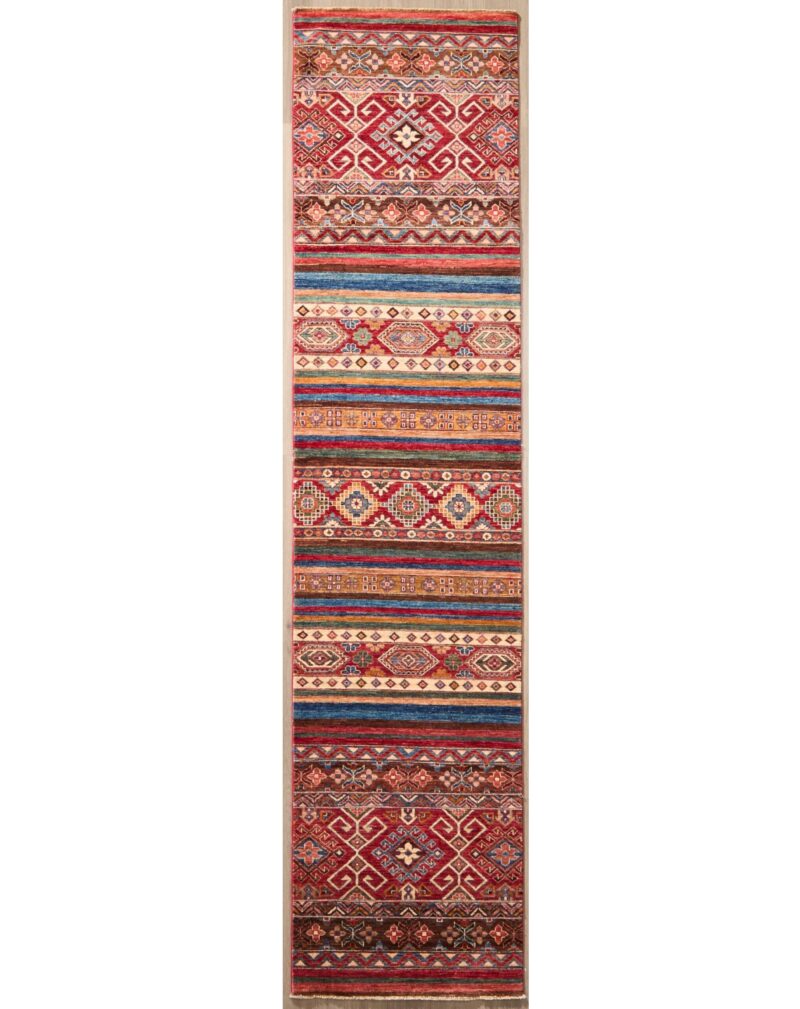
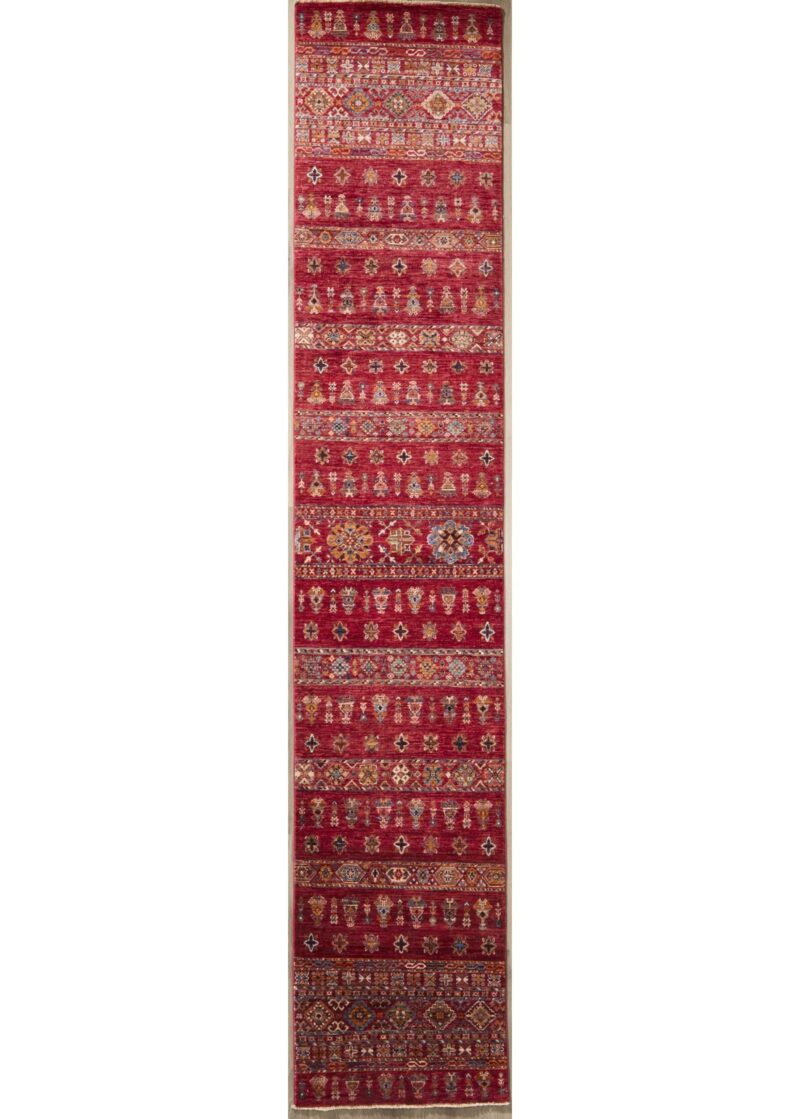
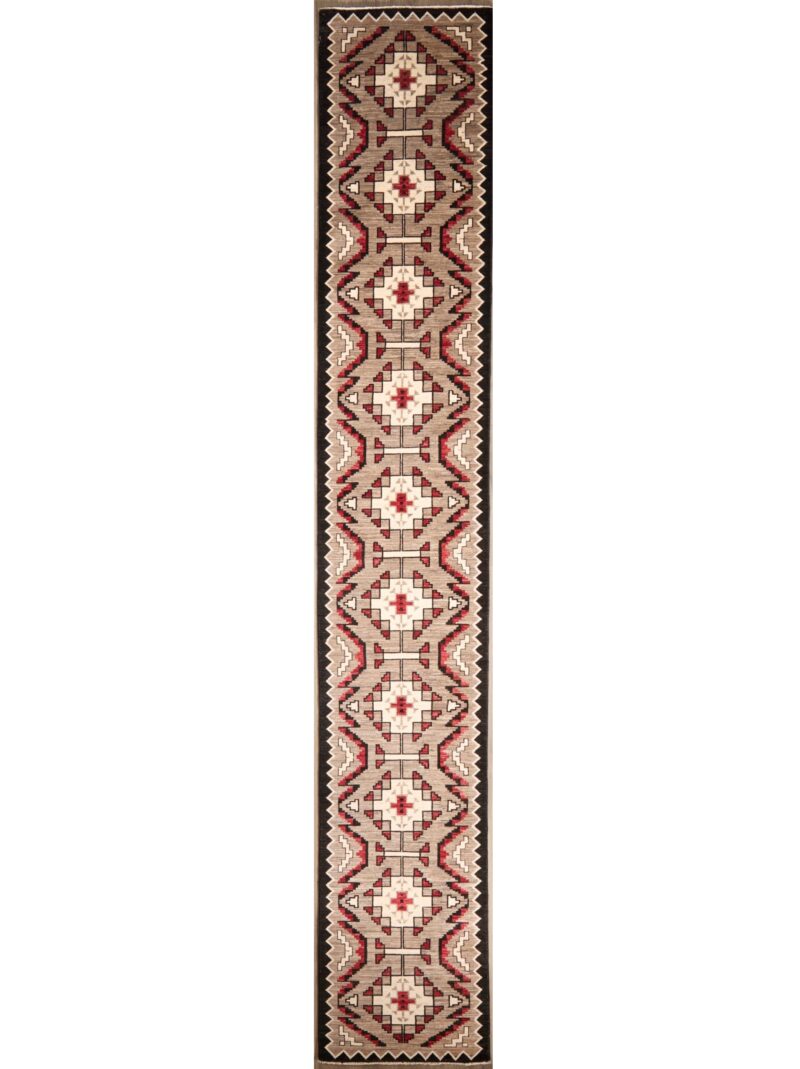
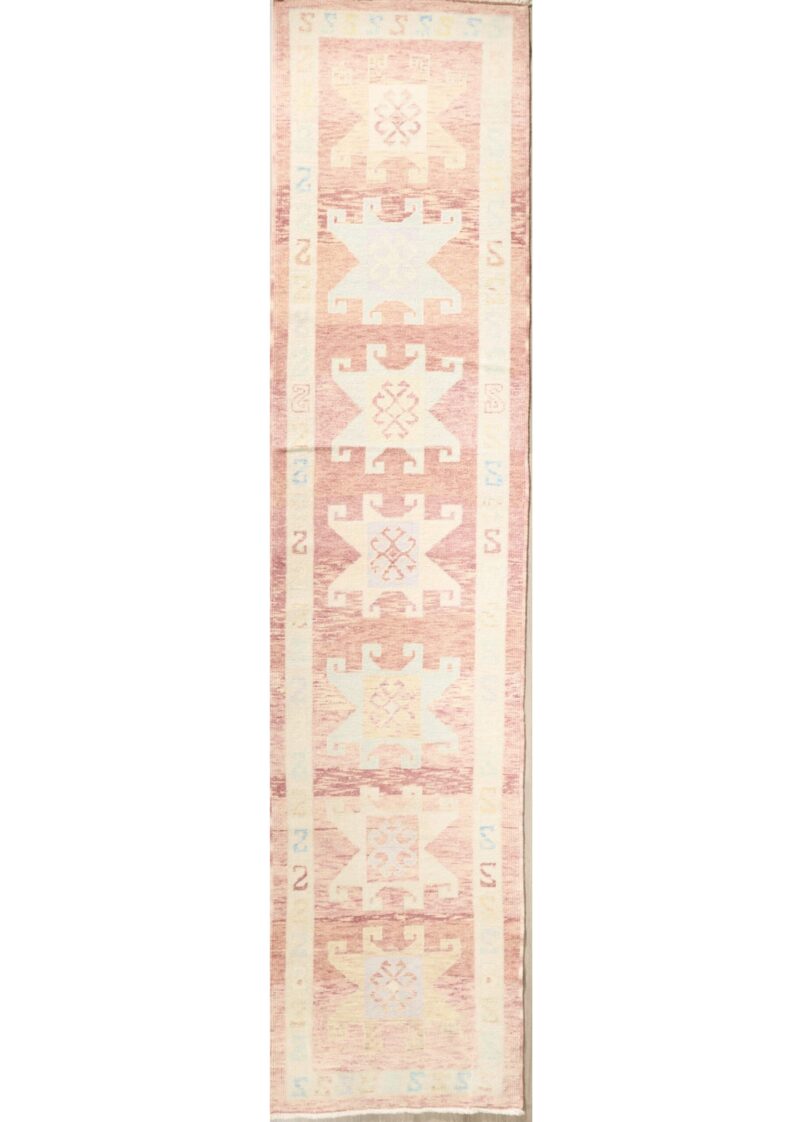
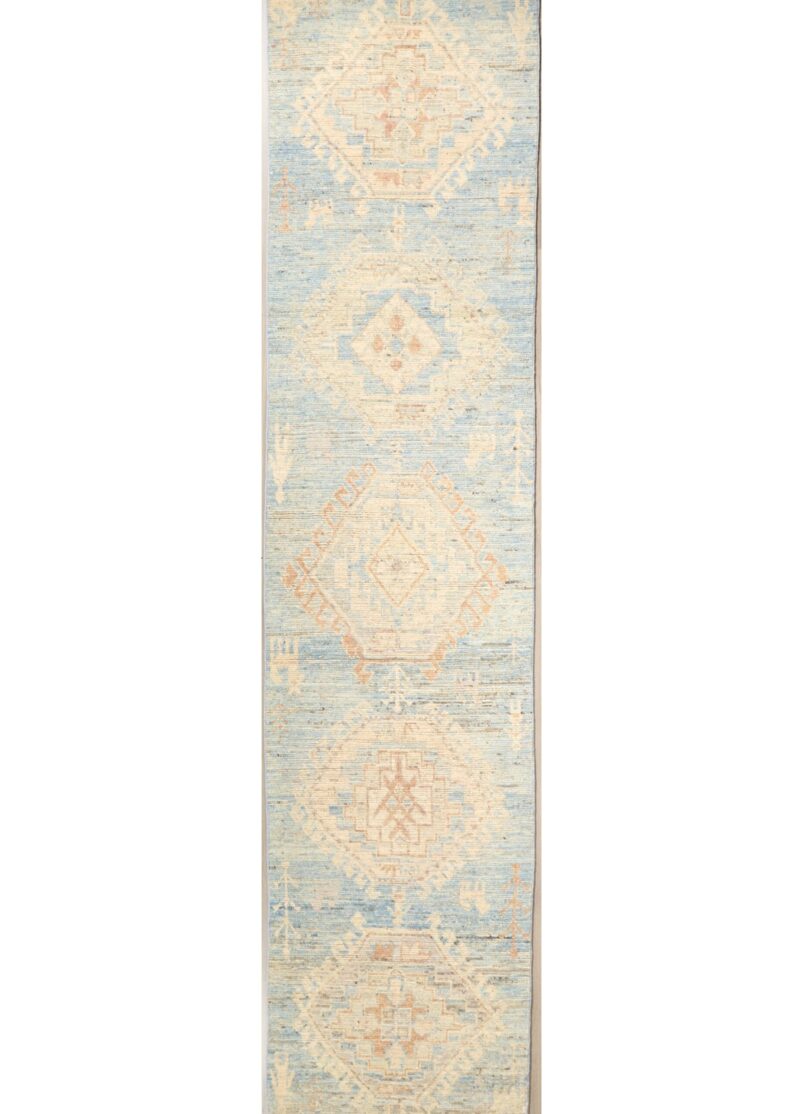
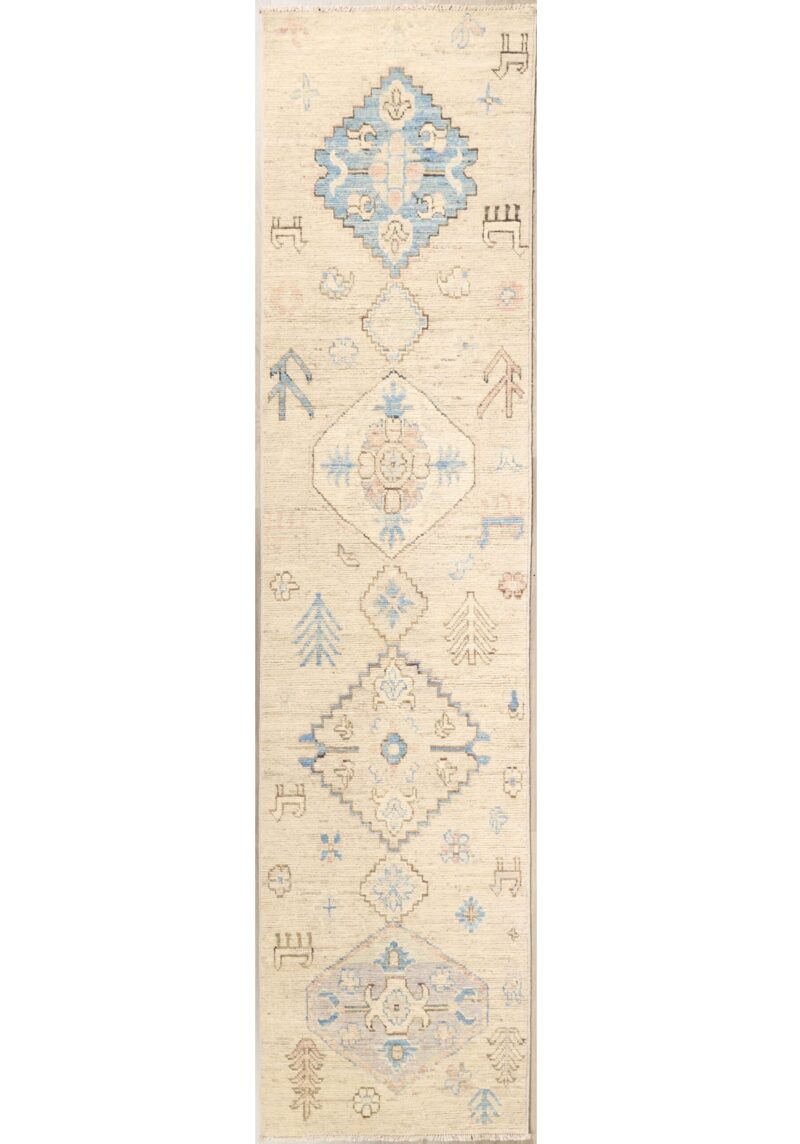
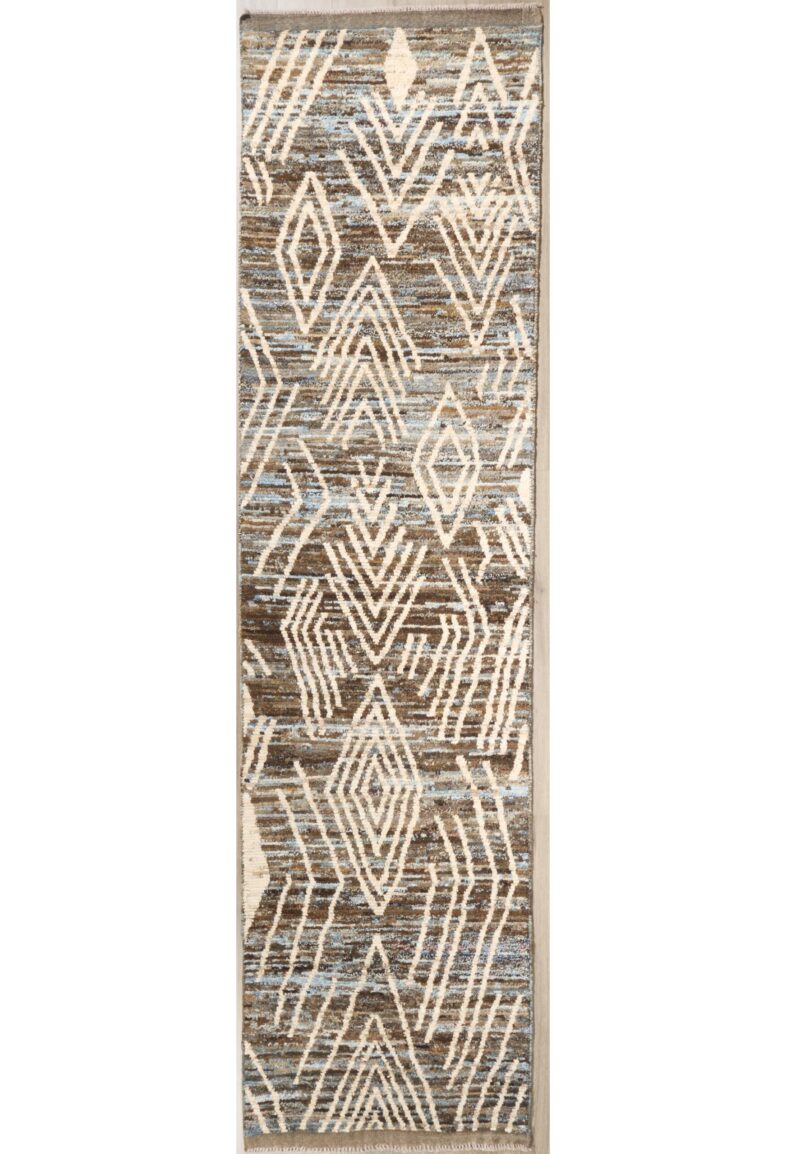
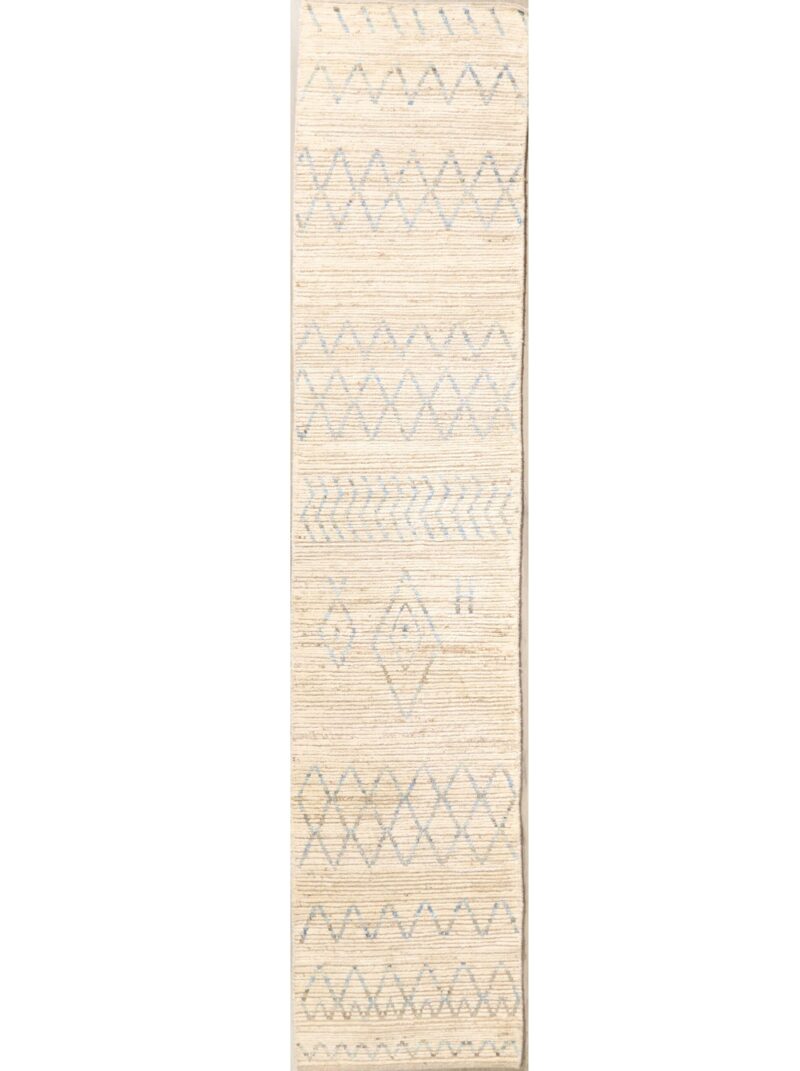
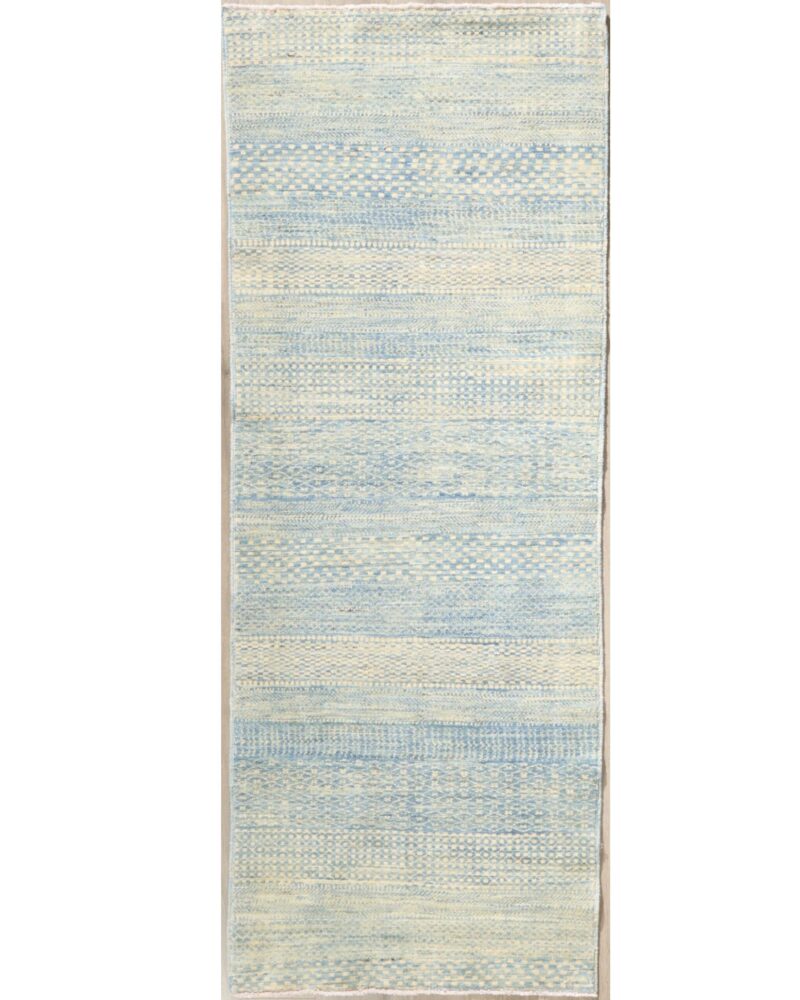
Transitional rugs blend classic Persian and Anatolian design with a restrained, modern sensibility. The style softens dense medallions and ornate borders into open fields, muted palettes, and balanced patterns. Its roots lie in hand-knotted traditions from Iran, Turkey, and Pakistan, reworked for contemporary interiors. Transitional rugs suit homeowners who love heritage craftsmanship but want a calmer, more flexible look. Designers often choose them for living rooms, dining rooms, and bedrooms that mix old and new furnishings.
What Defines Transitional Rugs?
Transitional rugs are typically hand-knotted in wool using the symmetrical Turkish (Ghiordes) knot or the asymmetrical Persian (Senneh) knot. Pile height usually runs between 0.25 and 0.5 inch, which gives a refined surface with clear pattern definition. Weavers in Iran, Turkey, Pakistan, and Afghanistan produce most of these pieces, often on cotton foundations. Hand-spun wool and vegetable-based dyes add depth and a soft sheen.
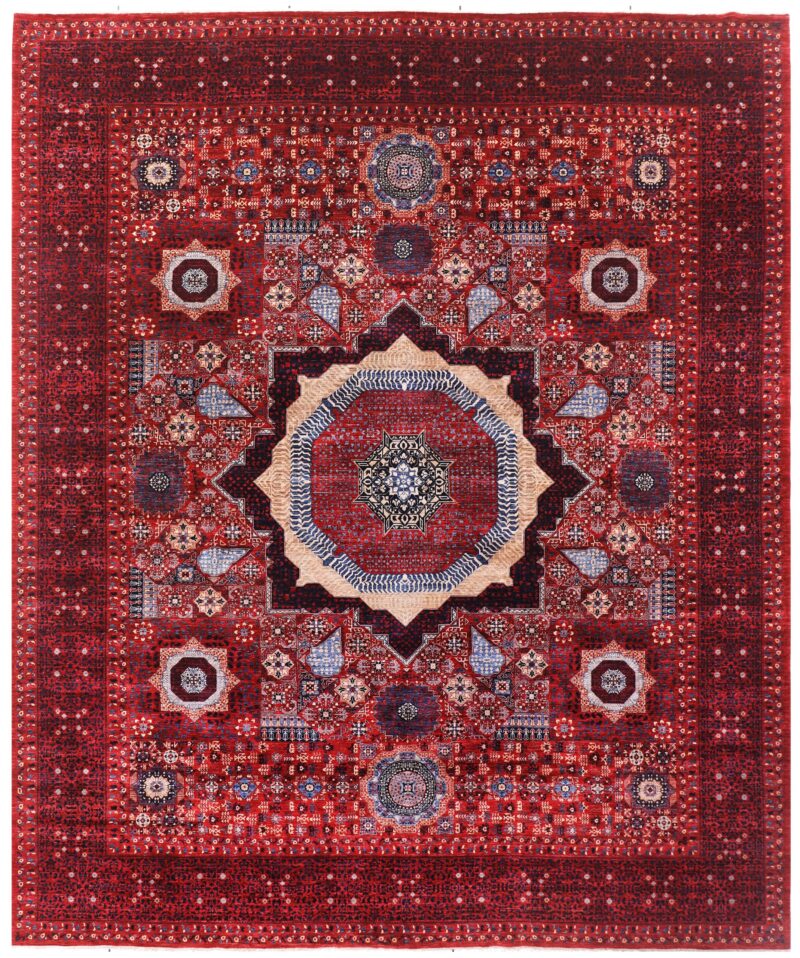
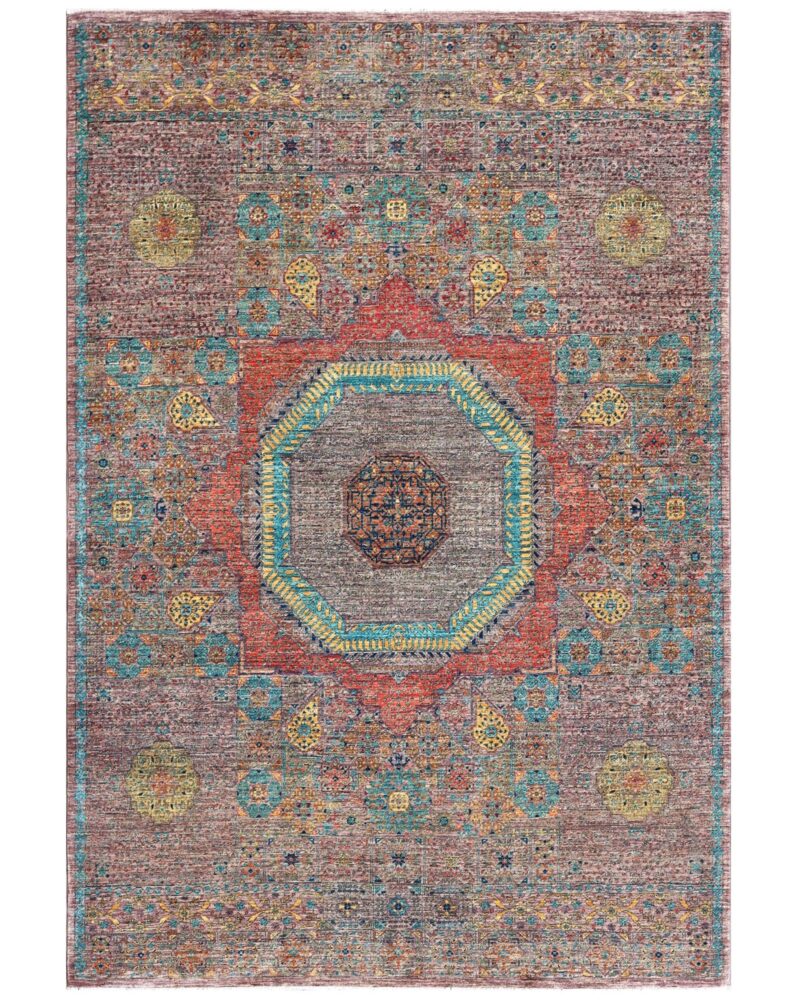
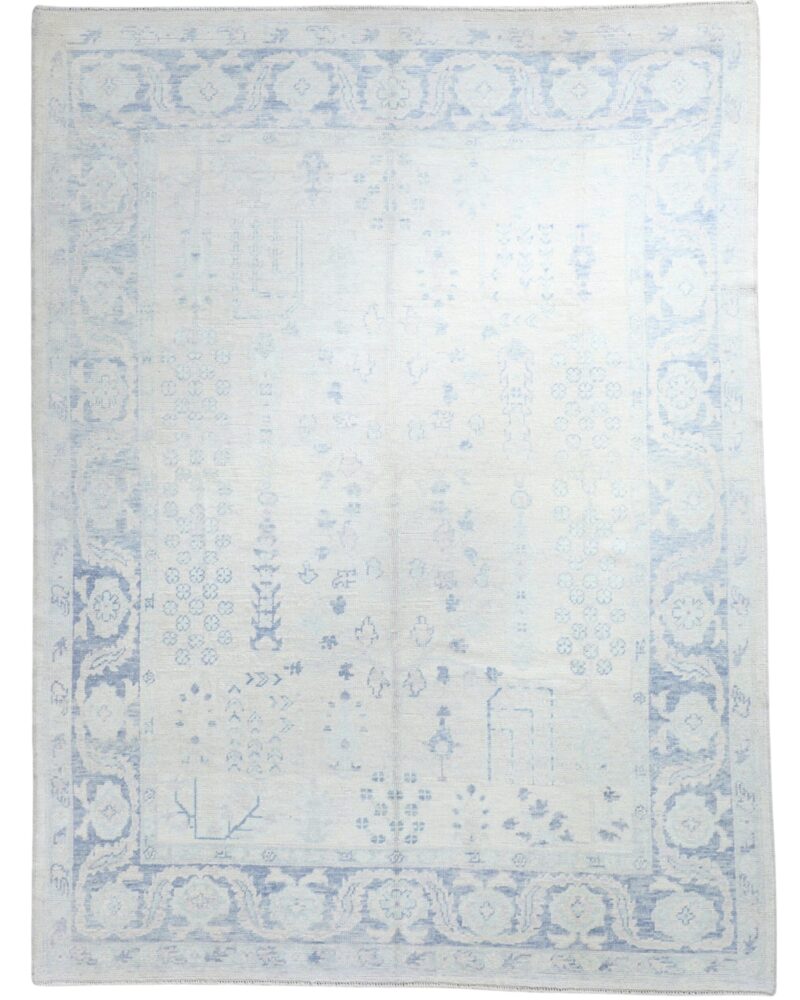
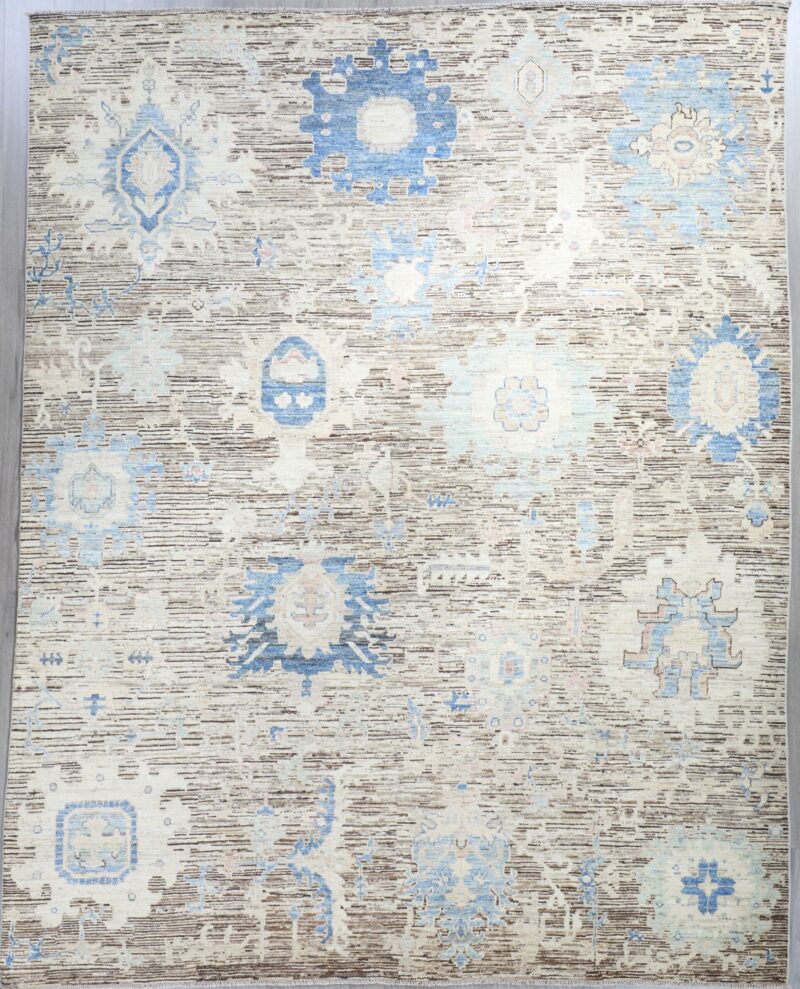
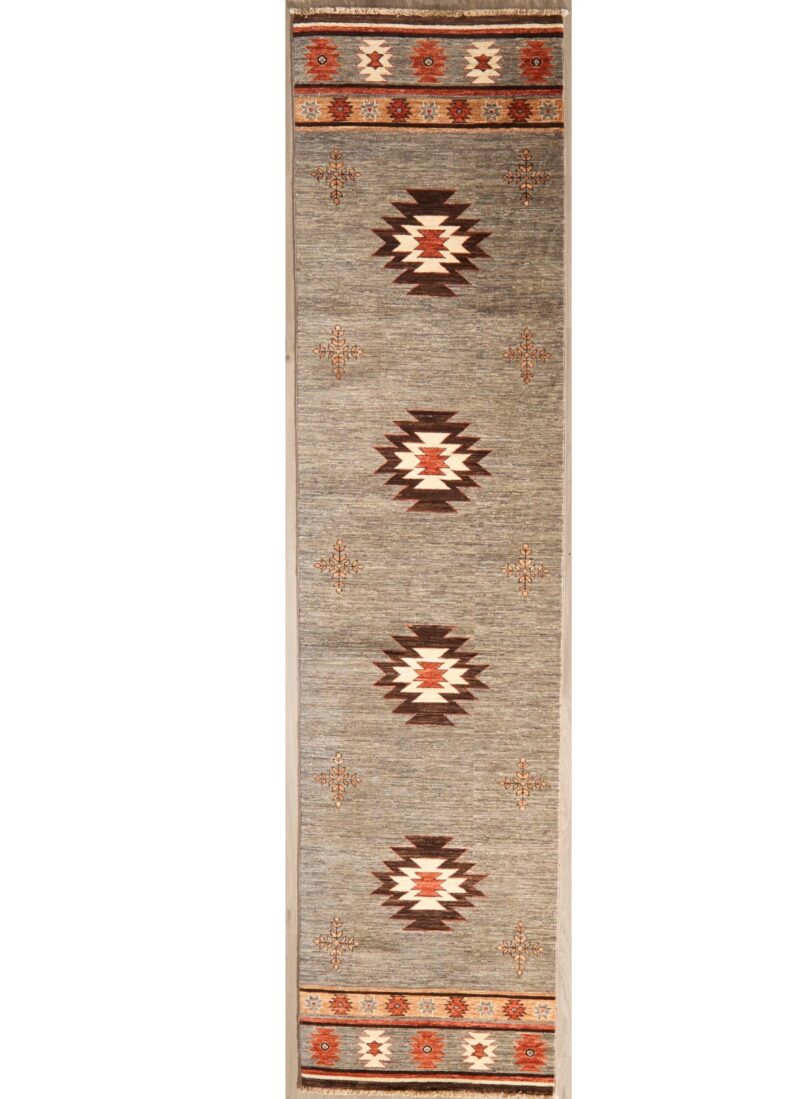
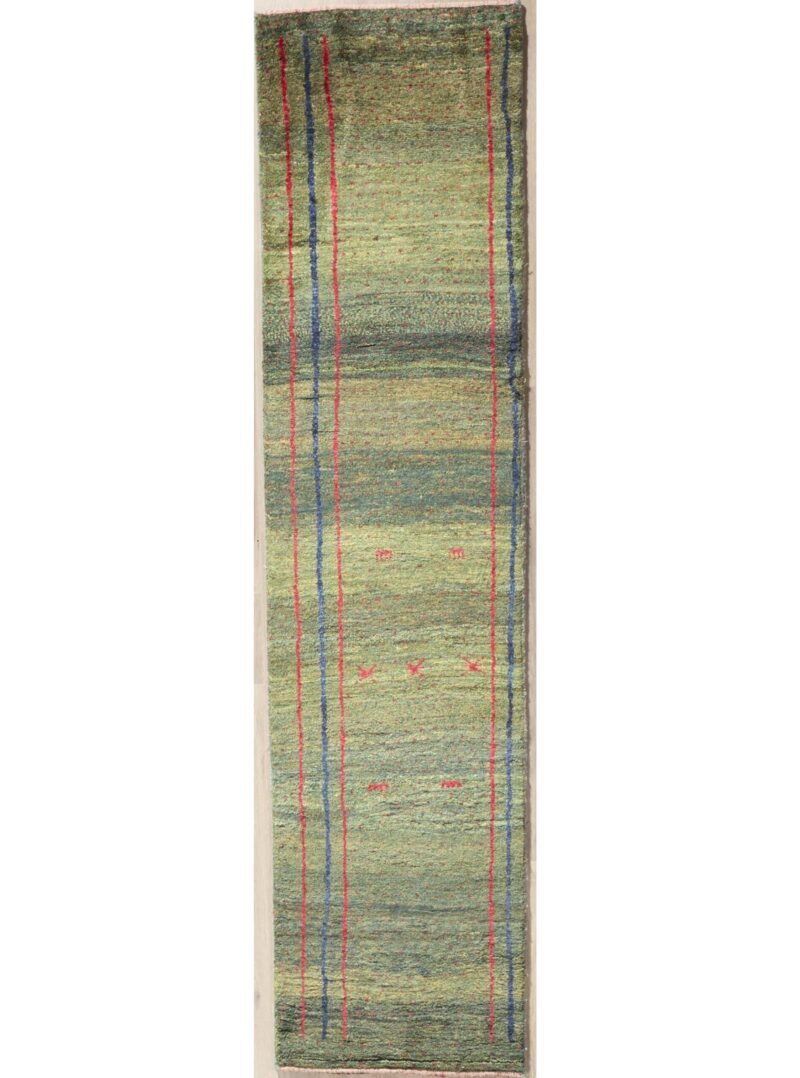
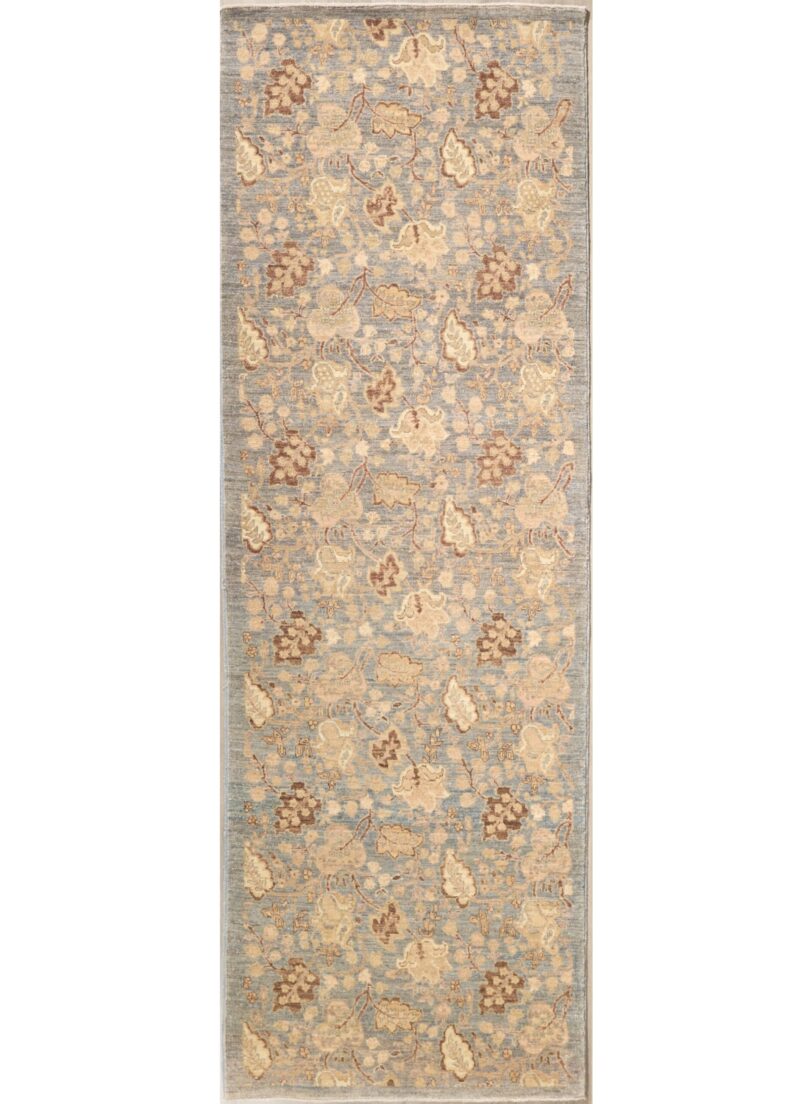
Designs borrow from traditional families such as Heriz, Sultan Abad, Mamluk, and Oushak, then simplify them. Oushak rugs, for example, favor open fields, faded reds, soft golds, sage, and ivory. Heriz and Sultan Abad patterns keep their geometric or floral structure but use quieter contrast. Gabbeh and Suzani-inspired pieces add looser, more graphic shapes. Across the category, neutral grounds of beige, grey, and cream dominate, with accents in blue, rust, or green.
Which Features Matter Most in Transitional Rugs?
Transitional rugs vary widely, so a few practical features separate a lasting piece from a disappointing one.
- Material: Hand-spun wool is typical, on a cotton or wool foundation.
- Pile height: Typically 0.25 to 0.5 inch, low enough for furniture and easy vacuuming.
- Durability: Wool hand-knotted construction commonly lasts several decades with routine care.
- Size range: Runners near 2 x 7 feet up to palace sizes beyond 12 x 18 feet.
- Care level: Moderate, with regular vacuuming, rotation, and professional washing every few years.
Transitional Rug Quick Facts
| Attribute | Typical value | Why it matters |
|---|---|---|
| Construction | Typically hand-knotted, sometimes hand-knotted flatweave blends | Knotting determines pattern clarity and lifespan. |
| Pile height | Typically 0.25 to 0.5 inch | Low pile suits dining chairs and high-traffic rooms. |
| Fiber | Typically wool on a cotton foundation | Wool resists soiling and recovers from foot traffic. |
| Palette | Typically soft neutrals with muted accents | Quiet color pairs with many decor styles. |
| Cleaning interval | Typically every 1 to 3 years, depending on traffic | Regular washing removes embedded grit that cuts fibers. |
How Do You Style Transitional Rugs at Home?
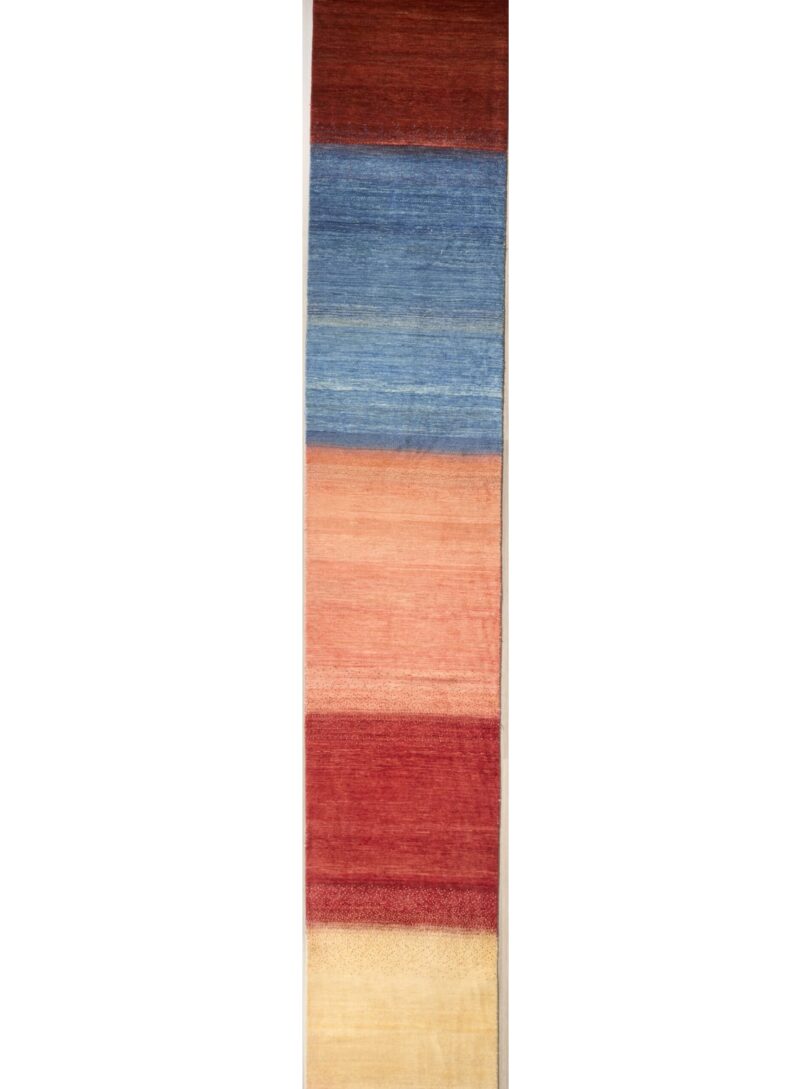
Transitional rugs work in living rooms, dining rooms, bedrooms, and entryways. They pair well with modern farmhouse, mid-century, coastal, and updated traditional decor. Choose a rug with a neutral field if your sofa or walls carry strong color. Pick one with a bolder pattern if the room is mostly white or grey. Runners such as a Garden Panel or a modern Oushak design fit hallways and kitchens well.
Sizing matters more than pattern. In a living room, place at least the front legs of all seating on the rug, which often means 8 x 10 or 9 x 12 feet. Under a dining table, extend the rug about 24 inches past each edge so chairs stay on it when pulled out. A proper pad prevents slipping and protects the foundation; see our rug padding options. For a more tribal or graphic accent, browse our Gabbeh rugs.
Frequently Asked Questions
What size Transitional rug should I buy for my living room?
A Transitional rug for a living room should reach under at least the front legs of every seat. Most rooms suit 8 x 10 or 9 x 12 feet. Leave 12 to 18 inches of bare floor around the edges so the room feels framed.
How do I clean and care for a Transitional rug?
Transitional rugs need weekly vacuuming without a beater bar, rotation twice a year, and prompt blotting of spills. Wool and natural dyes react badly to harsh chemicals and heat. Schedule professional rug cleaning every one to three years to remove embedded soil safely.
Are Transitional rugs durable enough for high-traffic areas?
Transitional rugs hold up well in busy rooms when they are hand-knotted in wool. Their low pile resists crushing and hides wear. Dense knotting and a cotton foundation add strength. Use a quality pad, rotate the rug, and clean it regularly to protect the fibers for decades.
Are Transitional rugs handmade or machine-made?
Transitional rugs come in both forms, but fine examples are hand-knotted by artisans. Hand-knotted pieces show slight irregularities in the back, with visible individual knots. Machine-made rugs show a uniform, mesh-like back. Hand-knotted wool lasts longer, can be repaired, and often keeps its value better.