


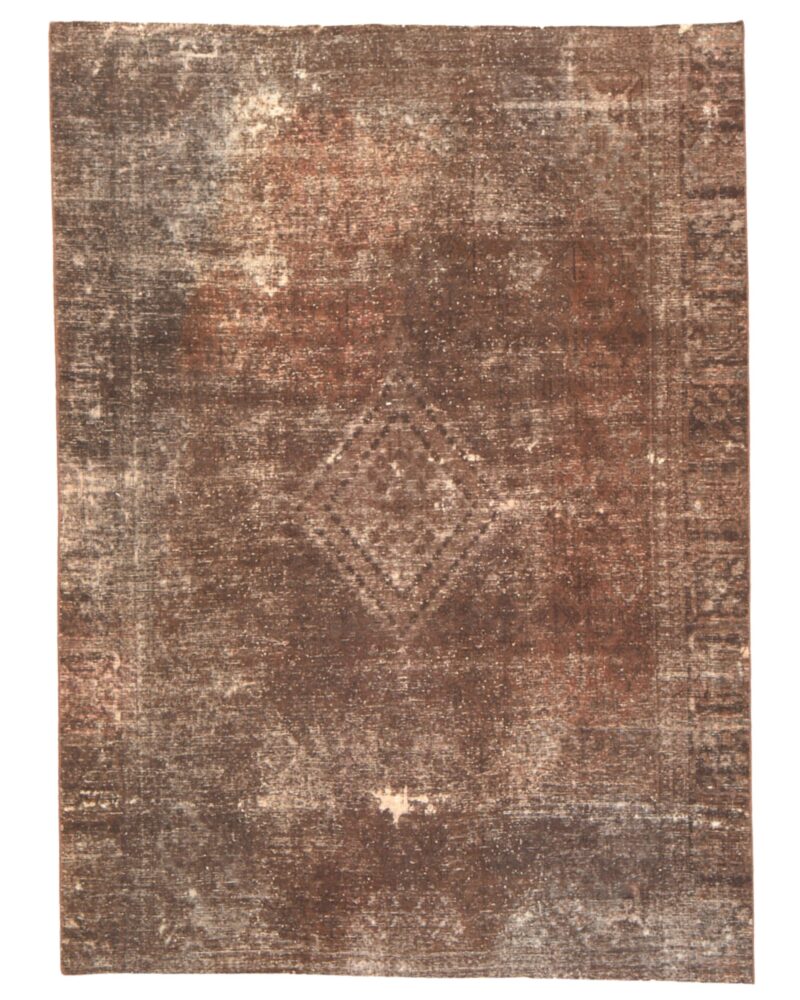
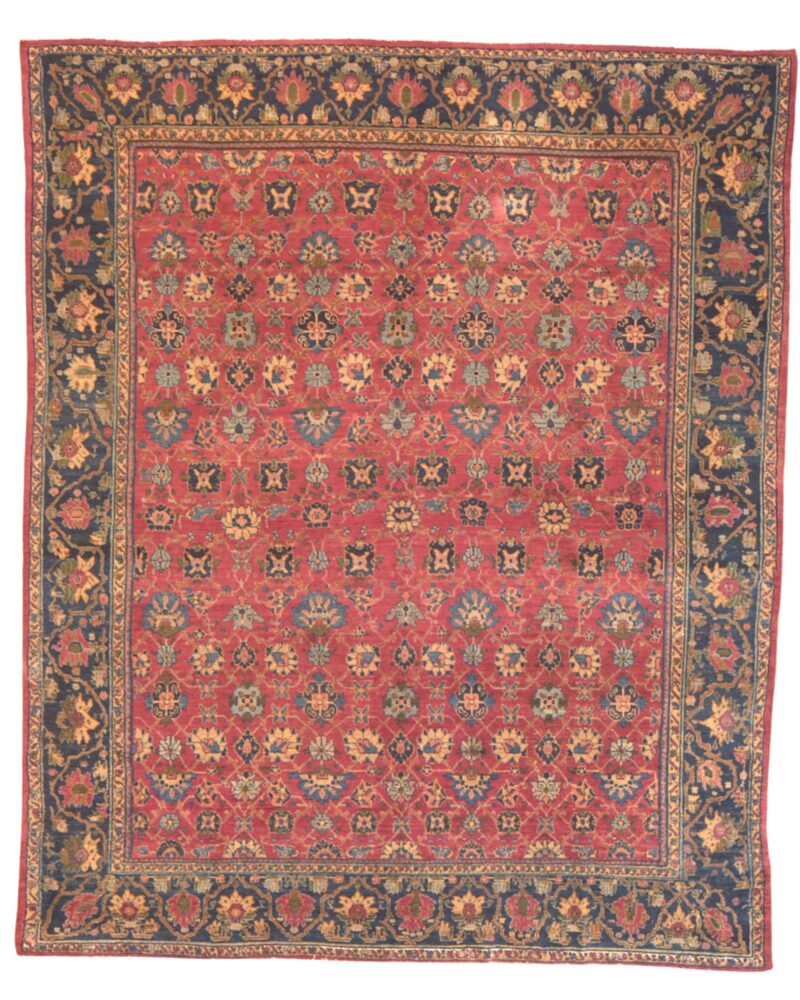
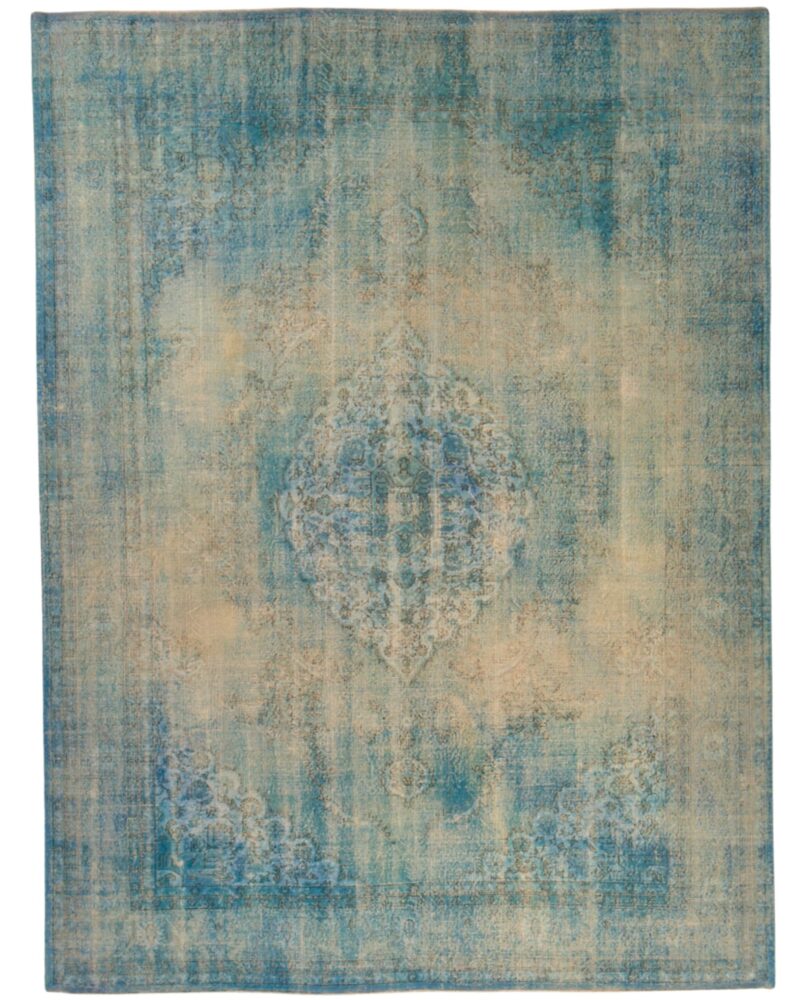
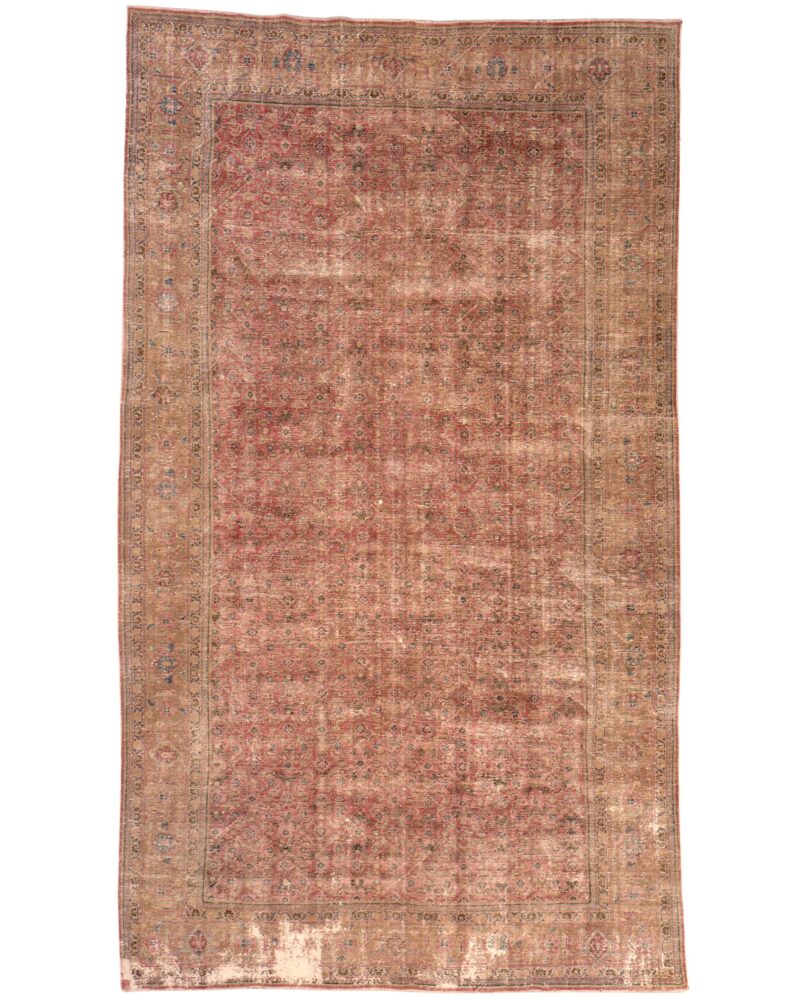
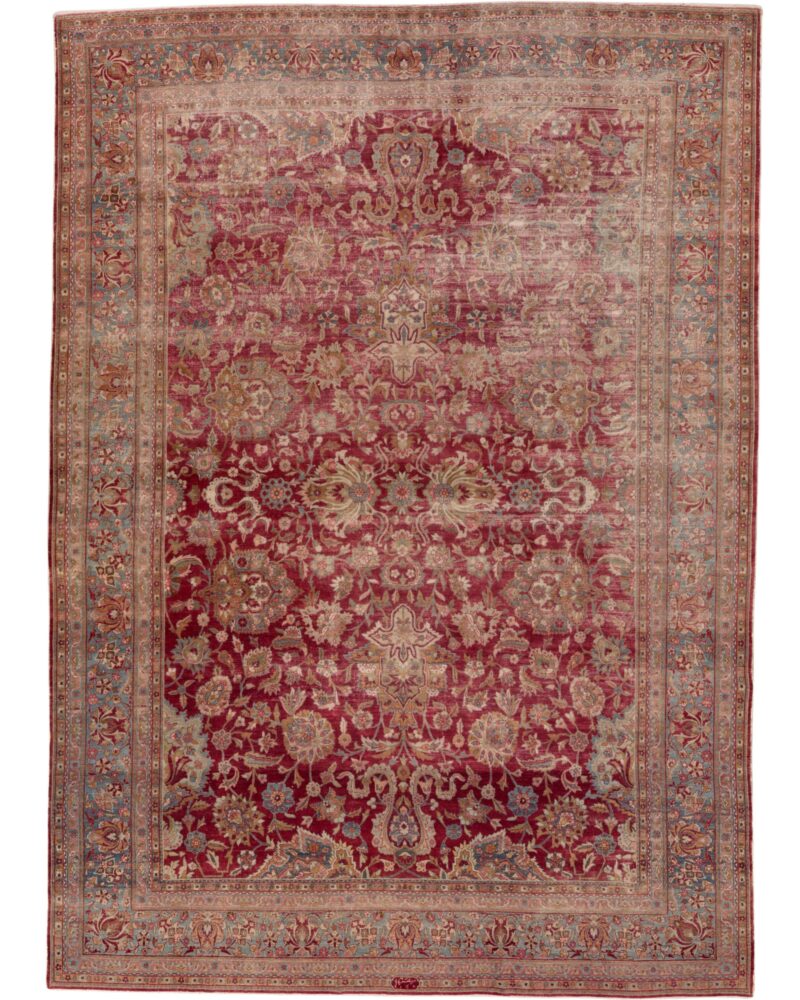
Vintage rugs are handmade pile rugs woven decades ago, usually in Persia, Turkey, or the Caucasus. Their style rests on hand-knotted wool, natural-dye color, and softened, time-worn surfaces. Weavers worked from inherited village and workshop patterns. Collectors, designers, and families who want character in a lived-in room favor them. Vintage rugs suit homeowners who value patina over uniformity. Each piece carries visible evidence of hand production and long use.
What Defines Vintage Rugs?
Vintage rugs use the asymmetrical Persian knot or the symmetrical Turkish knot, tied by hand on a cotton or wool foundation. Pile height typically measures 1/4 to 3/8 inch, though decades of foot traffic often wear it lower. Wool is the standard pile fiber. Region shapes the weave: Heriz and Mahal workshops in northwest and central Persia produced sturdy, coarser rugs, while Kerman and Tabriz weavers tied finer knots.
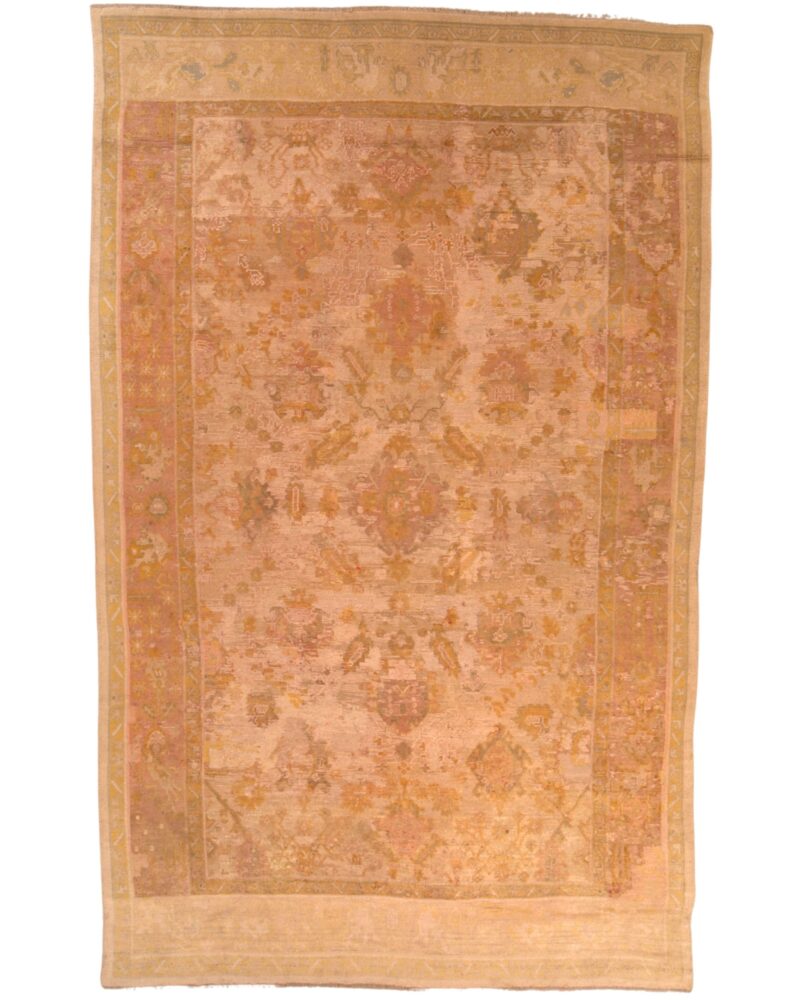
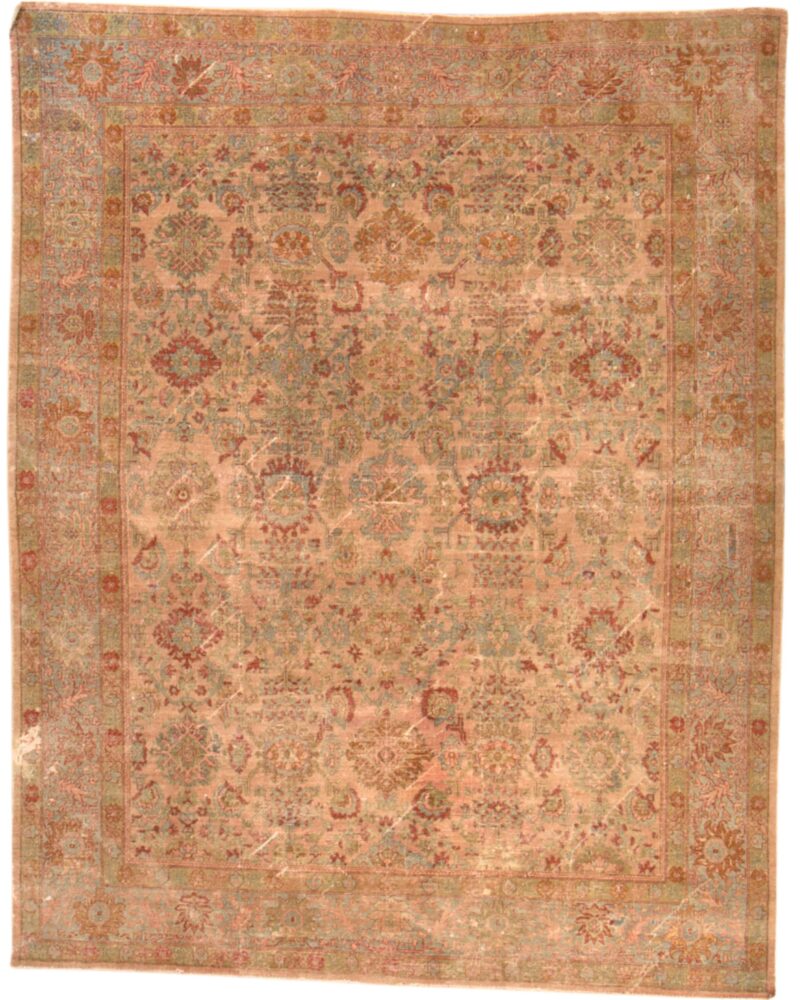
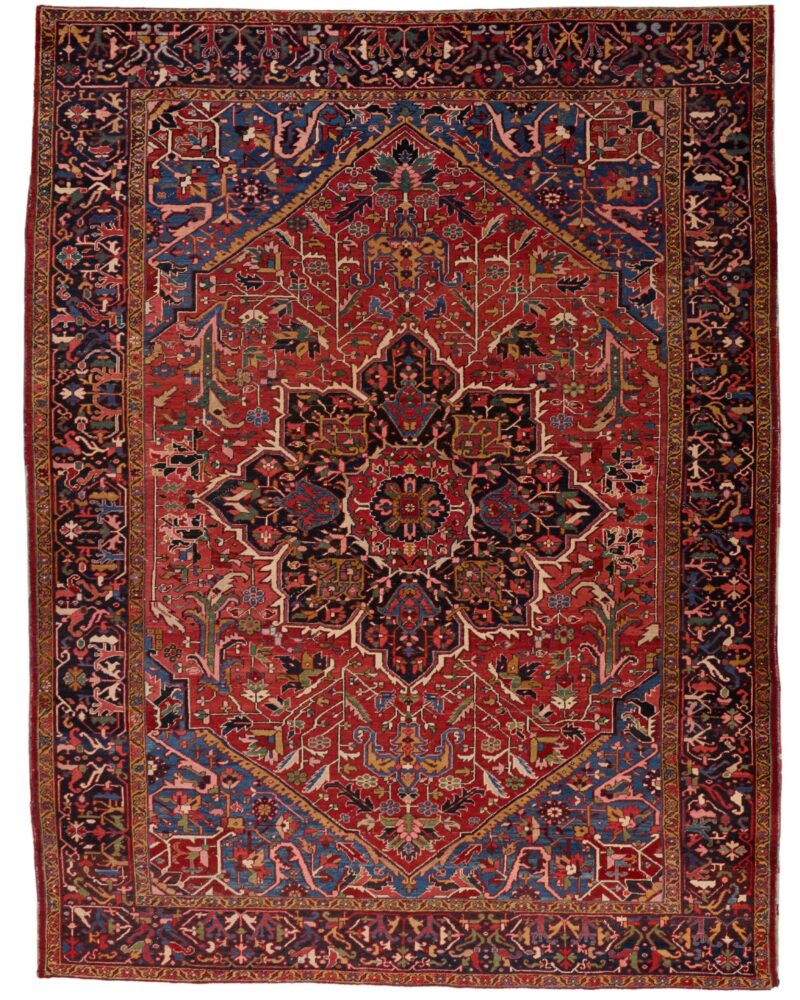
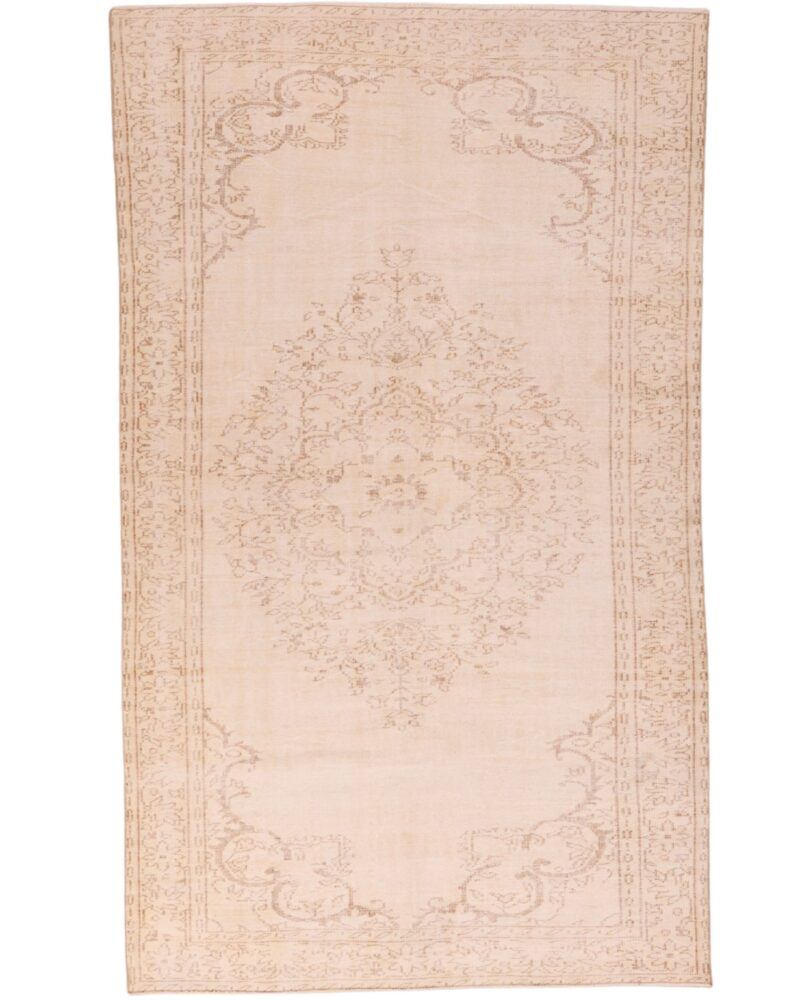
Color and motif vary by origin. Heriz rugs favor bold medallions in rust, indigo, and ivory. Mahal and Ziegler Mahal rugs use open floral fields in soft reds, blues, and sage. Turkish Oushak rugs lean toward muted gold, apricot, and faded green. Overdyed Tabriz rugs carry a deliberate recolored wash over a classic pattern. Our Antique & Vintage Rugs collection covers the wider range of age and origin.
Which Features Matter Most in Vintage Rugs?
Vintage rugs reward buyers who check a few construction details before they decide.
- Material: Hand-spun wool pile, usually on a cotton foundation, sometimes wool.
- Pile height: Typically 1/4 to 3/8 inch, often worn lower in high-use areas.
- Durability: Decades of use prove the construction, and sound wool rugs can last generations with care.
- Size range: Typically 6 x 9 feet to oversized palace sizes beyond 15 feet in length.
- Care level: Moderate, with regular vacuuming, rotation, and professional washing every few years.
Vintage Rug Quick Facts
| Attribute | Typical value | Why it matters |
|---|---|---|
| Knot type | Typically Persian (asymmetrical) or Turkish (symmetrical) | Knot type signals origin and affects pattern detail. |
| Pile height | Typically 1/4 to 3/8 inch | Lower pile suits high-traffic rooms and rolling furniture. |
| Foundation | Typically cotton, occasionally wool | A sound foundation keeps the rug flat and stable. |
| Dyes | Typically natural or early synthetic dyes | Dye type affects fading, cleaning method, and color depth. |
| Cleaning interval | Typically every 1 to 3 years | Regular washing removes embedded grit that cuts wool fibers. |
How Do You Style Vintage Rugs at Home?
Vintage rugs anchor living rooms, dining rooms, bedrooms, and entry halls. Oversized pieces like the Heriz, Mahal, and Oushak styles in this collection suit large open rooms. Pair soft Oushak golds and greens with linen, warm wood, and plaster walls. Pair Heriz rust and indigo with leather, dark timber, and traditional millwork. Overdyed Tabriz tones also work in transitional and modern rooms.
Sizing rules keep a vintage rug in proportion. In a living room, leave front legs of every sofa and chair on the rug. In a dining room, extend the rug at least 24 inches past the table edge on every side. Layer a quality pad underneath, and see our rug padding options. For more relaxed pieces, browse our Tribal Rugs.
Frequently Asked Questions
What size vintage rug fits a living room?
A vintage rug for a living room should typically measure 8 x 10 or 9 x 12 feet. Large rooms may call for 10 x 14 feet or more. Place at least the front legs of all seating on the rug so the arrangement feels connected and grounded.
How do you clean a vintage rug safely?
Vintage rugs need gentle, specialist cleaning rather than harsh chemicals or machine extraction. Vacuum without a beater bar every week, blot spills immediately, and test dyes before wet treatment. A professional rug cleaning every one to three years removes grit and protects the wool.
Are vintage rugs durable enough for daily use?
Vintage rugs are durable enough for daily use when the foundation and wool remain sound. Tightly knotted wool pile resists crushing and wear for decades. Check for dry rot, loose knots, and fraying edges before buying, and repair small problems early to prevent larger damage.
How can you tell a vintage rug is handmade, not machine-made?
A handmade vintage rug shows knots on the back, slight pattern irregularities, and fringe that extends from the foundation. Machine-made rugs show perfectly uniform backs and fringe sewn on separately. Fold the corner back and look at individual knots to confirm hand-knotting.