


What Color Rug Goes With Beige Furniture? A Rug Specialist’s Pairing Guide
November 14, 2026
What Color Rug Goes With Sage Green Curtains? A Rug Specialist’s Pairing Guide
November 16, 2026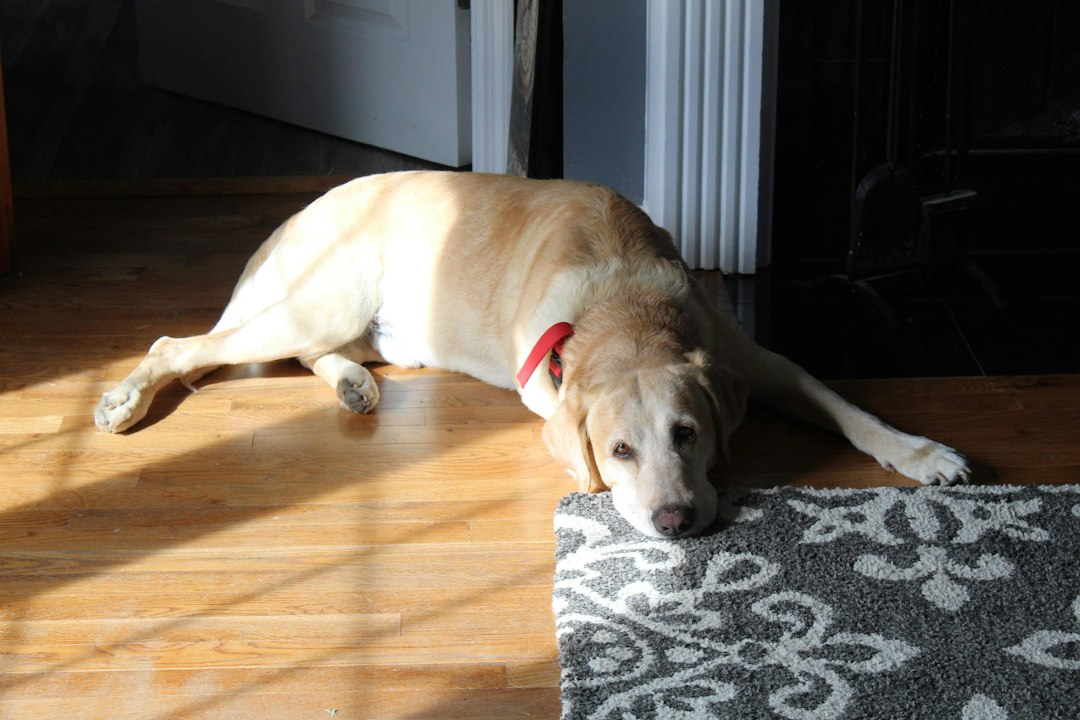
Getting dog urine out of rug pile takes more than paper towels, and I have spent close to two decades proving it in client homes and at the workshop. Most owners grab a spray bottle, scrub hard, and call the job finished once the wet patch fades. The job is rarely finished. Urine that travels past the pile into the foundation and pad keeps feeding bacteria long after the surface dries. That is why the smell returns on humid days or when the heat kicks on. Learn more about Abstract Rugs.
Key takeaways
- Urine soaks through the pile into the foundation within minutes, so surface cleaning alone leaves salts behind that bring the smell back on humid days.
- Act within the first hour by blotting with clean white towels, standing on them to wick liquid upward, and diluting with cool water.
- An enzymatic pet cleaner is what breaks down urine residue, while fragrance and absorbent powders like baking soda do not remove the source of the odor.
- Avoid hot water, ammonia-based cleaners, and hydrogen peroxide, since they set stains, encourage re-marking, or bleach natural wool dyes.
- Dried marks need rewetting with enzymes, and rugs over 20 years old or hand-knotted pieces with natural dyes belong with a specialist.
Dog urine behaves differently in wool, cotton, and synthetic fibers. The sections below sort home remedies by what works and what causes damage. They also mark the point where a stain stops being a DIY project and becomes a job for a restoration specialist. Every threshold comes from workshop practice, not guesswork. Learn more about Rug Cleaning.
Matching rugs
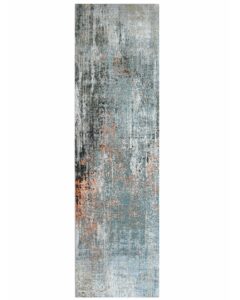
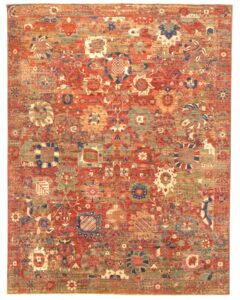
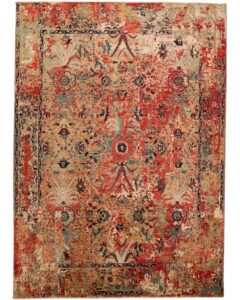
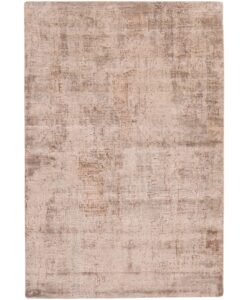
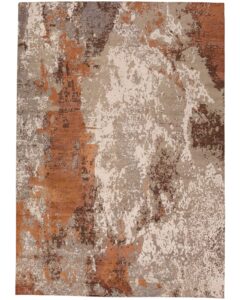
These rugs suit the pet-friendly, easy-care approach the article describes, with patterns and textures that stay beautiful through everyday messes.
What Happens Inside a Rug When Dog Urine Soaks In?
Urine soaks through the pile, knots, and foundation of a rug within minutes. Fresh urine is roughly 95% water. The remainder holds urea, uric acid, creatinine, and trace minerals such as sodium and potassium. On first contact the solution is mildly acidic, so a quick blot and cool rinse can prevent a permanent mark.
Bacteria convert urea into ammonia as the spot sits, and the pH swings alkaline. That shift creates the sharp, biting odor most owners recognize instantly. Uric acid and mineral salts then bond to wool keratin and to cotton or jute foundation fibers. Once dry, these salts become insoluble. Warmth and moisture reactivate them, so odor returns on humid days. Soap and water cannot dissolve the residue. An enzymatic or oxidizing treatment can.
Why Does a Urine Stain Behave Differently From Coffee or Wine on a Rug?
Urine penetrates deeper than coffee or red wine because it travels down through the pile instead of resting on top. Coffee tannins and wine pigments stay near the surface. Cold water, mild detergent, and sometimes a diluted vinegar rinse lift them. Urine leaves salts in the foundation, so surface cleaning removes only what the eye can see.
Jute and cotton foundations hold moisture for days. Residue left there keeps producing odor, and months of wetness can rot natural fibers. Technicians therefore treat urine as a depth problem, not a color problem. Wine calls for blotting skill and oxidizers. Urine calls for extraction that reaches the lowest layer.
Can You Remove Your Dog’s Urine From a Rug Yourself?
A fresh accident caught within the first hour often responds to home treatment. Blotting, cool-water dilution, and an enzymatic pet cleaner handle most small spots on synthetic rugs. Speed matters most, because crystals have not yet set into the fiber.
Clean white towels come first. Press them into the wet area and stand on them to wick liquid upward. Hold off on water, since flooding the spot early pushes contamination into the pad and subfloor. Work from the outer edge inward so the stain stays contained. Our walkthrough on how to wash area rug fibers safely explains each material’s limits.
Which Household Products Work on a Fresh Dog Pee Stain in a Rug?
Cool water, white vinegar, baking soda, and an enzymatic cleaner work on stains under 24 hours old. A solution of 1 part white vinegar to 2 parts cool water neutralizes some ammonia odor. Blot the area instead of rubbing. Baking soda then absorbs leftover moisture, though it does nothing to urate crystals.
Ammonia-based cleaners belong on the avoid list because they smell like stale urine and can encourage a dog to remark the spot. Hydrogen peroxide bleaches natural dyes on wool within minutes, and even a 3% household bottle can lighten madder reds. Hot water sets protein residue permanently.
- Cool water: dilutes urine; never use hot water
- Clean white microfiber cloth: blots without rubbing or spreading
- Enzymatic pet-odor cleaner: digests organic residue; apply enough to reach the backing
- Paper towels under weighted plastic sheeting: draw moisture upward overnight
- Wet/dry shop vacuum: extracts moisture instead of waiting for slow air drying
- pH test strips: confirm a neutral 6.5-7.5 reading before calling the job finished
What Is the Best Way to Treat Dried Urine Marks in a Rug?
Dried urine marks need rewetting with an enzymatic solution, because enzymes must reach the crystallized residue to break it down. Dry treatment cannot penetrate hardened salts. Saturate the spot more deeply than feels natural, cover it for 15 to 30 minutes, then extract with clean water. Repeat two to three times.
Wool and silk carry extra risk, since repeated saturation can move dye or weaken a brittle foundation. Rugs older than 20 years belong with a specialist, as does any hand-knotted piece with natural dyes. Press a damp white cloth against a hidden fringe edge first. Any color on the cloth means stop.
How Do You Get Urine Smell Out of a Rug for Good?
Permanent odor removal depends on enzymatic action that breaks residue down, not on fragrance or absorbent powders. Enzymes and bacterial cultures metabolize organic compounds into water-soluble pieces. Clean-water extraction then flushes those pieces out. Smell that returns after surface cleaning almost always signals treatment that never reached the pad or foundation.
Dwell time decides the result. Enzymes need 24 to 48 hours under slightly damp, covered conditions to finish their work. Store-bought labels often promise results in minutes, which falls far short. Keep plastic sheeting over the spot, rewet lightly if it dries, then extract and run fans.
What Brings Urine Odor Back After a Rug Is Cleaned?
Urine odor returns because contamination sits in the pad or subfloor where surface cleaning never reaches. Humidity reactivates dormant salts. The EPA advises keeping indoor humidity below 60%, with 30-50% as the target, and many summer rooms exceed that. Warm, damp air releases the same ammonia-like gas that announced the first accident.
Hardwood beneath the rug adds a third layer. Repeated accidents over several weeks let urine seep into the grain and finish, so rug, pad, and floor each need separate treatment. A professional Rug Cleaning service maps contamination with moisture meters and UV light before choosing a plan, instead of guessing from visible staining.
How Can You Kill Mildew Smell When Pee Keeps a Rug Damp?
Mildew smell in a urine-soaked rug fades only after full drying with forced airflow and an antimicrobial rinse. Mold spores already present in household dust colonize wet organic fibers within 24 to 48 hours in a poorly ventilated room. Masking sprays fail because growth continues underneath.
Aim fans and a dehumidifier at the rug, and lift it off the floor so air reaches the underside. Hold room humidity under 60%. A rug that stays wet beyond two days risks fungal growth, and enzymes alone will not stop it. At that stage a dedicated antimicrobial step becomes necessary.
More matching rugs
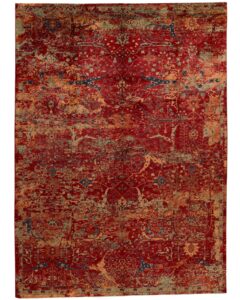
Another set of rugs that follow the same colors and style as this guide.

Which Cleaning Mistakes Set Pee Permanently Into a Rug?
Five cleaning mistakes turn a fixable accident into permanent damage: bleach, heat, hard scrubbing, early flooding, and drying without extraction. Each one locks residue into the fiber or strips dye. I rank them below by how difficult they are to reverse.
One decision rule saves most rugs. On wool or silk, apply no heat, no oxidizer, and no saturation without extraction. Follow that rule and the worst errors cannot happen. Synthetic rugs forgive more, yet their pads still hold odor.
- Full-strength peroxide: bleaches natural dyes within minutes; skip it on wool and silk
- Steam cleaning: heat bonds proteins to wool and silk; use cool water instead
- Hard scrubbing: distorts pile and drives urine deeper; blot gently
- Early flooding: carries urine into pad and subfloor; blot first
- Air drying alone: leaves dissolved salts behind; extract with a wet/dry vacuum
When Should You Call a Professional for Pet Urine in a Rug?
A professional should treat the rug when the stain is older than a few days, wider than 6 to 8 inches, or sitting on wool, silk, or an antique hand-knotted piece. Persistent odor after home treatment qualifies too. All of these signs point to contamination in the foundation yarns or padding, which household products and steam cleaners cannot reach safely.
Natural fibers react to urine differently from synthetics. Wool can felt or shrink under hot water or high-heat drying. Silk pile yellows permanently from alkaline urine byproducts and from misused peroxide. The table below sets out the thresholds I apply.
| Factor | DIY Treatment Suitable | Professional Treatment Recommended |
|---|---|---|
| Stain age | Under 24 hours | Over 48 hours or unknown age |
| Stain size | Under 4 inches diameter | Over 6-8 inches or multiple spots |
| Rug material | Synthetic (nylon, polypropylene) | Wool, silk, jute, hand-knotted antique |
| Odor status | No lingering smell after 48 hours | Persistent or worsening odor |
| Pad/floor involvement | Contained to rug surface only | Suspected seepage into pad or subfloor |
| Rug value | Under $200, replaceable | Antique, investment-grade, or sentimental value |
What Does Professional Restoration Involve After Urine Damage?
Professional restoration begins with a UV black-light inspection that maps every contaminated spot. Urine salts fluoresce under UV light even when invisible on dry fibers. Technicians then submerge or flood-rinse the whole rug in a controlled bath. Partial treatment on a saturated rug leaves a faint ring or odor pocket at the original stain edge.
A pH-balanced, fiber-specific enzyme solution follows the bath. Drying runs 24 to 48 hours at 70-80°F with industrial air movers, and severe cases take 3 to 5 days in total. Rotted or weakened foundation threads may need partial reweaving. That work falls under Rug Repair & Restoration, because structural threads beneath the pile sometimes need full replacement.
What Prevents Pet Stains From Ruining a Rug Long Term?
Prevention rests on three habits: a quality rug pad, forgiving materials, and a response within minutes. A dense, moisture-blocking pad guards the floor when a spot gets missed. Felt-and-rubber blends absorb urine, so a soaked pad needs replacing even after the rug is cleaned.
Material choice matters before a rug ever enters the house. Synthetic and flatweave options resist staining and odor absorption better than high-pile wool. Smart shopping costs less than later restoration. Quality Rug Padding adds a buffer that slows liquid long enough for a quick response.
Which Rug Types Resist Canine Urine Best?
Flatweave and low-pile synthetic rugs resist canine urine best, because short fibers and a tight weave give liquid little to cling to. Flat-woven styles from our Kilim Rugs collection have no deep pile, so owners gain a wider window to blot and treat the spot.
Households with puppies often choose machine-washable rugs. Our guide on caring for a washable rug explains which constructions survive repeated cycles without losing shape or color. Read it before buying for a home with a new dog.
- Low-pile flatweaves and kilims: quick to treat, minimal liquid retention
- Synthetic polypropylene: highly stain-resistant, tolerates stronger cleaners
- Washable cotton blends: survive a full wash cycle, ideal for puppy training
- Wool pile: needs pH-balanced treatment, dries faster over a breathable pad
- Silk or silk blends: highest risk of yellowing, best kept out of pet-heavy rooms
Final picks
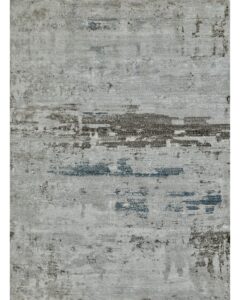
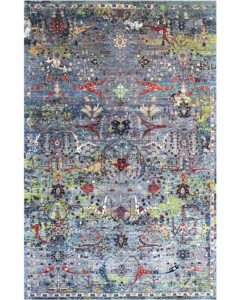
One last row of rugs chosen to go with the ideas above.


My Experience With Dog Urine Out of a Rug
I’ve lost count of the wool Persian and Turkish rugs that have reached our workshop carrying some version of this exact problem. The pattern rarely changes: an owner treats the surface, the stain seems to vanish, and three weeks later the smell returns stronger than before. One case stands out, a hand-knotted Heriz roughly 60 years old. The owner had used full-strength hydrogen peroxide on a urine spot without testing it. The peroxide lifted the stain, but it also stripped natural madder-root red from a six-inch patch, leaving a pale, bleached oval that no enzymatic cleaning could reverse.
Years of flood-rinsing rugs in our wash basin taught me that the UV light test rarely lies. Clients have sworn a rug was accident-free, then watched a black light reveal eight or nine old spots glowing pale yellow-green across the back, invisible from the front. That moment explains why diligent spot cleaning cannot solve a problem already inside the foundation. My rule after all these years is simple. If I still smell anything after the rug air-dries for 48 hours, more contamination is hiding than the eye can see, and the rug needs a full bath instead of another spot treatment.
Frequently Asked Questions About Urine in Rugs
Can baking soda alone remove dog urine smell from a rug?
Baking soda alone cannot remove dog urine odor from a rug. It absorbs surface moisture and mild smell temporarily, but it leaves urate crystals untouched, so odor typically returns within days once humidity rises. Use it as a drying aid alongside an enzymatic cleaner.
Is steam cleaning safe for dog urine in a rug?
Steam cleaning is unsafe for dog urine on wool and silk rugs. Heat denatures the proteins in urine and bonds them tighter to the fibers, which can set the stain permanently. Cool or lukewarm water paired with an enzymatic cleaner works far better.
How long does dog urine odor removal take?
Dog urine odor removal takes a few hours for a fresh, small stain. Older or deeply set stains need 24 to 48 hours of enzyme dwell time plus a full extraction cycle. Severe cases handled professionally may take 3 to 5 days including drying.
Will vinegar alone remove pee smell from a rug permanently?
Vinegar alone rarely removes pee smell from a rug permanently. It neutralizes some surface ammonia and alkaline residue but has no enzymatic action against urate crystals. Use it as a first-response step right after an accident, before the stain dries and crystallizes.
Does rug material affect how easily urine odor comes out?
Rug material controls both how deeply dog urine penetrates and how safely you can treat it. Synthetic and flatweave rugs recover fastest. Antique and hand-knotted pieces need professional handling, ideally after a Rug Appraisal that documents value and dye condition before aggressive treatment.
Sources
United States Environmental Protection Agency
Wikipedia: Urine
