

Understanding Rug Knot Density: A Comprehensive Guide to KPSI and Its Importance
July 29, 2026Understanding the Difference Between Antique and Vintage Rugs
July 31, 2026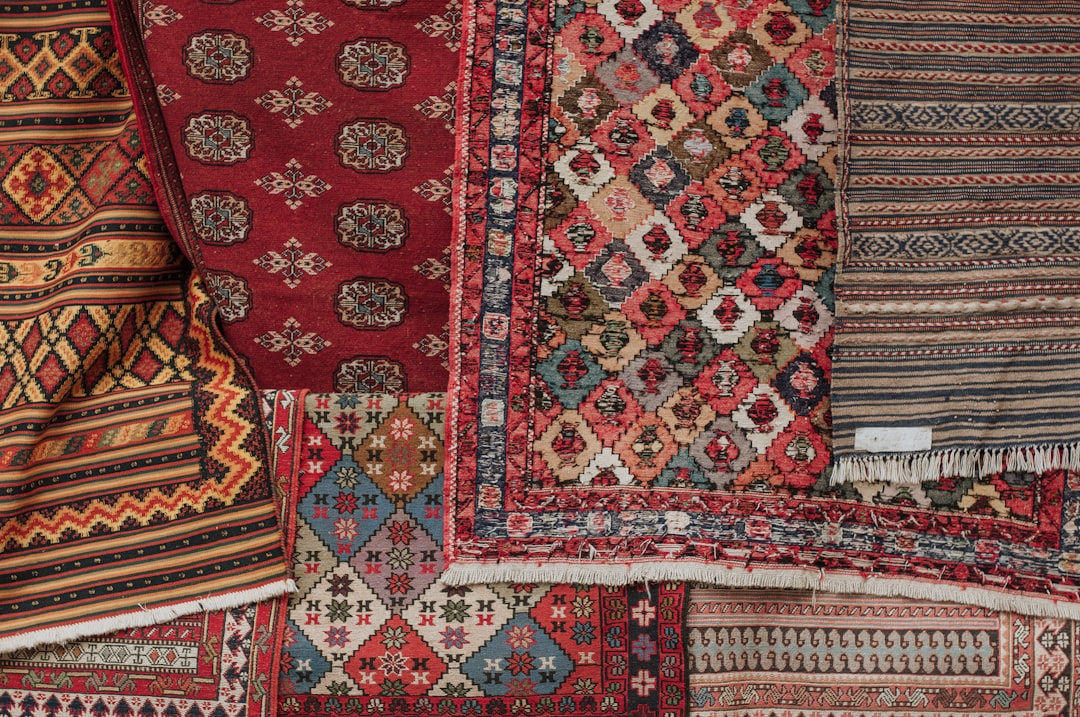
Rug dyes tell you more about a piece than almost any other single feature, and after two decades of pulling rugs apart at the fringe, testing colorfastness with a damp cotton swab, and watching how different pigments react to wear, I can tell you that natural vs synthetic rug dyes is not just an academic distinction. It affects how a rug ages, how it should be cleaned, and how much it’s worth on the resale market. This guide walks through the chemistry, the history, and the practical realities I’ve encountered in the workshop when a client brings in a piece and asks whether their heirloom Persian or their new hand-tufted accent rug will hold its color for another generation.
Natural Rug Dyes and Their Origins in Traditional Weaving
Natural rug dyes come from plant matter, insect extracts, and mineral compounds that weavers have relied on for well over 2,000 years. Madder root produces the deep reds seen in many Turkoman and Persian pieces, indigo (Indigofera tinctoria) delivers the range of blues found in Kilims and tribal weavings, and cochineal insects – native to Central and South America but adopted widely after the 16th century – yield the vivid crimson associated with certain Caucasian rugs. Walnut husks, pomegranate rind, and weld (a flowering plant) round out the traditional palette with browns, yellows, and golds.
These dyes remain central to the identity of Antique & Vintage Rugs and many hand-knotted pieces still produced today in regions like Tabriz, Hamadan, and the Caucasus. Because the source material varies from harvest to harvest, no two dye lots are ever perfectly identical, which is exactly why natural-dyed rugs display the subtle color striations – sometimes called “abrash” – that collectors specifically look for.
How Natural Pigments Are Extracted and Fixed to Wool
Producing a natural rug dye starts with harvesting raw material, then boiling or fermenting it to release the coloring compound. A weaver working with madder root, for example, will simmer the shredded root in water for several hours before introducing the wool. Because natural dyes generally don’t bond permanently to fiber on their own, a mordant such as alum, iron, or tannin is used to fix the color and improve wash-fastness; without this step, most vegetable dyes would wash out within a handful of cleanings.
The entire process, from harvest to finished skein, can take anywhere from three days to several weeks depending on the material and the desired depth of shade. Wool dyed this way is typically simmered at 160-180°F for one to three hours, then left to cure for a period before weaving begins. This is one reason authentic vegetable-dyed rugs from regions like Turkey’s Konya province or Iran’s Kurdish villages carry a premium – the labor and unpredictability built into the process cannot be shortcut.
Synthetic Rug Dyes and the Shift Toward Chemical Colorants
Synthetic rug dyes are manufactured from petroleum-derived chemical compounds and were introduced commercially after William Perkin’s 1856 discovery of mauveine, the first synthetic aniline dye. Since then, chemical dye classes such as acid dyes, chrome (mordant) dyes, and metal-complex dyes have become standard across the rug industry because they offer consistent, repeatable color at a fraction of the production time of natural methods.
Most rugs made after the 1930s, including the vast majority of pieces in Contemporary & Modern Rugs collections, use synthetic dyes almost exclusively. A single batch of acid dye can color hundreds of pounds of wool in a matter of hours rather than days, and the resulting hue can be replicated precisely on the next batch – something no natural dye lot can guarantee.
What Sets Chemical Dye Performance Apart From Vegetable-Based Methods?
Chemical dyes generally offer stronger colorfastness against UV exposure and washing, with modern chrome-mordant dyes rated to withstand 40+ hours of accelerated xenon-arc light testing without significant fading, a benchmark natural dyes rarely reach without noticeable shift. They’re also more affordable to produce, which keeps retail prices for machine-made and even many hand-knotted rugs considerably lower than comparable vegetable-dyed pieces.
The tradeoff shows up over time in a different way than most buyers expect. Early synthetic dyes from the late 1800s and early 1900s, particularly aniline dyes used before 1900, were notoriously unstable and would bleed or fade within 5-10 years – a defect that actually helps appraisers date certain antique pieces today. Modern synthetic dyes have largely solved that problem, but they can still lack the depth and slight tonal variation that gives hand-dyed wool its dimensional, almost three-dimensional color quality under natural light.
Comparing Rug Dye Types for Durability, Cost, and Appearance
Choosing between the two ultimately comes down to what you value in a rug: consistency and affordability, or character and provenance. Synthetic dyes cost roughly 60-80% less to produce at scale, which is why a comparable size and knot-count rug using chemical dyes might retail for $800-$1,500 while a vegetable-dyed equivalent from the same region could run $2,500-$6,000 or more.
Natural dyes, despite their higher cost, tend to soften and mellow attractively with age rather than simply fading flat, a quality prized in Classic & Traditional Rugs. Anyone weighing fiber choice alongside dye type should also consider how the material itself interacts with color absorption, since wool, silk, and cotton each take dye differently – a topic covered in more depth when comparing pile materials and their long-term performance.
Why Does Dye Type Matter for Long-Term Rug Value?
Dye type matters because it directly affects both how a rug ages visually and how appraisers and collectors assess its authenticity and worth. A rug with confirmed natural dyes and hand-spun wool from a recognized weaving region can appraise 30-50% higher than a visually similar piece made with synthetic dyes, all else being equal.
This isn’t just about aesthetics. Insurance appraisals, auction house evaluations, and resale transactions all factor in dye origin because it correlates strongly with production method, age, and regional authenticity. A Sotheby’s or Christie’s rug specialist will often request a dye test before cataloguing a piece specifically because the answer changes the estimated value range significantly.
Identifying Rug Dyes Through Visual and Chemical Testing
Identifying whether a rug uses natural or synthetic dye involves examining color consistency under magnification, testing colorfastness with a damp white cloth, and in more rigorous cases, sending fiber samples for laboratory analysis using thin-layer chromatography or high-performance liquid chromatography (HPLC). A trained eye can often make a reasonably confident visual call, but lab testing remains the only truly definitive method.
In practice, I start with a magnifying loupe at 10x to check for the subtle color banding within a single strand of wool that natural dyes almost always produce. Synthetic-dyed wool tends to show flat, uniform saturation from root to tip of the fiber, while naturally dyed wool often reveals slight variation because the dye bath penetrated unevenly. This single test, done correctly, resolves the question for me on about 80% of the rugs that come across my workbench.
What Does the Wet-Cloth Colorfastness Test Reveal?
The wet-cloth test involves pressing a damp white cotton cloth firmly against the rug’s pile for 10-15 seconds and checking for color transfer. Heavy bleeding onto the cloth often points to an unstable synthetic dye or a poor-quality mordant process, while natural dyes that have been properly fixed typically show little to no transfer.
This test isn’t foolproof, since some well-fixed synthetic dyes will also pass cleanly, and some natural dyes with weak mordanting will bleed. That’s why I always pair it with UV light inspection, which can reveal fluorescence patterns typical of certain synthetic dye classes that are invisible under normal lighting. Rugs that fail this test outright need extremely cautious handling during any wet cleaning process, which is a major part of what we assess before beginning Rug Cleaning.
Vegetable Dyes and Their Continued Role in Rug Craftsmanship
Vegetable dyes, drawn from sources like madder, indigo, pomegranate rind, and walnut hulls, remain in active use among artisan cooperatives in Iran, Afghanistan, Turkey, and parts of Central Asia, particularly for rugs marketed as heirloom or collector-grade pieces. Organizations like GoodWeave have helped document and promote vegetable-dye revival programs since the 1990s, partly to preserve traditional knowledge that nearly disappeared after synthetic dyes took over mainstream production in the early 20th century.
These dyes carry genuine ecological advantages as well, since they’re biodegradable and typically require fewer heavy metal fixatives than some older chrome-mordant synthetic processes, though modern synthetic dyes have also become significantly cleaner in their environmental footprint over the past 30 years. Buyers drawn to sustainability arguments should know both sides of this have improved, and neither is automatically the “green” choice without more specific information about the mill or workshop.
How Vegetable Dye Sourcing Affects Rug Authenticity and Price
Confirmed vegetable dye sourcing directly supports a rug’s documented authenticity, which is a major factor in appraisal and resale value, particularly for rugs claiming regional designations like Persian Heriz, Bijar, or Turkish Konya provenance. Dealers and appraisers will often request documentation or dye testing before validating these claims, since the terms “vegetable-dyed” and “natural-dyed” have occasionally been used loosely in marketing without lab confirmation.
I’ve seen this cause real disputes at the point of sale – a buyer paying a premium for a “vegetable-dyed” rug deserves proof, not just a verbal assurance from the seller. If you’re evaluating a piece and want a reliable read on its background and materials, understanding how to identify an authentic Persian rug before you buy involves cross-referencing dye characteristics with knot structure, foundation material, and selvedge construction, not relying on any single indicator alone.
My Experience with Natural vs Synthetic Rug Dyes: Understanding the Difference
Over roughly eighteen years of hands-on restoration work, I’ve handled everything from a 90-year-old Heriz with heavily oxidized brown wool to newly woven Gabbeh pieces dyed with commercial acid dyes just months before arriving at my bench. One case that stands out involved a client’s Bijar rug that had been stored folded in a damp basement for years; the natural madder red had actually deepened and mellowed into a rich brick tone rather than fading, while a synthetic-dyed border repair done decades earlier had gone noticeably chalky and uneven by comparison.
That contrast taught me something I now check for on every intake: age-related color shift tells you almost as much as the dye test itself. Natural dyes tend to fade evenly and warm in tone, while many older synthetic dyes fade unevenly, often leaving a washed-out or slightly greenish cast in reds and a chalky flatness in blacks. I’ve also learned to be far more cautious with wet cleaning methods on rugs where dye stability is uncertain; a rug that seems stable in a spot test can still bleed under full immersion, so I always run an expanded colorfastness check across multiple pile areas, not just one corner, before committing to a full wash.
Practical Lessons From Testing and Restoring Dyed Rug Fibers
The biggest lesson from years of this work is that dye identification changes the entire treatment plan, not just the cleaning solution. A rug with confirmed unstable dyes needs a completely different approach to spot removal, drying speed, and even how it’s rolled for storage or transport, since heat and moisture can reactivate dye migration in fibers that seemed stable for decades.
This is also where structural repair work intersects with dye knowledge. When I’m reweaving a damaged section using the rug reweaving process, matching new wool to decades-old natural dye is genuinely difficult and sometimes requires custom small-batch dyeing to get the tone right, while matching a modern synthetic-dyed rug is far more straightforward because the manufacturer’s dye lot can often be identified and sourced directly. That difference alone shapes how I price and time a restoration project for a client. Careful dye assessment during any Rug Repair & Restoration job isn’t optional in my workflow anymore – it’s the first thing I document before touching the piece.
Frequently Asked Questions About Natural and Synthetic Rug Dye Types
The questions below cover what clients most commonly ask me during rug intake and appraisal consultations, based on recurring concerns about authenticity, care, and value.
Understanding these distinctions helps set realistic expectations before a rug is cleaned, appraised, or purchased, since misidentifying dye type can lead to costly mistakes during restoration.
What Is the Core Difference Between Vegetable-Based and Chemical Rug Colorants?
The core difference is sourcing: vegetable-based colorants come from plants, roots, and insects and require mordants to fix color, while chemical colorants are synthesized from petroleum derivatives and bond to fiber through different chemical processes entirely. This affects everything from production time to how the rug ages over decades. For more on how structural details factor into overall rug quality, see this guide to Understanding Rug Knot Density: A Comprehensive Guide to KPSI and Its Importance.
How Do Appraisers Confirm Whether a Rug’s Colorant Is Natural?
Appraisers confirm this through a combination of visual inspection under magnification, wet-cloth colorfastness testing, UV fluorescence checks, and in high-value cases, laboratory chromatography analysis. No single test is considered fully conclusive on its own, which is why multiple methods are typically layered together for a confident determination.
Do Vegetable-Dyed Rugs Cost More Than Synthetically Dyed Ones?
Yes, vegetable-dyed rugs typically cost 50-150% more than comparable synthetic-dyed pieces due to the labor-intensive harvesting, mordanting, and dyeing process involved. The price gap widens further for rugs with documented, lab-verified natural dye sourcing from recognized weaving regions.
Has Modern Chemistry Closed the Gap Between the Two Dye Categories?
Modern synthetic dye technology has closed much of the visual gap, with high-quality acid and metal-complex dyes now capable of replicating subtle natural tones fairly convincingly. Even so, trained eyes and lab testing can still usually detect the difference through fiber-level color banding and aging characteristics that develop over years of exposure and wear.
Sources:
Wikipedia: Natural Dye
Textile School: Synthetic Dye Reference
