


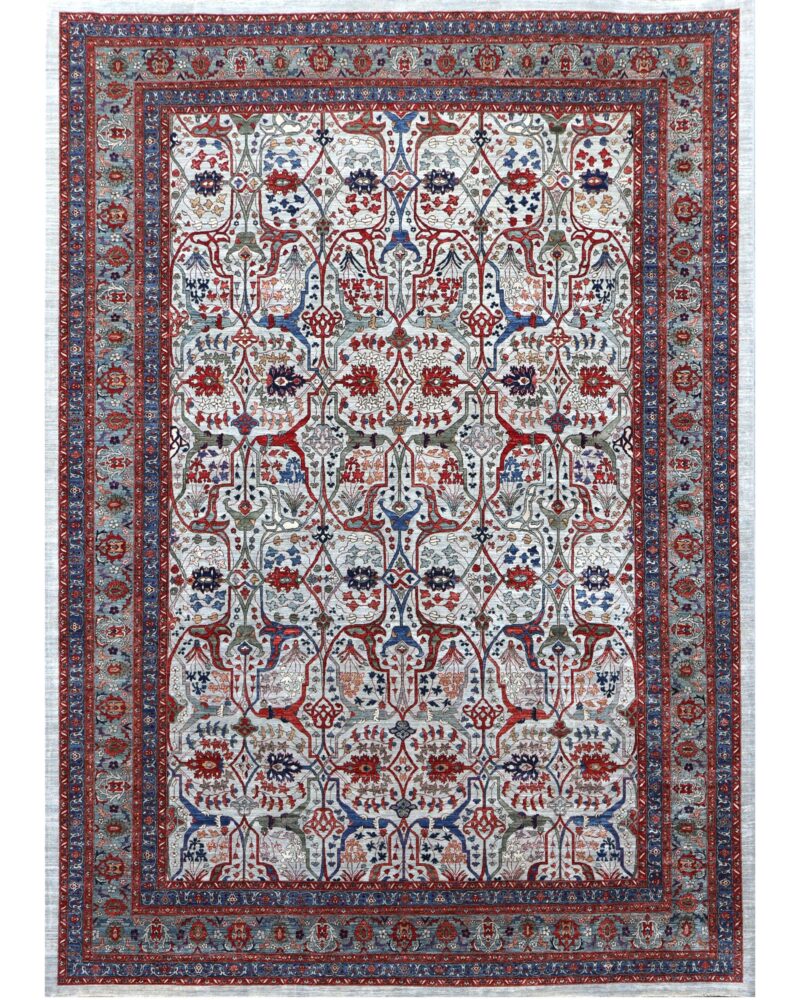
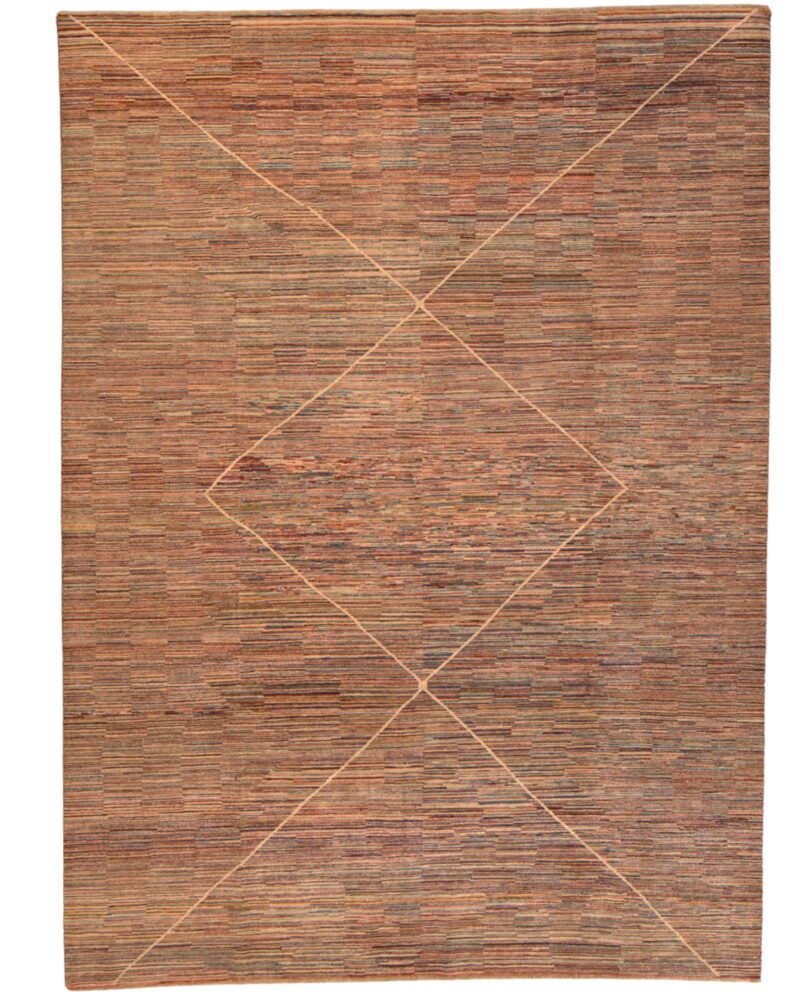
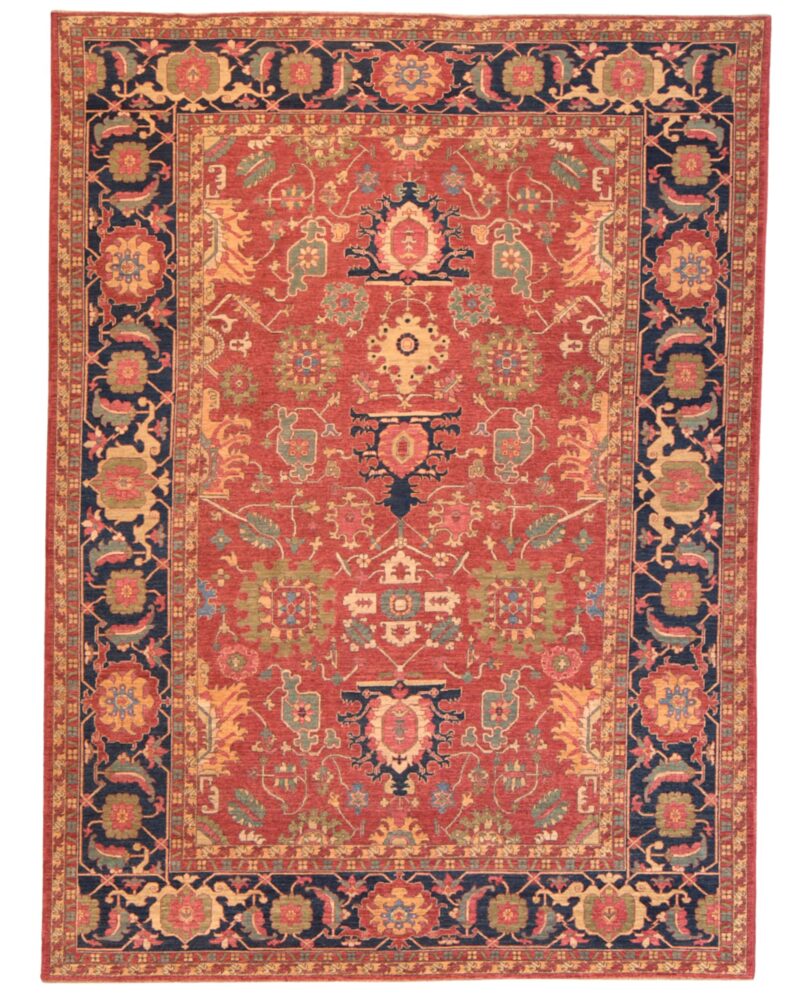
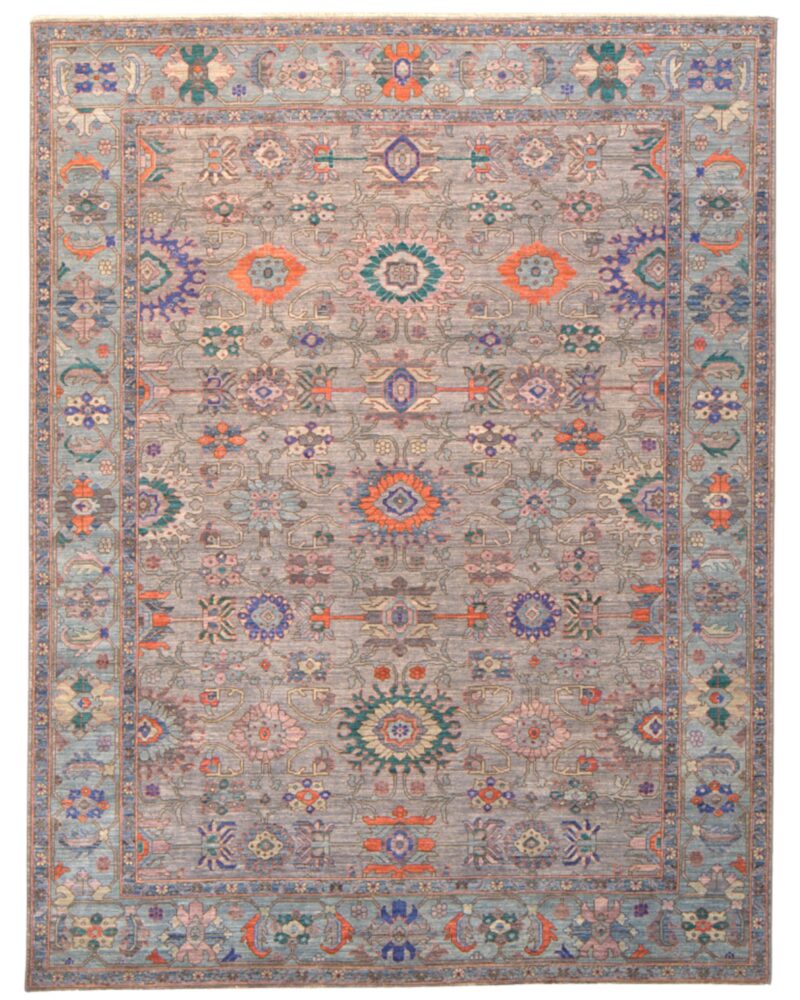
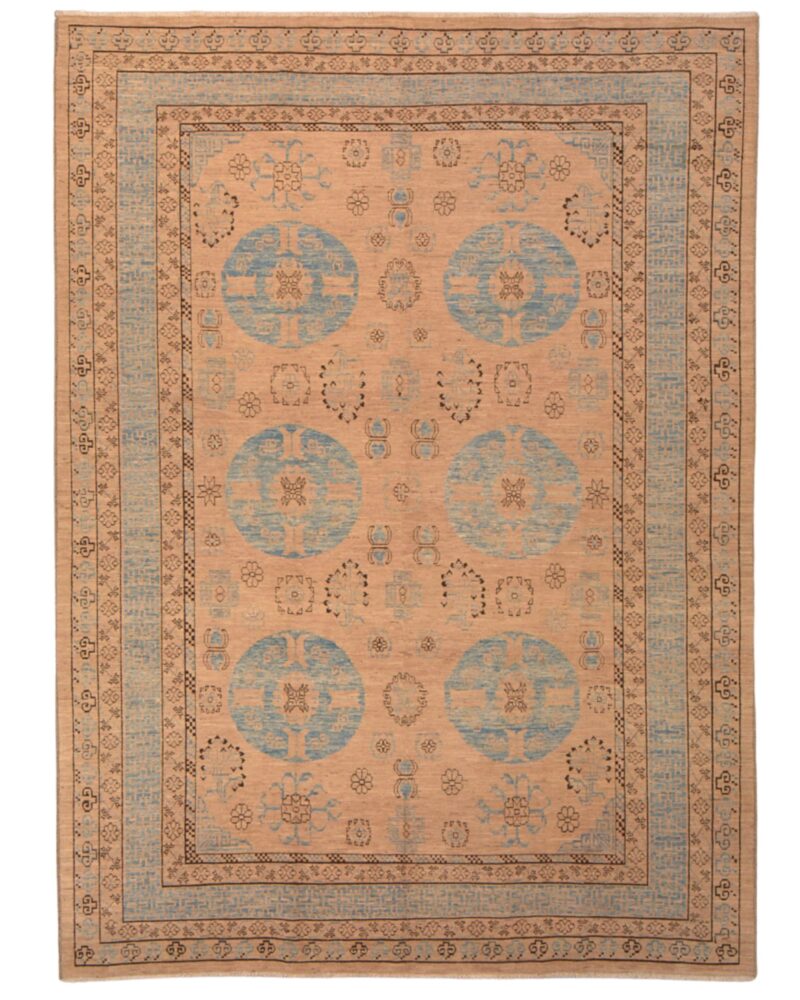
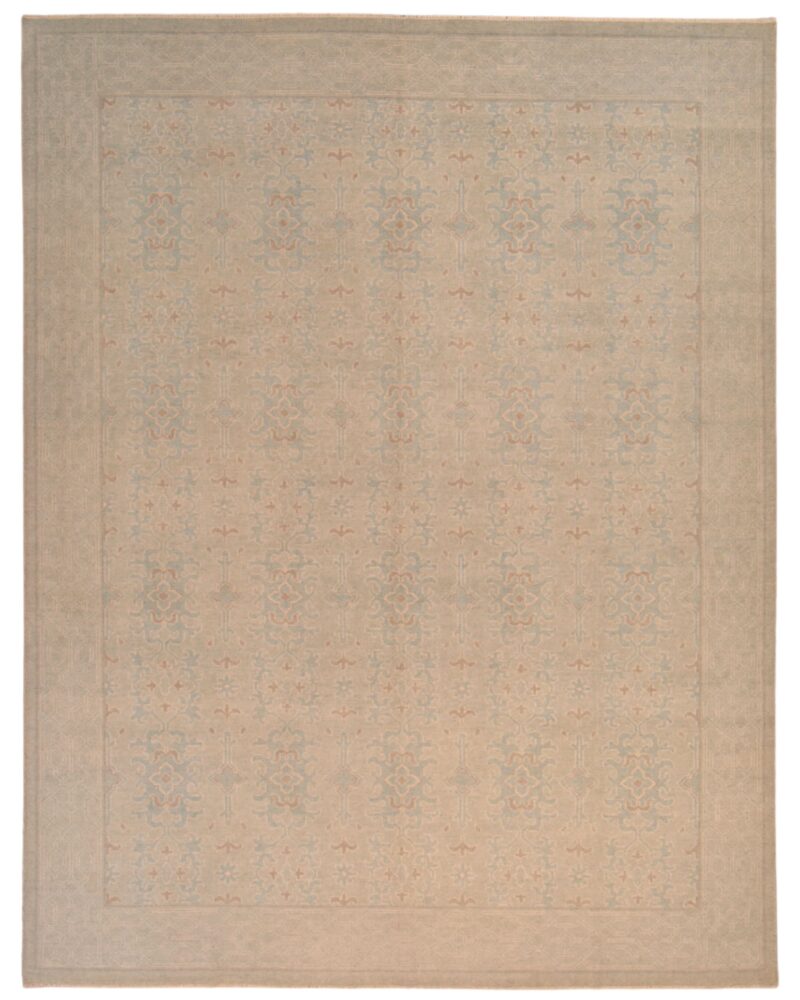
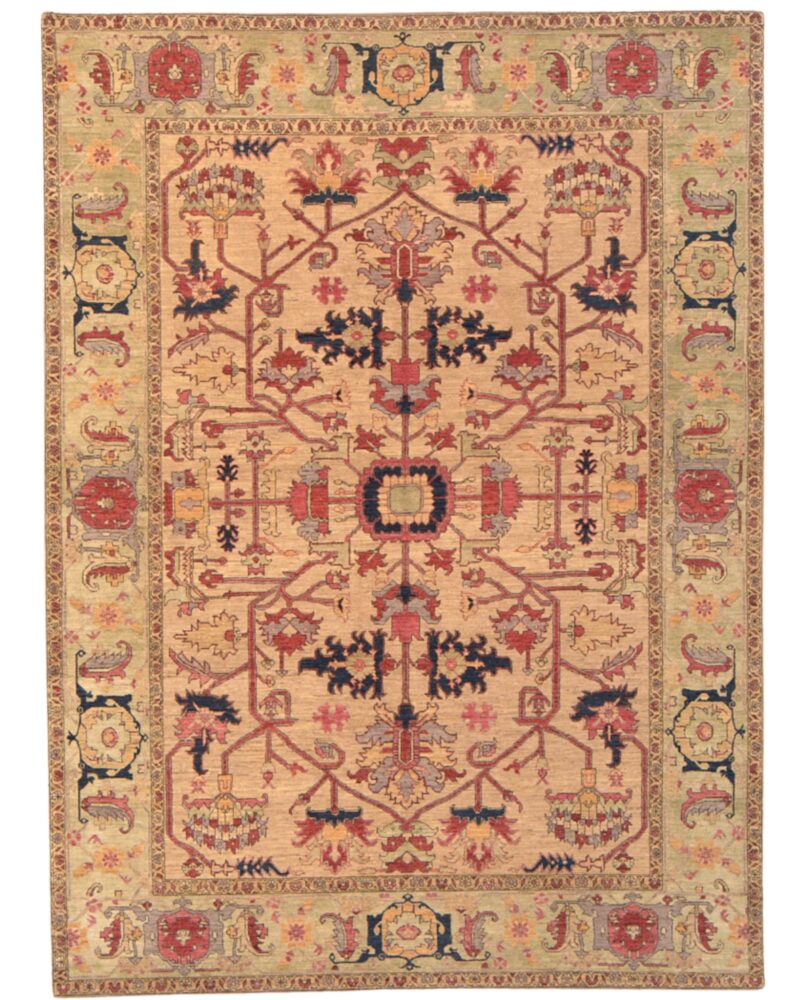
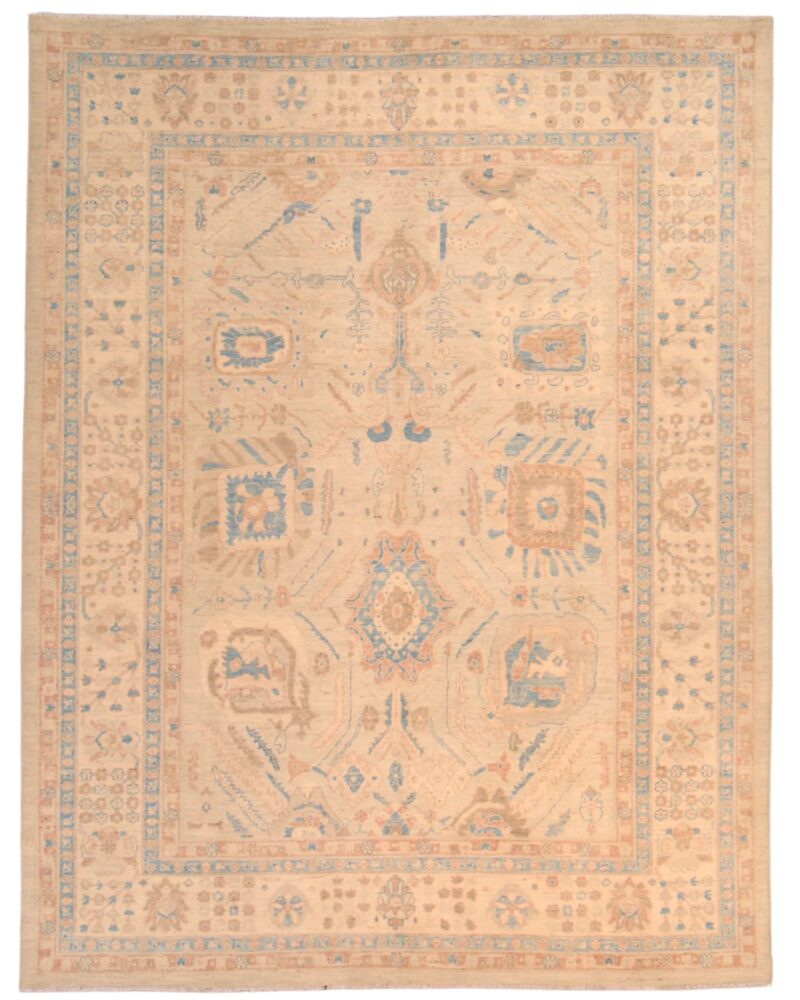
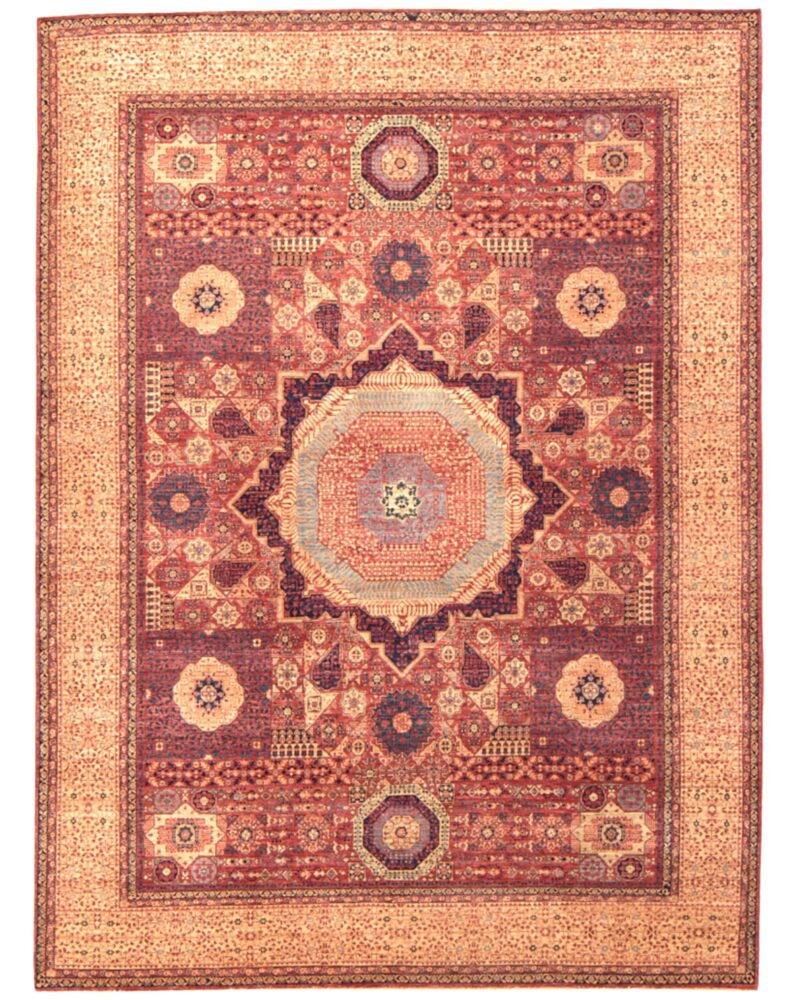
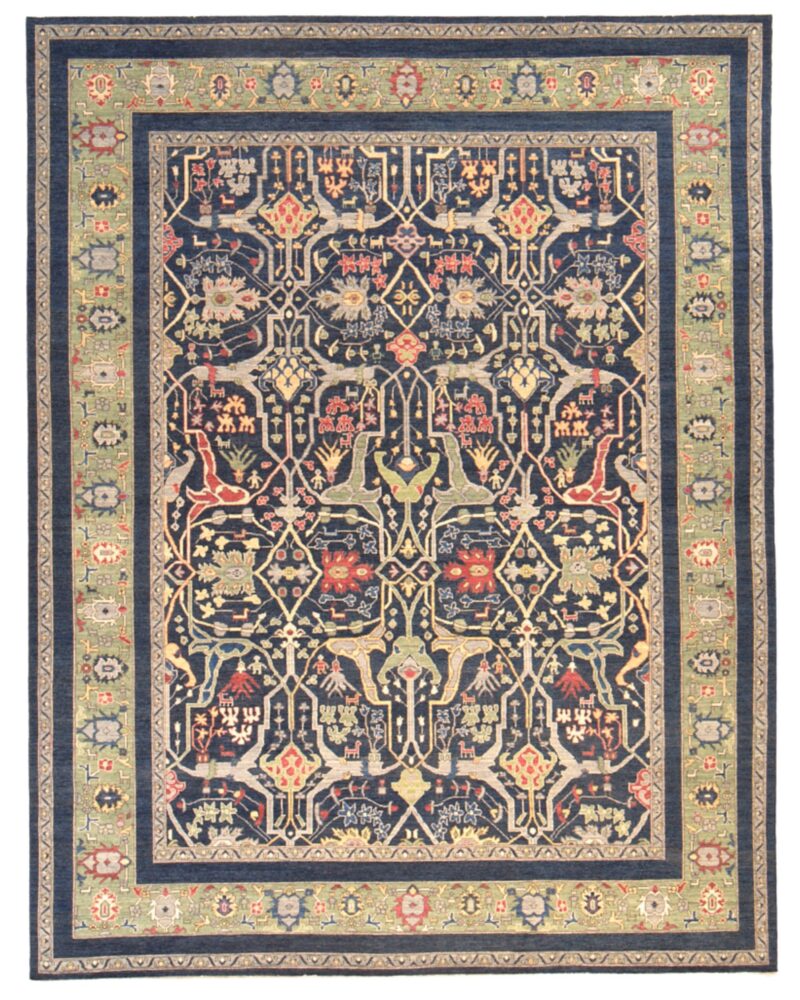
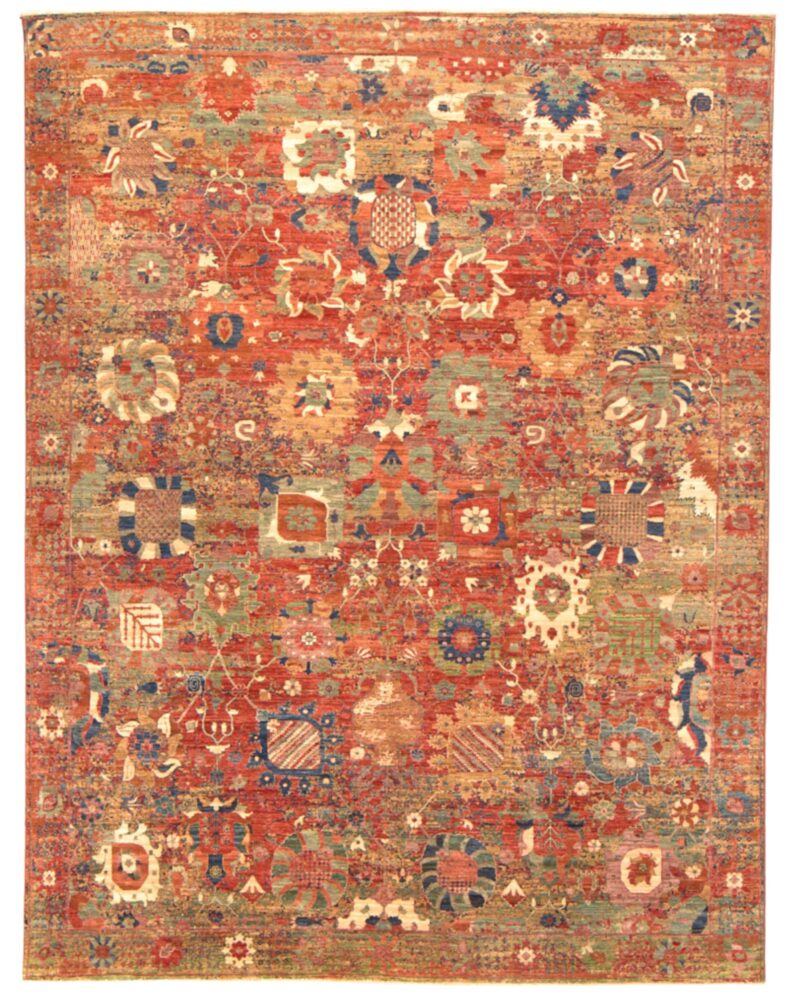
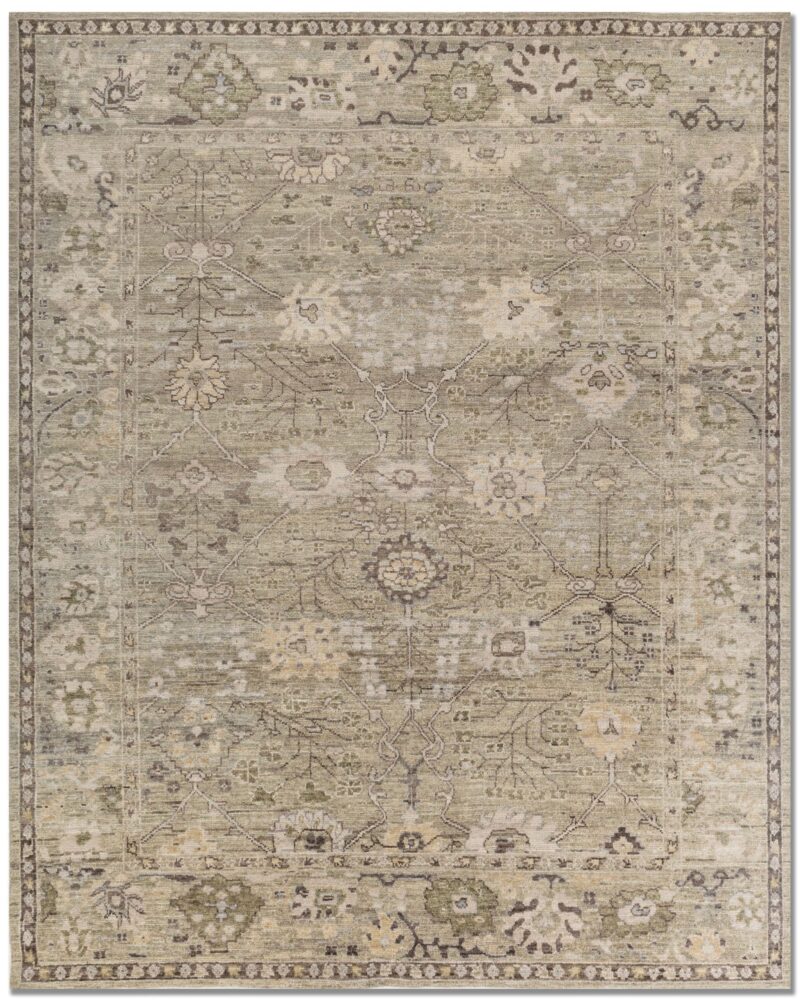
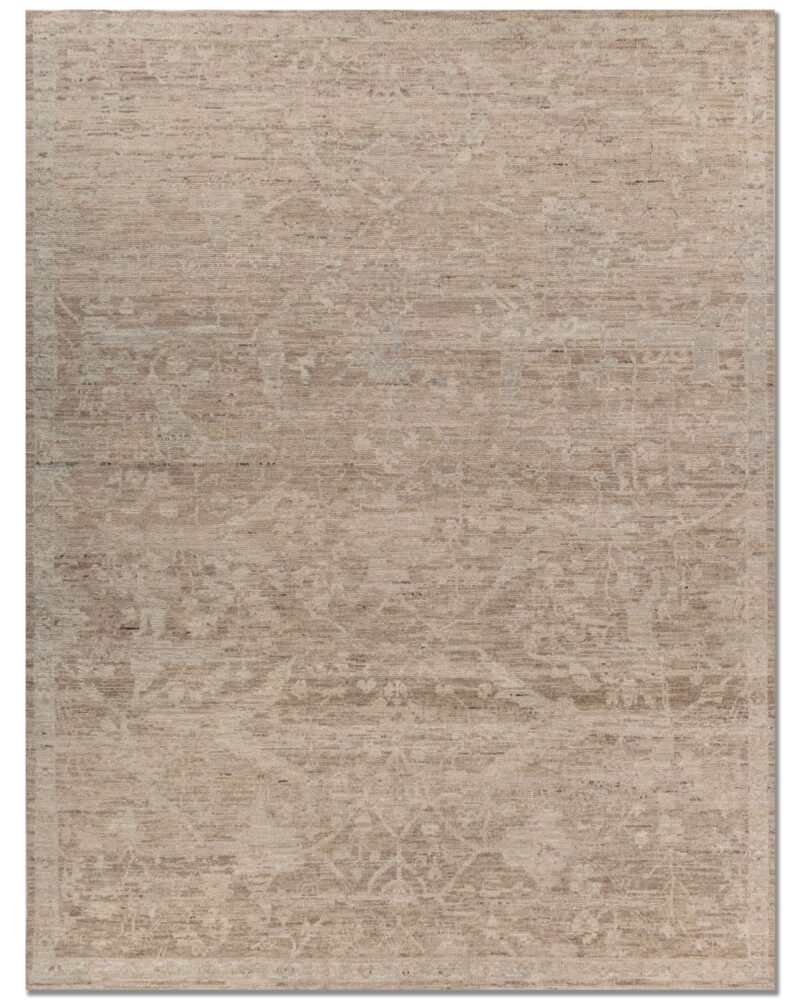
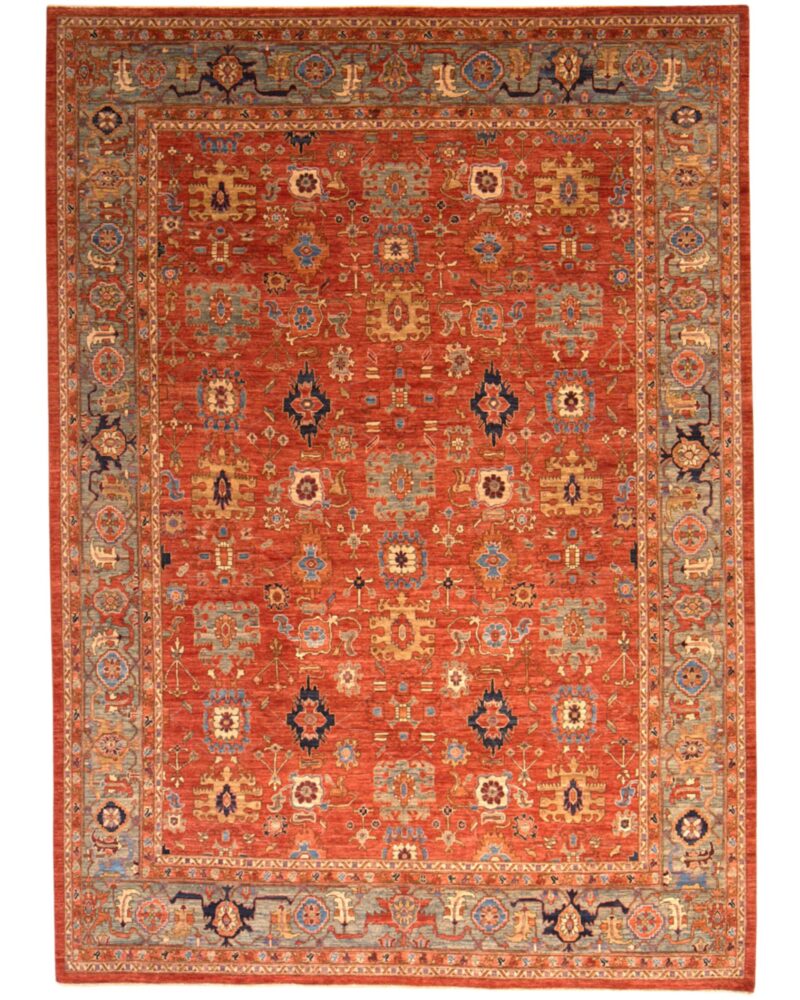
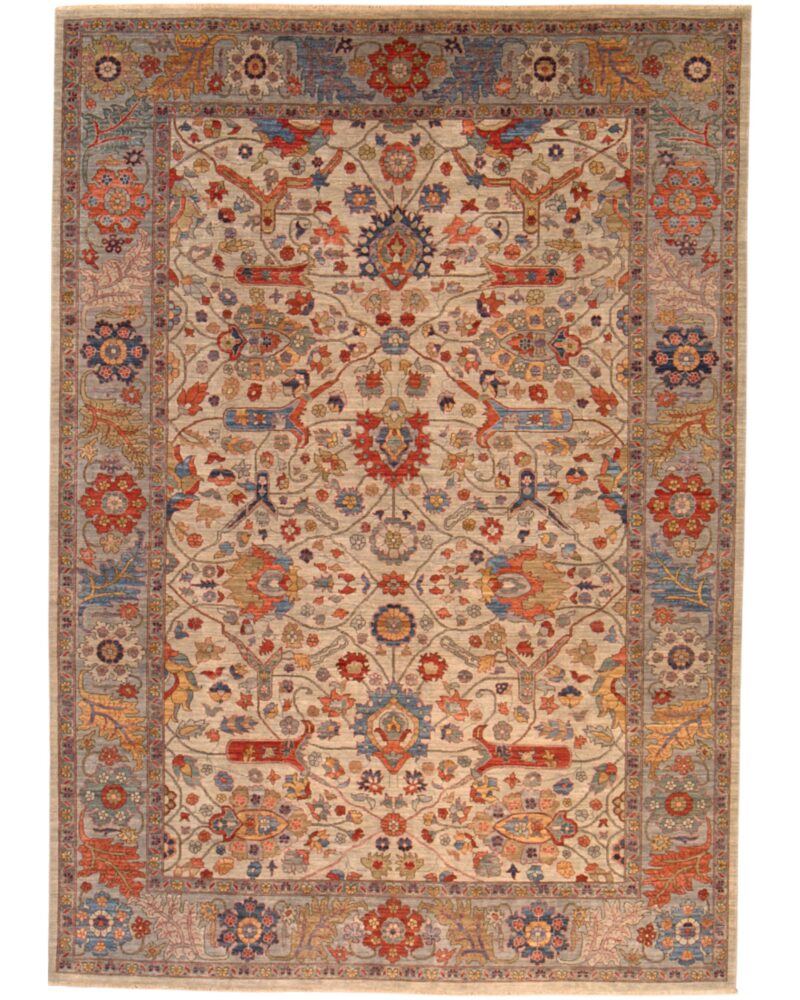
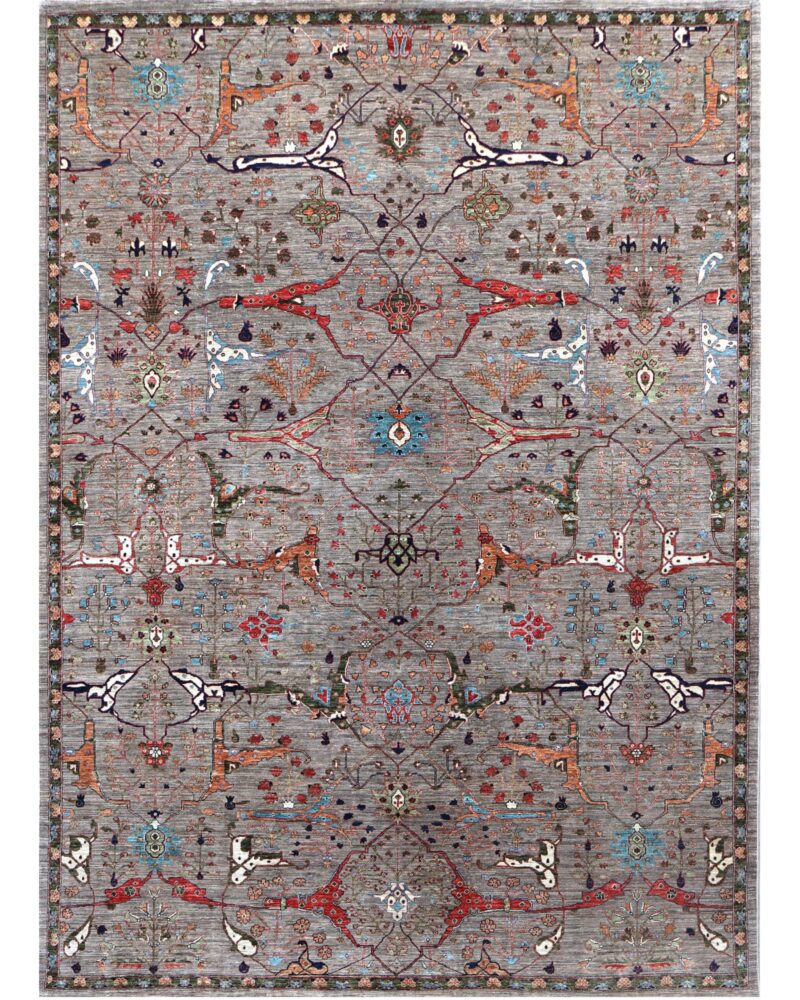
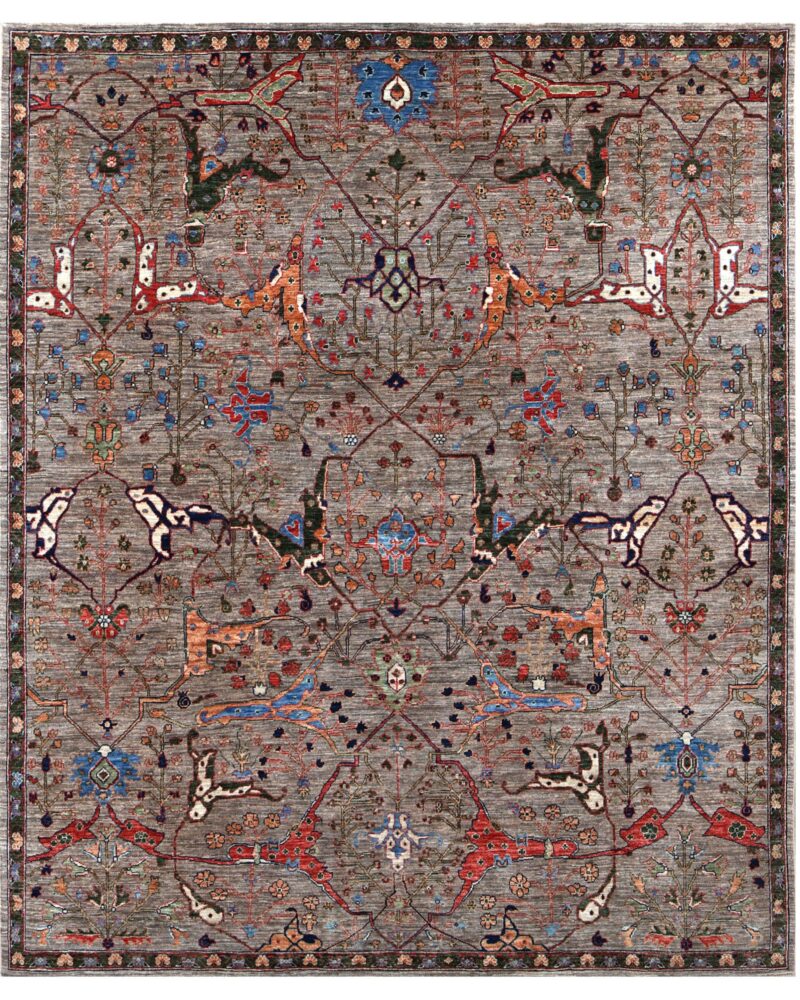
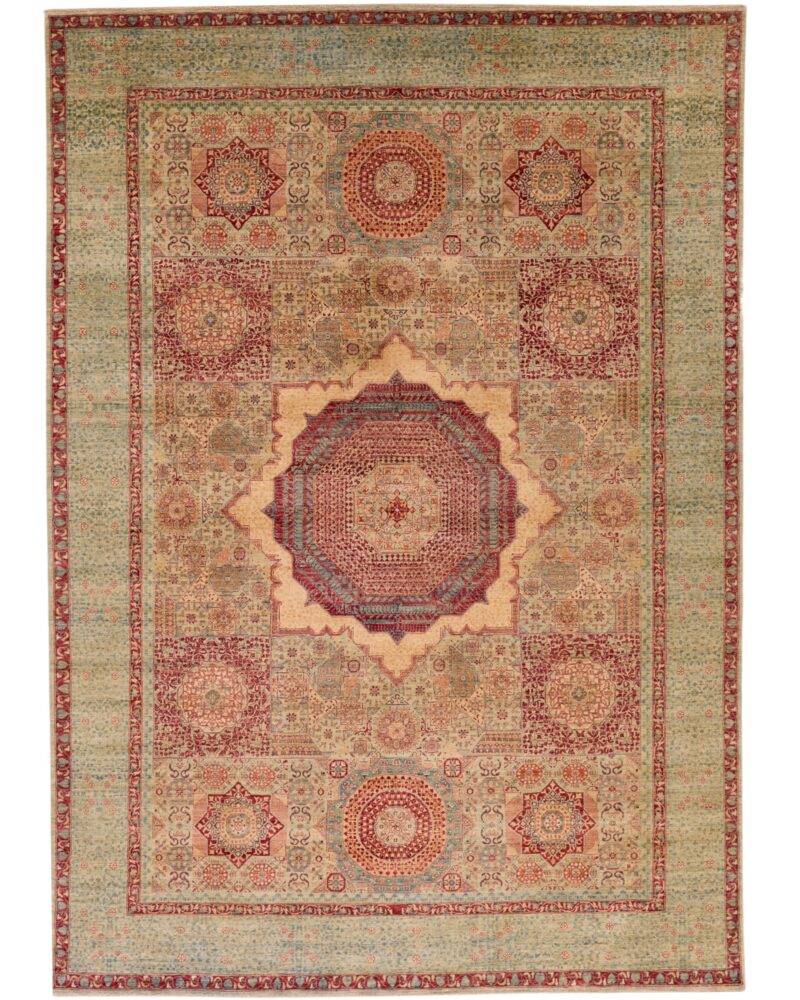
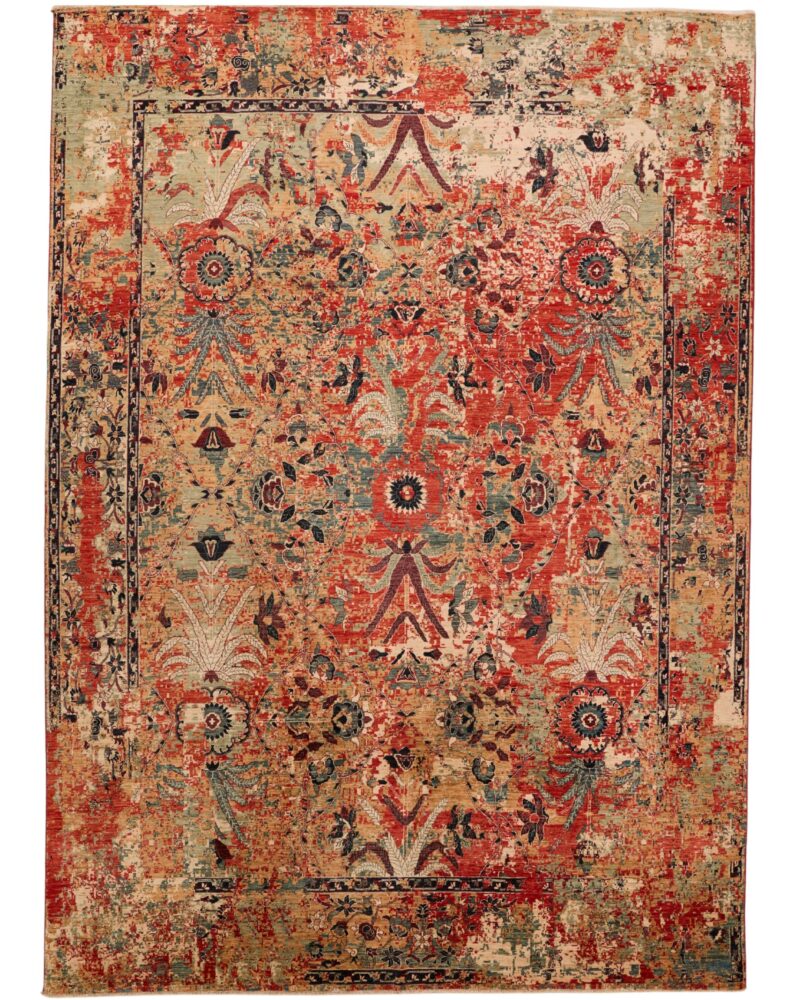
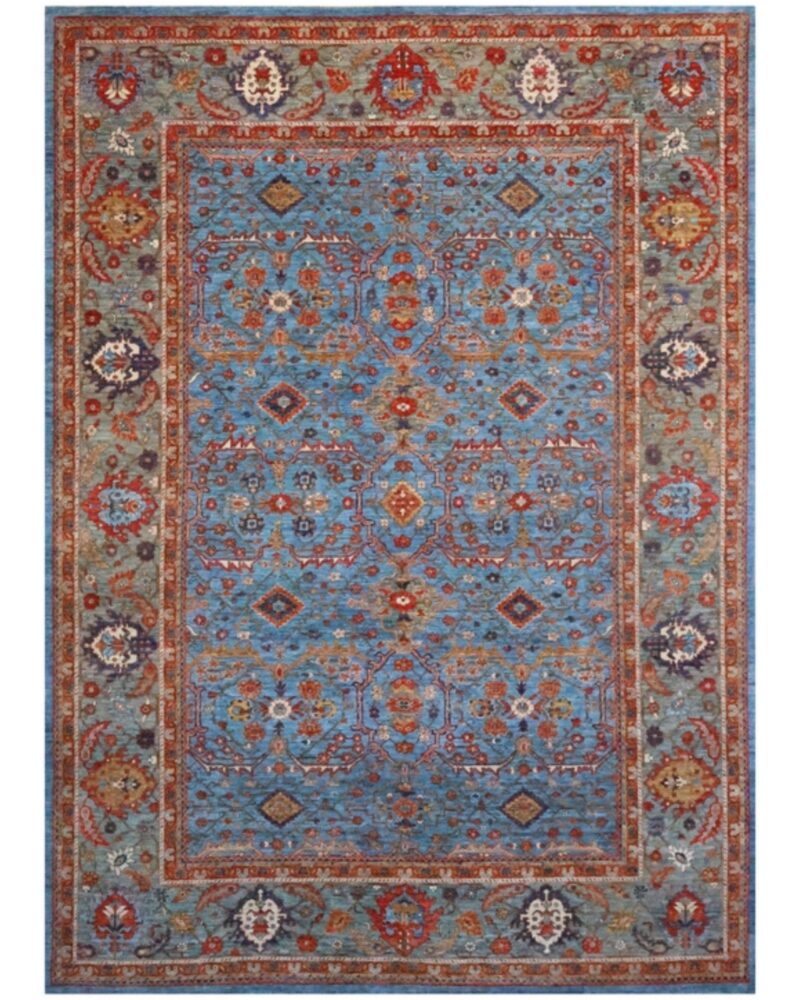
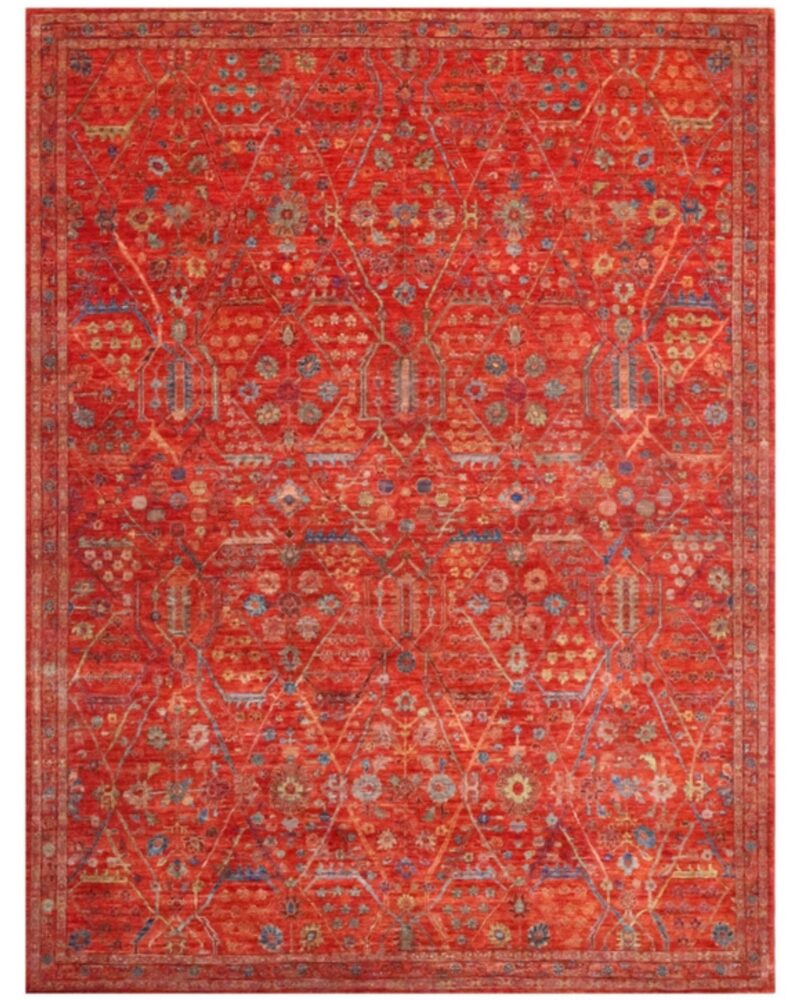
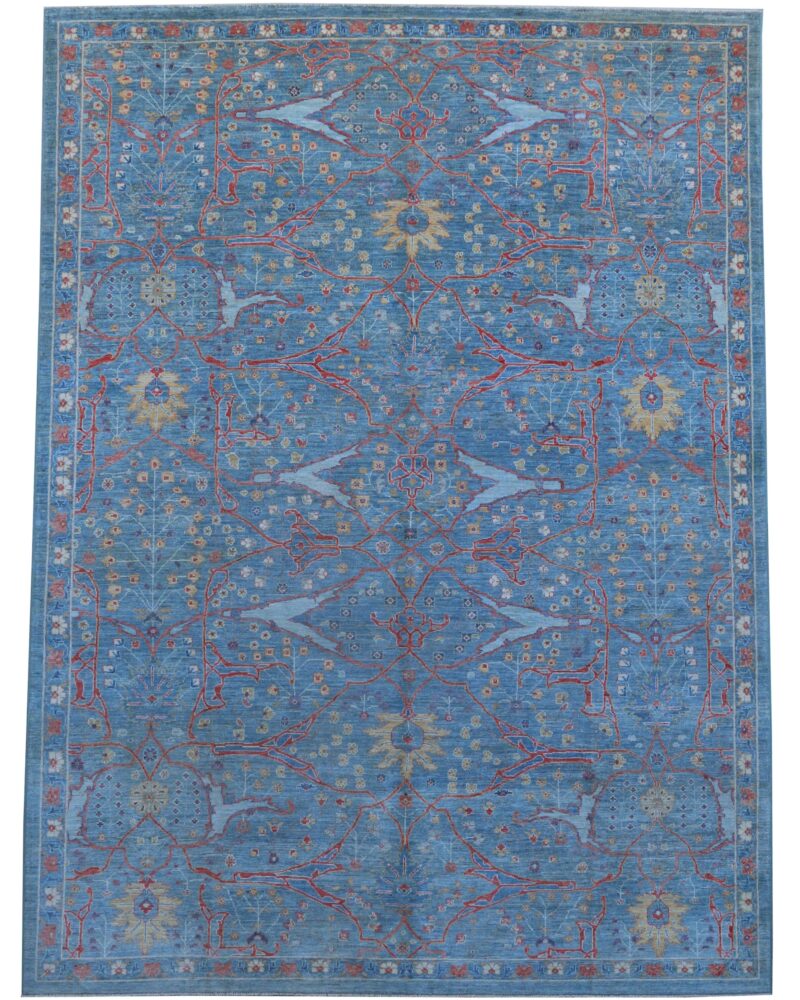
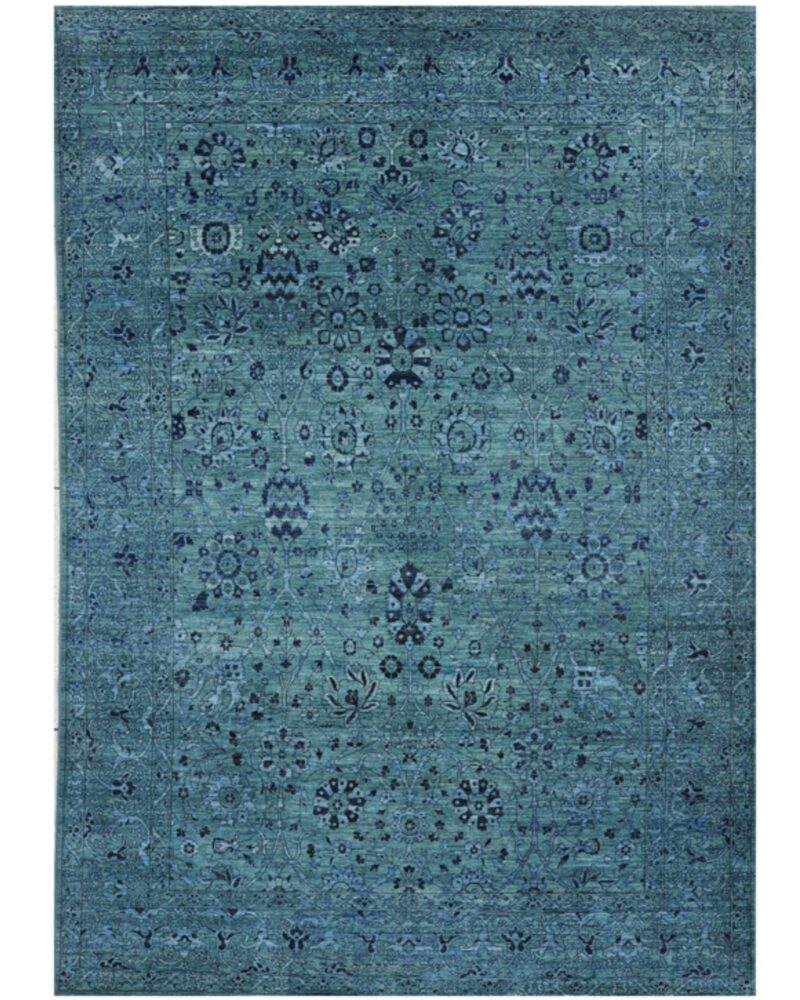
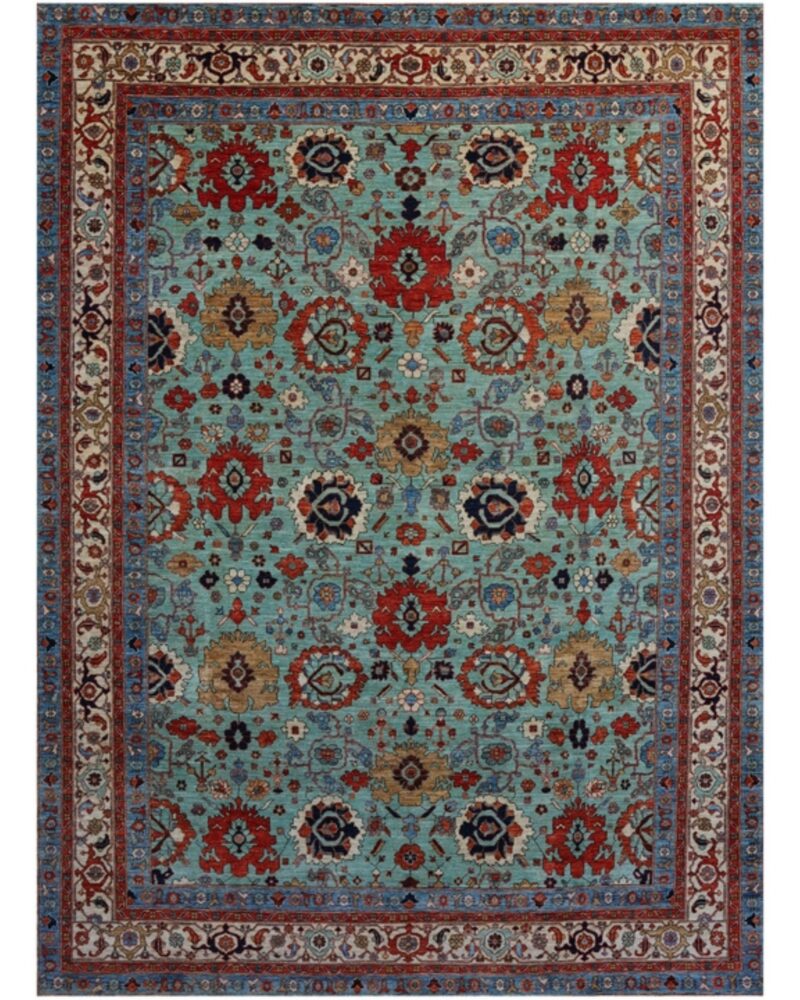
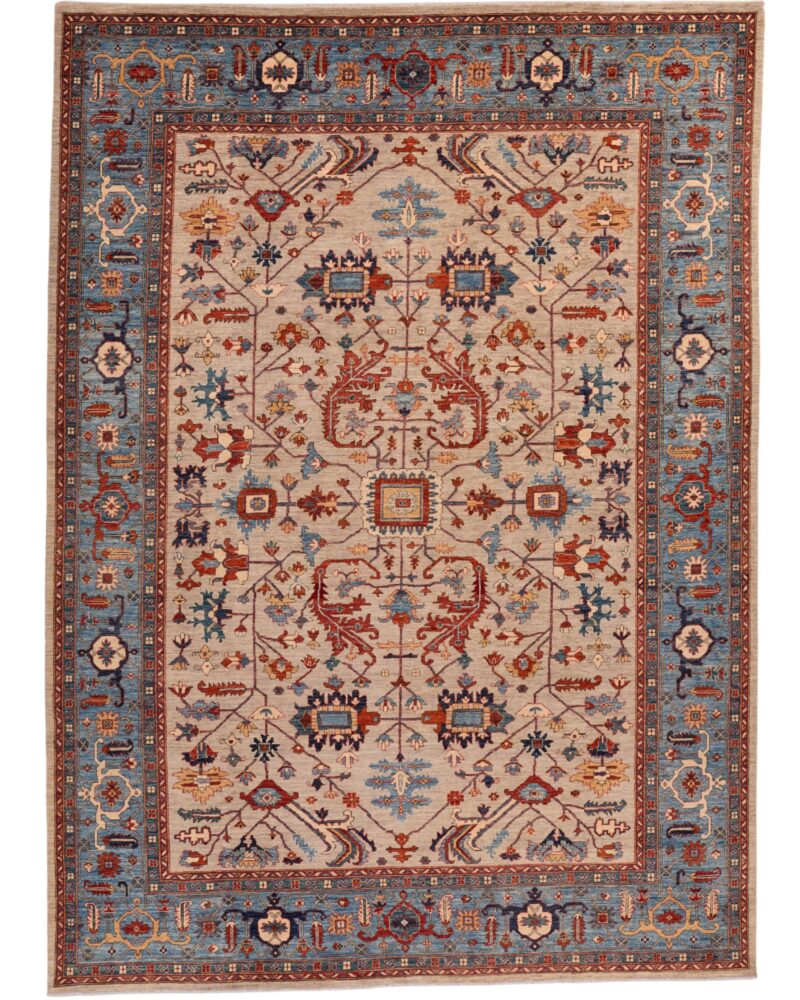
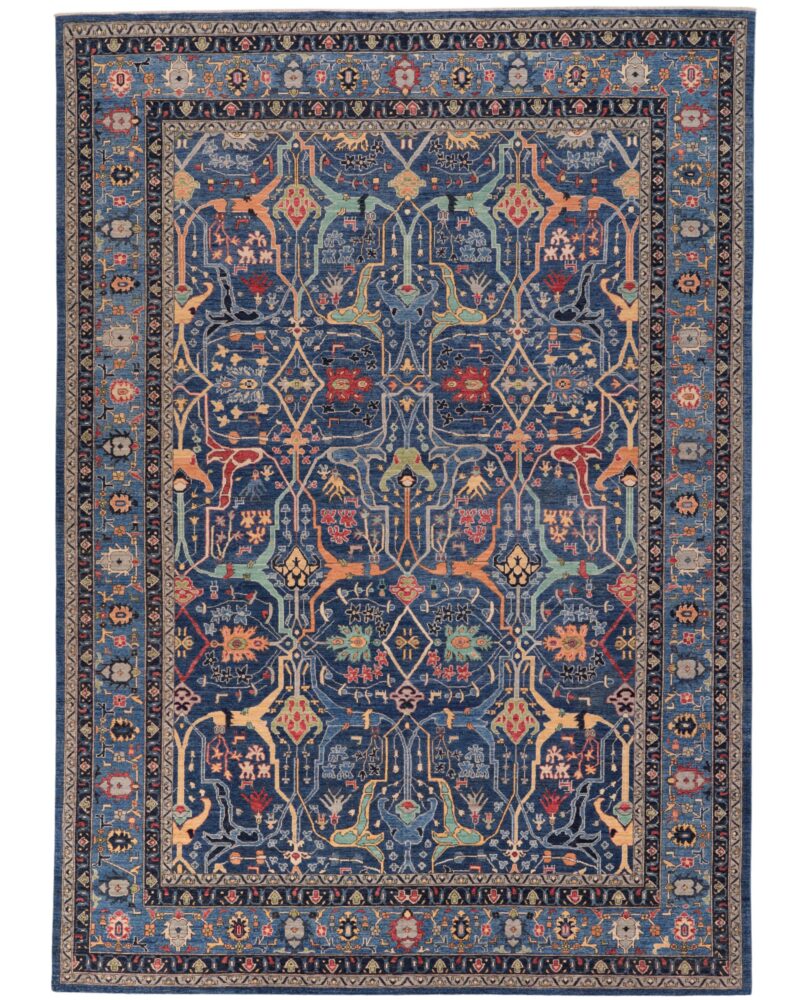
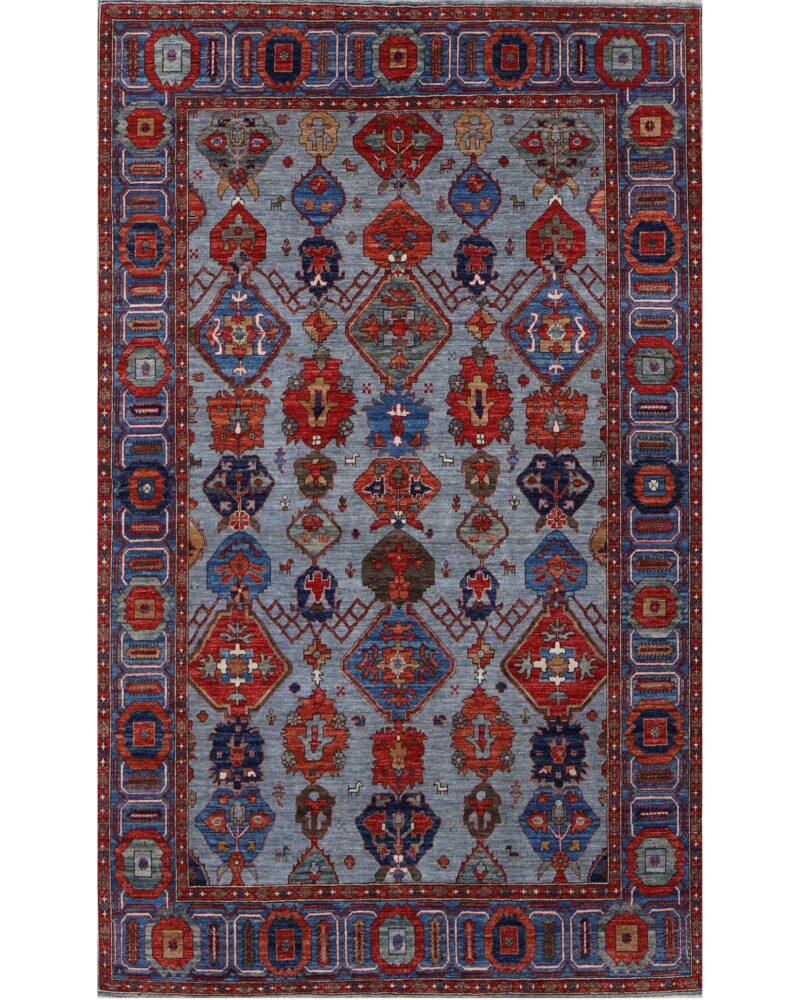
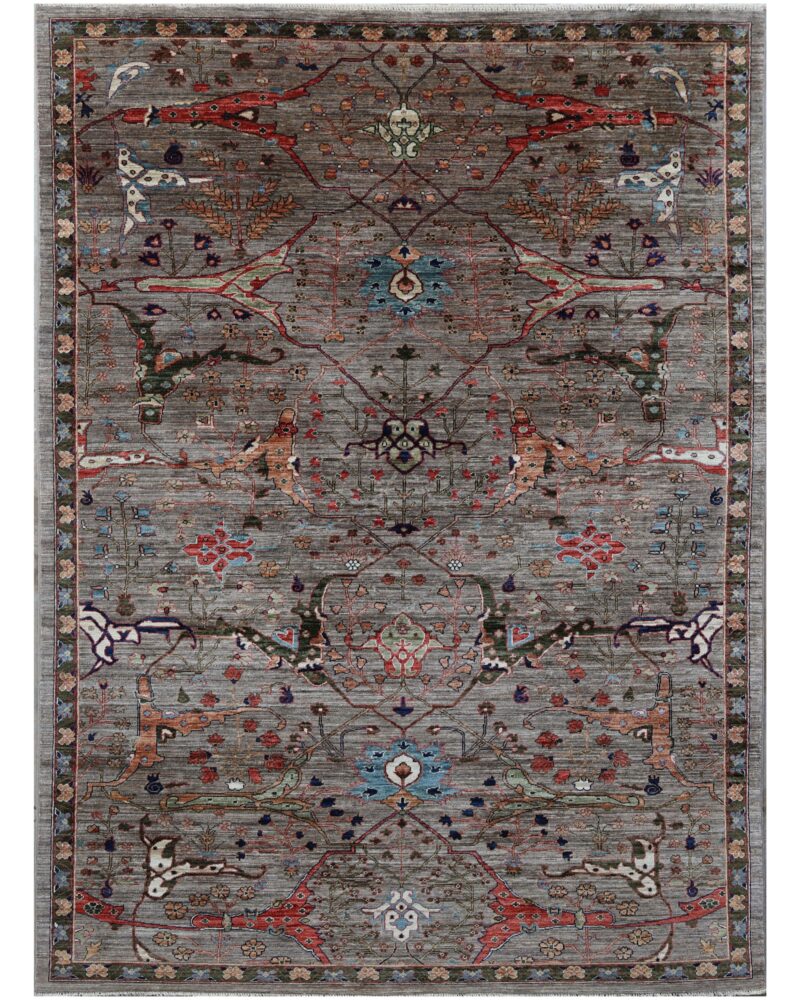
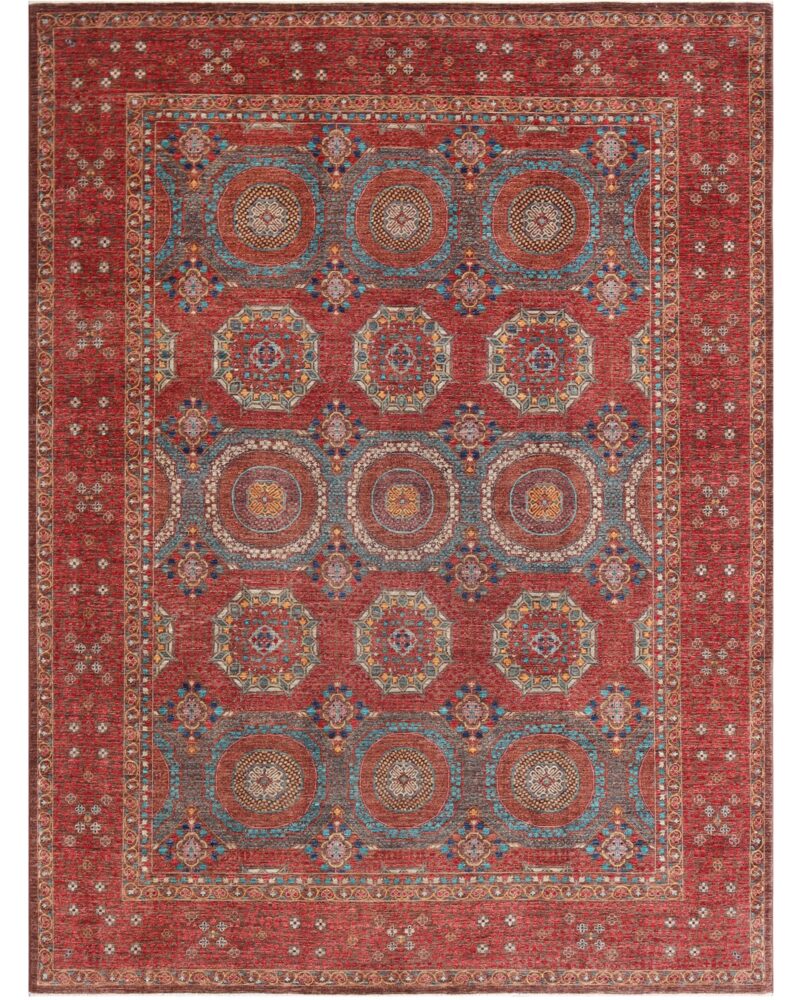
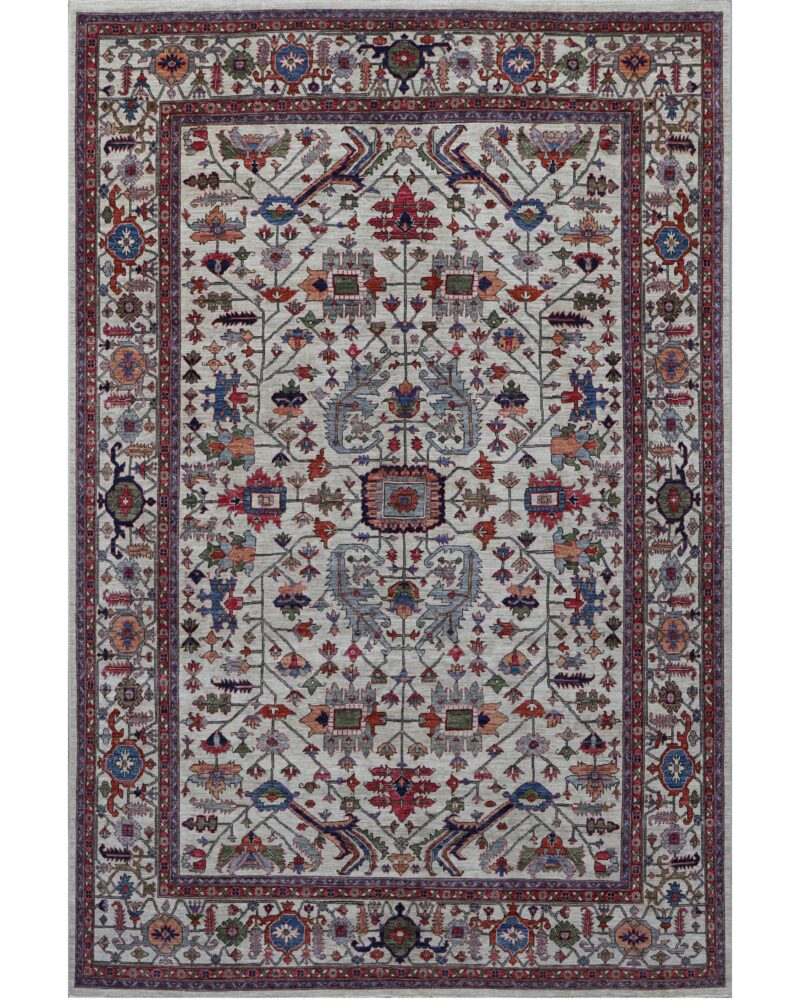
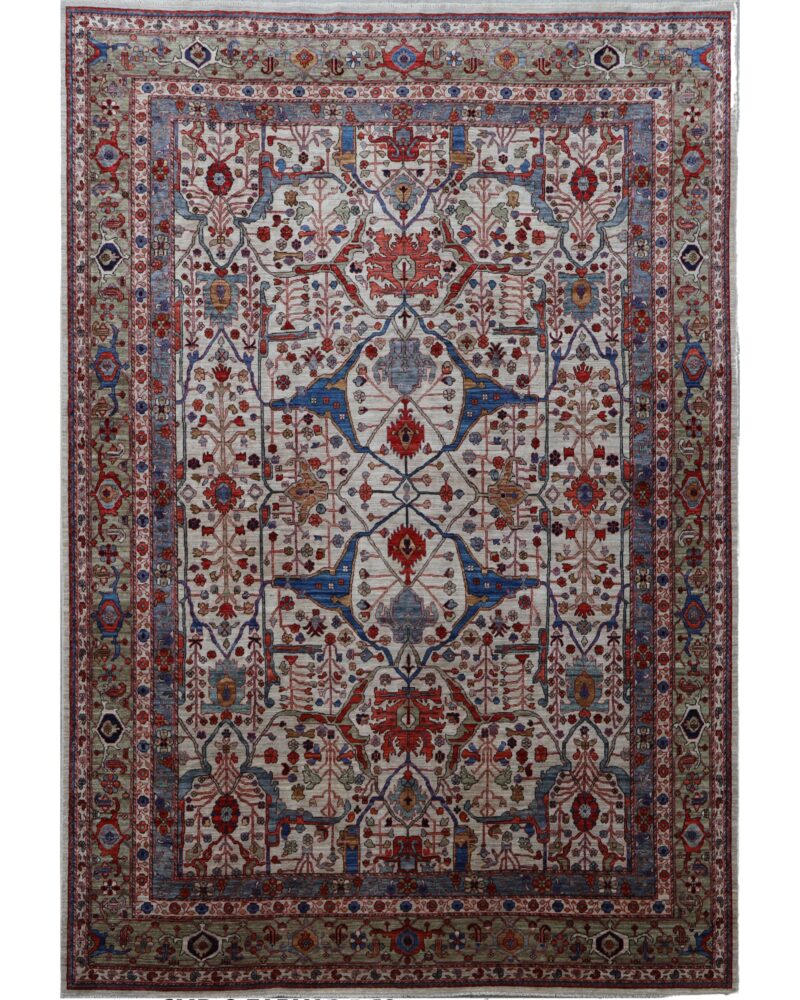
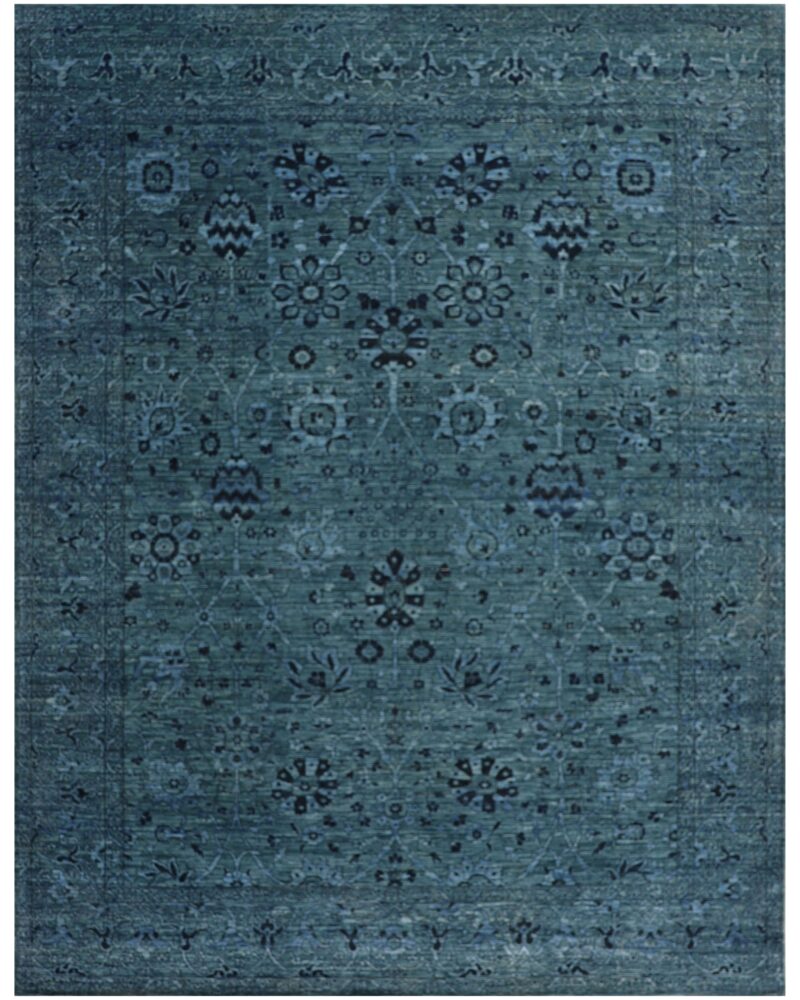
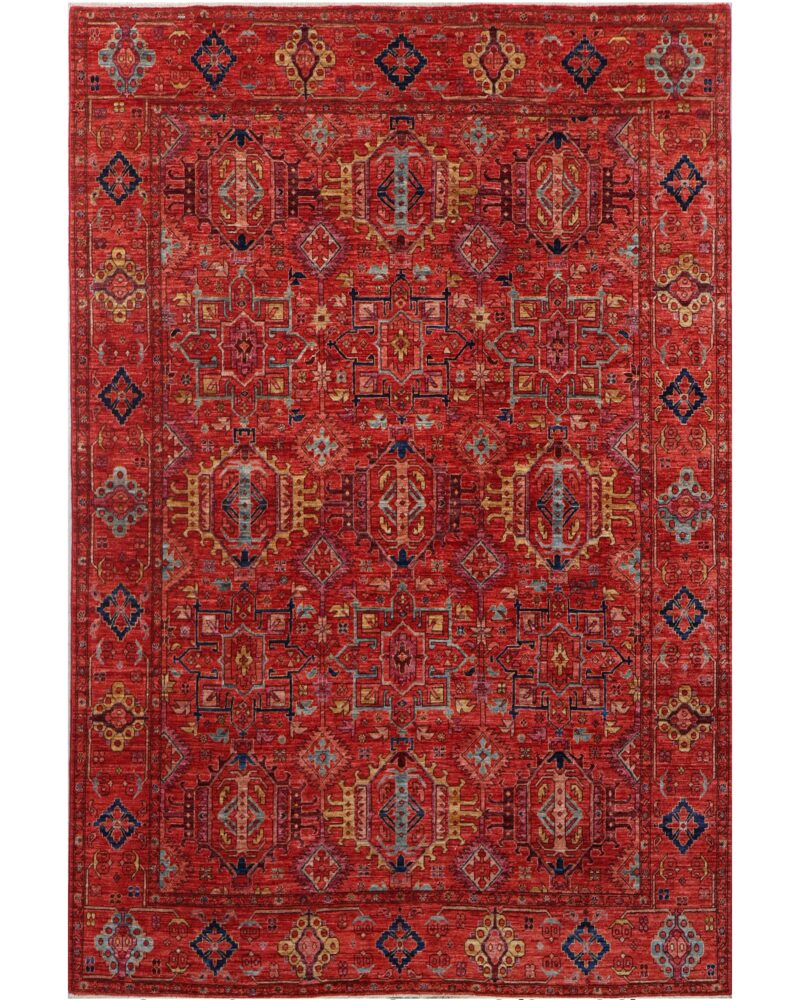
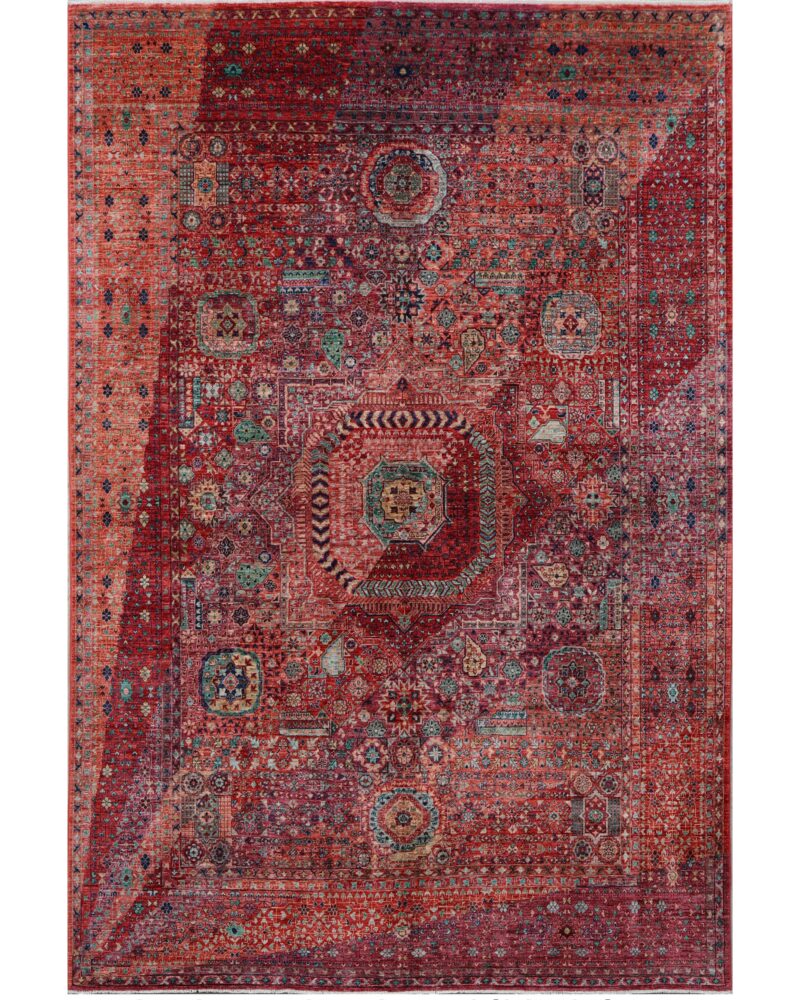
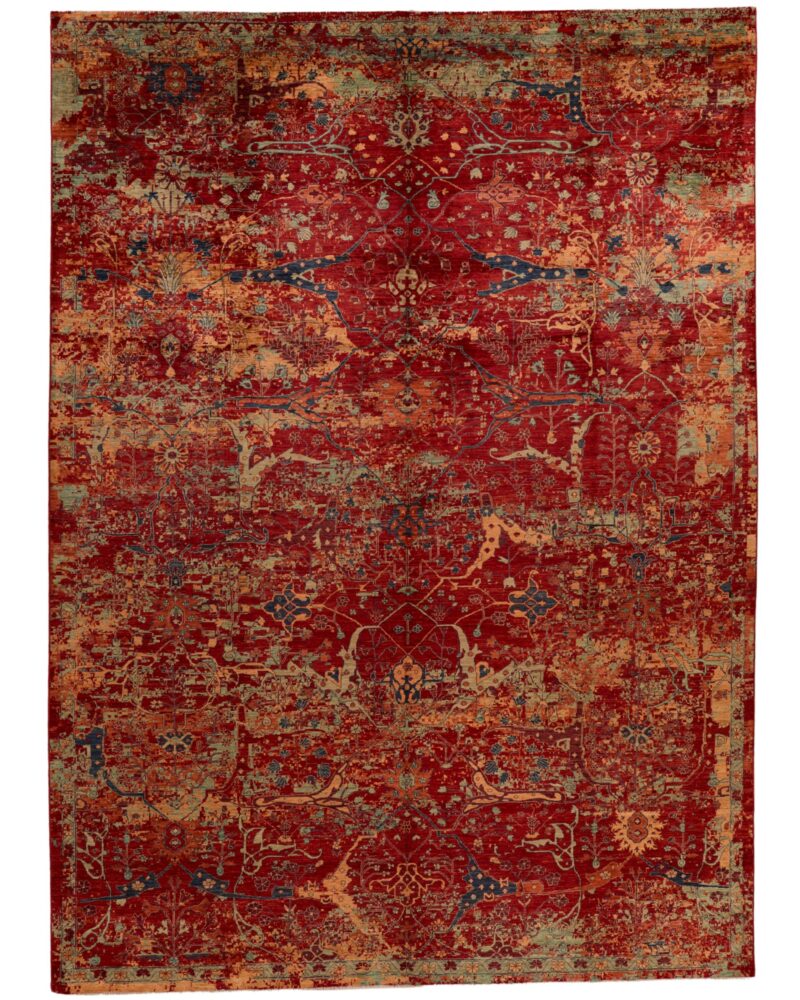
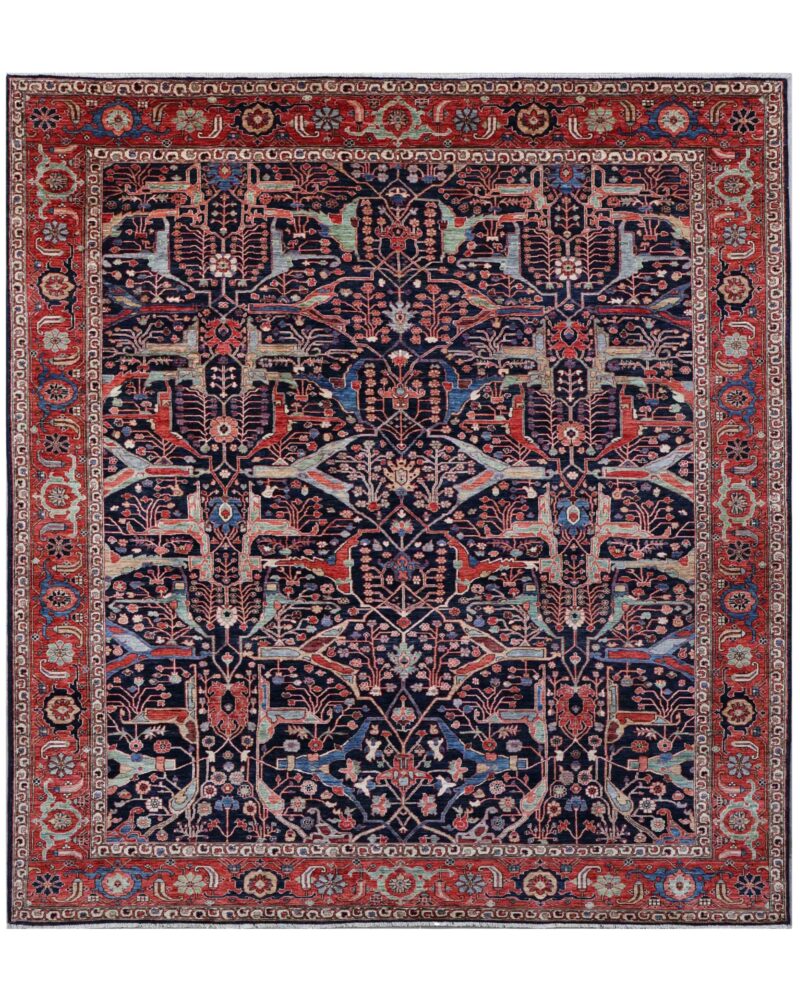
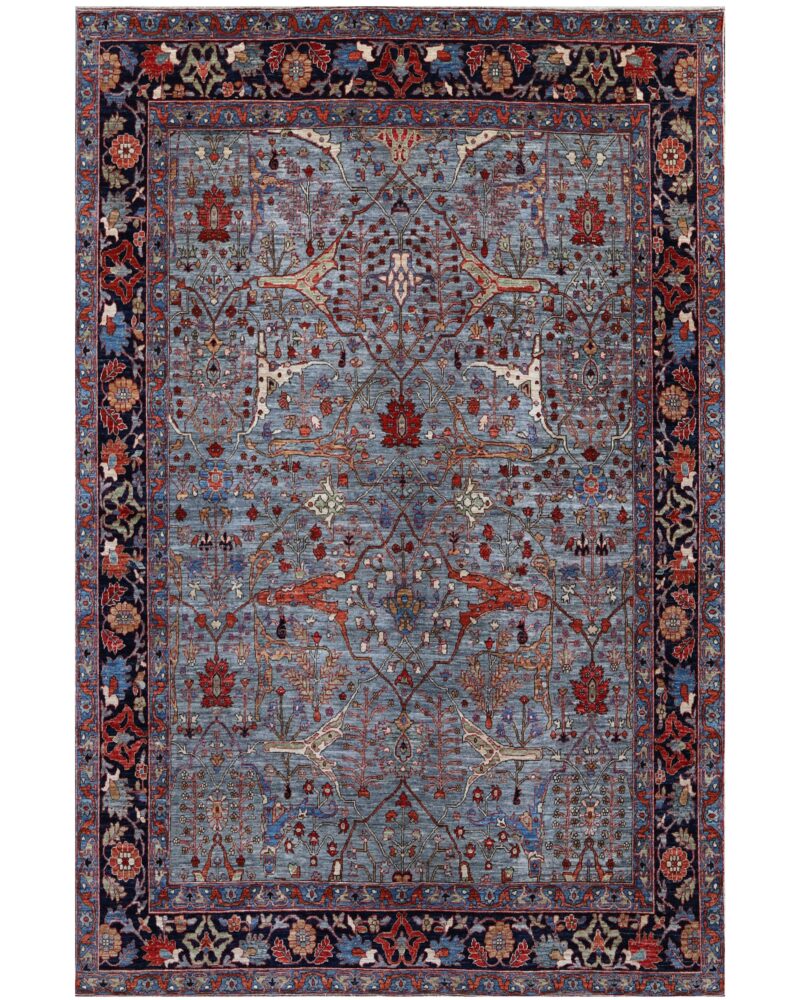
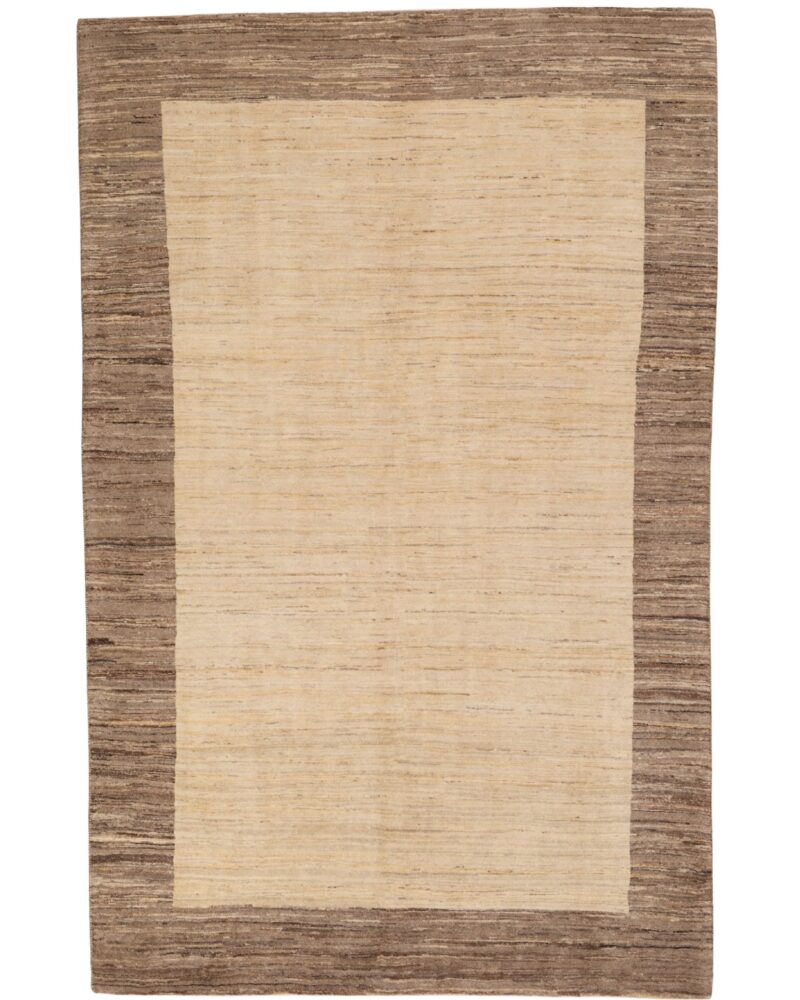
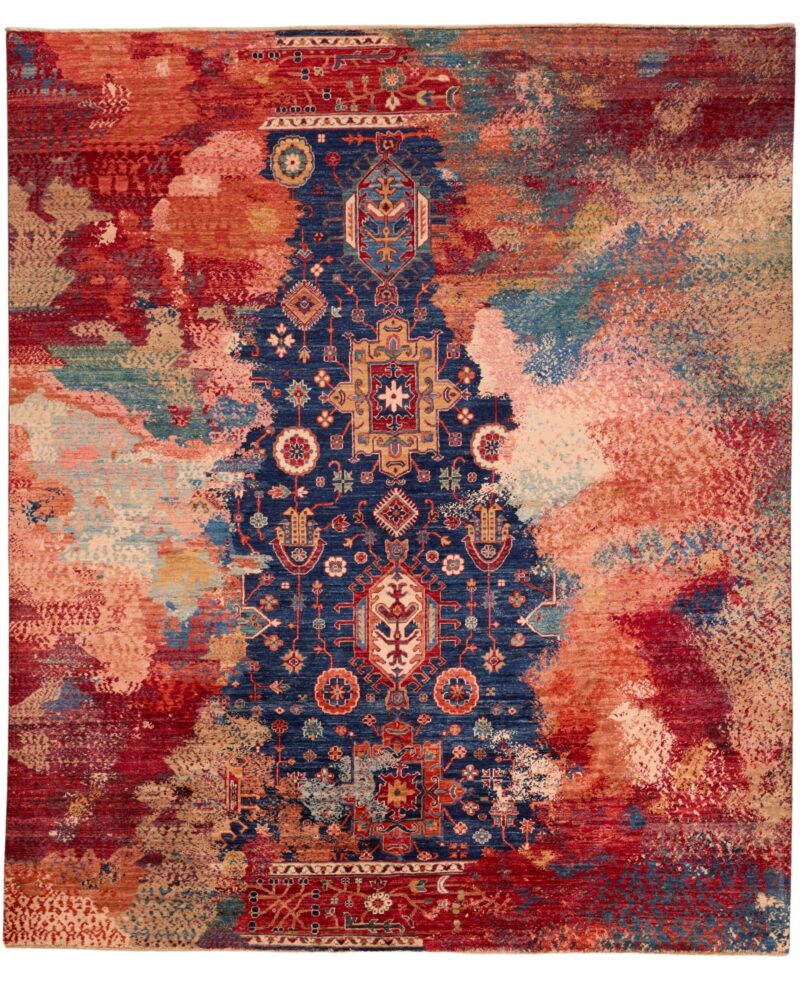
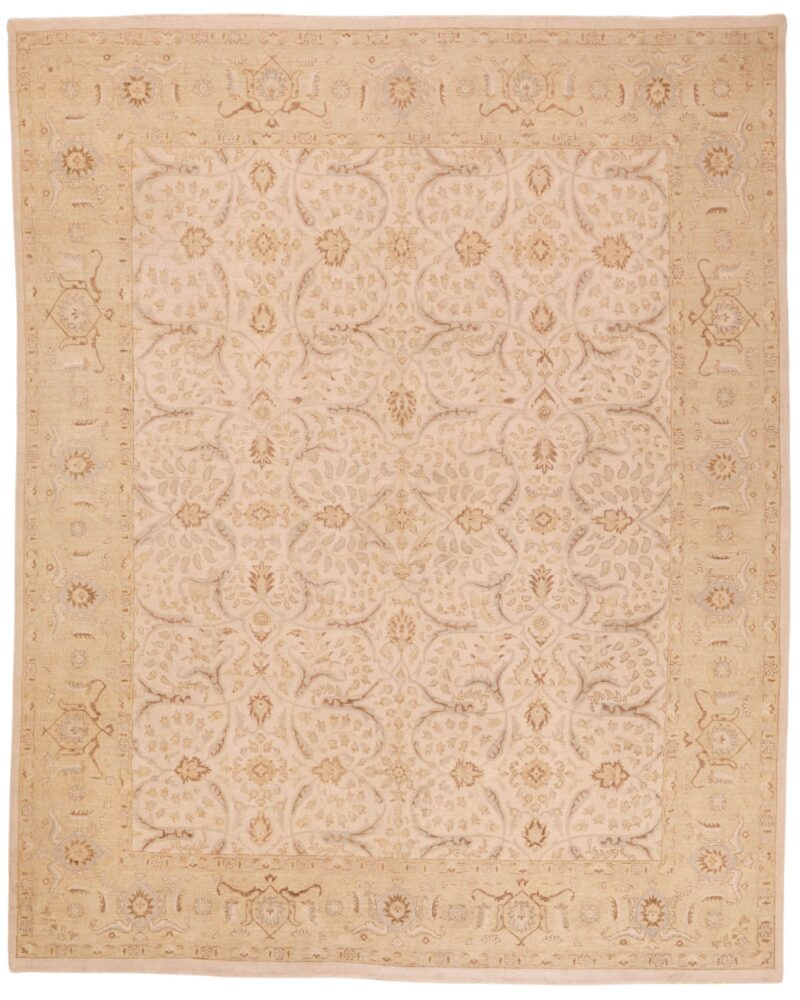
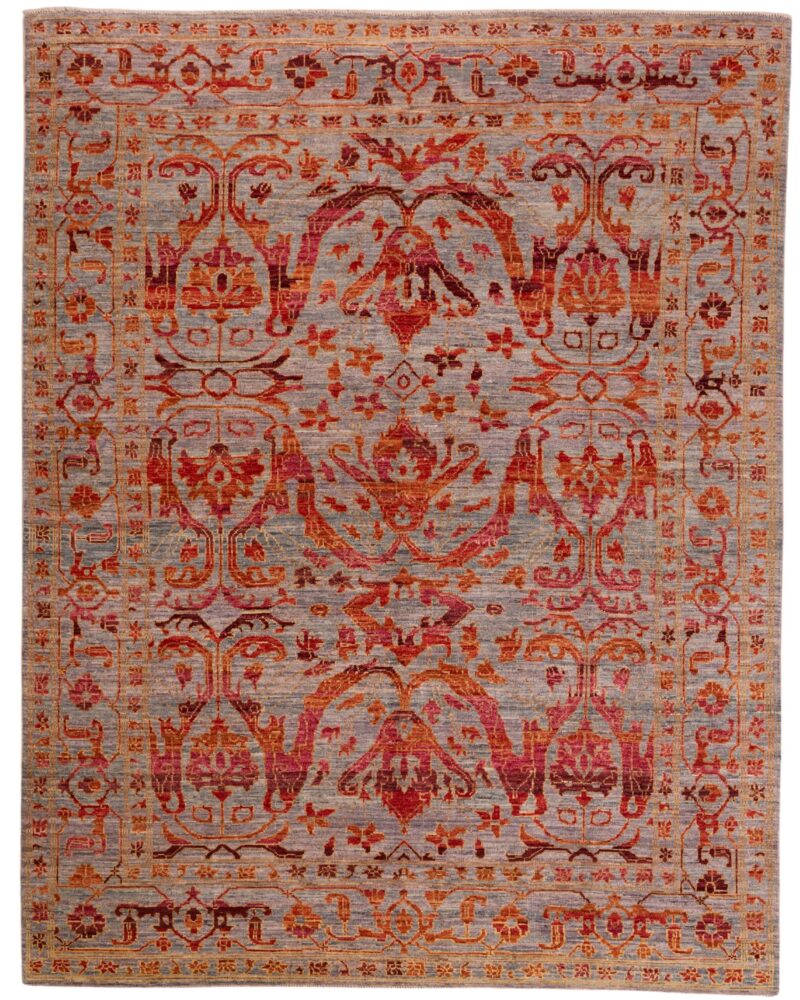
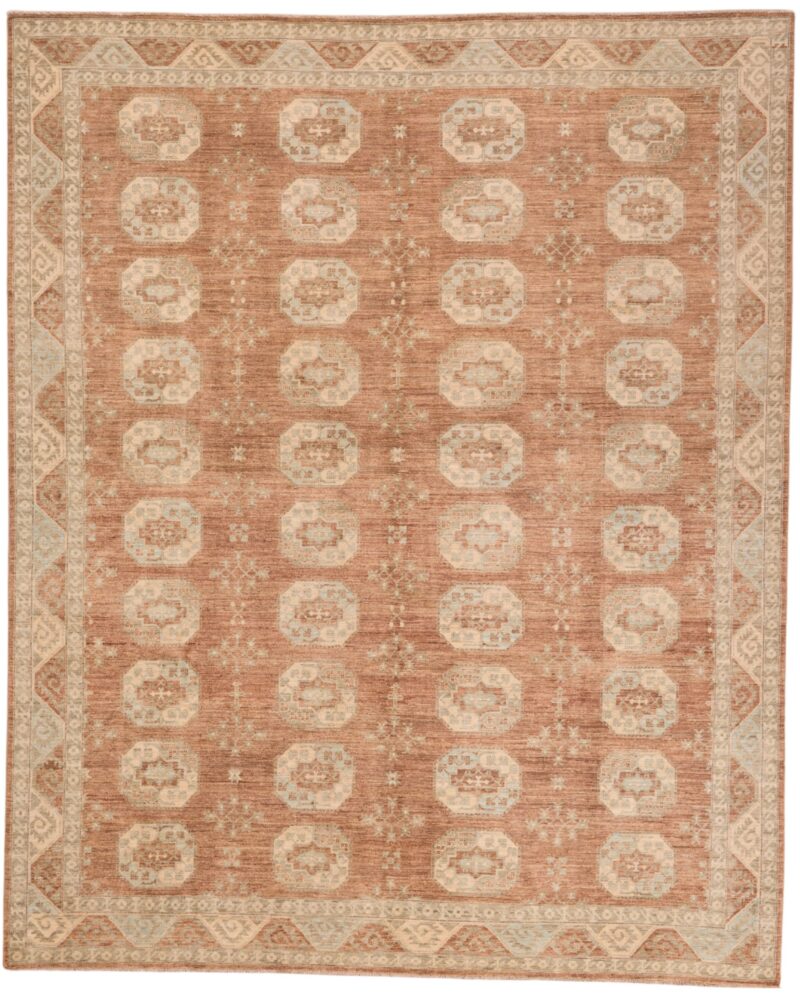
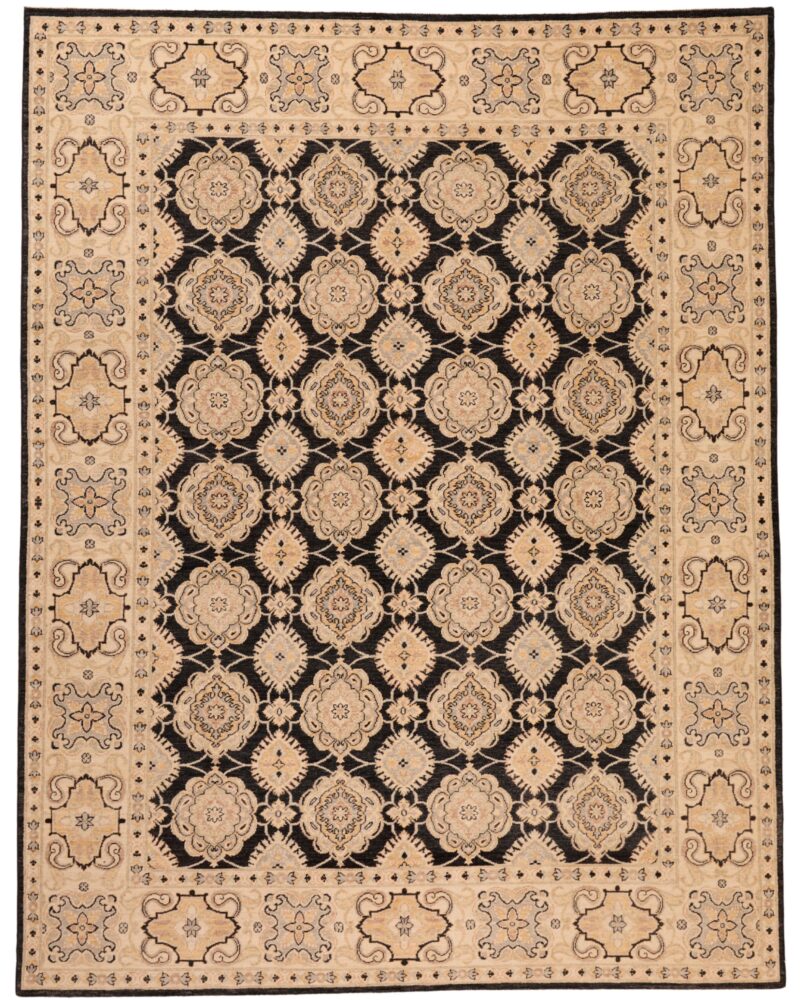
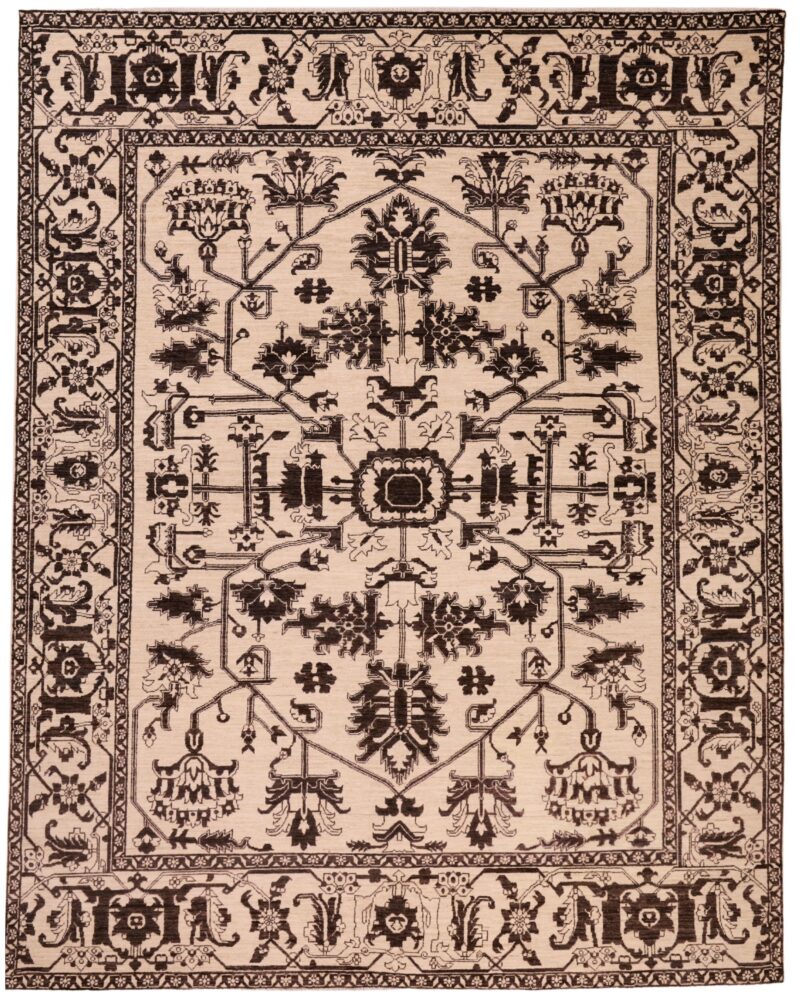
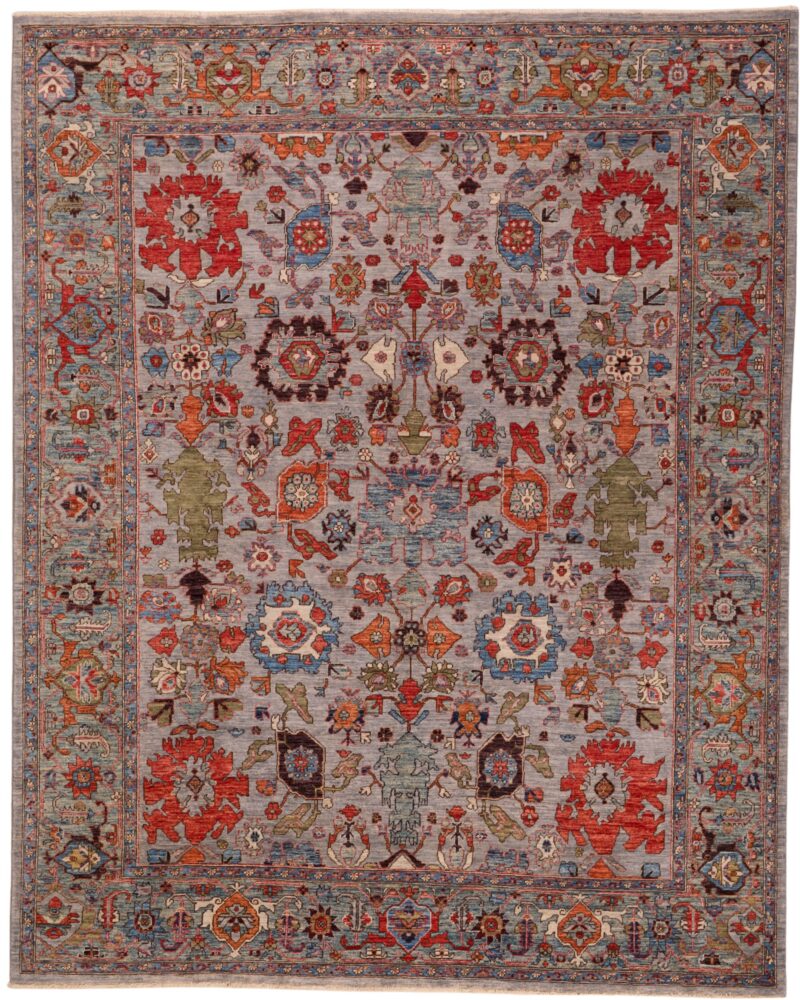
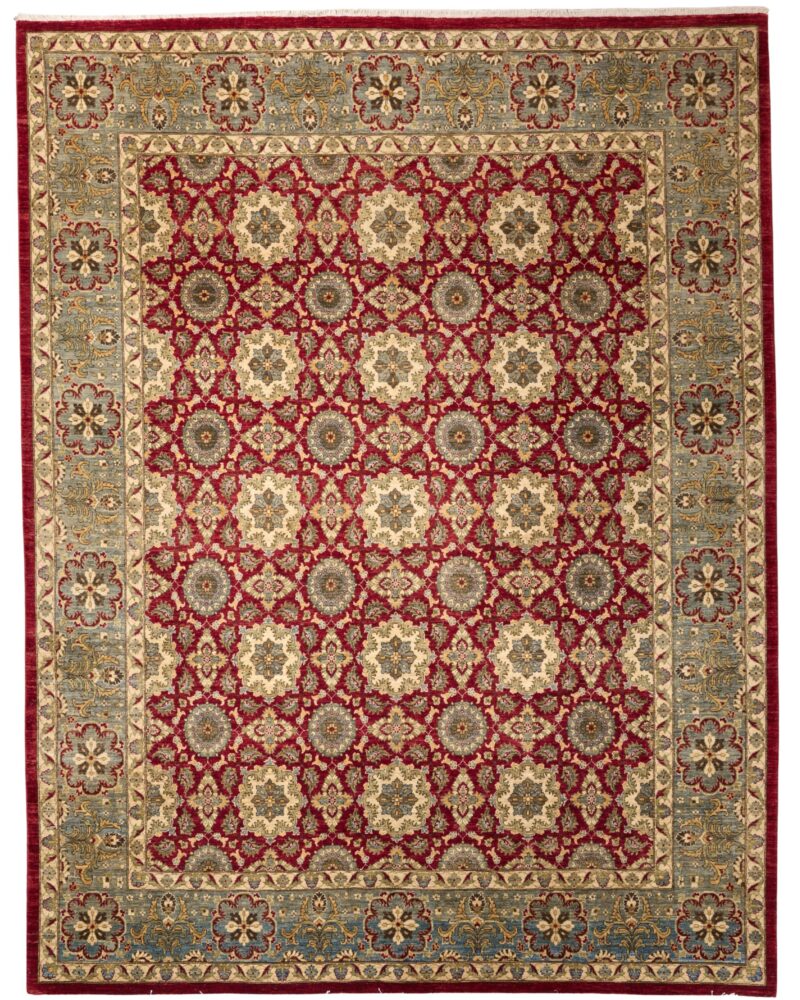
Traditional Modern rugs pair classic Persian and Anatolian design with a cleaner, more open composition. Weavers keep the medallions, borders and floral lattices of centuries-old workshops. They soften the density, lighten the palette and give the field more breathing room. Hand-knotted wool construction gives these rugs lasting structure. Traditional Modern rugs suit homeowners who love heritage patterns but want a room that feels current rather than formal.
What Defines Traditional Modern Rugs?
Traditional Modern rugs follow the weaving methods of Iran, Turkey and the Caucasus. Weavers tie each knot by hand on a cotton or wool foundation. Heriz, Tabriz, Bidjar, Mahal and Oushak designs are the usual references. Most use the symmetric Turkish knot, while Tabriz workshops often use the asymmetric Persian knot for finer detail. Pile height typically runs from 0.25 to 0.5 inch, with Oushak-style pieces sometimes a little thicker.
Wool is the standard pile material, and finer pieces may add silk highlights. Traditional Modern rugs often use softened madder reds, indigo blues, ivory, sage and warm camel instead of dense, saturated grounds. Motifs include angular Heriz medallions, Bidjar herati patterns, Mahal repeating florals and Tabriz scrolling vines. Our collection also includes a Moroccan design and a Mamluk design, which show how broadly the style travels.
Which Features Matter Most in Traditional Modern Rugs?
Traditional Modern rugs reward buyers who check a few construction details before choosing a piece.
- Material: hand-spun wool pile on a cotton foundation, sometimes with silk accents
- Pile height: typically 0.25 to 0.5 inch, low enough for chairs and dining tables
- Durability: well-made wool rugs commonly last for decades with regular care
- Size range: room sizes from about 8 x 10 feet up to 10 x 14 feet and larger
- Care level: moderate, with routine vacuuming and professional washing every few years
Traditional Modern Rug Quick Facts
| Attribute | Typical value | Why it matters |
|---|---|---|
| Construction | Typically hand-knotted on cotton or wool foundation | Hand knotting gives strength and makes repair possible. |
| Pile height | Typically 0.25 to 0.5 inch | Low pile lies flat under furniture and resists crushing. |
| Pile material | Typically wool, sometimes with silk highlights | Wool resists soil and recovers well from foot traffic. |
| Common sizes | Typically 8 x 10 to 10 x 14 feet | Large formats anchor living and dining rooms. |
| Professional washing | Typically every 2 to 3 years | Regular washing removes grit that wears down fibers. |
How Do You Style Traditional Modern Rugs at Home?
Traditional Modern rugs work in living rooms, dining rooms, bedrooms and entryways. They pair well with transitional, farmhouse, mid-century and minimalist decor. Neutral sofas and pale walls let a Heriz or Tabriz medallion lead the room. Warm wood, aged brass and linen upholstery echo the muted reds and blues. Keep one or two accent colors from the rug in pillows or art. If your space leans more relaxed, browse our Transitional Rugs for related looks.
Sizing matters more than pattern. In a living room, leave 8 to 12 inches of bare floor around the rug, with at least the front legs of every sofa and chair on it. Under a dining table, add 24 inches beyond each edge so chairs stay on the rug when pulled out. A rug pad prevents slipping and extends the life of the pile. Our rug padding service can match a pad to your floor and rug.
Frequently Asked Questions
What size Traditional Modern rug should I buy for a living room?
A Traditional Modern rug for a living room should usually measure 8 x 10 or 9 x 12 feet. Place at least the front legs of all seating on the rug. Leave 8 to 12 inches of bare floor along each wall for balance.
How do I clean and care for a Traditional Modern rug?
Traditional Modern rugs need weekly vacuuming without a beater bar, and prompt blotting of spills. Rotate the rug every six to twelve months for even wear. Schedule a professional hand wash about every two to three years, using our rug cleaning service.
Are Traditional Modern rugs durable enough for high-traffic areas?
Traditional Modern rugs in hand-knotted wool handle hallways, dining rooms and living rooms well. Dense wool pile and a cotton foundation resist crushing and wear. Regular cleaning, a quality pad and occasional rotation keep them looking good for decades.
How can I tell a handmade Traditional Modern rug from a machine-made one?
A handmade Traditional Modern rug shows small irregularities in knot spacing and pattern on the back. Individual knots are visible, and fringe is part of the foundation. Machine-made rugs show a uniform, grid-like back, and the fringe is usually sewn on.