


What Color Rug Goes With Sage Green Curtains? A Rug Specialist’s Pairing Guide
November 16, 2026
What Color Rug Goes With Navy Blue Curtains? A Rug Specialist’s Pairing Guide
November 18, 2026
An oriental rug is a hand-knotted or hand-woven textile from the belt stretching across Turkey, Iran, the Caucasus, Central Asia, and China. After two decades spent kneeling over wool piles with a loupe, I still meet owners who cannot say what lies underfoot. Dealers pin the label on any medallion pattern, yet it names a precise family of structures, fibers, and dyes. Learn more about Rug Cleaning.
Key takeaways
- An oriental rug is a hand-knotted or hand-woven textile from Turkey, Iran, the Caucasus, Central Asia, or China, and the label describes how and where it was made.
- Every Persian rug is oriental, but not every oriental rug is Persian, so ask sellers for the specific town or tribe of origin.
- A genuine hand-knotted rug shows its pattern mirrored on the back with visible knots, while machine-made copies have a uniform mesh-like backing.
- Knot density in knots per square inch measures weaving time, but wool quality and dye integrity matter too, so never judge by it alone.
- Price depends on knot density, fiber quality, dye type, age, and condition, and pieces made before the 1920s often need cold-water, low-agitation washing.
The guide below covers origins, styles, authenticity checks, pricing, washing, repair, and storage. Each section answers one question that buyers and owners raise in my workshop.
What Is an Oriental Rug and How Do Weavers Make One?
Oriental rugs are floor coverings hand-knotted or hand-woven in the Middle East, the Caucasus, Central Asia, or East Asia from wool, silk, or cotton. The label describes where and how weavers made the piece, not one look. A Persian Tabriz, a Turkish Oushak, and a Chinese Ningxia all qualify, though they look nothing alike.
Hand-knotting defines the construction. Weavers tie each knot around two warp threads, then pack the row down with a weft and a beating comb. Two knot types dominate: the Persian knot, which is asymmetrical, and the Turkish knot, which is symmetrical. A 9 by 12 foot rug at 100 KPSI holds roughly 1.5 million knots. A skilled weaver may need a year or more to finish one. That labor explains why authentic pieces cost far more than machine-made imitations.
- Foundation: cotton or wool warp and weft threads
- Pile: wool or silk, knotted row by row
- Persian knot: asymmetrical, open on one side
- Turkish knot: symmetrical, closed around two warps
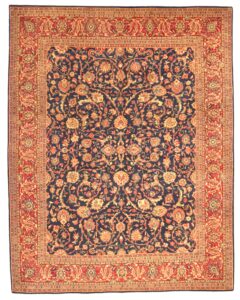
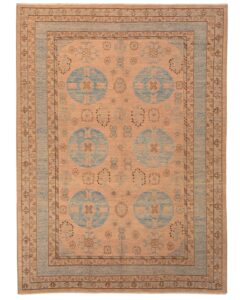
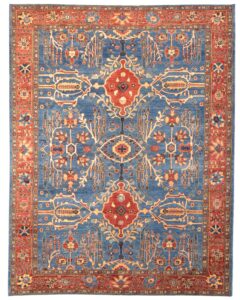
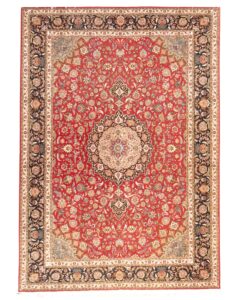
Matching rugs
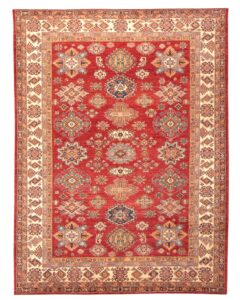
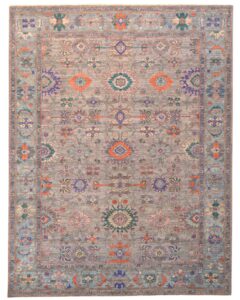
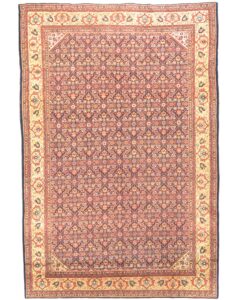
These hand-knotted rugs reflect the craftsmanship, medallion designs, and traditional construction the article describes, so you can see the style in person.
How Does a Persian Rug Differ From Turkish, Caucasian, and Chinese Pieces?
A Persian rug is any piece woven in Iran, so every Persian rug is oriental while the reverse does not hold. Tabriz, Kashan, Heriz, Isfahan, and Qum each developed a signature palette and motif vocabulary. The wider category also covers Turkish, Caucasian, Afghan, Pakistani, Indian, and Chinese production.
Origin steers both value and care. Heriz weavers use coarse, durable wool that tolerates a wash pit well. Fine Qum silk needs gentler handling and shorter soak times. Turkish Oushak pieces carry soft wool and muted palettes. Caucasian Kazaks pair bold geometry with lustrous wool, a look you can browse in our Tribal Rugs collection. Chinese Ningxia rugs favor open fields with sculpted dragons or florals. Ask a seller for the town or tribe of origin, not only the country.
Which Tabriz, Heriz, Oushak, and Kashan Rug Styles Do Buyers Ask About Most?
Tabriz, Heriz, Oushak, Kashan, and Khotan lead the styles that appraisers name most often. Persian towns favor curvilinear floral medallions and detailed borders. Caucasian and tribal weavers prefer bold geometry. Turkish workshops range from ornate Hereke court designs to simple village pieces, while Turkmen and Uzbek weavers produced the Bokhara pattern.
- Tabriz: 150-500 KPSI, medallion-and-corner layout, wool or wool-silk blend
- Heriz: 60-100 KPSI, angular medallion, durable in high-traffic rooms
- Oushak: soft muted palette, large-scale geometric or floral fields, suits transitional interiors
- Kashan: dense wool pile, deep red and navy grounds, detailed central medallion
- Khotan: East Turkestan origin, pomegranate and lattice motifs
Natural dyes from madder root, indigo, walnut husks, and cochineal produce abrash, the subtle color banding collectors prize. Early synthetic aniline dyes reached weaving centers in the 1870s and often faded or bled. Chrome dyes, common from about the 1920s, resist light far better. Buyers who like Persian-style medallion structure should start with our Classic & Traditional Rugs.
Collectors who prize age and documented provenance should browse our Antique & Vintage Rugs. Pieces made before the 1920s often carry natural dyes, so they call for cold-water, low-agitation washing.
How Can You Verify That a Handmade Rug Is Authentic?
A genuine hand-knotted rug shows its pattern mirrored on the back, with individual knots visible. A machine-made copy shows a uniform, mesh-like backing with no knot structure. Authentic fringe extends the foundation warp threads, while factory rugs often have fringe stitched on.
Knot density, counted in knots per square inch (KPSI), measures weaving time. Village and tribal rugs commonly run 40-100 KPSI. City workshop pieces run 150-300 KPSI. Silk court-style pieces from Persia and Turkey can exceed 500-800 KPSI. Higher density allows finer detail and usually lifts resale value. Wool quality and dye integrity count just as much, so never judge by KPSI alone.
What Determines Prices for Persian, Turkish, and Chinese Area Rugs?
Five factors set the price of a hand-knotted piece: knot density, fiber quality, dye type, age, and condition. Size scales cost because larger rugs hold more knots. Signed workshops and documented provenance add premiums. Undocumented repairs and color restoration subtract value.
Treat the table figures as rough retail estimates for 8 by 10 foot rugs, not quotes. Dealer markup, condition, and current demand can move real prices well outside these ranges.
| Rug Origin | Typical Knot Density (KPSI) | Primary Material | Common Motifs | Estimated Price Range (8×10 ft) |
|---|---|---|---|---|
| Persian Tabriz | 150-500 | Wool / wool-silk | Medallion, floral | $3,000-$15,000 |
| Persian Heriz | 60-100 | Wool | Geometric medallion | $1,800-$6,000 |
| Turkish Oushak | 80-150 | Wool | Large-scale floral | $2,500-$9,000 |
| Caucasian Kazak | 50-90 | Wool | Bold geometric | $2,000-$7,000 |
| Chinese Ningxia | 90-150 | Wool, sometimes silk accent | Dragon, floral medallion | $1,500-$6,500 |
A simple decision rule helps: rank wool and dye quality first, density second, and age third. A 100-KPSI rug in lustrous wool with stable natural dyes often outperforms a 200-KPSI rug in thin, over-bleached wool. Dense knotting cannot rescue weak fibers.
What Should You Inspect Before Buying a Persian or Turkish Rug?
A pre-purchase inspection of a Persian or Turkish rug covers five checks. Check pile depth and even wear first, in daylight, and ask the seller to let you flip the piece fully.
- Inspect the knot structure on the reverse for consistency and density
- Check fringe and selvage for original construction versus later repair
- Look for insect damage, especially moth larvae feeding in the pile
- Rub a damp white cloth across dark areas to test dye stability on several colors
- Request documentation on origin, age, and prior restoration work
Request a written condition report that notes repairs, reweaving, and color restoration. Ask for documented provenance when the price exceeds a few thousand dollars. Moth damage shows as bare patches with powdery residue and silky webbing. Our Rug Appraisal service documents condition, origin, and current market value for insurance or resale.
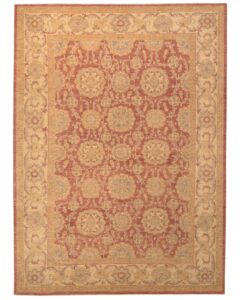
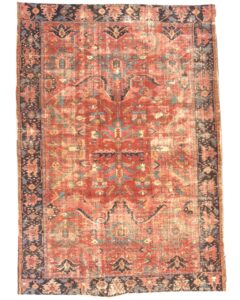
More matching rugs
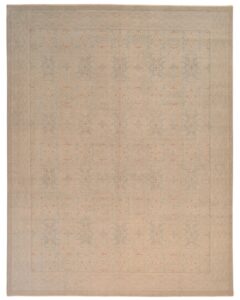
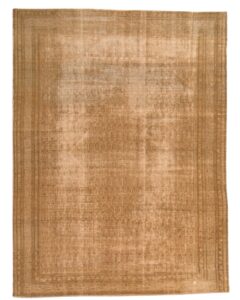
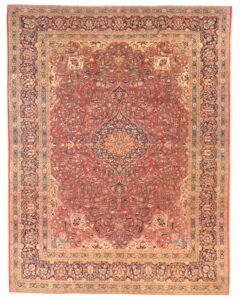
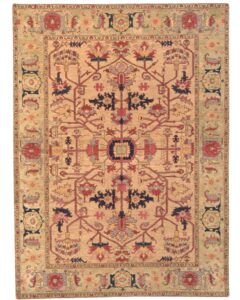
Another set of rugs that follow the same colors and style as this guide.
Which Washing Method Is Safest for Oriental Wool Rugs?
Full immersion washing in a controlled wash pit is the safest method for a hand-knotted rug. Workshops from Iran to the United States rely on it because water carries soil, dust mite waste, and pH-altering residue out of the foundation. Vacuuming never reaches that deep.
Natural fibers, vegetable or chrome dyes, and hand-tied foundations react to water, heat, and agitation differently from synthetic broadloom. High-alkaline detergents, over-wetting, and steam machines with rotating brushes strip dye, shrink wool, and rot foundation threads. In-home shampooing leaves moisture inside the foundation, where mold and odor can develop within 24-48 hours. A dedicated Rug Cleaning facility should meet the standards below.
- Wash method: full immersion, performed off-site
- Drying: climate-controlled room
- Detergent: pH-balanced and wool-safe
- Agitation: gentle hand work, no rotating brushes
- Silk pieces: shorter soaks in cold water
How Do You Care for a Hand-Knotted Rug Between Professional Washes?
Weekly vacuuming of both sides protects a hand-knotted rug between professional washes. Use suction only, or raise the beater bar to its highest setting. Aggressive brush rollers fray delicate wool and silk. Rotate the piece 180 degrees every six months so sunlight and foot traffic wear the field evenly.
Spill response decides whether a stain sets. Blot at once with a dry white towel, and never rub, because rubbing drives liquid and dye deeper. Skip off-the-shelf carpet shampoos, since many contain optical brighteners or enzymes that are too harsh for natural dyes. Our guide on how to wash area rug surfaces safely covers wool and silk techniques in more depth.
Proper padding extends a rug’s life. A felt-and-rubber pad about 1/4 inch thick prevents slipping and cushions knots against foot pressure. Cut the pad about 1 inch smaller than the rug on every side so the edges lie flat. Browse our Rug Padding options for sizes and materials.
Can Moth Holes and Frayed Fringe on Antique Carpets Be Repaired?
A skilled restorer can repair nearly any moth hole, frayed fringe, worn corner, or unraveling selvage on a hand-knotted rug. Matching wool and period-correct reweaving make the repair blend into the field. Untreated damage compounds, because each vacuum pass and footstep pulls neighboring knots loose.
Reweaving rebuilds the missing warp and weft, then hand-knots new pile to match density, color, and wool texture. A silver-dollar patch takes three to five hours. A large moth area or worn traffic lane can take several days. Severely rotted foundations and extensive dye bleed limit how closely the result matches the original. Our Rug Repair & Restoration service covers holes, edges, and general wear and tear.
- Moth damage: bare patches with powdery residue, repaired by reweaving plus preventive treatment
- Frayed or missing fringe: rebuilt onto the original warp, never simply reattached
- Flood damage: controlled drying within 48 hours prevents dye bleed and mildew
In What Order Should You Repair, Wash, Resize, and Store a Handmade Wool Rug?
A handmade wool rug needs service in a fixed order: stabilize loose edges, wash, reweave, resize, then store. Stabilizing first stops unraveling in the wash pit. Washing before reweaving lets the restorer match new wool against clean pile instead of soil-dulled color.
Resizing cuts a piece down for a new room or doorway and re-binds the edge without harming the border or field. Schedule Rug Resizing after repairs so the cut avoids weak areas.
Storage closes the sequence. Wool folded in a damp basement for a season can develop mildew and permanent creases. Roll the rug loosely, wrap it in acid-free paper or a cotton sheet, and avoid plastic, which traps moisture. Treat for moths before wrapping. Our Rug Storage program provides climate control between uses.
My Experience Cleaning and Restoring Oriental Rugs
A Heriz border taught me more about dye chemistry than any textbook. Early in my career, a homeowner handed me one that a rented carpet machine had scrubbed after a red wine spill. Hot water and alkaline detergent had set the stain and driven madder-root dye from the border into the ivory field. Three cold-water flushes and a controlled reduction treatment over two days pulled the bleed back, though a faint shadow remained. I now tell every client to blot, never scrub, and call a specialist before trying a home remedy.
Neglect causes just as much harm as over-cleaning. One Kashan silk prayer rug reached my workshop with so much compacted grit in the foundation that the fibers sawed against each other with every footstep. Its owner had skipped cleaning for fifteen years, fearing damage to an heirloom. A proper immersion wash removed nearly half an ounce of embedded soil per square foot, and the colors came back noticeably brighter. Cases like it explain why I recommend washing on a fixed schedule rather than waiting for visible dirt.
Moth damage fills the rest of my repair bench, especially on rugs pulled from storage or kept under furniture that blocks airflow. Wool is a protein fiber, and clothes-moth larvae can eat through pile within weeks in warm, dark, undisturbed spots. I have restored rugs where the damage tripled in under two months because nobody checked beneath a sofa. Pair routine inspection with Rug Moth Protection and the bill stays far lower than any reweaving invoice.
How Often Does a Persian or Oriental Carpet Need Professional Cleaning?
Professional immersion washing every 12-18 months suits Persian rugs in active living spaces. Homes with pets, young children, or heavy foot traffic benefit from the shorter end of that range. Bedroom and low-traffic rugs often stretch to two or three years.
Embedded grit saws against fibers with every footstep, so waiting for visible dirt costs pile. Schedule the wash by traffic and household, not by appearance.
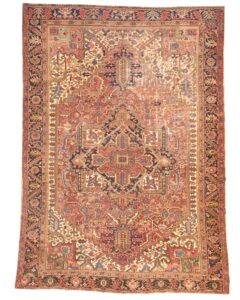
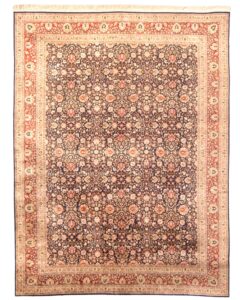
Final picks
One last row of rugs chosen to go with the ideas above.
Is a Machine-Made Carpet Ever Truly Oriental?
A machine-tufted or power-loomed carpet never counts as oriental, because the category requires hand-knotting or hand-weaving in a traditional weaving region. Factories anywhere can print an oriental design onto synthetic pile, yet the construction stays industrial.
Hand-tufted rugs push yarn through canvas with a tufting gun and seal it with a latex backing. Hand-knotted rugs tie every knot to the foundation. A glued latex or cloth backing on the reverse gives the tufted rug away.
Does a Washable Rug Replace a Genuine Oriental Piece?
A washable rug serves a different purpose than a hand-knotted piece. It offers convenience in spill-prone rooms but lacks the investment value, wool density, and longevity of hand-knotting.
Readers weighing the difference can compare options in our guide to the washable rug category. Use washable rugs in kitchens and entryways, and keep hand-knotted pieces in living rooms and bedrooms.
Where Can You Find Persian Carpet Cleaning and Repair Near Me?
Persian carpet cleaning specialists should show documented experience with hand-knotted construction, unlike general carpet cleaners. Ask whether the shop offers appraisal, repair, and immersion washing under one roof, so condition records stay consistent across services.
Visit the facility in person. A real specialist shows you the wash pit, the drying room, and before-and-after repair photos. Request a written estimate that lists the method, detergent type, and turnaround time.
Sources:
Wikipedia: Oriental Rug
Smithsonian Institution
