


Sisal vs Seagrass Rug: Which Natural Fiber Holds Up Better in a Real Home?
November 13, 2026
Getting Dog Urine Out of a Rug: When DIY Works and When to Call a Pro
November 15, 2026
Beige upholstery forgives almost every mistake and resolves almost nothing, which makes the question of what color rug goes with beige furniture harder than it looks. After twenty years of washing, reweaving, and color-matching rugs from beige living rooms, I treat the answer as three questions: which undertone the fabric hides, how much contrast the room can carry, and how the fiber and dye will look after three winters of foot traffic. This guide shows how to read your sofa’s undertone, which rug colors suit a living room versus a bedroom, what an oatmeal sofa needs that a camel one does not, and why a showroom favorite can fail by year four. Learn more about Rug Cleaning.
Key takeaways
- Identify your beige sofa’s undertone first, because the rug color must agree with the warm, cool, or neutral hue hidden in the fabric.
- Hold white printer paper against the cushion in daylight and again under evening lamps to tell whether the beige leans warm or cool.
- Warm beige pairs with slate blue, indigo, and charcoal, while cool beige pairs with rust, terracotta, and brick red.
- Choose a medium-depth rug two to three shades darker than the sofa, since it grounds the room and hides traffic lanes.
- Oatmeal sofas need a saturated color or clear texture contrast, such as a flat-woven kilim, because smooth pale rugs dissolve into the flecked weave.
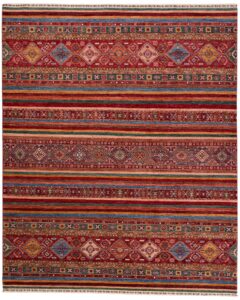
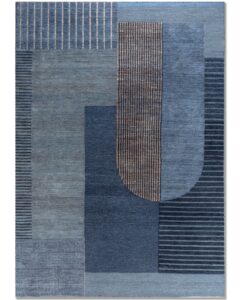
Matching rugs
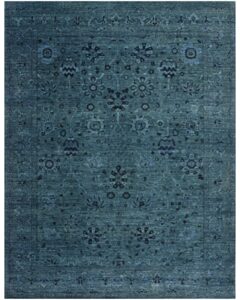
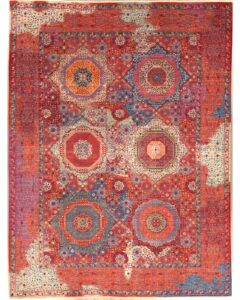
These rugs reflect the undertone-based color pairings and textures the article recommends for grounding beige sofas and living rooms.
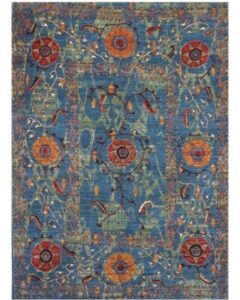
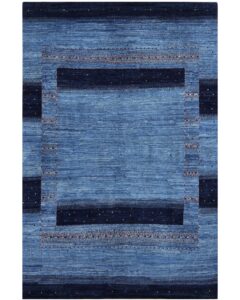
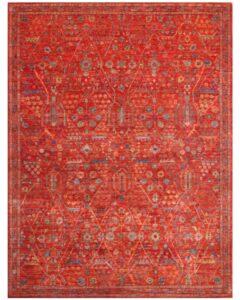
How Does Undertone Shape the Right Rug Color for Beige Furniture?
Undertone decides the rug color before any other factor does. Every beige fabric is a pale tint of yellow, orange, red, or occasionally green, and the rug must agree with that hidden hue. A rug that fights the base makes the sofa look dingy from across the room. Settle the undertone first, then shop for color.
- Warm beige (yellow, peach, camel): looks yellow beside white paper; pairs with slate blue, indigo, and charcoal.
- Cool beige (gray, pink, mushroom): looks gray or rosy beside white paper; pairs with rust, terracotta, and brick red.
- Neutral greige: shows no strong lean; pairs with olive, sage, and muted teal.
Color science gives this problem a vocabulary. The Munsell system places beiges in the yellow and yellow-red hue families at low chroma, which means they are muted. Light Reflectance Value (LRV) rates how much visible light a surface returns, from 0 for black to 100 for white. My rule of thumb in the workshop: keep a clearly visible LRV step between rug field and sofa. I also choose the opposite temperature when a client wants definition, and the same temperature when a client wants calm.
How Can You Test Whether a Beige Sofa Leans Warm or Cool?
A sheet of plain white printer paper held against the cushion in daylight reveals the lean. If the beige looks faintly yellow or peach beside the paper, it is warm. If it looks gray, mushroom, or rosy, it is cool. The eye cannot judge a neutral alone, so it needs a white reference.
A five-step check gives a more reliable answer, and I usually run it in a client’s home in about fifteen minutes. Light changes everything here, so the steps cover both daytime and evening.
- Check the sofa at midday near a north- or east-facing window, where daylight runs roughly 5000 to 6500 Kelvin.
- Repeat the comparison at night under the room’s own lamps, since warm LED bulbs run 2700 to 3000 Kelvin and push every beige toward yellow.
- Inspect the weave up close. Linen blends, bouclé, and performance polyester often pair a light warp with a darker weft, and the darker thread sets the undertone.
- Photograph the cushion beside a gray card or a true-white object, because the camera exaggerates the lean.
- Record the verdict in writing before you shop, since memory drifts toward whichever swatch you saw last.
Which Rug Color Suits an Oatmeal Sofa Better Than a Camel or Sand Sofa?
An oatmeal sofa needs a saturated rug color or a clear texture contrast, because a smooth pale rug dissolves into its flecked weave. Oatmeal fabric mixes ecru, taupe, and thin charcoal yarns. Those flecks act like a built-in heather and absorb any rug that shares their tonal range. Indigo, olive, and terracotta hold their ground against it.
Flat-woven Kilim Rugs solve the problem in one object. A hand-woven wool kilim in madder red or deep indigo brings color snap and weave contrast together. Its tight, pile-free surface also sits visibly flatter than a plush oatmeal cushion, which sharpens the edge between floor and seat. Camel and sand upholstery are warmer and smoother in tone, so soft ivory and cream rugs work there. The same rugs look muddy beside oatmeal.
Which Rug Color Looks Best Under a Beige Couch in the Living Room?
A medium-depth rug two to three shades darker than the sofa looks best in most living rooms. Cool anchors such as slate blue, charcoal, and deep teal work well. Warm anchors such as rust, terracotta, and aged brick red work equally well. Ivory with a black or chocolate lattice is the one light choice that still reads as a decision rather than an afterthought.
The classic 60-30-10 proportion explains why timid rugs fail. It assigns 60 percent of a room to a dominant neutral, 30 percent to a secondary color, and 10 percent to accents. A beige sofa sits in the 60 percent, so the rug carries the 30. An 8 by 10 foot rug covers 80 square feet and has to earn that space. Hand-knotted Beni Ourain pieces from Morocco’s Middle Atlas succeed because the pattern supplies the structure the color lacks: undyed ivory wool pile of 1 to 1.5 inches, with a sparse black diamond grid. Among Moroccan Rugs, that style has been my most-requested pairing for warm beige sofas for a decade.
Should a Rug Be Darker or Lighter Than a Beige Sofa?
A darker rug suits most living rooms, because it takes the heaviest wear and grounds the pale sofa visually. A mid-to-deep tone also conceals traffic lanes between the sofa, the doorway, and the kitchen. The sofa then reads as the light element of the room instead of floating without an anchor.
Lighter rugs earn their place in two situations. Dark walls or dark floors call for a lighter rug, and so does a small north-facing room that needs the floor to bounce light. Pile direction adds a wrinkle in either case. A cut-pile wool rug looks darker when viewed against the nap, so a charcoal rug that looked medium in the store can read nearly black at home. I ask clients to view a candidate from the seat they actually use before committing.
Which Rug Color Families Match Which Beige Undertone?
Slate and indigo blues suit warm beige, rust and terracotta suit cool beige, and olive or sage works with either. The table below compares the main rug color families by undertone match, contrast, soil concealment, and typical rug type.
| Rug color family | Best beige undertone | Contrast with beige | Soil concealment | Typical rug type |
|---|---|---|---|---|
| Slate or indigo blue | Warm (yellow, camel) | High | Very good | Hand-knotted Persian Heriz, Afghan kilim |
| Rust or terracotta | Cool (greige, mushroom) | Medium-high | Good | Gabbeh, vintage Turkish Oushak |
| Olive or sage green | Either, best with oatmeal | Medium | Good | Transitional wool, overdyed vintage |
| Charcoal or warm gray | Warm | Medium | Very good | Contemporary hand-loomed wool |
| Ivory with dark pattern | Warm camel or sand | Low field, high pattern | Poor to fair | Moroccan Beni Ourain, Azilal |
| Faded apricot or blush | Cool pink-beige | Low | Fair | Antique Oushak, distressed vintage |
Each rug family flatters one beige temperature and merely tolerates the other. The soil column separates rugs that stay handsome under children and dogs from rugs that need a quieter household. Ivory Moroccan pile looks glorious and demands care, because undyed wool shows every dropped coffee and yellows first along the entry edge.
Which Rug Color Works With Beige Furniture on Oak, Walnut, or Painted Floors?
Floor color acts as the third color in the scheme. Honey or red oak calls for a rug that cools the room, such as slate blue, sage, or ivory with charcoal. Dark walnut or espresso calls for a lighter rug in cream, dusty blue, or washed terracotta. The lighter rug keeps the beige sofa from floating on a dark void.
Matching the rug’s warmth to the floor’s warmth is the error I see most often. It stacks three warm tones, and the room goes flat. Curtains complicate the picture further, because a strong drapery hue pulls the rug toward its complement or its softer cousin. Readers working through a saturated window treatment beside neutral seating will find the same undertone logic in my guide on what color rug goes with yellow curtains, where the sofa is often beige and the rug has to bridge both.
More matching rugs
Another set of rugs that follow the same colors and style as this guide.

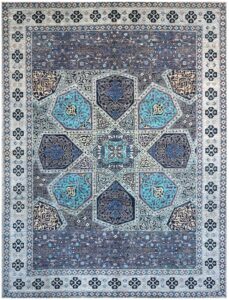

What Color Rug Goes With Beige Furniture in a Bedroom?
A bedroom tolerates lighter and softer rugs than a living room does. Soft sage, dusty blue, blush-tinged rose, and warm gray all pair well with beige bedroom furniture. Low contrast and plush pile are virtues here, not liabilities. Foot traffic is light, nobody eats on the floor, and the goal is calm rather than anchoring.
Sizing shapes the color decision too. Much of the rug disappears under the mattress, so a tribal piece with a strong border and a quieter field works well. The border is the part you will see. Hand-knotted Persian pieces of this kind use soft, long-staple wool about half an inch deep, with palettes built on saffron yellow, madder red, and indigo. The thick, plain color fields of Gabbeh Rugs, woven by Qashqai weavers in southern Iran, read as quiet from the pillow. They still give a beige upholstered bed a visible frame.
How Should a Rug Under a Beige Upholstered Bed Differ From One Under a Sofa?
A rug under a bed differs because the mattress hides the center, so only the border and the foot panel contribute color. Choose the rug for what those visible inches look like against the beige headboard and bed skirt. A rug under a sofa shows its entire field and has to hold its own across the whole surface.
- Queen bed: 60 by 80 inches; an 8 by 10 foot rug leaves roughly 18 to 30 inches showing at the sides and foot.
- King bed: 76 by 80 inches; a 9 by 12 foot rug leaves about 16 inches at each side and more at the foot.
Bedroom lighting compounds the difference. Bedside lamps run warm, at 2700 Kelvin or lower, and sit low, so they light the rug from the side. Side light exaggerates pile texture and deepens apparent color. A dusty blue that looked airy at noon turns toward navy at 10 p.m. Choosing one step lighter than instinct suggests compensates for that shift.
How Do Pattern Scale and Pile Height Change the Rug Color Beside Beige Bedroom Pieces?
Large-scale patterns can hold far more beige and cream without disappearing, because the eye reads the overall motif instead of individual tones. Small, dense patterns beside beige furniture blur into a textured neutral and lose their color identity. Taller pile also reads darker than flat weave in the same dye, owing to the shadows between tufts.
Cushioning changes how the color sits as well. A quarter-inch felt and natural rubber pad lifts the rug so the pile stands upright. The color then presents evenly instead of crushed and matted in the walkway, and the edges stop curling into odd angles of light. Proper Rug Padding is cheap insurance for a soft bedroom pairing, and it extends the life of a plush wool rug.
How Do Fiber and Dye Change the Best Rug Color for a Beige Sofa?
Fiber decides how long a color choice stays true. Wool holds dye deeply and masks soil in its crimp. Undyed jute and sisal darken and yellow with light and moisture. Viscose, sold as “art silk,” develops permanent gray traffic lanes that no pale beige sofa can forgive. The color you compare against the sofa on day one is only a forecast, and fiber sets its accuracy.
Maintenance intervals are part of that forecast. Vacuum wool weekly without a rotating beater bar. Schedule a professional wash every 2 to 4 years, sooner for light fields and pet households. Full-immersion Rug Cleaning restores the color depth that dry soil dulls. It matters most for light and mid-tone rugs, because gray soil pulls them toward the sofa’s beige and erodes the contrast you paid for.
Which Rug Colors Hide Soil Best Next to a Beige Couch?
Mid-tone, multicolor, and heathered rugs hide soil best. Tracked-in dirt is itself a mid-gray, so it vanishes into a busy mid-tone and stands out on pale ivory or deep black. Solid charcoal, counterintuitively, shows lint and pet hair almost as badly as cream shows mud. These traits mark the winners in my workshop, judged by how rugs look when they arrive for washing after years of service.
- Pile: short to medium wool, which traps grit below the visible surface.
- Abrash: gentle horizontal color banding in hand-dyed wool, which breaks up any single stain.
- Field dyes: madder red, indigo blue, and walnut brown, which fade toward the sofa’s range instead of away from it.
- Border: dark or multicolor and at least 6 inches wide, where edge wear and sofa-leg marks collect.
Owners who prefer spot care between professional washes can follow my fiber-by-fiber instructions to clean area rug surfaces without bleeding the dyes. Test any cleaner on a hidden corner first, especially on red fields.
How Do Natural Dyes Age Next to Beige Upholstery?
Natural dyes soften toward the beige family as they age. In my workshop I watch madder red drift toward coral, indigo toward dusty denim, and walnut brown toward warm taupe. A vegetable-dyed rug therefore grows friendlier to a beige sofa over a decade instead of clashing with it. Synthetic chrome and acid dyes hold their original hue longer, but they can look stark beside upholstery that has itself faded.
Sunlight sets the pace. Ultraviolet light breaks dye bonds, and textile lightfastness is rated on the ISO 105-B02 blue wool scale from 1 to 8, where higher numbers resist fading longer. A south-facing room with unfiltered glass fades a rug faster, so I tell clients to rotate it 180 degrees every 6 to 12 months. The pre-faded palettes of Antique & Vintage Rugs have already done most of their aging. Turkish Oushaks in apricot and pale green pair with cool pink-beige upholstery more predictably than a brand-new piece.
What Has My Experience Matching Rugs to Beige Furniture Taught Me?
The pairing that taught me the most was a greige performance-linen sectional in a Cherry Creek townhouse, bought to “go with anything.” The owners had tried a cream jute, a camel wool, and a light taupe shag, and each had vanished. I measured the sectional against a gray card and found it leaned distinctly pink-gray. All three rejected rugs were yellow-based. A 9 by 12 foot antique Persian Heriz in brick red and deep blue, with an ivory medallion, made the sectional look expensive the moment it was unrolled. The clients said the room felt finished for the first time in two years.
Another lesson came from a bedroom with a camel bouclé bed and a client set on an all-cream Moroccan rug. I suggested she keep both finalists at home for a week, under her own lamps and with her bedding in place. That is the whole point of our Try Rugs at Home service. By Thursday she had switched to a soft sage and ivory flatweave. The cream was not ugly, but at night the two camel tones merged into one shapeless mass. Showroom daylight had hidden a problem that 2700 Kelvin lamps exposed in an evening.
Which Rug Color Mistakes Do I See Most Often Under Beige Sofas?
Matching instead of contrasting is the most frequent mistake. A rug in the same undertone and nearly the same value as the sofa produces a room that looks unfinished, no matter how costly each piece was. Buying by photo is the second. Screens shift color, and a warm rug can look neutral on a cool-calibrated display, so request a physical sample.
Rugs that reach my workshop for repair tell the same story from the other direction. Ivory fields under beige sectionals arrive with yellowed entry edges and a gray band where feet land on the way to the kitchen. Mid-tone patterned pieces from identical households arrive looking merely dusty. Clients who want a quieter look without that penalty do well with the muted, lightly patterned fields of Transitional Rugs. They keep enough tonal variety to hide wear and stay soft enough for a calm beige scheme.
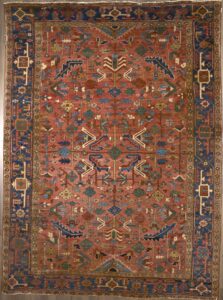
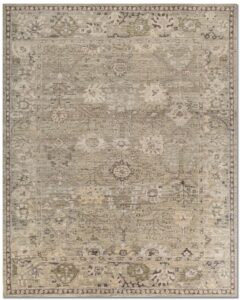
Final picks
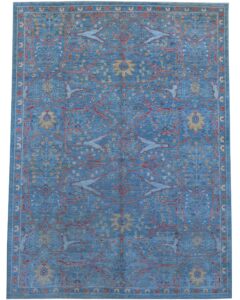
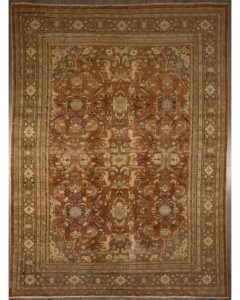
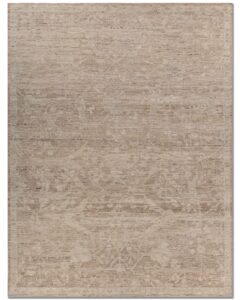
One last row of rugs chosen to go with the ideas above.
Quick Answers on Rug Color for Beige Furniture
These questions are the ones I field most often across the counter. Each answer stands alone, so you can act on it without rereading the guide.
Pair any answer with the undertone test earlier in this article. A rug that suits a warm beige sofa can fail against a cool one.
Which Rug Color Suits a Room Where Beige Furniture Is the Only Color?
A saturated mid-tone such as indigo, rust, or olive suits that room best. Let the rug be the one bold statement and the beige furniture the quiet backdrop.
Repeat the rug’s hue in two or three small accents, such as pillows or a throw, so the choice looks planned rather than isolated.
Is a Gray Rug a Good Match for a Beige Sofa?
A warm gray with a visible brown or taupe cast matches a warm beige sofa well. A cool, blue-leaning gray beside a yellow-based beige looks dingy.
Test the sample against the cushion in both daylight and lamplight before you decide.
Can a Cream or Ivory Rug Work With Beige Upholstery?
A cream or ivory rug works with beige upholstery when it carries a strong dark pattern, such as a black Moroccan lattice, and the sofa is a clearly warmer tone like camel.
Otherwise the two neutrals merge and the room loses definition.
Which Rug Color Fits an Oatmeal Sofa in a Small Living Room?
A flat-woven kilim in one saturated color, such as madder red or deep teal, fits an oatmeal sofa in a small room. It supplies the contrast and texture change oatmeal needs.
Its thin profile also adds no visual weight to a compact space.
Should a Bedroom Rug Be Lighter Than the Living Room Rug Beside Beige Furniture?
A bedroom rug can be lighter than the living room rug, because bedrooms see far less soil and benefit from a calmer, lower-contrast palette.
Soft sage, dusty blue, or warm gray suits a beige upholstered bed, though the same tones may look washed out under a living room sofa.
Sources on Beige and Rug Color Theory
Wikipedia: Color Theory
Wikipedia: Beige
