

The Ultimate Layering Rugs Guide: Expert Tips and Tricks for a Polished Look
August 10, 2026Mastering the Art of Choosing the Perfect Rug Color: A Comprehensive Guide
August 10, 2026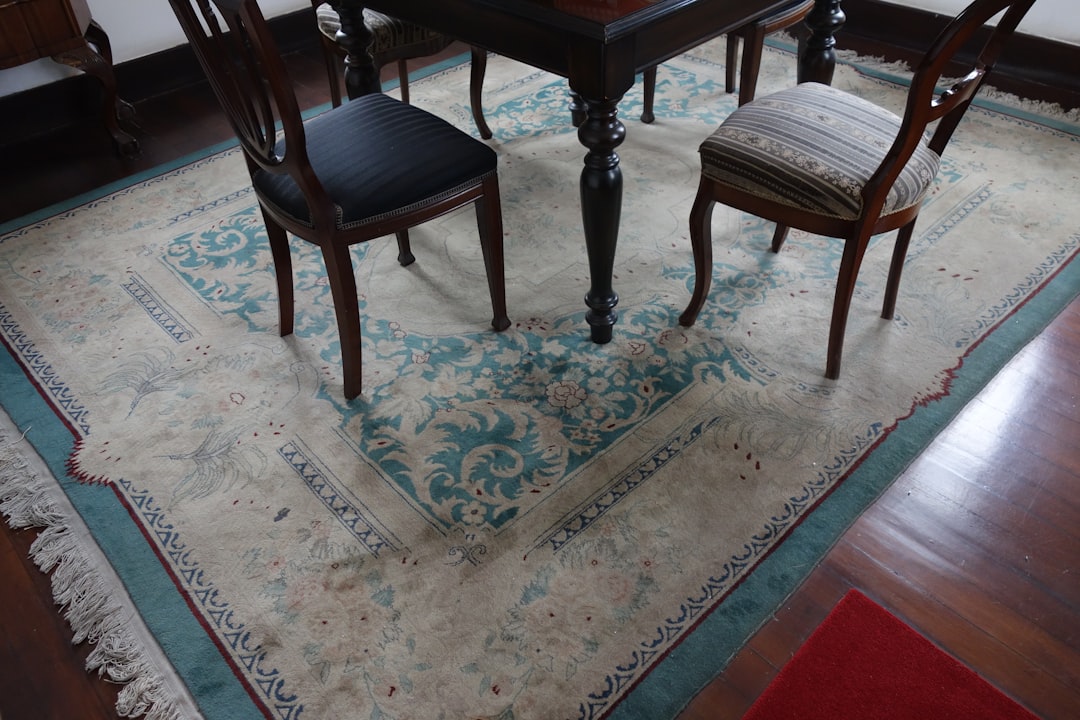
Choosing a dining room rug comes down to a handful of practical rules that most homeowners never hear until they’ve already bought the wrong size. Dining room rug rules for choosing the right size and material for your space start with proportion, move into fiber selection, and end with how well the rug holds up to chair legs, dropped forks, and the occasional spilled glass of red wine. After two decades of cleaning, repairing, and restoring rugs that clients bought without this guidance, I can tell you the mistakes are almost always the same – and almost always avoidable.
What Governs Proper Dining Room Rug Sizing?
Proper sizing hinges on one measurement: the distance from the table’s edge to the rug’s edge once chairs are pulled out. The industry standard calls for 24 to 30 inches of rug extending beyond each side of the table, which gives chairs enough room to slide back fully without a back leg catching the rug’s edge. For a standard 42-inch by 78-inch rectangular table that seats six, this typically means a rug in the 8-foot by 10-foot to 9-foot by 12-foot range, not the 12-by-15 dimension some big-box retailers push as a one-size-fits-all answer.
Round tables need a different approach – measure the table’s diameter and add 48 to 60 inches total to land on the right round or square rug size. A 48-inch round table, for instance, usually looks proportionate on a 7-foot or 8-foot round rug. Square and rectangular rooms behave differently too: in a narrow galley-style dining area, an oversized rug can eat into walking clearance along the walls, so I generally recommend leaving at least 18 inches of bare floor between the rug’s edge and any wall or buffet.
How Do You Measure a Room for the Correct Rug Dimensions?
Start by measuring your table’s length and width with chairs pushed in, then add 24 to 30 inches to each side – this total becomes your minimum rug footprint. A 60-inch by 38-inch table, for example, needs a rug at least 108 inches by 86 inches, which rounds up to a common 9-foot by 12-foot size once you factor in extra clearance for chair movement.
I always tell clients to tape off the proposed rug dimensions on the floor with painter’s tape before ordering anything. This single step catches more sizing mistakes than any formula, because it reveals how the rug will actually interact with door swings, sideboards, and adjacent furniture. It’s also worth testing the layout with chairs pulled fully out and pushed back in, since a rug that looks fine with chairs tucked under the table can suddenly feel undersized the moment guests sit down.
Which Fibers Perform Best Under a Dining Table?
Wool remains the top performer for dining room use because its natural lanolin coating repels liquid long enough for a quick blot to prevent staining, and it resists crushing under chair legs far better than most synthetics. A dense, hand-knotted wool rug with a knot count above 100 per square inch will typically shed surface dirt and resist ground-in grime for 8 to 10 years of daily dining use before it needs deep restoration.
Silk, while beautiful, is a poor practical choice directly under a table – its fibers absorb liquid quickly and can water-stain permanently within minutes, and the sheen that makes silk desirable also shows foot traffic wear paths faster than wool. I reserve silk and silk-blend rugs for dining rooms used only for formal, occasional entertaining, never for households eating there daily. Synthetic options like polypropylene and nylon have improved considerably in the last decade – a good machine-made polypropylene rug rated for indoor/outdoor use can handle spills that would ruin silk, and it costs a fraction of the price, often $150 to $600 for an 8-by-10 compared to $1,500 or more for a comparable wool piece.
What Weave and Pile Height Work Best for a Dining Area?
A flatweave or low-pile construction under half an inch is the most practical choice for dining rooms, since it lets chairs glide rather than drag and won’t trap crumbs the way a plush pile does. Flatwoven options in the Kilim Rugs category work particularly well here, offering durability and a tight weave without the loft that traps debris under table legs.
Looped constructions like Berber or sisal-look synthetics can snag on chair casters, so I steer clients away from them for this specific room even though they perform well in living rooms or hallways. If you already have wall-to-wall carpet or hardwood and want a wool option with a bit more texture, a low, tight Persian or Oriental-style weave in the 6mm to 10mm pile range strikes a workable balance between comfort underfoot and ease of cleaning.
How Does Rug Shape Interact With Table Shape?
Rug shape should generally mirror table shape – round tables pair with round or oval rugs, rectangular tables pair with rectangular or oval rugs, and square tables under six feet across often look best on a square rug. This isn’t a rigid law, but mismatched shapes tend to leave awkward slivers of exposed floor at the corners or ends that photograph poorly and feel visually unresolved in person.
Oval rugs deserve more consideration than they typically get, especially in rooms with rounded architectural details like arched doorways or curved bay windows. A 9-foot by 12-foot oval under a rectangular table for eight can soften a room that would otherwise feel boxy, and it tends to leave more consistent clearance around the perimeter than a rectangular rug of the same dimensions, since there are no sharp corners competing with chair legs.
What Patterns and Colors Hold Up Best in a Dining Room?
Busy, tonal patterns in the mid-to-dark range hide crumbs, dust, and the occasional wine drip far better than solid pale colors, which is why traditional Persian and Oushak-style patterns remain dining room staples. A medallion or all-over pattern in navy, terracotta, or deep green will visibly mask debris between vacuuming sessions in a way that a cream or ivory solid simply cannot.
Color choice also affects how forgiving a rug is over its lifespan – darker, saturated dyes generally show less fading from the repeated sun exposure that dining rooms near windows often get. For anyone unsure how to narrow down a palette against existing wall colors and wood tones, our guide on how to choose rug color walks through the pairing logic in more depth than we have room for here. If your dining space opens into a living or entry area, coordinating pattern weight and color saturation across rooms – something covered well in our piece on layering rugs for a polished, cohesive look – keeps the transition from feeling disjointed.
What Practical Benefits Does a Rug Add to a Dining Room?
A rug under the dining table absorbs sound that would otherwise bounce off hardwood or tile, cutting down on the echo and scrape of chairs that makes open-plan dining areas feel noisy. It also adds a buffer layer that reduces impact damage when dishware or glassware is dropped, and it defines the dining zone visually in open-concept homes where the dining area isn’t enclosed by walls.
Beyond acoustics and visual definition, a rug protects the subfloor itself. Hardwood exposed to daily chair-dragging and food spills develops scratches and water rings over time, and a rug with a quality pad underneath absorbs that friction instead. This is where pad selection becomes part of the equation – not just for sizing but for protecting both the rug and the floor beneath it.
Does a Rug Pad Matter as Much as the Rug Itself?
Yes – a rug pad extends the rug’s lifespan by 3 to 5 years on average by preventing the backing from grinding against hard flooring every time a chair moves. Pads also stop slippage, which in a dining room is a real safety issue given how often people stand up and sit down over the course of a meal.
For dining rooms specifically, I recommend a felt-and-rubber combination pad between 1/4 inch and 3/8 inch thick rather than a thicker plush pad, since excess loft under a dining rug makes chairs wobble and increases wear at the rug’s edges. A properly fitted pad, cut about half an inch smaller than the rug on all sides, also prevents the rug from bunching or rippling under the repeated push-and-pull of chair legs.
What Are the Most Common Material and Sizing Mistakes?
The most frequent mistake is buying a rug that only covers the table’s footprint without the 24-to-30-inch chair clearance, which forces back chair legs off the rug every time someone sits down or scoots in. The second most common error is choosing a plush, high-pile rug for aesthetic reasons and then struggling with chairs that rock or drag unevenly across the uneven surface.
A third mistake I see constantly in restoration work is picking a light, low-twist wool or a loosely woven synthetic that looks fine in a showroom but flattens and fuzzes within 12 to 18 months of daily dining use. Checking the rug’s knot density or tuft count before buying, and asking specifically whether it’s rated for high-traffic or commercial use, avoids most of this. Many of the same durability principles that apply to entryways and hallways apply here too, and our breakdown of best rugs for high traffic areas covers fiber and construction choices that translate directly to a dining room’s demands.
My Experience with Dining Room Rug Rules: Choosing the Right Size and Material for Your Space
Over the years I’ve pulled more wine-stained silk rugs out from under dining tables than I can count, and nearly every one of those clients told me the same thing: the rug looked stunning in the showroom, and nobody warned them it wasn’t built for daily meals. One case that stands out was a client with a 200-knot Tabriz silk-wool blend that had been placed under a breakfast table used by a family of five every single day – within 14 months, the pile had crushed in visible traffic lanes and there were three separate water rings that required a full wash-and-block restoration to correct.
The sizing mistakes are just as consistent in the field. I regularly get called out to re-pad or re-fit rugs that clients bought at exactly their table’s dimensions, thinking that was the correct approach – only to find every chair leg sitting half on, half off the rug’s edge, wearing a visible groove into the pile after a year or two. My standard advice, after fixing dozens of these, is to size up rather than down whenever a room’s dimensions allow it, and to spend the extra money on a wool or wool-blend flatweave rather than a bargain synthetic, since the repair and restoration costs on a poorly chosen dining rug almost always exceed what the size and material upgrade would have cost upfront. A rug cleaned and re-padded correctly from day one can realistically outlast three cheaper replacements bought over the same period.
Which Rug Styles Fit Traditional Versus Contemporary Dining Rooms?
Traditional dining rooms with wood furniture and formal table settings tend to pair best with hand-knotted rugs featuring classic medallion, floral, or geometric motifs, while contemporary spaces with sleek tables and minimal decor look sharper with abstract patterns or solid low-pile weaves. Our Classic & Traditional Rugs collection covers the ornate, formal end of that spectrum, with Persian, Oushak, and Caucasian-inspired patterns that suit dining rooms anchored by antique or dark-wood furniture.
On the more modern end, rooms with clean lines and neutral palettes benefit from a rug that doesn’t compete visually with the table itself – a muted geometric or tonal abstract keeps the space feeling calm rather than busy. Anyone building out a broader minimalist scheme across connected rooms may find our article on minimalist decor rugs useful for extending that aesthetic beyond just the dining space.
How Should You Maintain a Dining Room Rug Long-Term?
Dining room rugs need vacuuming at least twice a week given the food debris and foot traffic concentrated in that one zone, plus immediate blotting – never rubbing – of any spill with a clean white cloth to prevent it from setting into the fibers. Professional deep cleaning every 6 to 12 months removes the ground-in oils and food particles that regular vacuuming can’t reach, particularly around the base of chair legs where debris accumulates fastest.
Rotating the rug 180 degrees every 6 months evens out wear patterns caused by chairs being pulled in and out from the same seats repeatedly. If a spill does happen, blot from the outside of the stain inward to avoid spreading it, and avoid steam cleaning wool or silk rugs at home, since high heat can set certain dyes or cause shrinkage in natural fibers. When stains, fraying edges, or fringe damage do occur despite good maintenance, professional Rug Cleaning and Rug Repair & Restoration services can typically restore a rug rather than requiring full replacement, even after years of heavy dining use.
Frequently Asked Questions About Dining Room Rug Sizing and Materials
What size rug should go under a dining table that seats six?
A table seating six typically needs a rug between 8 feet by 10 feet and 9 feet by 12 feet, allowing 24 to 30 inches of clearance beyond the table’s edge on every side for chairs to be pulled out fully.
Is wool or synthetic better for a dining room rug?
Wool generally performs better for dining rooms because of its natural stain resistance and durability under repeated chair movement, though a high-quality synthetic like polypropylene is a reasonable budget alternative that handles spills nearly as well at a lower price point.
How much space should be left between the rug and the wall in a dining area?
Leaving at least 18 inches of bare floor between the rug’s edge and the nearest wall or piece of furniture keeps a dining room from feeling cramped and preserves clear walking paths around the table.
Can a rug be placed under a pedestal-base dining table?
Yes, a pedestal-base table works fine with an area rug as long as the rug is sized generously enough to extend well past all the chairs, since there’s no fourth leg pattern to plan around – only the chair positions and the base itself.
How often should a dining room rug be professionally cleaned?
Professional cleaning every 6 to 12 months is standard for dining room rugs, though households that eat at the table daily or have young children may benefit from cleaning closer to the 6-month mark.
Sources:
Wikipedia: Carpet
U.S. Environmental Protection Agency: Care for Your Carpet
