


What Color Rug Goes With Blue Walls? A Rug Specialist’s Pairing Guide
November 5, 2026
What Color Rug Goes With Brown Curtains? A Rug Specialist’s Pairing Guide
November 7, 2026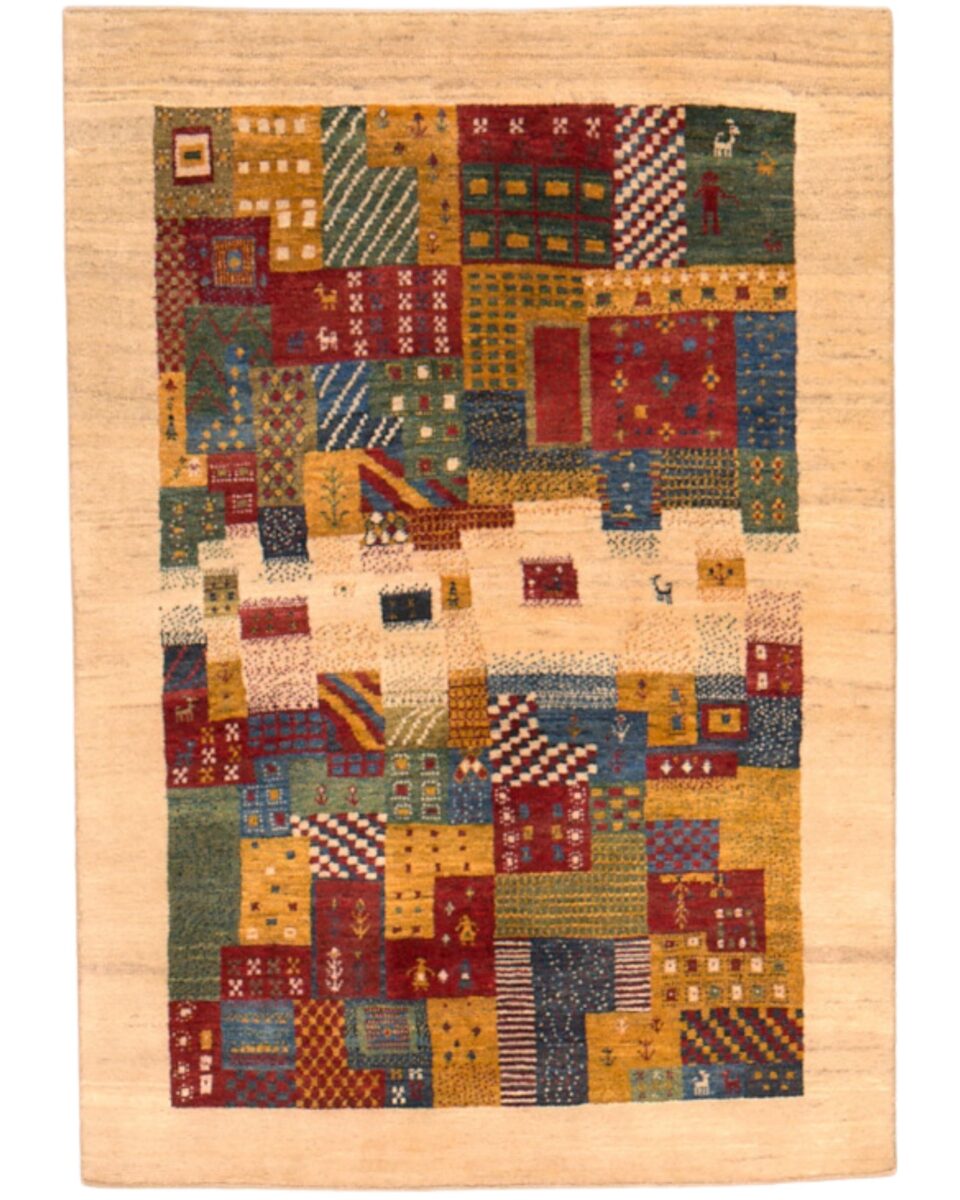
Gabbeh wool defines the soft, shaggy character of the tribal rugs woven in Iran’s Zagros Mountains. After years on the cleaning floor and in the repair workshop, I have handled many of these pieces, and no two behave alike. Most share a plush pile and a loose, playful approach to pattern. This guide covers origin, spinning, softness, dyes, buying checks, cleaning, and storage. Browse our Gabbeh Rugs collection to compare the pile heights and palettes described below.
Key takeaways
- Gabbeh rugs are hand-spun from coarse, lanolin-rich wool by Qashqai and Luri nomads in Iran’s Zagros Mountains, especially Fars province.
- Their softness comes from a 0.5 to 1 inch pile, roughly 25 to 60 knots per square inch, and wool that keeps its natural oils.
- Low knot density does not mean low quality, because open knotting lets thick wool stand upright and resist crushing and matting.
- Designs stay minimal, with single animals, trees of life, geometric blocks, or solid color fields, and motifs reflect pastoral tribal life.
- Gabbeh pile needs gentler, less frequent vacuuming than low-pile rugs, since aggressive beater bars can pull the fibers, and professional cleaning is suggested every 12 to 18 months.
What Is Gabbeh Wool and Where Does It Come From?
Gabbeh wool is the coarse, lustrous sheep’s wool hand-spun by the Qashqai and Luri nomadic tribes of the Zagros Mountains in southwestern Iran, especially Fars province. The fleece keeps more natural lanolin and a longer staple than the wool in city-workshop rugs from Tabriz or Kashan. That gives the pile its bounce and shag-like texture. Learn more about Rug Cleaning.
Highland flocks graze at elevations often above 2,000 meters. The cool climate tends to grow hardier fiber with a higher crimp count than lowland wool. Crimp traps air inside the fiber structure. Trapped air makes these rugs feel warmer and springier than flatter wool pile rugs woven elsewhere in Iran or Turkey.
How Do Qashqai Shearing and Spinning Shape Gabbeh Fiber?
Qashqai herders shear their flocks once a year, in late spring before the heat arrives. Weavers then sort the raw fleece by hand according to color and coarseness. Sorting by hand keeps each dye lot consistent and each yarn suited to its place in the design.
A drop spindle still spins much of this wool. The slower method yields irregular, thick-and-thin yarn instead of the even strands a mechanized mill produces. Collectors read that irregularity as proof of handwork. Under raking light during an inspection, I can tell hand-spun from machine-spun yarn within seconds by the thickness variation along a single knot row.
Matching rugs
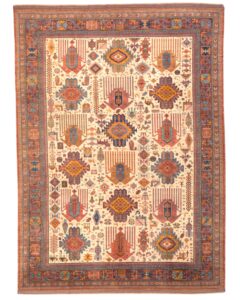
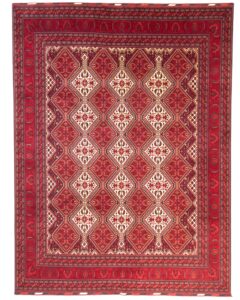
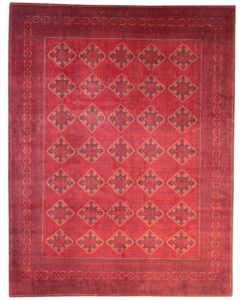
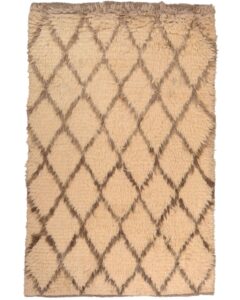
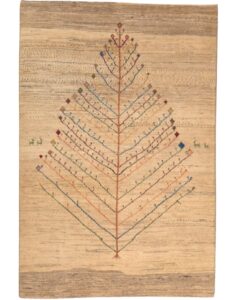
These plush, hand-spun tribal rugs reflect the soft pile, minimal patterns and natural wool character the article described.
Why Does Wool From Gabbeh Rugs Feel So Soft and Plush?
Gabbeh softness comes from three compounding factors, each of which you can measure on the rug itself:
- Pile height: 0.5 to 1 inch
- Knot density: roughly 25 to 60 knots per square inch (KPSI)
- Fiber finish: natural oils retained, minimal chemical processing
Together these produce a pile that compresses gently underfoot and springs back. A fine Persian city rug carries 150 to 400 KPSI and a pile under a quarter inch. That construction serves crisp pattern definition, not cushioning. Gabbeh weavers prioritized comfort and durability, so nomadic families used the rugs as flooring, bedding, and even saddle blankets.
| Feature | Gabbeh Wool Rug | Fine Persian City Rug |
|---|---|---|
| Typical knot density | 25–60 KPSI | 150–400+ KPSI |
| Pile height | 0.5–1 inch | Under 0.25 inch |
| Wool source | Nomadic highland flocks (Zagros region) | Mixed regional flocks, often more processed |
| Pattern style | Minimal, abstract, single motifs | Dense medallions, floral detail |
| Estimated lifespan with care | 40–70+ years | 60–100+ years |
| Recommended cleaning interval | Every 12–18 months | Every 18–24 months |
Does Low Knot Density Mean a Lower-Quality Gabbeh?
Low knot density does not signal low quality in a gabbeh. Open knotting lets each wool strand stand upright and keep its loft. That structure suits a rug built to feel soft instead of photographically detailed, and new buyers often misjudge it.
Durability holds up because thick, lanolin-rich wool resists crushing and matting better than finer, drier fiber at the same knot count. I have restored Qashqai pieces 30 to 40 years old that still carried respectable pile height. Decades of foot traffic in a working nomadic household had not defeated the wool before the rug ever reached a retail floor.
What Do Gabbeh Patterns and Natural Dyes Say About Tribal Identity?
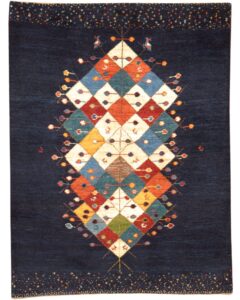
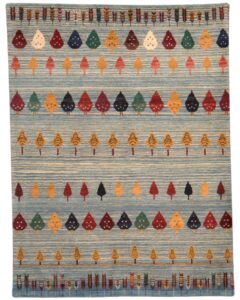
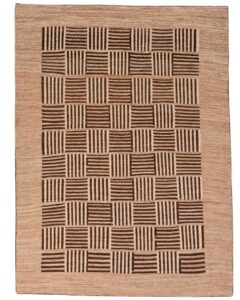
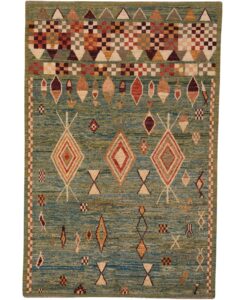
Gabbeh designs stay deliberately minimal. Weavers favor a single animal figure, a tree of life, abstract geometric blocks, or an open field of solid color inside a narrow border. Dense, symmetrical Persian medallions look nothing like them. Nomadic weavers worked from memory and instinct, not from a paper cartoon.
Color carries equal weight. Traditional dyers used madder root for red, indigo for blue, pomegranate rind for yellow-green, and walnut husk for brown. Since the 1980s, many commercial gabbehs sold abroad use synthetic dyes instead. Those dyes deliver the saturated, slightly abstract color fields collectors now associate with the style.
What Do Common Gabbeh Motifs Represent?
Gabbeh motifs draw their meaning from pastoral life, not pure decoration. Four figures recur most often:
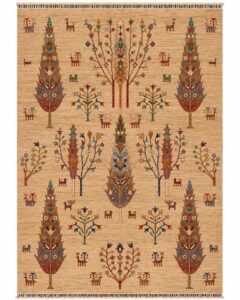
- Animal figures (sheep, goats, birds): the herds central to tribal livelihood
- Tree of life: fertility, continuity, and links between generations
- Diamond or lozenge shapes: protection or fertility, a symbol found across Southwest Asian tribal weaving
- Scattered combs, stars, and scorpions: charms some weavers believed would ward off misfortune
Much of this vocabulary overlaps with other nomadic weaving traditions. Our Tribal Rugs collection lets you compare gabbeh figures against Qashqai, Luri, and related village work side by side.
More matching rugs
Another set of rugs that follow the same colors and style as this guide.
How Should You Clean and Maintain a Gabbeh Wool Rug?
Gabbeh pile needs gentler, less frequent vacuuming than a low-pile rug. Aggressive beater bars pull and distort the long fibers. Use suction only, or raise the brush roll off the pile. Run the vacuum once or twice weekly in moderate-traffic rooms to keep grit from settling at the base of the fibers.
Spot cleaning starts with blotting, never rubbing. Use a plain white cloth and cool water. Natural dyes in older gabbehs react to alkaline cleaners more readily than the chrome-dyed wool in many commercial rugs. Our guide to wash area rug fibers without damage covers the home fundamentals in more depth.
When Does a Gabbeh Need Professional Cleaning Instead of Home Care?
A gabbeh needs professional cleaning once soil has migrated past the surface fibers to the foundation. The usual sign is a dull, flattened pile that no longer rebounds after vacuuming. Home care covers routine vacuuming, immediate blotting of spills, and airing the rug in shade to release trapped moisture or odor.
Three quick field tests help you decide:
- Fold test: bend a corner back and look at the pile base; a gray haze means embedded soil
- Tap test: strike the back with your palm; a visible dust cloud means the foundation holds grit
- Rebound test: press the pile flat for 10 seconds; slow recovery signals packed-in dirt
Our workshop uses a controlled immersion wash calibrated to wool’s near-neutral pH. High-alkaline detergents strip lanolin and leave the pile brittle. A professional Rug Cleaning visit every 12 to 18 months suits an average household.
Home spot work still benefits from the right product. Our breakdown of the best rug shampoo lists which formulas protect wool and which ones damage it.
How Do You Choose an Authentic Gabbeh Wool Area Rug?
An authentic gabbeh shows visible irregularity in yarn thickness and knot spacing on the back. Machine-made imitations produce a perfectly uniform grid that hand-spun wool cannot replicate. Check the fringe as well. On a genuine piece, the fringe extends from the foundation warp threads. A sewn-on or glued strip signals a copy.
Weight offers another clue. A wool gabbeh typically weighs 4 to 7 pounds per square yard, depending on pile height. Synthetic imitations of similar size feel thin and artificially springy. A fiber test confirms the material. Pull one loose fiber from the fringe or back, hold it with tweezers over a sink, and touch a flame to it:
- Wool: burns slowly, smells like burnt hair, leaves a crushable ash
- Polypropylene: melts, smells waxy, leaves a hard bead
- Nylon: melts and drips, smells like celery, leaves a hard bead
What Should You Check Before Buying a Gabbeh Rug Online or In Store?
Five checks protect you before you buy a gabbeh, whether you shop online or in person. Photographs and seller descriptions alone leave gaps, so confirm these points:
- Dye type: natural or synthetic, since it affects color behavior and cleaning needs
- Back photo: a close-up showing knot regularity and the foundation material (wool or cotton warp)
- Origin: genuine Qashqai or Luri pieces carry that label, not just “Persian style”
- Specifications: pile height and approximate knot count, which reputable sellers know
- Documentation: a written appraisal for any higher-value piece
Older tribal pieces deserve proof of authenticity and worth. Our Rug Appraisal service documents age, origin, materials, and condition before you commit.
My Experience Restoring and Cleaning Gabbeh Wool
Gabbeh pieces reach my bench in two forms: worn family heirlooms from Qashqai-descended clients, and new commercial weaves sold under the gabbeh name but made on a tighter, mechanized loom. The difference under my hands is immediate. Old-growth gabbeh wool pushes back against the palm like pressing into moss. Newer commercial versions feel softer at first touch but flatten faster under repeated pressure.
One 1970s Qashqai gabbeh stands out. A basement flood had soaked it. The wool survived structurally because its lanolin resisted fiber rot, but the cotton foundation had weakened badly. We rebuilt the foundation section by section with matched-weight cotton warp, then reintroduced the original pile. The finished rug showed almost no repair line. Our Rug Repair & Restoration team follows the same sequence on every structural job.
I also see avoidable damage from well-meaning owners who use steam cleaners or high-heat equipment. Excess heat breaks down lanolin and leaves the pile coarser within a few cleaning cycles. In sunlit rooms, I tell clients to rotate the rug every 3 to 6 months. Natural dyes react to UV light faster than synthetic dye lots, and uneven fading shows sooner than most people expect.
Final picks
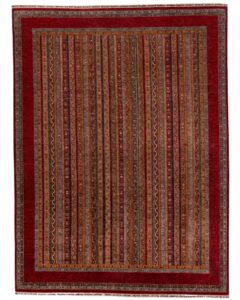
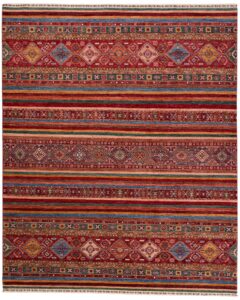
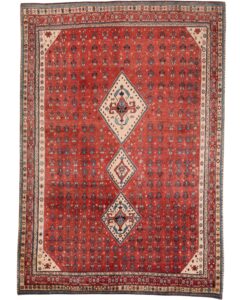
One last row of rugs chosen to go with the ideas above.
How Can You Protect Gabbeh Rugs From Moths, Sun, and Wear?
Long-term protection of a gabbeh depends on four variables: moisture, direct sunlight, insects, and foot-traffic wear. Wool resists most household insects. Lanolin, however, makes gabbeh pile somewhat more attractive to clothes moths and carpet beetles than drier, more processed wool.
A rug pad is not optional under a pile this thick. Without one, heavy pile traps moisture against hardwood and shifts on tile, which wears the foundation faster. A quality Rug Padding setup cushions the knots and holds the rug flat. Five common mistakes cause most of the damage I see:
- Steam or high heat: lanolin breakdown and coarse pile
- Alkaline detergent: stripped oils and brittle fiber
- Beater-bar vacuuming: pulled, distorted pile
- Plastic wrap in storage: trapped humidity and mildew odor
- Fixed placement in sun: uneven dye fade
What Storage and Pest Steps Protect Gabbeh Wool Best?
Professional cleaning before storage protects gabbeh wool best, because leftover soil, skin cells, and food particles attract moth larvae. Roll the rug with the pile facing inward. Wrap it in breathable cotton, never plastic, to avoid the trapped humidity that causes mildew odor in heavy wool.
Our Rug Moth Protection treatment suits thick-pile wool before seasonal storage. Rolled with care, a gabbeh keeps its shape for years. Poor rolling is among the most common causes of permanent creasing in heavy wool rugs.
Households without a dry, climate-stable space can use Rug Storage instead of a basement or attic.
Gabbeh Wool Questions Answered
Buyers ask about gabbeh wool in four recurring areas: how it differs from other Persian wool, how long it lasts, whether home washing works, and how it handles sunlight.
The answers below draw on the workshop observations and construction figures covered above.
Is Gabbeh Wool the Same as Regular Persian Rug Wool?
Gabbeh wool is not the same as regular Persian rug wool. It comes from nomadic highland flocks in the Zagros Mountains.
It keeps more lanolin and a thicker staple than city-workshop wool, which produces a softer, higher pile.
How Long Does a Genuine Gabbeh Rug Last?
A genuine gabbeh rug can last an estimated 40 to 70 years or longer with rotation, padding, and periodic professional cleaning.
Lanolin-rich fiber resists crushing and matting better than many lower-grade wools.
Can You Wash a Gabbeh Wool Rug at Home?
Gabbeh wool rugs tolerate light spot cleaning with cool water and blotting at home. Full immersion is risky.
Thick pile holds moisture near the foundation, and poor drying can cause mildew or dye bleeding within 24 to 48 hours.
Do Gabbeh Rugs Fade in Sunlight?
Gabbeh rugs dyed with natural pigments like madder root or indigo fade more readily in sunlight than synthetically dyed wool.
Rotating the rug every 3 to 6 months and limiting direct sun prevents uneven fading.
Sources: Wikipedia: Gabbeh, Wikipedia: Qashqai people
