


Gabbeh Wool Rugs: What Makes Them Soft, Tribal and Timeless
November 6, 2026
Are Washable Rugs Worth It? A Rug Specialist’s Honest Breakdown
November 8, 2026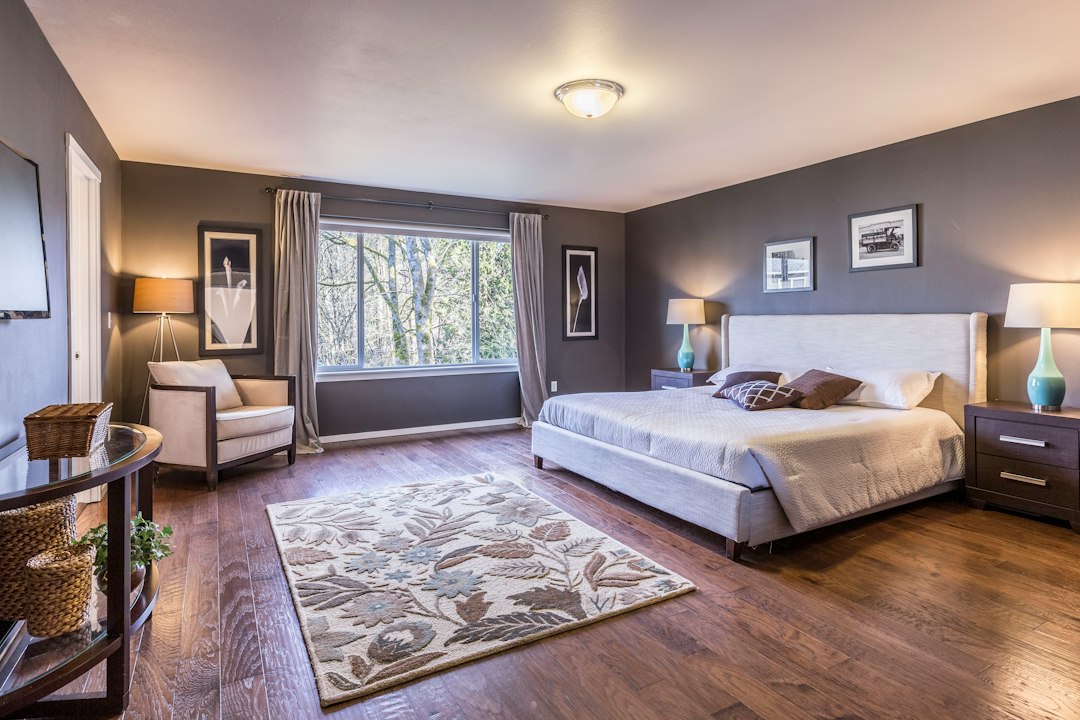
Choosing what color rug goes with brown curtains starts with the curtain’s undertone, not its darkness. Brown drapery absorbs light, anchors the window wall, and sets the temperature for every surface around it. After years of lifting rugs out of client homes for cleaning and seeing them return under the same drapery, I know which pairings hold up and which ones fight. This guide covers undertone, living room choices, grey and white wall combinations, and how fiber and dye change the answer once the rug meets daily use. Learn more about Rug Cleaning.
Key takeaways
- Ivory, cream, or oatmeal rugs are the most dependable match for brown curtains, with navy or soft blue as the strongest contrasting alternative.
- Check the curtain’s undertone first, since red-brown, yellow-brown, and grey-brown curtains each flatter different rug colors and can clash with others.
- A rug should look clearly lighter than chocolate curtains, which you can confirm by photographing both samples and converting the picture to black and white.
- Living rooms work best with a light rug, such as cream or ivory with a subtle pattern, that contrasts with the brown panels.
- Rust, terracotta, sage green, and warm grey suit narrower conditions, such as red-brown curtains, north-facing light, or grey walls.
Matching rugs
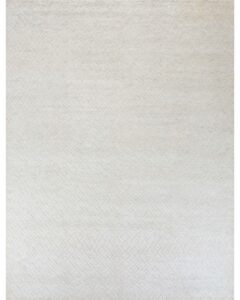
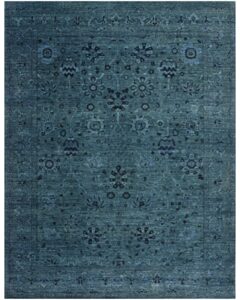
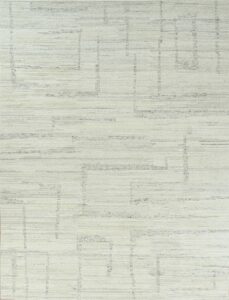
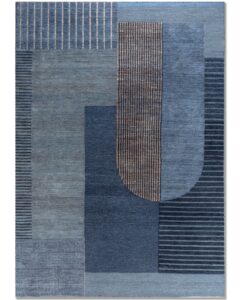
These rugs reflect the pairings the article described, from calm light neutrals to contrasting blues and warm tonal shades.
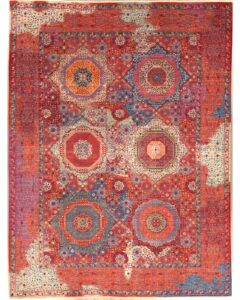
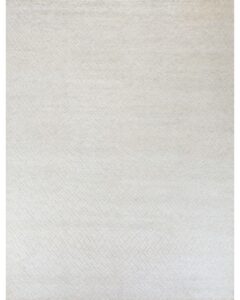
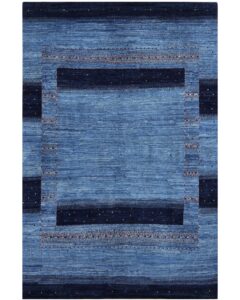
What Color Rug Goes With Brown Curtains in Most Rooms?
An ivory, cream, or oatmeal rug is the most dependable match for brown curtains, with navy or soft blue as the strongest contrasting alternative. Brown is a darkened orange, so its complement sits on the blue side of the color wheel. Pale neutrals supply the value contrast a dark window wall needs. Without that contrast, the curtains swallow the floor.
Rust, terracotta, sage green, and warm grey work under narrower conditions. Rust and terracotta share a red-orange base with most browns, so they build a tonal, enveloping scheme. Sage sits opposite red-brown and cools the room without the formality of navy. The curtain undertone and the room’s tolerance for contrast pick the winner.
- Ivory or oatmeal: calm and light, safe in any room
- Navy or denim: complementary contrast, strongest with white walls
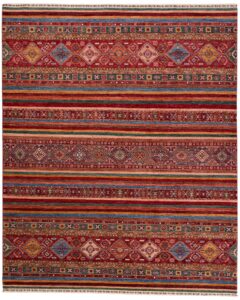
- Rust or terracotta: tonal warmth, best beside red-browns
- Sage green: soft complement, best in north-facing light
- Warm grey: neutral bridge, best with grey walls
How Does the Undertone of Brown Drapes Decide the Rug Color?
Undertone decides the rug because brown splits into three families: red-browns, yellow-browns, and grey-browns. Red-browns include chocolate, mahogany, and espresso. Yellow-browns include camel, caramel, and tan. Grey-browns include taupe, mushroom, and mocha. A rug that flatters one family can look muddy beside another. Rust next to camel reads as an off-key orange, while the same rust beside espresso looks rich and deliberate.
A white card test identifies the family. Hold a curtain swatch against plain white card near a window in daylight. Repeat the test at night under your own lamps. Warm 2700K bulbs push every brown toward red, while 4000K bulbs reveal grey and olive notes. Caramel and honey fabrics follow the logic in my guide on what color rug goes with yellow curtains, since both carry a yellow base that fights cool pinks and most purples.
| Curtain undertone | Example shades | Best rug colors | Rug types that deliver them | Colors to avoid |
|---|---|---|---|---|
| Red-brown | Chocolate, espresso, mahogany | Ivory, navy, teal, sage | Beni Ourain, antique Heriz with navy ground, Oushak | Orange, hot pink, bright red |
| Yellow-brown | Camel, caramel, tan, cognac | Cream, denim blue, forest green, charcoal | Gabbeh, Turkish kilim, modern wool loop | Lavender, cool pink, mustard |
| Grey-brown | Taupe, mushroom, mocha | Oatmeal, slate blue, muted rust, mid grey | Vintage Oushak, overdyed Persian, flatweave wool | Pure white, neon tones |
How Much Lighter Should a Rug Be Than Chocolate Curtains?
A rug should read clearly lighter than chocolate curtains, by a gap you can still see in a greyscale photo. Take a picture of the curtain swatch beside the rug sample, then convert it to black and white. If the two shapes merge into one grey mass, the pairing lacks contrast. Paint chips print a light reflectance value (LRV) on the back, which helps with walls, but rugs rarely list one, so the photo test works better.
Too little contrast is the more common mistake. Clients pair a dark walnut rug with espresso drapery because both feel classic, and the room collapses into one heavy block from window to floor. Antique pieces solve the problem neatly. A century of light exposure softens their palette into mellow golds and faded blues that sit between the extremes. Browsing Antique & Vintage Rugs with the greyscale test in hand narrows the field quickly.
Which Rug Colors Suit a Living Room With Brown Curtains?
A cream or ivory rug with a subtle pattern suits a living room with brown curtains best, followed by a blue-and-ivory medallion if the sofa is neutral. Living rooms carry the most furniture of any room. The rug must coordinate with a sofa, chairs, a coffee table, and often a brown wood floor. A light rug separates the floor from all of that and stops the window wall from becoming the only focal point.
Scale changes the color decision. An 8×10 ft (244×305 cm) rug under a full seating group covers far more visual area than the curtains do. A saturated solid at that size becomes the dominant note instead of an accent. Keep blue or rust inside the pattern of a lighter ground. The 60-30-10 design guideline fits well here: light neutrals at 60%, brown drapery and wood at 30%, and one accent color at 10%, spread across pillows and a rug border.
Should a Living Room Rug Match or Contrast Brown Curtain Panels?
A living room rug should contrast with brown curtain panels in almost every case. Matching works only in very large rooms with high ceilings and plenty of daylight, where repeated brown reads as deliberate and cocooning. In a standard 12×16 ft living room with one window wall, a matching rug removes the only horizontal break and makes the ceiling feel lower.
A workable middle path is a rug whose border repeats the curtain color while the field stays light. Many vintage Oushaks do exactly this, with an ivory or soft apricot ground and a thin walnut outline around the medallion. The repeated brown draws a thread from window to floor without duplicating the weight of the drapery. The pale field still does the lifting.
Which Patterned Rugs Work Best in a Brown-Curtained Living Room?
Geometric and tribal patterns in two or three colors work best with brown curtains. The drapery already supplies a strong, solid block of color, so a dense floral with eight or more colors competes instead of grounding the scheme. Open ground and a limited palette give the room rhythm without noise.
- Moroccan Beni Ourain: undyed ivory wool, charcoal lattice, pile near 1 inch (2.5 cm), suits red-brown and grey-brown curtains
- Turkish or Persian kilim: flatwoven, about 0.2 inches (5 mm) thick, rust, indigo, and cream stripes that echo yellow-brown drapery
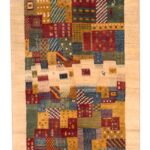
- Gabbeh: thick hand-knotted pile from southwestern Iran, saffron and cream fields, pairs with camel and caramel
- Vintage Oushak: large medallions in faded apricot, sage, and ivory, flatters espresso and mahogany
- Navy-ground Heriz: angular medallion on indigo with ivory and rust accents, lets the complementary blue lead
Flatweaves and pile rugs reflect light differently, and nap direction shifts the shade too. A flatwoven piece reads slightly darker than a pile rug in the same dye. Pile also looks lighter or darker depending on the viewing angle. When I size up Kilim Rugs for a room with dark curtains, I steer clients one shade lighter than they expect. The gap is small on a swatch and obvious on a full 6×9 ft piece.
Which Rug Color Ties Brown Curtains and Grey Walls Together?
A warm grey or greige rug ties brown curtains to grey walls or a grey sofa. The grey needs a touch of beige or taupe, because a cool blue-grey beside warm brown creates a temperature clash that no accent pillow can fix. Oatmeal, mushroom, and stone rugs all do the job. An ivory rug with grey motifs works when the walls already sit at a mid-tone grey.
Grey and brown feel balanced, yet the pairing fails more often than people expect. Many paint greys are mixed with a blue or green base to look crisp, and those undertones pull against the red base in chocolate fabric. Tape a paint chip of the wall color to the curtain before buying anything. Any sourness at swatch scale gets worse at room scale.
Does a Grey Rug Clash With Brown Window Treatments?
A grey rug clashes with brown window treatments only when the grey is cool-based. Warm greys sit comfortably beside every brown family. Cool greys with a blue or violet cast make red-browns look dull and yellow-browns look dirty. Hold the rug sample beside the curtain and look for a hint of purple or green in either fabric. That hint signals a temperature mismatch.
Undyed wool offers the safest grey. Natural fleece from grey or moorit sheep contains no blue pigment, so it holds a soft warm charcoal under daylight and lamplight alike. Dyed greys, especially acid-dyed greys in machine-made rugs, can shift toward blue under 4000K light even when they look neutral in the showroom. Textile people call that shift metamerism, and a lamp test at home exposes it.
Which Accent Colors Bridge Grey and Brown Curtain Schemes?
Rust, mustard, and dusty blue bridge a grey-and-brown room most reliably. Rust connects to the red base of most browns and adds vitality the greys lack. Mustard warms a scheme that has tipped too cool. Dusty blue, between denim and slate, belongs to the grey family and to brown’s complementary side, so it suits either.
Introduce the accent through the rug pattern, not through a solid field. A greige ground with a rust and slate geometric motif, typical of Afghan and Pakistani production, reads as cohesive under brown curtains and grey walls. A solid rust rug at room scale overpowers the space. A solid blue one cools it until the curtains look like an afterthought.
More matching rugs
Another set of rugs that follow the same colors and style as this guide.
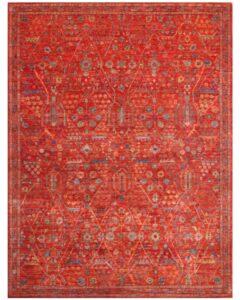

Which Rug Colors Pair With Brown Curtains and White Walls?
Ivory, oatmeal, and pale blue rugs pair best with brown curtains and white walls. White walls make brown drapery look darker by comparison, so a dark rug tips the room into a stark, cold contrast. A light floor keeps the airiness the white paint was chosen for and leaves the curtains as the single dark anchor.
Bright white rugs are the exception to avoid. A rug as bright as the walls makes the curtains look like a hole cut into the room. Choose a rug a few shades warmer than the walls, such as natural undyed ivory. Wool in its natural state carries a slight cream cast, which supplies the warmth this scheme needs and gives the floor its own identity.
Is an Ivory Rug Too Close to White Walls Under Espresso Drapes?
An ivory rug is not too close to white walls under espresso drapes, provided it carries a visible warm cast and some texture. Flat white and smooth ivory can merge. A high-pile ivory wool rug with a charcoal lattice separates itself from a painted wall through shadow and motif. Texture creates the distinction more than hue does.
I recommend this pairing most often for espresso drapery with white walls. Hand-knotted Moroccan Rugs in the Beni Ourain or Azilal style fit naturally. A genuine Beni Ourain uses undyed Atlas Mountain wool, so its color never shifts under lamp light. The deep pile holds the ivory tone as daylight changes from morning to evening.
Can a Blue Rug Carry Brown Curtains and White Walls?
A blue rug carries brown curtains and white walls well when the blue is muted and the pattern includes ivory. Navy, indigo, and denim sit opposite brown on the color wheel, which creates the complementary tension that makes a room feel considered. White walls stop the blue-and-brown pairing from turning too dark, the usual risk with this scheme.
The classic version is an antique Persian piece with an indigo ground, colored with natural indigo from the indigofera plant and softened by decades of wear. Modern equivalents include a navy-and-cream Turkish Oushak reproduction or a hand-loomed wool rug in washed denim. Avoid cobalt and royal blue. Both are too saturated against brown and pull the room toward a nautical theme.
How Do Rug Fibers and Dyes Change the Best Color Beside Brown Curtains?
Fiber and dye change the best color because they control how the rug looks after the first year, not only on delivery day. A light rug that soils quickly or a saturated rug that fades unevenly stops matching the curtains long before the curtains change. Wool with natural dyes ages gracefully. Synthetic fibers hold their color but show traffic lanes. Viscose loses sheen and darkens with every spill.
Dye chemistry explains much of this. Madder root reds, walnut husk browns, and indigo blues in older hand-knotted rugs mellow under indirect light into tones that flatter brown fabric. Chrome dyes, in use since the early 20th century, resist light well but can shift if poorly fixed. Acid dyes on nylon stay bright yet react badly to alkaline cleaners, which matters for a pale rug that needs regular maintenance.
Which Rug Colors Hide Soil Best Beneath Tan Curtains?
Mid-tone rugs with multicolor patterns hide soil best, which conflicts with the pure ivory rugs that look best under tan and brown curtains. Oatmeal and greige with a tonal pattern offer the compromise. They lift the room and still disguise the dry dust that settles into any busy household’s pile. Solid ivory in a high-traffic living room shows grey traffic lanes first.
Wool helps considerably. Its scaly fiber structure and residual lanolin resist the dry soil that dulls synthetics. Vacuum without a beater bar and book professional Rug Cleaning every 1 to 3 years, depending on traffic, to keep ivory wool reading true against the drapery. Polypropylene in the same shade greys faster because oily soil bonds to the fiber and vacuuming cannot lift it.
Will Sunlight Past Brown Curtain Panels Fade a Rug?
Sunlight past brown curtain panels does fade rugs, and the fade is uneven. Lined panels block more UV than unlined ones, yet the gap at the side of the window admits a stripe of direct sun each morning or afternoon. Blues and rusts lighten along that stripe while undyed ivory barely changes. The result is a visible band running parallel to the window.
A lighter rug therefore protects the color relationship with the curtains longer, since undyed wool has no dye to lose. If you prefer saturated blue or rust, rotate the rug 180 degrees every 6 months so the fade spreads evenly. UV-filtering window film that blocks over 99% of UV rays adds protection. A quality felt pad keeps the rug flat, so no raised ridge takes extra sun.
Final picks
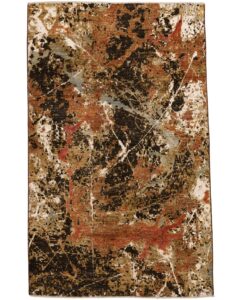
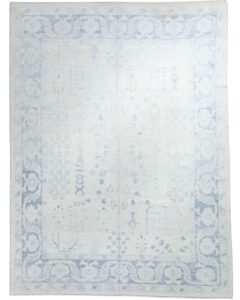
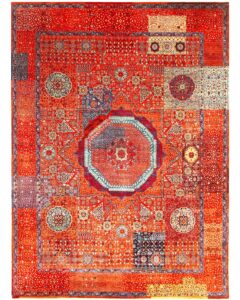
One last row of rugs chosen to go with the ideas above.


My Experience Choosing a Rug Color for Brown Curtains After Years in the Workshop
Years of cleaning and restoring rugs taught me that the pairing that looks best at delivery rarely looks best after five years. I see rugs at both ends of that timeline. They arrive for a wash, then go back under the same curtains. Ivory wool pieces return looking much as they did. Deep solid colors come back lighter on the window side, and the room no longer reads the way the owner intended.
Brown curtains also hide dust and pet hair that then transfers to a light rug. Hems that brush the floor collect dander and drop it along the window wall. In homes with espresso velvet panels, I routinely find a distinct soil line on the rug directly beneath the hem. Hanging panels so they float half an inch (1.3 cm) above the floor removes the problem.
Which Rug Color Under Dark Brown Draperies Surprised My Clients Most?
Sage green surprised my clients most under dark brown draperies. Few people consider green against brown, yet sage sits almost opposite red-brown on the color wheel. The pairing follows the same complementary logic as blue, with a softer, more organic feel. One client with mahogany silk panels in a north-facing room had tried three cream rugs. Each looked flat in the cool light. A faded sage Oushak made the room settle immediately.
That job changed how I advise people. I now suggest living with a candidate rug for several days before committing. Our Try Rugs at Home program exists for this reason, because no showroom lighting matches your window orientation, lamp temperature, and curtain fabric. Check the rug under your own drapery at 8 a.m. and again at 9 p.m. That tells you more than any color chart.
Frequently Asked Questions About Rug Colors for Brown Curtains
Five questions reach my workshop phone more than any others. Each answer below stands on its own, so you can jump to the one that matches your room.
What color rug suits brown curtains in a bedroom? Cream, oatmeal, or soft blue rugs suit a bedroom with brown curtains, because bedrooms benefit from a calm, low-contrast floor. Choose wool for warmth underfoot. Position the rug so the lighter color shows on both sides of the bed instead of disappearing beneath the frame.
Which rug color works with brown curtains and grey walls? A warm greige or oatmeal rug with rust or slate blue accents works best with brown curtains and grey walls. The warm base keeps the walls from clashing with the red undertone of the fabric. Pattern accents connect the two neutrals into one deliberate scheme.
Can a dark rug go with brown curtains and white walls? A dark rug can go with brown curtains and white walls only in a large, bright room. Even then, navy or charcoal with ivory motifs is safer than a solid dark field. In average rooms, a dark floor plus dark window wall against bright walls feels boxy and small.
Do red-toned rugs clash with brown drapery? Muted red-toned rugs such as rust, terracotta, and faded madder harmonize with brown drapery, while bright or blue-based reds clash. The temperature of the red decides the result, as I explain in my guide on what color rug goes with red curtains.
Should a rug be lighter or darker than brown curtains? A rug should be lighter than brown curtains in nearly every room. The lighter floor separates the window wall from the ground plane, keeps the ceiling feeling higher, and ages better, because undyed and pale wool shows less fading than saturated dyes under daily light.
