



Machine Washable Throw Rugs: What You Need to Know Before You Buy
October 28, 2026
Best Rug Shampoo: What to Use (and Avoid) on Wool and Synthetic Rugs
October 31, 2026
If you are standing in a living room wondering what color rug goes with red curtains, the practical answer is that cream, charcoal, navy, sage green, gold, a toned-down red, and a multicolor Persian pattern all work, though each one succeeds for a different reason and in a different kind of room. Red is the most assertive color a window can wear, and the floor beneath it either settles that energy or amplifies it. Over years of cleaning, repairing, and restoring rugs in homes dressed in crimson velvet, burgundy damask, and brick-colored linen, I have seen which pairings still look intentional after a decade of foot traffic and sunlight, and which ones the owners quietly replaced within two years. This article walks through how the undertone of the red, the weight of the curtain fabric, the rug’s fiber and weave, and the direction of the light all influence the match, along with the field lessons that changed how I advise clients. Learn more about Rug Cleaning.
Key takeaways
- Cream, charcoal, navy, sage green, gold, muted red, and multicolor Persian patterns all work with red curtains.
- Identify whether your red leans orange or blue first, because a rug that fights that undertone looks wrong.
- Warm orange-leaning reds suit camel, ivory, olive, and chocolate rugs, while cool burgundy reds suit charcoal, slate, and gray.
- Muted greens like sage or olive give complementary contrast without looking like a holiday display under red drapes.
- Red curtains usually fill the accent slot, so the rug and walls should carry the room in quieter tones.
Why Does the Undertone of Red Curtains Decide Which Rug Color Works?
The undertone of your red curtains matters more than the fact that they are red, because every red leans either toward orange or toward blue, and a rug that fights that lean will look wrong no matter how expensive it is. A tomato-red curtain with an orange bias wants warm rug tones such as camel, ivory, olive, and chocolate. A burgundy or wine curtain with a blue bias wants cooler companions such as slate, charcoal, dusty rose, and silver gray. Identify the bias first, then choose the rug.
Textile dyers describe this lean with the Munsell system, where a pure red sits at hue 5R, orange-reds drift toward 10R, and purple-reds move toward 5RP. Commercial drapery fabric rarely states its Munsell value, so the quickest test is to hold a white sheet of printer paper against the curtain in daylight. Against white, an orange-leaning red reads almost like rust at the edges, while a blue-leaning red takes on a faint plum cast. Velvet complicates the reading because its pile shifts from dark to light as you move around the room, so judge velvet from two angles before deciding.
How Do Warm Reds and Cool Reds Pair With Different Rug Colors?
Warm, orange-leaning reds pair best with camel, ivory, oatmeal, olive, teal, and chocolate rugs, while cool, blue-leaning reds pair best with charcoal, slate blue, soft gray, dusty pink, and off-white rugs with a gray base. Mixing the two families, such as a plum curtain over a rust rug, produces a muddy transition that the eye registers as a mistake even when the viewer cannot name why.
Fabric weight amplifies the effect. A 450 gsm cotton velvet in burgundy absorbs light and deepens its blue cast, which is why a slate-blue Bakhtiari with cream borders sits so comfortably under it. A 180 to 220 gsm linen in brick red lets light through, warms the whole room by a few hundred Kelvin in afternoon sun, and asks for a rug that can stay calm in that glow, typically an undyed ivory wool or a camel-and-cream geometric. Sheer red panels behave differently again: they tint the floor pink in direct light, and a gray rug under them can look bruised, so a warm ivory or sand is safer.
What Does the Color Wheel Say About Rug Colors Under Red Drapes?
On the traditional red-yellow-blue color wheel, green sits directly opposite red, so a muted green rug is the complementary choice, blue and yellow form red’s triadic partners, and orange and purple are its analogous neighbors. Complementary pairings create the strongest contrast, triadic pairings feel balanced and lively, and analogous pairings feel enveloping and warm.
Saturation is where most people go wrong with this theory. A fully saturated kelly-green rug under scarlet drapes looks like a December display window, not a living room. Dropping the chroma to sage, moss, olive, or eucalyptus keeps the complementary relationship while removing the holiday effect. The same logic governs blue: a navy or indigo rug reads as sophisticated under red, while a bright royal blue competes for attention. Interior designers often lean on the 60-30-10 proportion rule here, and red curtains usually occupy the 10 percent accent slot or at most the 30 percent secondary slot, which leaves the rug and walls to carry the dominant 60 percent in quieter tones.
Matching rugs
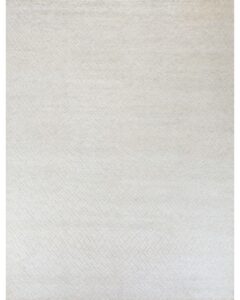
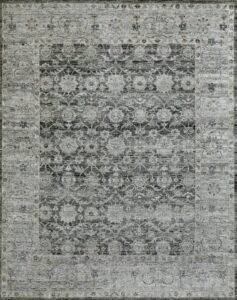
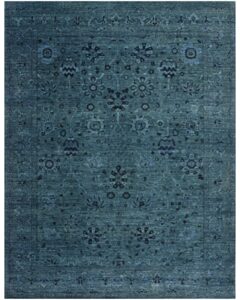
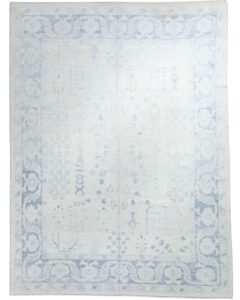
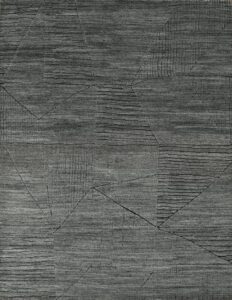
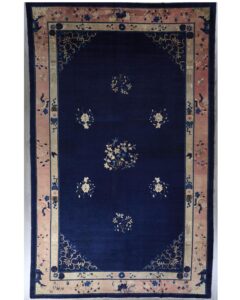
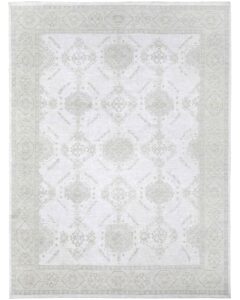
These cream, charcoal, navy and patterned rugs settle the energy of red curtains, matching the pairings described in this article.
What Are the 7 Rug Colors That Go With Red Curtains?
Seven rug colors reliably go with red curtains: warm ivory or cream, charcoal or deep gray, navy or indigo, sage or olive green, antique gold or mustard, a muted red that repeats the curtain in a lower saturation, and a multicolor traditional pattern that contains red among four or five other hues. Each of these appears repeatedly in rooms that photograph well and, more tellingly, in rooms whose owners still like them after years of daily use.
The ranking below reflects how often each pairing survives real life rather than a showroom. A rug that hides soil, tolerates sun, and still reads as a deliberate choice against the window treatment earns a higher place than one that looks striking on installation day and tired by the third winter. Notes on fiber and construction follow each entry because the same color behaves differently in a hand-knotted wool pile than in a printed polyester flatweave.
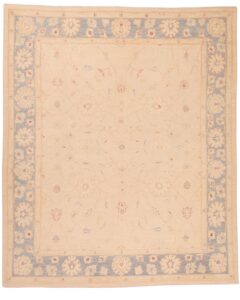
- Warm ivory or cream. The classic foil for red. An undyed wool Oushak or a Beni Ourain-style Moroccan with a 1 inch pile lets the curtains be the focal point. Light reflectance values around 70 to 80 brighten a room that red fabric would otherwise darken, though these rugs show tracked-in soil within 6 to 12 months in high-traffic rooms.
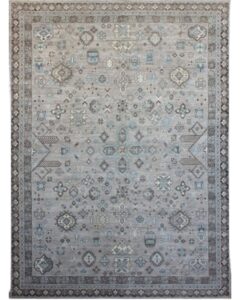
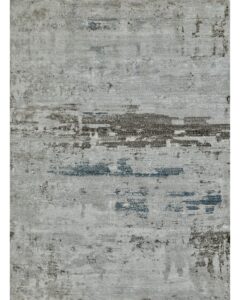
- Charcoal or deep gray. Grounds cool reds especially well. A charcoal rug with a light reflectance value near 8 to 12 anchors burgundy velvet and hides most soil, but lint and pet hair stand out on it.
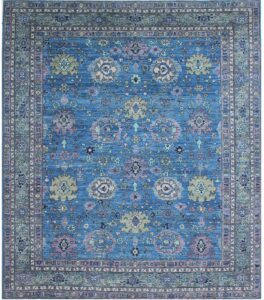
- Navy or indigo. Red and blue form a historic pairing seen in 19th-century Heriz and Serapi weaving. A navy field with ivory accents works under both warm and cool reds because the blue is dark enough to read as neutral.
- Sage, olive, or moss green. The complementary choice, kept at low saturation. Vegetable-dyed Gabbeh rugs and some Turkish kilims carry these greens naturally, and they age gracefully as the dyes soften.
- Antique gold or mustard. An analogous warm pairing that suits brick and tomato reds. Gold rugs with a 30 to 40 percent cream content avoid looking like a sports team palette.
- Muted or faded red. Repeats the curtain color but at roughly half the chroma, as in an overdyed vintage rug or a washed-out madder-red tribal piece. The two reds must share an undertone or the pairing fails.
- Multicolor traditional pattern. A Persian or Caucasian design where red covers 20 to 40 percent of the surface alongside navy, ivory, gold, and green. The pattern connects to the curtains through its red while the other colors keep the room from feeling monochrome.
Which Neutral Rug Shades Complement Red Window Treatments Best?
Warm ivory, oatmeal, and greige complement red window treatments best among the neutrals, because they carry enough yellow to harmonize with the red without competing. Pure brilliant white rugs tend to look stark and clinical beside saturated red, and cool blue-grays can make warm reds appear orange and cheap. Aim for a neutral with a visible warm cast and a touch of natural variation in the fiber.
Undyed wool delivers that variation on its own. The natural cream of a Moroccan Atlas Mountain fleece contains lanolin-tinted fibers that range from bright white to pale honey within a single rug, and that gentle mottling reads as depth rather than dirt. Shoppers looking at Moroccan Rugs for this purpose should favor pieces with charcoal or brown diamond lattices over those with colored accents, since the dark lines echo curtain rods and hardware and give the eye a bridge between floor and window.
Pile height changes how a neutral behaves under red, too. A shaggy 2 inch pile throws shadows that make cream look slightly gray, which can be an advantage under cool reds and a disadvantage under warm ones. A tightly knotted pile under half an inch keeps cream crisp and warm. In rooms with children or dogs, a flatweave or low pile in oatmeal is more forgiving than a plush ivory shag, and it responds far better to spot cleaning.
When Should a Rug Repeat the Red of the Curtains?
A rug should repeat the red of the curtains only when it does so as one color among several in a pattern, or when the rug’s red sits at a clearly lower saturation than the fabric. A solid red rug under solid red curtains produces a monochrome box that flattens the architecture and makes the room feel smaller, and a slight mismatch between two solid reds looks like an error rather than a choice.
Traditional weaving solves this better than any modern product. In a Heriz, the madder-red field is broken by a navy medallion, ivory spandrels, and gold or green vine work, so the red reads as a thread running through the room rather than a dominant block. Browsing Classic & Traditional Rugs with this in mind, look for pieces where the red was dyed with madder root rather than a synthetic azo dye. Madder-dyed wool mellows toward terracotta over 20 to 30 years and stays in harmony with most red fabrics, while some synthetic reds hold their original punch and can begin to clash as the curtains fade at a different rate.
How Do Rug Fiber and Weave Change the Rug Color You Choose for Red Curtains?
Fiber and weave change the rug color you choose for red curtains because they control how much light the rug absorbs or reflects, how saturated its dyes appear, and how the color shifts across the room. Wool pile absorbs light and renders colors softer and deeper, silk reflects it and makes every hue brighter and more changeable, and flatweaves present color in a flat, matte, slightly lighter version of the same dye lot.
These differences are not subtle. A navy that looks perfect in a hand-knotted wool sample can look almost electric in a wool-and-silk blend, and a sage green that feels calm in a Gabbeh pile can appear chalky in a kilim. Synthetic fibers add another variable: polypropylene takes dye in a flat, uniform way with no tonal variation, which makes a solid charcoal polypropylene rug look like a slab beneath textured velvet. Hand-spun wool, by contrast, absorbs dye unevenly along the yarn and produces the gentle striations weavers call abrash, which gives even a solid-color rug enough life to hold its own against a dramatic window.
| Rug Type | Typical Palette | Best Red Curtain Match | Pile Height | Soil Visibility | Typical Price (8×10 ft) |
|---|---|---|---|---|---|
| Oushak (Turkish, hand-knotted wool) | Ivory, soft gold, pale green, faded coral | Warm brick or tomato reds | 0.4 to 0.6 in | High on ivory fields | $2,500 to $9,000 |
| Heriz / Serapi (Persian, hand-knotted wool) | Madder red, navy, ivory, gold | Both warm and cool reds | 0.3 to 0.5 in | Low | $3,000 to $15,000 |
| Beni Ourain (Moroccan, hand-knotted wool) | Undyed cream with charcoal lattice | Cool burgundy or wine | 0.8 to 1.5 in | High | $1,800 to $6,000 |
| Gabbeh (Persian tribal, hand-knotted wool) | Olive, mustard, rust, cream, indigo | Warm reds | 0.6 to 1.0 in | Low to medium | $1,500 to $5,000 |
| Kilim (Turkish or Persian flatweave wool) | Sage, navy, ochre, madder | Warm reds, sheers | Flat, 0.1 to 0.2 in | Medium | $600 to $3,000 |
| Solid wool tufted (modern) | Charcoal, navy, cream | Depends on undertone of the solid | 0.5 to 0.75 in | Medium | $500 to $2,000 |
| Polypropylene machine-made | Any printed color | Short-term or rental spaces only | 0.2 to 0.4 in | Low | $150 to $600 |
Which Rug Types Naturally Carry the Colors That Suit Red Curtains?
Flatweaves and tribal pile rugs naturally carry the muted greens, golds, indigos, and softened reds that suit red curtains, because their traditional dye palettes came from madder, indigo, weld, and walnut husk rather than from a color chart. The result is a set of hues that were literally designed to sit beside one another on a loom, which is why they rarely clash with a red fabric that shares the same natural-dye lineage.
A Turkish or Persian flatweave is the strongest option for a room with lightweight or sheer red panels. The matte surface of Kilim Rugs does not bounce the pink-tinted light back up the way a glossy pile would, so the floor stays visually quiet while the window glows. Kilims woven with a sage or ochre ground and a thin madder-red stripe make a particularly tidy connection to the drapery without repeating it wholesale.
For heavier curtains in rust, paprika, or brick, a tribal pile rug delivers the warmth those reds want. The olive, mustard, and cream fields found across Gabbeh Rugs were dyed by weavers in the Zagros Mountains using plant sources that produce exactly the low-chroma greens and golds the color wheel recommends. A Gabbeh’s thick, lanolin-rich pile also handles the dry Colorado climate better than many modern tufted rugs, which matters when the heating season runs from October through April.
More matching rugs
Another set of rugs that follow the same colors and style as this guide.
My Experience Matching Rug Colors to Red Curtains in Client Homes
Most of what I know about pairing rugs with red drapery I learned on my knees in other people’s living rooms, usually while cleaning or repairing something that had been chosen years earlier. One Cherry Creek home I service twice a year has floor-to-ceiling burgundy cotton velvet in a north-facing room, and the owners had laid a cream Oushak under it on the advice of a decorator. The pairing was beautiful, and it remained beautiful for about eight months, after which the entry side of the rug had taken on a visible gray traffic lane that the velvet made look even dingier by contrast. I now wash that rug annually, and I suggested a runner in a charcoal-and-ivory flatweave at the doorway, which solved most of the problem without changing the look they loved.
A different job in Boulder taught me the opposite lesson. The client had tomato-red linen curtains and a bright royal-blue machine-made rug that she described as “fighting with the window every day.” I brought three rugs from the shop to test on a Saturday afternoon: a navy Heriz with a red medallion, an olive Gabbeh, and a camel Oushak. Under the warm linen, the camel rug disappeared into the oak floor, the navy Heriz looked handsome but slightly formal for her family room, and the olive Gabbeh made the red curtains look like they had been chosen specifically for it. She kept the Gabbeh. Four years and two professional cleanings later, its vegetable dyes have softened slightly and the pairing looks better than it did on day one.
What Field Lessons Changed How I Recommend Rugs for Red-Curtained Rooms?
Three field lessons changed how I recommend rugs for red-curtained rooms: always test the rug in the room’s actual light rather than in a showroom, weigh soil visibility as heavily as color harmony, and check how the curtain fabric and the rug’s dyes will each age before committing to a close match. Each of these came from a repair or cleaning job where a pairing that looked right at purchase had drifted into looking wrong.
The aging issue surprised me most. A Fort Collins client had matched a solid red tufted rug to red silk-blend curtains almost perfectly in 2019. By 2024 the south-facing curtains had faded about two shades toward salmon while the rug, which sat mostly in shadow, had barely changed. The result was a room where two reds argued with each other. We resolved it by replacing the solid rug with a multicolor antique Mahal in which red was only one of five colors, which let the faded curtains read as intentional rather than tired. That job convinced me that a solid rug matched to a solid curtain is a short-term pairing unless both are kept out of direct sun.
I also learned to ask about rug pads early. A cream wool rug on hardwood under red drapes migrates toward the window as people walk toward the light, and a migrating rug eventually buckles. A dense felt-and-rubber pad of about 0.25 inch thickness stops the creep, protects the knots from grinding against the floor, and keeps the pairing looking as deliberate as it did on installation day. Clients who skip the pad are the ones who call me two or three years later about curled corners and wear lines.
How Do You Keep a Rug Paired With Red Curtains Looking Right Over Time?
Keeping a rug paired with red curtains looking right over time comes down to managing sun exposure, cleaning on a schedule tied to the rug’s color rather than a calendar, and rotating the rug 180 degrees every 6 months so that fading and wear stay even. Red drapery draws attention to the floor beneath it, so uneven fading or a soil lane that would go unnoticed in a quieter room becomes obvious here.
Light-colored rugs need the most attention. Ivory and cream wool should be professionally washed every 12 to 18 months in a household with pets or children and every 2 to 3 years otherwise, because surface vacuuming removes only the top layer of grit while the fine dust that grays a pale rug settles at the base of the knots. Dark rugs in charcoal or navy can stretch that interval, but they still accumulate the same 1 to 2 pounds of embedded soil per year in an average living room, and that grit abrades the fibers whether or not you can see it.
Does Sunlight Through Red Curtains Fade a Rug Differently?
Sunlight through red curtains does fade a rug differently, because red fabric transmits mostly red and orange wavelengths while blocking much of the blue and green light that drives dye breakdown, so a rug under closed red curtains fades more slowly than one under sheer white panels. The real damage happens when the curtains are open, and it falls in a band along the window wall that is usually 18 to 36 inches wide.
That band is where most of my color-restoration work on living-room rugs happens. Indigo and madder dyes resist ultraviolet light reasonably well, but the pale yellows and greens from weld and pomegranate rind fade fastest, which is why an old Oushak often loses its soft green vines long before its ivory field changes. A practical guide to slowing this down is covered in detail in this piece on protecting rugs from sun fading, and the short version is that a window film blocking 99 percent of UV, combined with a 6-month rotation, keeps a rug’s color even enough that the pairing with the curtains still reads as deliberate a decade later.
When fading has already happened, a professional wash often improves the situation more than owners expect, because what looks like a faded band is frequently a layer of sun-bleached dust sitting on top of still-vivid fiber. A proper immersion wash through our Rug Cleaning process removes that film and reveals how much true dye loss remains, which is usually less than half of what the owner feared. True loss can then be addressed by a dye-restoration specialist who re-tints individual areas by hand.
How Should You Test a Rug Color Against Red Curtains Before Buying?
Test a rug color against red curtains by placing the actual rug, or at least a 2 by 3 foot sample, in the room for 48 hours and viewing it at 9 a.m., 2 p.m., and 8 p.m. under the room’s own bulbs, with the curtains both open and closed. Showroom lighting is typically 4000 K neutral white, while most living rooms run 2700 K warm bulbs at night, and that difference alone can push a gray rug from elegant to purple.
During the test, photograph the rug and curtains together with your phone’s white balance locked, then compare the images across the three times of day. A pairing that holds up in all three readings will hold up for years. For a deeper framework on reading undertones and proportion in any room, the guide on choosing the perfect rug color covers the broader principles that apply beyond red drapery.
Before you finalize, also think about upkeep. Pale rugs under red drapes will need the most frequent attention, and knowing how to clean rug fibers correctly before the first spill arrives saves both the rug and the pairing. A wool rug that is blotted and spot-treated properly within the first 10 minutes of a spill almost never needs more than a routine wash, while one scrubbed with a grocery-store cleaner frequently arrives in my shop with a bleached halo that no color choice can hide.
Final picks
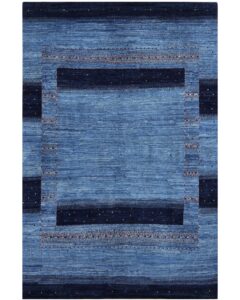
One last row of rugs chosen to go with the ideas above.



FAQ
What color rug goes with red curtains in a small room?
In a small room, a warm ivory, oatmeal, or light greige rug goes best with red curtains, because a light floor with a reflectance value above 60 keeps the space from feeling closed in while the red fabric supplies the drama. Choose a low pile or flatweave in that neutral so the rug does not add visual bulk, and keep any pattern small-scale.
Can a gray rug go with red curtains?
A gray rug can go with red curtains if the gray matches the red’s undertone. Cool charcoal and slate grays sit well under burgundy, wine, and cranberry, while warm greige and taupe-leaning grays work under brick, rust, and tomato. A neutral mid-gray with no visible cast is the riskiest choice because it tends to turn slightly purple beside warm reds under 2700 K evening lighting.
Does a green rug clash with red drapes?
A green rug does not clash with red drapes as long as its saturation stays low. Sage, olive, moss, and eucalyptus are complementary to red and make it look richer, whereas bright kelly or emerald green produces a holiday effect. Vegetable-dyed tribal rugs are the easiest place to find greens at the right chroma.
Should the rug be lighter or darker than the red curtains?
The rug should usually contrast with the curtains in value rather than match them. A light rug under deep burgundy or a dark navy rug under bright scarlet both create a clear visual hierarchy. Matching the value, such as a mid-tone red rug under mid-tone red curtains, flattens the room and removes the sense of depth that makes the pairing feel designed.
Will red curtains make a cream rug look dirty faster?
Red curtains do not soil a cream rug faster, but they make existing soil far more noticeable because the eye compares the pale floor directly against the saturated fabric. Plan on a professional wash every 12 to 18 months for a cream wool rug in a busy room under red drapery, rotate it every 6 months, and use a dense rug pad to prevent the traffic lane from deepening into a wear line.
