

Rug Binding and Serging: Why Repairing Rug Edges Matters
September 3, 2026Water Damage Rug Restoration: How to Save a Flooded Wool Rug
September 8, 2026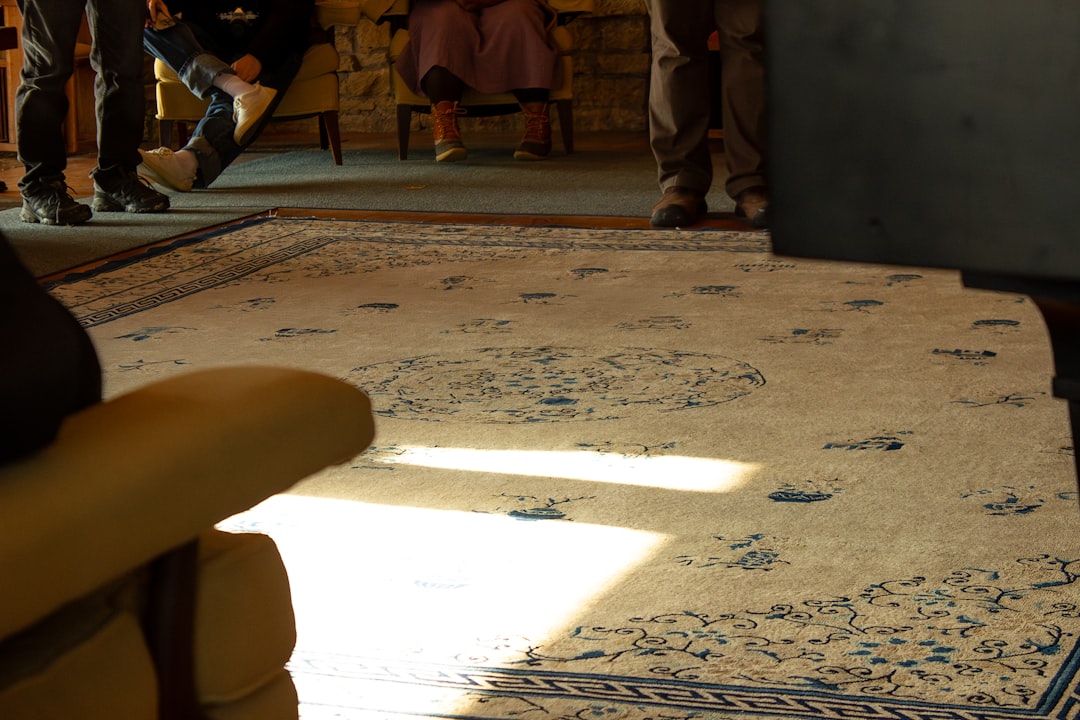
Few things sting quite like walking into a sunroom you love and noticing that the rich burgundy field of your Persian rug has quietly turned a chalky pink where the afternoon light hits it hardest. Sun fading on rugs is one of the most common damage patterns I see in my workshop, right up there with moth holes and worn fringes, and it’s also one of the most preventable once you understand how ultraviolet light actually breaks down dye molecules and fiber structure. In this article, I’ll walk through why this happens, which rugs and dyes are most vulnerable, how to tell early fading from advanced damage, what can realistically be repaired versus rewoven, and the specific steps that have worked in real homes I’ve serviced across sun-drenched rooms in Colorado and beyond.
What Causes Sun Fading on Rugs?
Sun fading on rugs happens when ultraviolet radiation, primarily UVA wavelengths between 315 and 400 nanometers, breaks the chemical bonds that hold dye molecules together in wool, silk, and cotton fibers. As those bonds degrade, the dye can no longer reflect light the same way, so the color you see shifts toward a washed-out, lighter version of itself. Heat and infrared exposure accelerate this breakdown, which is why a rug sitting in a south-facing bay window fades faster than one in a north-facing room with indirect light.
This isn’t just a surface phenomenon. On antique and semi-antique pieces, I’ve measured color loss extending 2 to 3 millimeters into the pile on rugs that have sat in direct sun for a decade or more, meaning the damage isn’t something you can simply brush or steam away. Natural dyes derived from madder root, indigo, and cochineal tend to hold up somewhat better under UV stress than early synthetic aniline dyes from the late 19th century, but even the most stable natural dye will shift given enough cumulative sun exposure.
How Does UV Exposure Break Down Rug Dyes?
UV photons carry enough energy to excite electrons within dye chromophores, the part of the molecule responsible for absorbing visible light and producing color. Over time, repeated exposure causes photo-oxidation, a chemical reaction where the dye molecule reacts with oxygen in the air and permanently alters its structure. Once that oxidation occurs, the original color cannot be restored chemically; it can only be replaced through redyeing or careful reweaving.
Wool fiber itself also yellows slightly under prolonged UV exposure because the keratin protein undergoes its own photodegradation, independent of whatever dye sits on top of it. This is why a faded red wool rug often reads as a dusty orange or salmon rather than simply a paler red; you’re seeing both dye loss and fiber yellowing happening simultaneously.
How Can You Tell If a Rug Has Sun Damage or Just Normal Wear?
Sun damage typically shows up as a distinct color gradient across the rug, with the section nearest a window or skylight noticeably lighter than the areas tucked under furniture or in shadow. Normal wear, by contrast, tends to show as pile flattening, fraying, or soiling concentrated in high-traffic paths rather than a directional lightening tied to a light source.
I always ask clients to flip back a corner of furniture that hasn’t moved in years and compare that protected patch of pile to the exposed field. If there’s a visible difference in saturation, even a subtle one, that’s a reliable diagnostic for cumulative UV exposure rather than mechanical wear from foot traffic.
What Are the Visible Signs of Sun-Damaged Wool and Silk Fibers?
Silk rugs show sun damage differently than wool because the protein structure of silk is more delicate and reacts faster to both UV and heat. You’ll often see a brittle, almost crunchy texture in silk pile that’s been sun-stressed, along with a shift from lustrous sheen to a dull, matte finish.
Wool tends to fade more gradually and evenly, but it can also develop a slightly dry, straw-like feel in heavily exposed sections. Here are the specific indicators I check for during an in-home inspection:
- Color gradient running parallel to a window, skylight, or glass door
- Loss of sheen in silk highlights or silk-wool blend rugs
- Brittleness or slight fiber breakage when the pile is gently bent
- Uneven fading between wool pile and cotton foundation warp threads
- A chalky or powdery residue on darker colors like navy, black, or deep brown
- Yellowing in areas that were originally ivory or cream
Which Rug Types and Dyes Are Most Vulnerable to Sun Fading?
Rugs dyed with early synthetic chrome and aniline dyes from roughly 1880 through the 1930s tend to fade fastest, sometimes showing visible change within 3 to 5 years of consistent direct sun exposure. Rugs using natural vegetable dyes, particularly indigo blues and madder reds from regions like Heriz, Tabriz, and Kashan in Iran, generally show more gradual, even fading over 10 to 20 years rather than sudden shifts.
Silk rugs and silk-highlighted pieces, including many fine Qum and Nain weaves, are among the most fragile under UV light because the fiber itself degrades structurally, not just chromatically. Flatweaves such as Kilim Rugs can also fade quickly since there’s no pile depth to shield underlying yarns, meaning the entire thickness of the weave is exposed to light simultaneously rather than just the surface tips.
Do Modern Synthetic Rug Dyes Fade Less Than Natural Dyes?
Modern acid dyes and pre-metallized dyes used in most contemporary wool and wool-silk blend production do generally offer better lightfastness ratings than 19th-century aniline dyes, often scoring 6 to 7 on the standard 1-to-8 AATCC lightfastness scale. That said, “modern” doesn’t automatically mean “fade-proof,” and cheaper mass-produced rugs using unstable dye lots can still shift color within a single sunny season.
Overdyed and color-saturated rugs deserve special mention here, since the heavy dye load used in the overdyed rugs process can behave unpredictably under UV exposure, sometimes fading unevenly where the top color layer breaks down faster than the base color beneath it. If you’re choosing a rug specifically for a sunroom or south-facing living space, I’d steer toward tightly woven pieces from the Tribal Rugs collection, which tend to use denser, more UV-resistant wool with naturally higher lanolin content.
| Rug Material / Dye Type | Typical Lightfastness Rating (1-8 scale) | Visible Fading Onset | Fading Pattern |
|---|---|---|---|
| Natural vegetable dye (madder, indigo) | 5-6 | 10-20 years direct sun | Gradual, even |
| Early synthetic aniline dye (pre-1940) | 2-3 | 3-5 years direct sun | Rapid, patchy |
| Modern acid/pre-metallized dye | 6-7 | 15-25 years direct sun | Slow, uniform |
| Silk or silk-blend highlights | 3-4 | 5-8 years direct sun | Sheen loss plus color shift |
| Overdyed wool | 4-5 | 5-10 years direct sun | Uneven, top-layer first |
How Can You Prevent Sun Damage on an Area Rug?
Protecting rugs from sun damage comes down to controlling three variables: the intensity of light hitting the rug, the duration of exposure each day, and the cumulative years the rug spends in that spot without rotation. Window films that block 95 to 99% of UV rays, UV-filtering glass, and simple physical barriers like sheer curtains or adjustable blinds all reduce the radiation load reaching the fibers.
Rotating a rug 180 degrees every 6 to 12 months is one of the simplest habits I recommend, since it redistributes exposure across the whole field rather than concentrating it on one section indefinitely. For rugs placed under skylights, where rotation alone won’t help because the light comes from directly overhead, a removable UV-blocking film applied to the skylight glass is often the more practical fix.
What Products and Habits Actually Reduce UV Exposure Indoors?
Beyond window treatments, a quality rug pad plays a supporting role by keeping the rug flat against the floor, which reduces the buckling and rippling that can create shadow-and-light patterns leading to uneven fading over time. A pad also protects the foundation from heat transfer through certain flooring types, which indirectly slows fiber degradation.
Here’s a practical checklist I give clients with sun-exposed rooms:
- Install UV-filtering window film rated to block at least 95% of UVA and UVB rays
- Rotate the rug 180 degrees every 6 months during peak sun seasons
- Use sheer curtains or adjustable blinds during the brightest midday hours, typically 11am to 3pm
- Keep humidity between 40-50% to reduce fiber brittleness compounded by heat
- Add a non-slip, breathable rug pad to reduce buckling and heat retention
- Schedule professional cleaning every 12-18 months to remove UV-attracting dust and soil buildup
Can You Fix a Rug That Has Already Faded from the Sun?
Fixing faded rugs is possible in many cases, though the approach depends on how deep the color loss runs and whether the fading is even or patchy. Localized redyeing, sometimes called “painting in” among restorers, can correct small faded sections by hand-matching dye to the surrounding pile using natural or synthetic dyes applied with a brush or small applicator.
For more extensive or structurally compromised fading, particularly where UV exposure has also made the fibers brittle, reweaving damaged sections may be the more durable long-term solution rather than attempting a dye correction that won’t hold up to foot traffic. This is a similar structural logic to the rug reweaving process used for moth damage or physical holes, since both situations require replacing compromised fiber rather than simply masking the surface.
Is Professional Restoration Worth It for a Faded Antique Rug?
For rugs with genuine age or provenance, professional restoration is almost always worth the investment because DIY dye correction attempts frequently create a mismatched, blotchy patch that’s more visually distracting than the original fade. A skilled restorer can custom-mix dye lots to account for the specific wool source, dye family, and even the sheen level of the surrounding pile before touching the rug.
Before committing to restoration costs, which typically range from $150 to $800 depending on the size of the faded area and complexity of the dye match, it’s worth having the piece formally evaluated. A proper Rug Appraisal can clarify whether the rug’s age and rarity justify full restoration versus a more modest touch-up, and pairing that with a full-service Rug Cleaning beforehand often reveals the true extent of fading once years of embedded soil are removed.
My Experience with Sun Fading on Rugs
I’ve spent close to two decades handling rugs that come through the door with every kind of damage imaginable, and sun fading is one of the patterns that surprises clients the most because it happens so slowly they don’t notice until the contrast becomes stark. One case that stands out was a 9×12 Heriz that had sat in the same spot in a Vail sunroom for nearly 15 years; the exposed half had faded from a deep brick red to almost a dusty rose, while the half protected under a sofa remained essentially original. The owner genuinely believed the rug had always looked that way until we pulled back the furniture and showed her the difference side by side.
What I’ve learned from projects like that one is that early intervention matters more than people expect. A rug I inspect within the first 2 to 3 years of noticeable lightening usually responds well to a partial redye, blending seamlessly once it’s reintegrated into the pile. But rugs left in direct sun for a decade or longer often need reweaving in the worst-hit sections because the wool itself has become dry and structurally weak, not just discolored. I’ve also noticed that silk-inlaid Tabriz and Qum pieces are the ones I worry about most in bright Colorado homes, given how intensely the sun reflects off snow in winter and adds an extra, often overlooked, dose of UV bounce through south-facing windows even in the colder months.
FAQ
Does sun fading on rugs happen faster at higher altitudes?
Yes, UV intensity increases roughly 10-12% for every 1,000 meters of elevation gain, which means homes in mountain towns experience faster fading rates than similar homes at sea level, even with comparable window orientation and hours of daily sun.
Can you reverse sun fading without redyeing the rug?
No, once photo-oxidation has altered the dye molecule’s chemical structure, the original color cannot be restored through cleaning, conditioning, or any topical treatment; redyeing or reweaving are the only methods that genuinely correct the color loss.
Are darker rug colors more resistant to sun fading than lighter ones?
Not necessarily; darker colors like navy and deep brown often show fading more visibly as a chalky or grayish cast because the contrast against the original saturation is more noticeable, even though the underlying rate of dye breakdown may be similar to lighter colors.
How often should a rug be rotated to prevent uneven sun fading?
Rotating a rug 180 degrees every 6 to 12 months is generally sufficient for most residential settings, though rooms with intense southern or western exposure may benefit from rotation every 3 to 4 months during peak summer sun.
Does rug padding help reduce sun damage?
Rug padding doesn’t block UV rays directly, but it does reduce heat buildup and buckling that can worsen fiber brittleness in already sun-stressed sections, and pairing a quality Rug Padding setup with UV window film addresses both the mechanical and radiation-related causes of long-term damage.
Sources
Smithsonian Museum Conservation Institute
Canadian Conservation Institute


