

How to Stop Color Bleeding in Rugs When You Wash an Oriental Rug
September 2, 2026How to Protect Your Persian Rugs from Sun Fading
September 5, 2026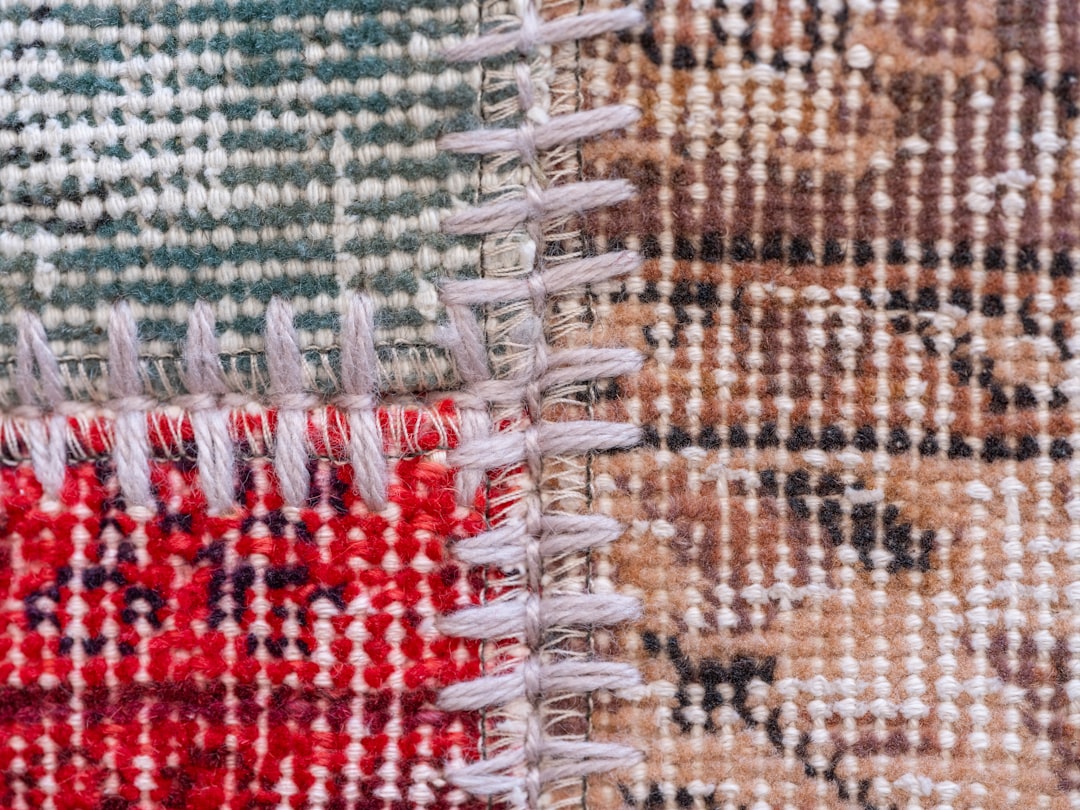
A rug rarely fails in the middle first. Long before the field of a rug wears through, the edges start to go — threads pop loose, binding tape peels back, and fringe pulls away from the foundation. Repairing rug edges is one of the most overlooked yet consequential parts of rug maintenance, because the edge is structurally what holds the entire piece together. Once the selvage or binding unravels, the weft threads that give a rug its shape begin to loosen row by row, and what started as a minor cosmetic flaw can turn into a full-blown structural failure within a single season of foot traffic. This article walks through how rug binding repair and the rug serging process actually work, what materials and techniques professionals use, and how to recognize the early warning signs before a rug needs a full rebuild.
Why Does Repairing Rug Edges Matter So Much for a Rug’s Lifespan?
Repairing rug edges matters because the edge — whether finished with binding, serging, or overcasting — is the only thing preventing the weft and warp threads from unraveling under normal foot traffic. A rug’s field can survive decades of wear if its structural perimeter stays intact, but a single loose corner left unattended can unravel six to eight inches of weave in a matter of weeks under heavy use.
Most hand-knotted rugs, including Persian, Turkish, and Caucasian weaves, are constructed with the warp threads running the full length of the piece. When the edge finishing fails, those warp threads have nothing holding them in a straight line, and the weave begins to fan outward at the sides. I’ve seen 8×10 Heriz rugs come into the workshop with an inch and a half of unraveling on one side simply because a vacuum cleaner brush roll caught a loose thread and kept pulling with every pass.
The cost difference between early intervention and delayed repair is significant. A basic re-serging job on a wool rug typically runs between $4 and $8 per linear foot, while a rug that has unraveled into the pile and lost knots along the border can require reweaving that costs $40 to $150 per square inch depending on knot density and pattern complexity. Addressing the edge early is almost always the more economical path, and it preserves more of the rug’s original material, which matters enormously for antique or collectible pieces.
How Fast Does Edge Damage Actually Spread?
Edge damage spreads at a rate roughly proportional to foot traffic and vacuum exposure, but as a general rule, an untreated loose edge on a wool pile rug will progress noticeably within 4 to 6 weeks in a moderate-traffic hallway or entryway. In low-traffic rooms such as formal dining rooms, the same damage might take 6 to 12 months to become visually obvious.
What accelerates the process is moisture and pet activity. Dogs and cats often chew or scratch at loose fringe and binding, and humidity swings cause natural fibers like wool and cotton to expand and contract, which loosens stitching further. I’ve had clients bring in rugs where a corner that looked like a minor fray on their last visit had turned into eighteen inches of open, unwoven warp just four months later because the household had a large dog that used the rug edge as a chew toy.
What Are the Main Techniques Used in Rug Binding Repair?
The two primary techniques used to repair and finish rug edges are binding, which involves stitching a folded fabric tape (often cotton twill, wool, or leather) over the raw edge, and serging, which uses a continuous overcast stitch worked directly through the rug’s selvage cords with wool or cotton yarn. Both techniques exist to protect the same vulnerable point — the edge where weft threads terminate — but they suit different rug constructions and wear patterns.
Binding tape is typically applied with a heavy-duty sewing machine or by hand using a curved upholstery needle, and it wraps fully around the edge, hiding the selvage cords beneath a folded strip usually 1 to 1.5 inches wide. This method is common on machine-made rugs, flat weaves, and any rug where the original edge finish has been lost entirely. Serging, by contrast, is almost always done by hand on hand-knotted rugs, replicating the wrapped-yarn technique used by the original weavers so the repair blends visually with the rug’s construction.
- Wool serging thread: matched to the rug’s original wool tones, typically 2-ply or 3-ply yarn at roughly 200-300 denier.
- Cotton binding tape: pre-shrunk, usually 1 to 1.5 inches wide, sewn with a lockstitch machine at 6-8 stitches per inch.
- Leather binding: used on Southwestern and Navajo-style flatweaves for high-abrasion environments like thresholds or stair runners.
- Whipstitch overcasting: a lighter, hand-applied finish used for temporary stabilization before a full serging repair.
- Fringe reattachment: often performed alongside edge repair, since damaged fringe frequently accompanies a compromised selvage; this is covered in more depth in our guide on when to repair rug fringes.
How Does the Rug Serging Process Work Step by Step?
The rug serging process begins with removing any damaged or loose remnants of the original edge finish, then stabilizing the exposed warp ends with a temporary whip stitch before the final decorative overcast is applied. A technician works in short, even passes, wrapping yarn around the selvage cord and through the outermost one or two rows of pile knots to lock the stitch into the existing structure rather than simply wrapping the surface.
Color matching is a critical part of this stage. A skilled repairer will hand-dye wool yarn to match the rug’s border palette, sometimes blending two or three yarn shades to replicate the abrash, or natural color variation, found in older hand-spun wool. On a typical 9×12 rug, a full re-serge along both long sides can take 10 to 16 hours of hand labor, which is why this work is priced by the linear foot rather than as a flat fee. Rugs with silk foundations or extremely fine knot counts — above 300 knots per square inch — require slower, more delicate stitching and can add 30 to 40 percent more time to the job.
What Are the Warning Signs That a Rug Needs Edge Repair?
The clearest warning sign that a rug needs edge repair is any visible gap between the binding or serging and the pile, along with loose threads protruding from the corners or sides. Other early indicators include fraying fringe that connects directly to the edge, a wavy or rippled border where the selvage cord has broken, and small holes forming within an inch of the rug’s perimeter.
Corners deserve particular attention because they absorb the most mechanical stress from foot traffic, furniture legs, and rolling or folding during storage or moving. A rug that has been folded rather than rolled for transport, even for a short trip, often shows creasing and thread stress concentrated exactly at the corners within weeks of the fold. If you’re evaluating whether curling or creasing at the corners is a related but separate issue from edge unraveling, it typically is — creasing is a pile and foundation issue, while true edge damage involves the selvage cords themselves failing.
How Can You Tell the Difference Between Fringe Damage and True Edge Damage?
Fringe damage is limited to the decorative warp extensions beyond the rug’s woven body, while true edge damage involves the selvage cords and the outermost woven rows that hold the entire rug together structurally. Fringe can often be trimmed, reknotted, or replaced without touching the rug’s structural integrity, whereas a compromised selvage requires immediate binding or serging to prevent the weave itself from opening up.
A simple way to check at home is to gently tug on a loose thread near the border. If it comes from a tassel or fringe strand hanging off the end, it’s a fringe issue. If pulling the thread causes the weave a few rows in to loosen or pucker, the selvage cord has likely already broken, and the rug needs prompt professional attention rather than a spot fix.
| Repair Type | Best Suited For | Typical Cost Range | Estimated Turnaround |
|---|---|---|---|
| Hand serging (wool yarn) | Hand-knotted Persian, Turkish, Caucasian rugs | $4 – $8 per linear foot | 2 – 4 days |
| Machine binding (cotton tape) | Machine-made rugs, flatweaves, area rugs under $2,000 | $3 – $6 per linear foot | 1 – 2 days |
| Leather binding | Navajo and Southwestern flatweaves, stair runners | $6 – $12 per linear foot | 2 – 3 days |
| Full corner reweave with re-serge | Antique rugs with advanced unraveling | $150 – $500 per corner | 1 – 3 weeks |
How Do Rug Construction and Material Affect Edge Repair Methods?
Rug construction and fiber content directly determine which edge repair method will hold up, since wool, silk, cotton, and synthetic foundations each respond differently to needle tension, dye absorption, and stitch type. A flatweave Kilim, for instance, has no pile to anchor stitches into, so its edge repair relies almost entirely on the strength of the warp-wrapping technique, while a thick-pile Moroccan rug has more surface material to stitch through, allowing for a more forgiving repair.
Hand-knotted wool rugs from regions such as Tabriz, Heriz, and Bijar typically have wool selvage cords wrapped in wool yarn, which ages and fades at roughly the same rate as the rug’s border, making future color-matching easier. Silk rugs, by contrast, demand much finer thread — often 100% silk floss at a lighter denier — and a slower hand-stitching pace because silk fibers fray easily under machine tension. Flat-woven pieces like Kilim Rugs or Navajo weaves generally hold up well to leather or heavy cotton binding since their tight, wide-warp construction distributes stress more evenly across the edge.
Does Rug Pile Height Change the Repair Approach?
Yes, pile height changes the repair approach significantly, because higher pile rugs allow stitches to sit lower and hide within the wool, while low-pile or flatweave rugs expose every stitch, requiring more precise, uniform tension to keep the finished edge looking clean. On a plush 0.75-inch pile rug, a slightly uneven serge stitch will disappear into the nap, but on a 0.25-inch flatweave, the same inconsistency is immediately visible from across the room.
Tribal and gabbeh-style rugs, known for their thick, shaggy pile, are actually more forgiving during edge repair because the long wool fibers naturally drape over and conceal the stitch line. Rugs in this category, including many pieces found among Gabbeh Rugs, can often be serged with slightly heavier yarn without any visual penalty, which also adds extra durability along a border that tends to see heavy use in casual, high-traffic living spaces.
My Experience with Repairing Rug Edges
Over the years working the bench at a rug restoration studio, I’ve handled edge repairs on everything from $300 machine-made area rugs to a 19th-century Bijar that had been in one family for four generations. What stands out most is how predictable the failure pattern is once you’ve seen enough of it — the first six inches of wear almost always show up at the leading corner nearest a doorway or under a rocking chair leg, and if a client waits more than a few months after noticing that first loose thread, the repair scope typically doubles.
One case that stuck with me involved a silk Qum rug brought in with what the owner described as “just a little fringe fray.” On closer inspection, the selvage cord on one entire side had snapped in three places, and pulling gently on the border showed nearly two inches of open weave hidden just beneath a decorative tassel. We spent almost eleven hours hand-serging that side alone, matching four different shades of dyed silk thread to replicate the original abrash pattern. Had that rug come in even two months later, the unraveling would likely have reached the inner medallion, turning a border repair into a full field reweave.
I’ve also learned to distrust quick fixes. Iron-on binding tapes and craft-store fusible hems sold for household sewing projects are not built for rug fibers, and I’ve had to strip out more than a few of these DIY attempts before doing the repair properly. The adhesive tends to stiffen the rug’s edge, which then cracks and separates from the pile within a year, often taking a few original knots with it when it goes. A rug is a load-bearing textile in a way that clothing isn’t, and it deserves stitching methods designed for that structural role.
How Should You Maintain a Rug’s Edges Between Professional Repairs?
Maintaining a rug’s edges between professional repairs mainly comes down to controlling how the rug is vacuumed, positioned, and transported, since most day-to-day edge damage originates from mechanical friction rather than natural aging. Using a vacuum without a beater bar along the border, rotating furniture legs off the edge every few months, and always rolling rather than folding a rug for storage or moving all significantly extend the life of an existing binding or serge.
Placing a properly sized pad underneath the rug also reduces edge stress, since it prevents the rug from sliding and curling at the corners, which is one of the most common triggers for stitch fatigue. A well-chosen pad, discussed further under Rug Padding, keeps the entire perimeter flat against the floor rather than lifting slightly with each footstep, which reduces the shearing force on the stitches over time.
When Should You Call a Professional Instead of Attempting a Home Fix?
You should call a professional the moment you notice loosening that extends past the fringe into the woven body of the rug, or whenever the rug in question is hand-knotted, antique, or made of silk, since these constructions are unforgiving of incorrect stitch tension or mismatched thread. A home fix is reasonable only for a single popped stitch on a low-value, machine-made rug, and even then, it should be treated as temporary.
Professional evaluation also matters for insurance and resale purposes. A rug that has undergone amateur repair work often loses appraised value, since visible mismatched thread or stiff adhesive residue is easy for an appraiser to spot. Anyone planning to sell, insure, or pass down a rug should consider a professional Rug Appraisal alongside any edge repair, particularly for pieces with historical or collectible value. For everything else — pile soiling, odor, or general wear alongside the edge damage — a full Rug Cleaning is usually worth scheduling at the same time, since dirt and grit trapped near the border accelerates thread abrasion.
FAQ
How much does it typically cost to repair a rug’s edge?
Costs generally range from $3 to $12 per linear foot depending on the material and technique, with hand-serged wool rugs on the lower to middle end and leather or silk binding running higher. Rugs requiring a full corner reweave due to advanced unraveling can cost $150 to $500 per corner, since that work involves rebuilding lost knots rather than simply finishing an existing edge.
Can a damaged rug edge be repaired without removing the fringe?
In most cases, yes, since fringe and the woven edge are separate structural elements, though a technician will often need to temporarily detach a short section of fringe to access the selvage cord underneath. Once the binding or serging is complete, the fringe is reattached or, if it was already damaged, replaced using techniques similar to a standard fringe repair.
How long does a professional edge repair usually last?
A properly executed serge or binding repair typically lasts 8 to 15 years under normal residential use, and considerably longer in low-traffic areas such as formal rooms. Longevity depends heavily on ongoing care, including proper vacuuming technique and using a rug pad to reduce edge friction.
Is it possible to prevent rug edges from unraveling in the first place?
Prevention is largely about reducing friction and moisture exposure at the border, which means vacuuming with a suction-only setting near the edges, keeping furniture legs away from the perimeter, and storing the rug rolled rather than folded. Addressing minor fraying within the first few weeks, rather than waiting, also prevents the kind of cascading damage that leads to costly structural repairs later.
Do all rug types need the same kind of edge finishing?
No, edge finishing needs vary by construction; hand-knotted rugs typically require hand serging with matched wool or silk thread, flatweaves like Kilims rely on reinforced warp-wrapping, and machine-made rugs are usually finished with sewn cotton binding tape. Choosing the wrong method for a given construction, such as machine-binding a fine silk piece, often causes more harm than the original damage.
Sources: Wikipedia: Carpet and Smithsonian Institution


