



What Color Rug Goes With Navy Blue Curtains? A Rug Specialist’s Pairing Guide
November 18, 2026
What Color Rug Goes With Brown Furniture or a Brown Leather Couch?
November 20, 2026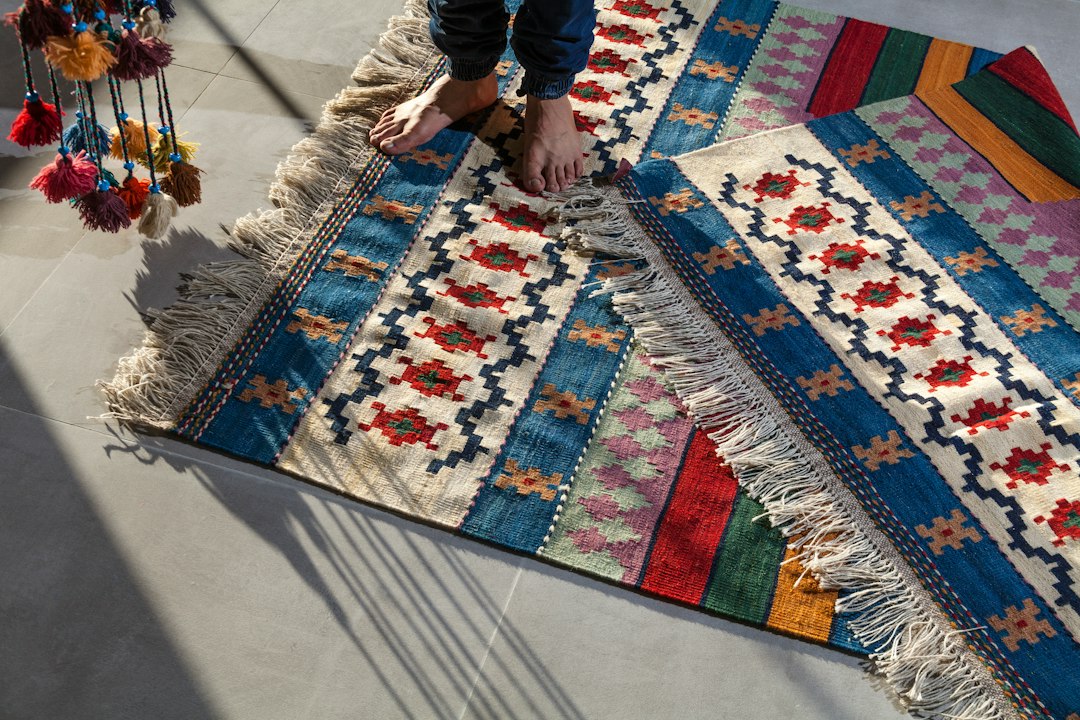
Two wool rugs can share a pattern and an 8 by 10 foot footprint, yet differ completely underneath. The hand knotted vs tufted rug question reaches my workshop almost weekly, usually after a buyer has paid for the wrong construction. One client arrives with a crumbling back. Another shows a bald spot in the walkway. This guide explains how each rug is built, how to identify it from the reverse side in under a minute, what each costs to own over 10 to 50 years, and how each handles washing, repair, and daily traffic. Our Rug Cleaning team sees both types every day.
Key takeaways
- The fastest way to tell the two apart is to flip the rug over: a knotted rug shows the full design on the back.
- A hand-knotted rug ties individual yarn knots around warp threads, so pile and foundation form one inseparable structure.
- A tufted rug punches yarn through canvas and glues it with latex, so it is assembled and adhered rather than woven.
- Hand tufted on a label does not mean hand-woven, since a tufted rug contains no knots at all.
- Construction decides lifespan, price, washing behavior, and repairability, so buy based on how the rug is built, not how the top looks.
What Is the Difference Between a Hand Knotted vs Tufted Rug?
A hand-knotted rug ties individual yarn knots around warp threads on a loom, while a tufted rug punches yarn through woven cloth and glues it in place. In the knotted rug, pile and foundation form one inseparable structure. In the tufted rug, the pile sits in a canvas and depends on a latex coat and a second backing. One rug is woven thread by thread. The other is assembled and adhered.
Construction explains lifespan, price, washing behavior, and repairability. Knotted weaving underlies Persian, Turkish, Caucasian, Afghan, and Tibetan rugs, and the method has barely changed since the Pazyryk carpet was woven around 400 BC. Tufting became common for area rugs in the second half of the twentieth century. Exporters in India and China adapted the pneumatic tufting gun from broadloom carpet manufacturing and cut labor costs sharply. The result is a wool rug that looks similar from above but behaves very differently over time.
What Does Hand Tufted Mean on a Rug Label?
Hand tufted on a rug label means a worker guided a hand-held tufting gun across stretched canvas to insert the yarn. The label does not mean hand-woven. A hand-tufted rug contains no knots at all, and no weft rows lock its pile in place.
The process starts with primary backing cloth, usually cotton canvas or cotton-polyester monk’s cloth, stretched on a vertical frame. The tufter follows a stenciled design, and the gun drives wool through the fabric, leaving loops on the face. Shears level those loops to a pile height of roughly 0.4 to 0.75 inches. Workers then brush liquid latex across the back, usually a styrene-butadiene synthetic blend. A secondary cotton scrim presses into the wet adhesive and locks everything down. Skilled tufters in Bhadohi or Panipat, two Indian production hubs, can finish an 8 by 10 foot wool rug in roughly 2 to 4 working days.
How Is a Hand-Knotted Rug Built Knot by Knot?
A weaver ties a short length of wool or silk around two adjacent warp threads, cuts it, and moves to the next pair. After each row, the weaver beats down one or two weft passes with a heavy metal comb. Two knot structures dominate. The asymmetric Persian or Senneh knot allows finer detail and curved patterns. The symmetric Turkish or Ghiordes knot gives a sturdier, blockier pile common in Anatolian and Caucasian village weaving.
Knot totals run high. A 9 by 12 foot rug at 150 knots per square inch holds about 2.3 million knots. Weavers commonly tie 6,000 to 10,000 knots per day, so one weaver needs roughly 230 to 390 working days for that rug. Three weavers sharing a loom cut the time to several months. Workshops in Tabriz, Isfahan, Qum, and Hereke often exceed 400 knots per square inch, and Hereke silk pieces can pass 1,000. Cotton warps and wefts dominate workshop rugs, while nomadic and tribal pieces often use wool foundations.
Matching rugs
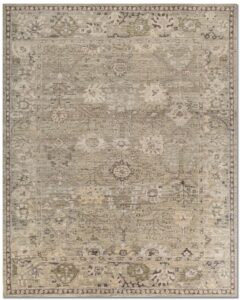
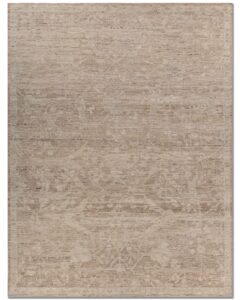
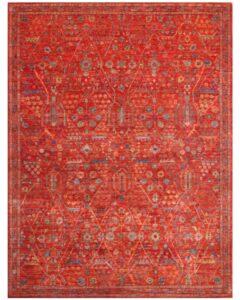
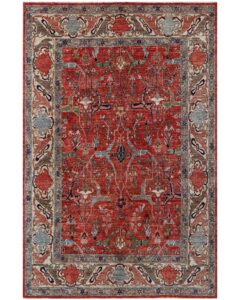
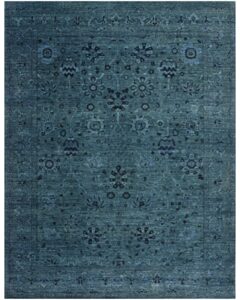
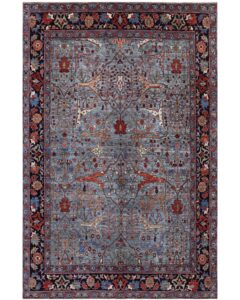
These hand knotted rugs reflect the durable, woven construction the article describes, with designs that look as complete on the back as the front.
How Do You Tell a Tufted Rug from a Hand-Knotted One at Home?
Flipping the rug over answers the question fastest. A hand-knotted rug shows its full design on the back as a slightly fuzzier mirror image, because every front knot ends in a visible loop behind. A tufted rug shows a plain sheet of off-white or tan cloth with no pattern at all.
Secondary checks help when a liner or a glued felt pad covers the back. Each test below pairs a method with the result you should expect:
- Corner bend: a knotted rug shows rows of tiny knot heads on the foundation; a tufted rug shows yarn entering flat fabric with a rubbery sheen.
- Thumbnail press on the back: a knotted back is flexible and drapes like heavy cloth; a tufted back feels stiff, tacky, or crunchy from latex.
- Smell on a warm day: a knotted wool rug smells of lanolin or nothing; a tufted rug gives off a faint sulfurous, rubbery odor.
- Edge finish: a knotted rug has a hand-wrapped selvedge over the outer warps; a tufted rug has a machine-serged or cloth-bound edge.
- Sewn-in label: a tufted rug often carries a fabric tag naming the country of origin and fiber content.
Why Do Photos of a Rug’s Reverse Side Settle the Knotted-or-Tufted Question?
Photographs of the reverse side settle the question because finishing, dyeing, and shearing cannot disguise a rug back. A knotted rug shows a knot-for-knot copy of the front design. A tufted rug shows a featureless fabric panel. No middle ground exists, which is why I trust the back over any label or listing.
Clients who email before visiting get a three-photo request from me: the full back in daylight, one back corner beside a coin for scale, and the fringe end from the side. A knotted corner shows individual loops about the size of a grain of rice, and the fringe flows continuously out of the body. A tufted corner shows woven canvas, sometimes with the scrim grid visible through the latex, and often a line of machine stitching where fringe was attached. In my experience, the photographs and the in-person inspection have always agreed.
Does the Fringe Reveal Whether a Rug Is Knotted or Tufted?
Fringe usually reveals the construction. On a hand-knotted rug, the fringe is the exposed warp ends, so each strand enters the body directly and cannot be removed without unraveling the end. On a tufted rug, any fringe is a separate strip of tape sewn or glued to the edge for appearance. Hold the end up and check where fringe meets pile: knotted strands continue into the rows of knots.
Two exceptions limit the rule. Many Tibetan and Nepalese knotted rugs fold the warp ends under and stitch them down, leaving no visible fringe. Some Indian knotted rugs get a short overcast edge for a cleaner, contemporary look. Meanwhile, fringe-free tufted rugs are growing more common, since buyers now link sewn-on fringe with lower quality. Treat the fringe as supporting evidence and let the back of the rug cast the deciding vote.
What Are the Hand Tufted vs Hand Knotted Rug Pros and Cons?
Knotted construction wins on longevity, repairability, washability, and resale value, while tufted construction wins on upfront price, availability, and bold custom designs. The trade is simple: decades of service life against a lower entry cost. Neither construction is dishonest, but each suits a different budget and time horizon.
The table below lists the specifications I share with clients choosing for a specific room. Ranges are typical estimates, not guarantees, and they shift with maker, wool grade, and region of origin.
| Specification | Hand-Knotted Rug | Hand-Tufted Rug |
|---|---|---|
| Construction method | Individual knots tied on warp threads, locked by weft rows | Yarn punched through canvas, secured with latex and scrim |
| Production time | Several months to over a year for a 9 x 12 ft rug, depending on density and weaver count | 2 to 4 days for an 8 x 10 ft rug with one tufter |
| Density measure | 40 to 1,000+ knots per square inch | Pile weight, roughly 40 to 80 oz per square yard |
| Expected service life | 50 to 100+ years with professional care | 5 to 12 years, limited by latex degradation |
| Retail price range | $30 to $150+ per square foot | $5 to $20 per square foot |
| Full immersion washing | Safe; recommended every 3 to 5 years | Not advisable; low-moisture surface cleaning only |
| Repair options | Reweaving, reknotting, selvedge and fringe reconstruction | Re-gluing, rebacking, serging edges |
| Shedding | Minimal after the first few vacuumings | Heavy for 6 to 18 months, then moderate |
| Resale and appraisal value | Holds or appreciates; eligible for fine art insurance | Depreciates sharply; replacement cost only |
Pile weight deserves caution. Tufted rugs often feel heavier underfoot than mid-grade knotted rugs because latex and double backing add mass. Manufacturers sell that heft as quality. Weight in this case signals glue, not durability.
How Long Does a Tufted Rug Last Compared With a Knotted One?
A tufted wool rug in a moderate-traffic living room typically lasts 5 to 12 years before the backing fails or the pile wears through. A comparable hand-knotted rug often serves 50 years or longer. I regularly wash and repair knotted rugs woven before 1920 that remain in daily use.
Two separate failure modes explain the gap. Adhesive alone holds tufted pile, so once the latex loses its grip, tufts pull out in clumps and no vacuuming reverses the damage. Weft rows mechanically lock knotted pile, so it wears down gradually, and a rug worn to the foundation in one walkway can be rewoven. Wool quality matters as well. Better knotted rugs use high-lanolin fleece, such as Afghan Ghazni or New Zealand crossbreds, which resists crushing longer than the shorter-staple carpet wool common in tufted yarns.
Which Factors Drive the Price Gap Between Knotted and Tufted Construction?
Labor hours drive the price gap between knotted and tufted rugs. Hundreds of weaver-days go into one 9 by 12 foot knotted rug, while a tufting gun inserts yarn far faster than hands can tie knots. An 8 by 10 foot tufted wool rug typically retails for $400 to $1,500. A hand-knotted rug of that size starts near $2,500 for a coarse village weave and passes $15,000 for fine workshop pieces.
Resale value diverges over time. A well-maintained knotted rug bought for $6,000 can hold that value for decades, which is why a formal Rug Appraisal matters for insurance scheduling on knotted pieces. Insurers treat tufted rugs as depreciating furnishings, so an appraisal rarely pays off there. Tufted rugs usually fetch only a small fraction of their original price at resale. Knot density, wool grade, dye quality, and weaving region all push the knotted price up; pile weight and size are the main drivers for tufted rugs.
More matching rugs
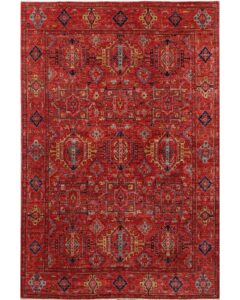
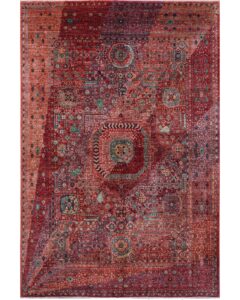
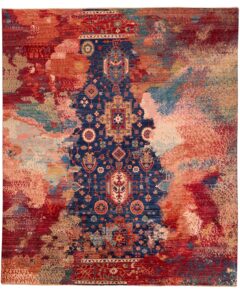
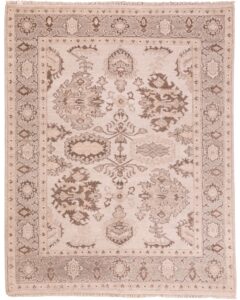
Another set of rugs that follow the same colors and style as this guide.
How Should You Clean and Repair a Tufted Rug Versus a Knotted One?
Full immersion suits a hand-knotted rug, while a tufted rug needs low-moisture surface cleaning. Wash knotted rugs with a pH-neutral solution between 5.5 and 7, rinse until the water runs clear, and dry flat or hung within 24 to 48 hours. Never soak a tufted rug.
Chemistry drives the rule as much as structure. Water that reaches the latex accelerates hydrolysis and can delaminate the secondary scrim in sheets. Cotton canvas holds moisture against the glue, so a soaked tufted rug may need 4 to 6 days to dry and often develops mildew. Our Rug Cleaning process runs the two types on separate tracks. Knotted pieces go through dusting, full immersion, and controlled drying. Tufted pieces get cleaned face-up on the floor with extraction equipment set to keep the backing dry.
Why Does the Latex Backing on a Tufted Rug Fail?
Synthetic latex backing fails through oxidation and hydrolysis, which turn a flexible rubber polymer into a brittle, powdery solid. Ordinary households see this in roughly 7 to 10 years. Radiant floor heating, direct sunlight, high humidity, and repeated wet cleaning can cut that to 3 or 4 years.
Symptoms follow a predictable order. First, fine white or yellow dust collects on the floor beneath the rug, which owners often mistake for drywall dust or an insect problem. Next, the back turns crunchy and hairline cracks appear when the rug is folded. Finally, tufts lift along traffic lanes and the sulfurous odor intensifies. Home machines speed the decline, so I warn clients away from any rug shampooer on tufted pieces, because the detergent and water volume reach the adhesive directly.
Which Repair Methods Work on a Knotted Rug but Not a Tufted One?
Reweaving, reknotting, selvedge rewrapping, and fringe reconstruction all work on hand-knotted rugs, because each repair ties into the original foundation and stays permanent. None of these techniques transfers to a tufted rug. Its realistic options are re-gluing lifted tufts, applying fresh latex and scrim to a failing back, and re-serging damaged edges.
Costs tell the same story. Reweaving a 4 by 4 inch moth hole in a knotted rug typically runs $150 to $400, depending on knot density, and the fix lasts for the life of the rug. Re-latexing an 8 by 10 foot tufted rug typically runs $300 to $600 and buys several more years, which often exceeds half the replacement price. Our Rug Repair & Restoration team quotes both honestly. On tufted pieces, the quote often comes with advice to replace the rug instead.
My Experience with Hand-Knotted and Tufted Rugs in the Workshop
Years of washing and repairing both constructions have taught me more than any textbook. Tufted rugs typically reach my door in the sixth to ninth year, often with a client apologizing for the white powder tracked through my entryway. Knotted rugs arrive for routine washing, moth damage, pet accidents, and the occasional flood, and rarely because the construction itself gave up.
One case stays with me. A couple brought two rugs from one house after a dishwasher leak: a 1960s Hamadan from a grandmother’s estate and a tufted wool rug bought three years earlier for $1,200. The Hamadan had sat in an inch of water for two days. I dusted it, ran a full immersion wash with a dye-set rinse, and dried it on the rack in 36 hours. It went home looking better than it had in a decade. The tufted rug’s latex had turned to paste. The scrim peeled off in my hands, and about a third of the tufts came away in the first extractor pass. I called the couple and explained that it was not salvageable at any price.
What Have Years of Repairs Taught Me About Choosing Knotted or Tufted?
Cost per year of use beats sticker price as the comparison. Take an illustrative case: a $900 tufted rug replaced every 8 years costs about $112 annually before cleaning. A $5,000 knotted rug that serves 50 years costs $100 annually and keeps resale value at the end. The knotted rug also survives floods, pet accidents, and several rounds of furniture rearranging.
Room context matters too. A knotted rug under a dining table in a house with children and a dog needs real washing after spills, and only that construction tolerates it. A formal guest bedroom sees few footsteps, so a tufted piece may honestly last 15 years there, and the economics tilt back toward it. Match the construction to the abuse the room will deliver, and the purchase pays off whichever type you choose.
Which Should You Buy: a Knotted Rug or a Tufted Rug?
Buy hand-knotted for any room where the rug will live more than a decade, take moderate to heavy traffic, or hold financial value. Choose tufted when the budget caps below $20 per square foot, when redecorating is likely within 5 to 8 years, or when the room sees little foot traffic and few spills.
Shoppers on the knotted route find proven designs in the Classic & Traditional Rugs collection. Persian, Turkish, and Indian workshop pieces at 100 to 400 knots per square inch balance durability and price for a first serious purchase. Treat knot count as a rough guide to detail and labor only. A 60-knot Gabbeh in thick, high-lanolin wool can outwear a 250-knot Indo-Persian woven from brittle, over-processed fiber. Judge the wool, the dyes, and the weave tension, not the number alone.
Which Room Calls for a Knotted Rug or a Tufted Rug?
A simple decision rule matches construction to room exposure. Score the room on three factors: traffic, moisture risk, and planned years of use. A room scoring high on two or more factors should get a hand-knotted rug. A room scoring low on all three can take a tufted rug. The list below applies the rule, one room per line:
- Dining room: knotted, because spills need full washing.
- Entryway or hallway: knotted, because grit and wet shoes punish adhesive backings.
- Pet area: knotted, because urine needs immersion rinsing to remove salts.
- Room with radiant floor heat: knotted, because heat speeds latex breakdown.
- Formal guest bedroom: tufted is acceptable, because traffic stays low.
- Rental apartment or staged home: tufted, because the time horizon is short.
Common mistakes undermine either choice. Buyers judge quality by weight or by the phrase “hand-crafted” instead of asking for the construction method. Owners place tufted rugs over radiant heat. Others rent a carpet machine for a wool tufted piece. Before paying, ask the seller for a photo of the back, the pile weight or knot count, and the fiber content of both pile and foundation.
When Does a Tufted Rug Make More Sense Than a Knotted Investment?
Tufted construction suits bold, large-scale contemporary designs, unusual custom sizes and shapes, and temporary living situations. A loom cannot produce those sizes and shapes economically. Lead times drop to a few weeks, and the price stays low. Those two advantages are real, and no knotted rug matches them.
Many pieces in the Contemporary & Modern Rugs category are hand-knotted in Nepal and India, so a current look does not require tufting. If you buy tufted, choose a maker that discloses pile weight in ounces per square yard and uses natural rubber instead of purely synthetic latex. Keep the rug off radiant heat and out of direct sun. Vacuum with suction only, with no beater bar, to slow shedding and protect the adhesive.
Final picks
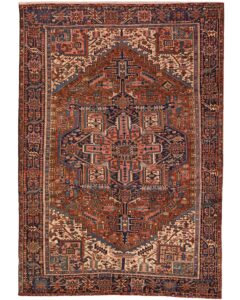
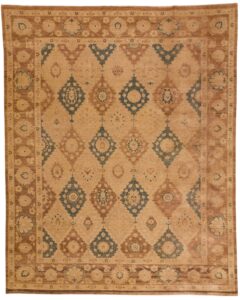
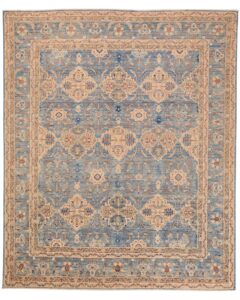
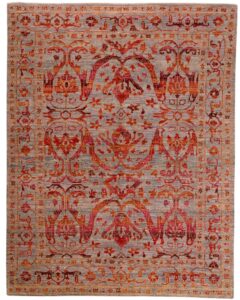
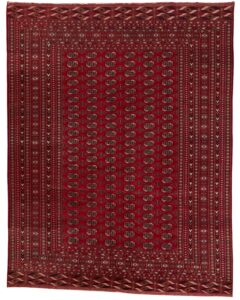
One last row of rugs chosen to go with the ideas above.
Knotted and Tufted Rug FAQ
Clients ask the questions below most often once they grasp the construction difference and apply it to a rug they own or plan to buy.
Each answer stays short so you can scan for your situation. The sections above give the longer explanations.
Is a Hand-Knotted Rug Always Better Than a Tufted One?
Structurally, a hand-knotted rug is better, because the weft locks the pile into the foundation and outlasts adhesive-held pile by decades.
Fit still depends on budget, years of ownership, and room traffic. A poorly made knotted rug with brittle wool can disappoint, so judge the specific piece.
Can a Tufted Rug Be Professionally Washed?
A tufted rug can be professionally cleaned, but not by full immersion. Specialists remove dry soil, then extract at low moisture from the face so latex and canvas stay dry.
Cleaning refreshes the pile and lifts most spots, but it cannot flush urine salts like a wash tank. Home cleaners who follow guidance to clean area rug fibers should respect the same moisture limit.
Why Is a New Tufted Rug Shedding So Much?
A new tufted rug sheds because shearing cuts the loops open, leaving millions of short fiber ends never twisted into knots. Loose fibers from carpet-grade wool add to the fluff.
Shedding fades over the first 6 to 18 months of vacuuming. A sharp rise after several years usually signals failing latex and whole tufts releasing.
How Can You Spot a Hand-Knotted Rug in a Store Photo?
A hand-knotted rug in a store photo reveals itself through the back view, which shows the full design reproduced in knots. Tufted rugs show plain canvas, often with a sewn-in origin label.
If a listing shows only the front, treat “hand-crafted” or “artisan” as warning signs. Sellers of genuine knotted rugs usually say “hand-knotted” and state the knot count.
Does a Tufted Rug Need a Pad Like a Knotted Rug Does?
A tufted rug needs a pad, arguably more than a knotted one. A felt or felt-and-rubber pad cushions the latex from grinding against hard floors and slows cracking and powdering.
Avoid PVC or cheap adhesive-coated pads under either construction, since migrating plasticizers can react with latex or leave a yellow stain on hardwood.
Sources on Knotted and Tufted Rug Construction
The references below give neutral background on rug weaving traditions and the tufting process.
