


Hand Knotted vs Tufted Rug: How to Tell Them Apart and Which Is Worth Buying
November 19, 2026
Pet-Proof Rugs: Best Materials, Weaves, and Patterns for Homes with Pets
November 21, 2026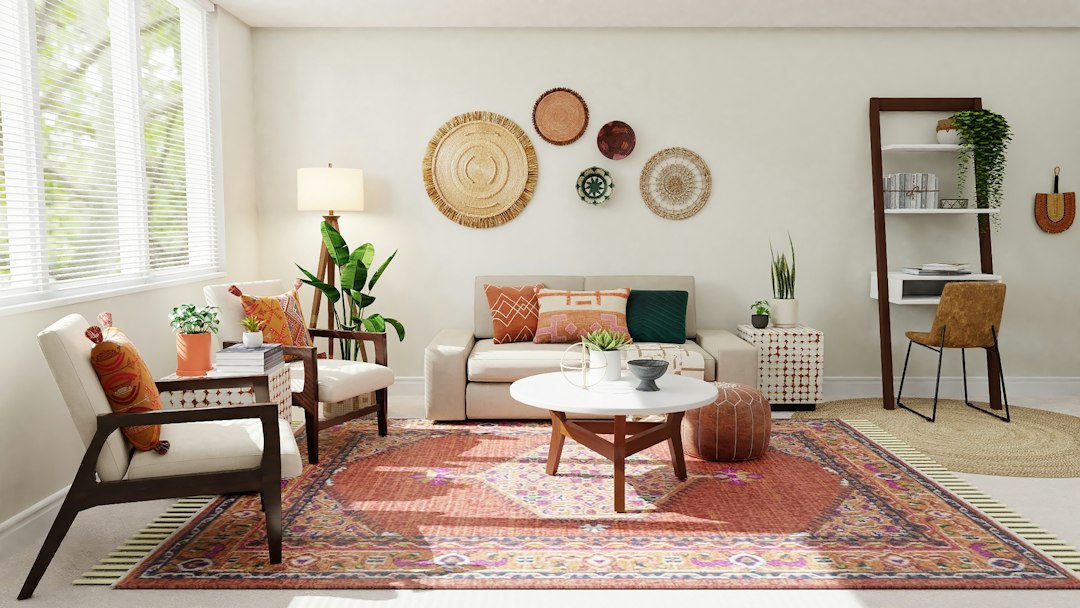
Brown upholstery turns up on more of my cleaning and repair calls than any other color, and it causes the most hesitation once a rug has to sit beneath it. Choosing what color rug goes with brown furniture comes down to undertone, value contrast, and how much daily soil the floor must hide. Here you will find which shades flatter a light brown couch, which ones lift a dark brown leather couch, how walls and floors shift the answer, and what years of hauling rugs through brown-furnished homes have taught me. Learn more about Rug Cleaning.
Key takeaways
- Start by finding your brown’s undertone, since red, yellow, or gray leanings decide which rug colors look deliberate instead of accidental.
- Red-leaning browns pair with rust, madder red, and ivory, while yellow-leaning browns suit navy, teal, and indigo.
- Gray-leaning browns like taupe and mushroom work best with sage, charcoal, silver-gray, and soft blue rugs.
- A light brown couch needs a rug at least two steps darker or more saturated, or the room flattens into one beige mass.
- Cream, ivory, oatmeal, and warm gray are the safest neutrals, but avoid bright white, which looks harsh and shows every particle.
Why Do Undertones Decide the Rug Colors That Suit Brown Furniture?
Undertone decides the match because brown is never a single color: every brown sofa leans toward red, orange, yellow, or gray. A rug either harmonizes with that lean or fights it. Rust beside a red-brown cognac leather sofa looks deliberate. Rust beside a cool taupe sofa looks accidental. Identify the undertone first, then pick the rug.
Hold a sheet of plain white printer paper against a cushion in daylight. The paper exposes the cast hiding in the hide or fabric. Tanners and dyers sort color by these casts, and I do the same with wool dye lots in my shop. A Heriz with a madder-red ground sits comfortably beside a chestnut sofa because both share a red base.
- Red-leaning browns (mahogany, cognac, chestnut): faint pink cast on white paper; pair with rust, madder red, and ivory.
- Yellow-leaning browns (tan, caramel, camel): golden cast; pair with navy, teal, and indigo.
- Gray-leaning browns (taupe, mushroom, driftwood): ashy cast; pair with sage, charcoal, silver-gray, and soft blue.
How Do Warm and Cool Browns Change the Best Rug Color for a Brown Sofa?
Warm and cool browns call for different rugs. Warm browns pair best with cream, rust, mustard, and olive, while cool browns pair best with blue, sage, charcoal, and silver-gray. Mixing temperatures works only with a bridging tone, usually an oatmeal or ivory field, that keeps the two from clashing.
Lighting changes the reading too. A 2700K incandescent or warm LED bulb pushes every brown toward orange after dark, so a gray rug that looked balanced at noon can turn muddy by 8 p.m. I keep one 4000K lamp and one 2700K lamp in the showroom and ask clients to view samples under both. Our Try Rugs at Home service exists for this reason, since no showroom reproduces the north-facing windows and table lamps of your own living room.
Which Neutral Rug Shades Sit Best Beneath a Brown Sofa?
Cream, ivory, oatmeal, and warm gray are the safest neutral shades beneath a brown sofa, because each one lightens the floor plane without competing for attention. Flecked oatmeal, with visible strands of darker wool, forgives the most in a busy household.
Pure optical white is the exception. Against a chocolate sofa, bright white looks harsh at floor level and reveals every tracked-in particle. A Beni Ourain style piece from our Moroccan Rugs collection solves the problem. Its undyed, lanolin-rich Atlas Mountain wool reads warm rather than stark, and the charcoal diamond lattice lets soil disappear into the pattern between cleanings. Warm gray works as the cool-leaning option, provided you pick one with a beige base rather than a blue one and test it under a 2700K lamp first.
Matching rugs
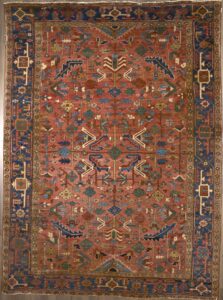
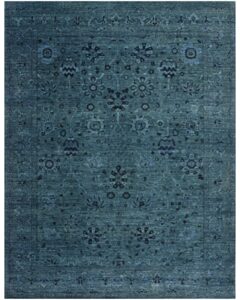
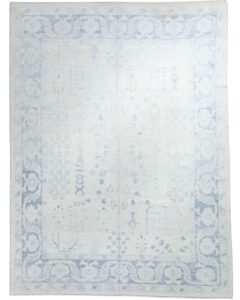
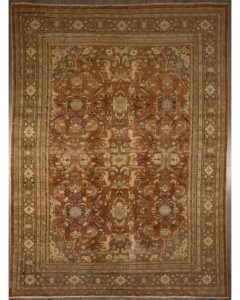
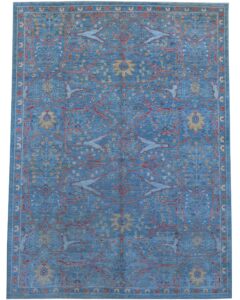
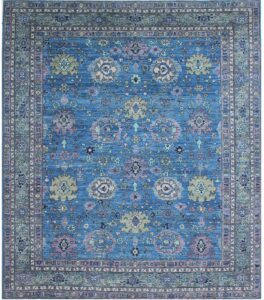
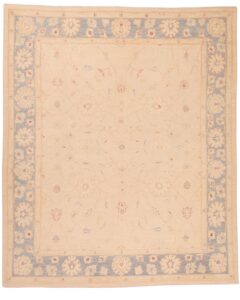
These rugs echo the undertones and contrast levels the article recommends for brown sofas, leather couches, and warm or cool brown furniture.
What Color Rug Goes With a Light Brown Couch?
A light brown couch, whether tan, camel, sand, or caramel, pairs best with a rug noticeably darker or more saturated than the upholstery. Navy, teal, forest green, charcoal, and patterned pieces with a deep red or indigo ground all work. A tan rug under a tan sofa flattens the room into one beige mass.
Value contrast, the lightness difference between two surfaces, explains the rule. A rug at least two steps darker than the sofa gives the upholstery a visible edge and anchors it to the floor. Rugs within a single step vanish underneath the seating. Beige-on-beige living rooms feel unfinished for exactly this reason, however expensive the individual pieces are. The Munsell color system rates value on a 0-to-10 scale and gives designers a shared vocabulary for this gap.
Does a Tan or Camel Couch Need a Darker Rug for Contrast?
Yes, a tan or camel couch needs a darker rug to define its footprint in almost every room. The exception is a dark hardwood or slate floor, where a mid-tone patterned rug does the same job without dimming the space further.
Darker need not mean somber. A tribal piece with a brick-red field, such as a Bokhara or an Afghan Ersari, sits several value steps below camel leather while staying warm. Parents often ask me for very dark rugs to hide soil. My honest answer favors a mid-value rug with dense pattern, because a flat charcoal field shows pale lint, pet hair, and winter salt rings within days. One shop-floor test settles most cases: if you can squint and still see where the sofa ends and the rug begins, the contrast is enough.
Which Blue and Green Rug Colors Suit a Light Brown Sectional?
Indigo, navy, teal, and deep sage suit a light brown sectional best, because blue sits opposite orange on the color wheel and tan is desaturated orange. The complementary pairing makes the leather look richer and the rug look cooler at once.
Vintage Oushak and overdyed Turkish pieces in faded teal are my usual recommendation for large L-shaped sectionals. Worn, uneven dye keeps a 9×12 foot expanse from reading as a solid blue slab. Several options in our Antique & Vintage Rugs category carry decades of gentle sun-softening that new production cannot imitate. Olive and sage work the same way: the field keeps the yellow undertone of camel leather company while adding the depth the room needs.
What Rug Looks Best Beneath a Dark Brown Leather Couch?
A dark brown leather couch, whether espresso, chocolate, or walnut, looks best over a rug lighter than the upholstery. Cream, ivory, oatmeal, pale gray, dusty blue, and traditional rugs with a light background all succeed. The goal is to stop the room from sinking under the weight of dark seating.
Dark leather absorbs light, and a dark rug beneath it swallows lamp light across the lower half of the room. A pale rug bounces light back onto the hide, which is why espresso sofas photograph so well on ivory floors. Saturated window treatments call for the same balancing act, and my guide on what color rug goes with red curtains applies identical light-balancing logic, with the rug brightening the space.
Can a Cream Rug Survive Under Dark Brown Leather Furniture?
A cream or ivory rug survives under dark brown leather furniture if it is woven from wool rather than viscose or cotton, rests on a quality pad, and receives a professional immersion wash every 12 to 24 months instead of repeated spot-scrubbing at home.
Wool sheds dry soil because its overlapping cuticle scales and natural lanolin keep particles from bonding to the fiber. An ivory rug in 100 percent New Zealand or Persian highland wool cleans back close to its original brightness after a proper bath. Viscose, sold as “art silk” or “bamboo silk,” yellows when wet and crushes under sofa feet, so I steer every dark-leather household away from it. Our Rug Cleaning process for pale wool uses a pH 5.5 to 6.5 wash, a cold rinse, and a 24 to 48 hour flat dry, which keeps the field bright without bleeding accent colors into it.
Why Do Rust, Terracotta, and Red Rugs Flatter a Dark Brown Leather Sofa?
Rust, terracotta, and madder-red rugs flatter a dark leather sofa because they share the red undertone hidden inside most chocolate and walnut hides. The rug pulls that warmth outward, so the sofa looks richer instead of flat.
Hand-knotted Persian Gabbeh pieces are my first stop here. Hand-spun wool takes dye unevenly and produces abrash, the subtle tonal banding that makes a red field look alive rather than painted. Browse our Gabbeh Rugs category and you will find fields from pomegranate to burnt orange, each a few value steps lighter than espresso leather. Heriz and Serapi rugs with rust grounds and ivory medallions do the same job in a formal room, and their dense hand-knotted construction withstands decades of coffee-table traffic. Cream pillows on the sofa repeat the light value and tie the arrangement together.
More matching rugs
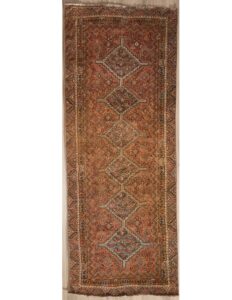
Another set of rugs that follow the same colors and style as this guide.

How Should Rug Color Relate to Brown Furniture, Walls, and Floors?
Rug color in a brown-furnished living room must relate to three surfaces at once: the sofa, the wall, and the floor. The rug should contrast with the floor, bridge the sofa and the wall, and carry one accent color that appears elsewhere, such as in artwork or pillows.
Most brown rooms share one combination: medium-brown hardwood, a brown sofa, and white or greige walls. Two mid-tone browns stacked on each other produce the muddy look clients complain about, and only the rug can separate them. The table below summarizes the pairings I rely on across delivery and cleaning visits. My soil-hiding scores are shop-floor ratings, not lab measurements.
| Rug color | With a light brown couch | With a dark brown leather couch | Undertone it serves | Soil-hiding (1 low to 5 high) | Recommended fiber and weave |
|---|---|---|---|---|---|
| Cream or ivory | Weak, too close in value | Excellent | Warm | 2 | Wool, Beni Ourain or Oushak |
| Flecked oatmeal or warm gray | Fair | Very good | Warm or cool | 4 | Wool loop pile or flatweave |
| Navy or indigo | Excellent | Fair, risks a dark room | Cool | 3 | Overdyed wool, kilim |
| Teal or sage | Excellent | Good when paired with ivory motifs | Cool (teal) or warm (sage) | 3 | Vintage Turkish wool |
| Rust or terracotta | Good | Excellent | Warm red | 4 | Gabbeh, Heriz, tribal |
| Charcoal | Good | Poor | Cool | 2 | Wool cut pile |
| Multicolor traditional (red, ivory, blue) | Excellent | Excellent | Warm | 5 | Hand-knotted Persian |
What Role Do Wall Color and Floor Tone Play in Choosing a Rug for Brown Furniture?
Wall color and floor tone set the depth your rug must supply. White or pale walls call for a rug with some depth so the room gains a middle value, while dark or saturated walls call for a lighter rug so the floor becomes the bright plane. On a dark floor, lighten the rug by two value steps or more. On pale oak or whitewashed boards, darken it by the same margin.
Yellow-based walls, from butter to mustard, create a special case because they amplify the orange hiding in brown leather. The approach in my write-up on what color rug goes with yellow curtains translates directly: bring blue or gray-green into the rug to cool the pairing. Greige walls with a gray undertone handle a taupe sofa gracefully and accept almost any rug.
What Size and Placement Make a Rug Under Brown Furniture Look Intentional?
Intentional placement lands the front legs of every seat on the rug by 6 to 8 inches and extends the rug 12 to 18 inches beyond the sofa on each side. In most living rooms that means an 8×10 or 9×12 foot size rather than the 5×8 people buy first. Undersized rugs are the mistake I see most after poor color matching.
- Minimum rug width: sofa width plus 24 to 36 inches.
- Wall clearance: 12 to 24 inches of bare floor on every side.
- All four legs of the sofa and chairs on the rug: 10×14 feet or larger.
- Pad trim: 1 inch short of the rug edge on all sides, so the border lies flat.
- Rotation: 180 degrees every 6 months, so sofa feet and window light wear both ends evenly.
Awkward rooms need not force a new purchase. A slightly oversized vintage piece can be cut down and rebound through our Rug Resizing service, which often costs less than hunting for a rare 7×11 in the right palette. Resizing also lets you keep a rug whose color you love when you move into a smaller living room.
How Does Aging Leather Change the Rug Color to Choose for a Brown Sofa?
Aniline and semi-aniline leather darkens and warms with age, so a brown sofa rarely stays the color it had on delivery day. Sunlight, hand oils, and conditioner deepen the hide, and the sofa often settles richer and redder than the showroom sample. Pigmented leather keeps its original color far longer, because a polymer coat seals the surface.
Choose the rug for the sofa you will own in three years. A light brown aniline sofa that patinas toward caramel gains contrast against a navy rug, while a rug that matched it perfectly on day one drifts out of step. Use the hide type as your decision rule:
- Full-aniline hide: expect a deeper, warmer tone; choose a rug with rust or red accents that the leather can grow into.
- Pigmented hide: color stays stable; choose on today’s undertone.
- Fabric upholstery in sun: fades toward a lighter, grayer brown; choose a rug with slightly more saturation than you think you need.
Which Mistakes Make a Rug Look Wrong Beside Brown Furniture?
Four mistakes show up repeatedly on my service calls, and each has a simple fix. Buyers who avoid them rarely need to return a rug.
- Matching the rug to the sofa shade: the room flattens into one tone; shift the rug at least two value steps.
- Judging color under showroom light only: browns turn orange after dark; test under 2700K and 4000K bulbs.
- Buying a 5×8 for a full seating group: the rug floats; move up to an 8×10 or 9×12.
- Choosing viscose in a pale shade: it yellows when wet; choose wool.
Every one of these errors costs more to fix after purchase than before it. Painter’s tape on the floor shows the rug’s footprint at full scale in about ten minutes, and a home trial reveals the evening color shift before you commit.
My Experience With What Color Rug Goes With Brown Furniture
After years of cleaning, repairing, and delivering rugs into homes with brown seating, my answer to the question has turned practical rather than theoretical. Choose the rug that still looks right after three years of real use, not the one that photographs best on delivery day.
One Cherry Creek job stays with me. A family with a dark espresso leather sectional bought a bright white polypropylene shag because it looked crisp online. Within eight months the traffic lane from the kitchen had turned gray, the synthetic fiber would not release oily soil, and the pile had matted where the chaise sat. We replaced it with an ivory hand-knotted Oushak with a soft apricot border. Same light-over-dark principle, but in wool, with a pattern that disguises the lane and a warm border that ties into the leather. Two washes later it still looks new.
What Have Cleaning and Repair Jobs Taught Me About Rug Colors Near Brown Leather?
Rugs under brown leather fail from fiber choice and sun exposure far more often than from color choice. The right shade pays off only when the construction behind it is sound.
Leather sofas sit low and heavy, and their feet leave crush marks in cut-pile rugs that can take two to three steam-and-brush sessions to lift. Flatwoven pieces show no such marks, so I point anyone who rearranges furniture often toward rust-and-indigo stripes from our Kilim Rugs collection. I have also rewoven more sun-faded corners beside brown sofas than in any other arrangement, because people push the sofa against the window wall and the rug’s exposed end takes the direct light. Madder red drifts toward salmon and indigo toward slate, so UV film on the glass or the rotation schedule above protects the color you paid for.
Final picks
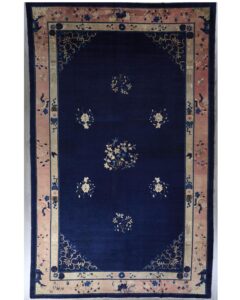
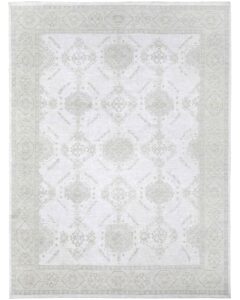
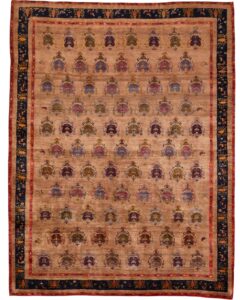
One last row of rugs chosen to go with the ideas above.


What Happens to Rug Color Beside Brown Furniture as Fiber and Dye Age?
Fiber and dye determine whether the color you chose still reads the same after a few years. Wool carrying natural or chrome dyes holds its hue and cleans well, while viscose, polyester blends, and cheaply dyed cotton shift, yellow, or crock onto surrounding surfaces.
Colorfastness is measured under AATCC Test Method 16 for light and AATCC Test Method 8 for crocking, the rubbing transfer of dye. Lightfastness grades run on the 8-step Blue Wool scale, where higher numbers resist fading longer. Hand-knotted wool from Iran, Afghanistan, and Turkey dyed with madder, indigo, and weld holds color well in indirect daylight. Machine-made polypropylene is solution-dyed and resists fading, yet it crushes under leather sofa feet, picks up body oils transferred from the hide, and cannot be restored once matted.
Which Rug Materials Hold Their Color Best Next to Brown Leather Seating?
Wool holds its color best next to brown leather seating, followed by wool-and-cotton flatweaves and then jute or sisal. Viscose and silk blends keep color poorly in high-traffic living rooms and belong in bedrooms instead.
Leather conditioners and armrest oils migrate onto whatever lies beneath the sofa. Wool releases them in a proper wash because its cuticle lets surfactants lift soil outward, while jute absorbs them and darkens permanently along the sofa line. A dense felt-and-rubber pad, which our Rug Padding service cuts to size, adds a barrier layer, stops sliding on polished floors, and shields the knots from the shearing stress of heavy furniture being pushed back and forth.
Households juggling spills, pets, and brown leather together do well with a patterned wool piece from our Transitional Rugs category. Look for a field light enough for a dark sofa, enough motif to absorb the inevitable, and a weave tight enough to wash well for decades.
FAQ: Rug Colors and Brown Furniture Questions
Readers ask the same few questions after a showroom visit or a delivery. Short answers follow, each drawn from jobs in living rooms with brown seating.
Topics below cover wall color, gray rugs, small rooms, and the match-versus-contrast debate.
Brown Walls and Brown Furniture: Which Rug Color Works?
A clearly different hue suits brown furniture when the walls are also brown or beige: deep blue, sage green, or an ivory field with a colored border. The rug must supply the only cool note.
Skip taupe, mocha, and camel rugs here. They merge with the sofa and leave the eye nowhere to rest.
Is a Gray Rug Good With a Dark Brown Leather Couch?
A gray rug works with a dark brown leather couch when the gray is warm, such as greige, mushroom, or flecked oatmeal-gray, and at least two value steps lighter than the hide.
Cool, blue-leaning grays make espresso leather look dull. Choose a gray carrying ivory or rust in its pattern to bridge the gap.
Small Living Room, Light Brown Couch: Which Color Rug Fits?
A mid-tone patterned rug in navy, teal, or rust with an ivory element fits a light brown couch in a small living room. Size it so the sofa’s front legs land on it, even if that means an 8×10 in a 12×14 foot room.
Pattern hides wear, and ivory keeps the room open. Avoid very dark solids, which shrink the perceived floor area.
Should a Rug Match Brown Furniture or Contrast With It?
A rug should contrast with brown furniture in value and harmonize in undertone. Make it clearly lighter or darker than the sofa while sharing the sofa’s warm or cool lean.
Exact matching disappoints because wool dye lots and leather tanning batches never align, and a near-miss looks worse than a deliberate difference.
