

Choosing Minimalist Decor Rugs for a Calm, Contemporary Home
August 18, 2026How to Decorate a Room with Colorful Vintage Rugs
August 20, 2026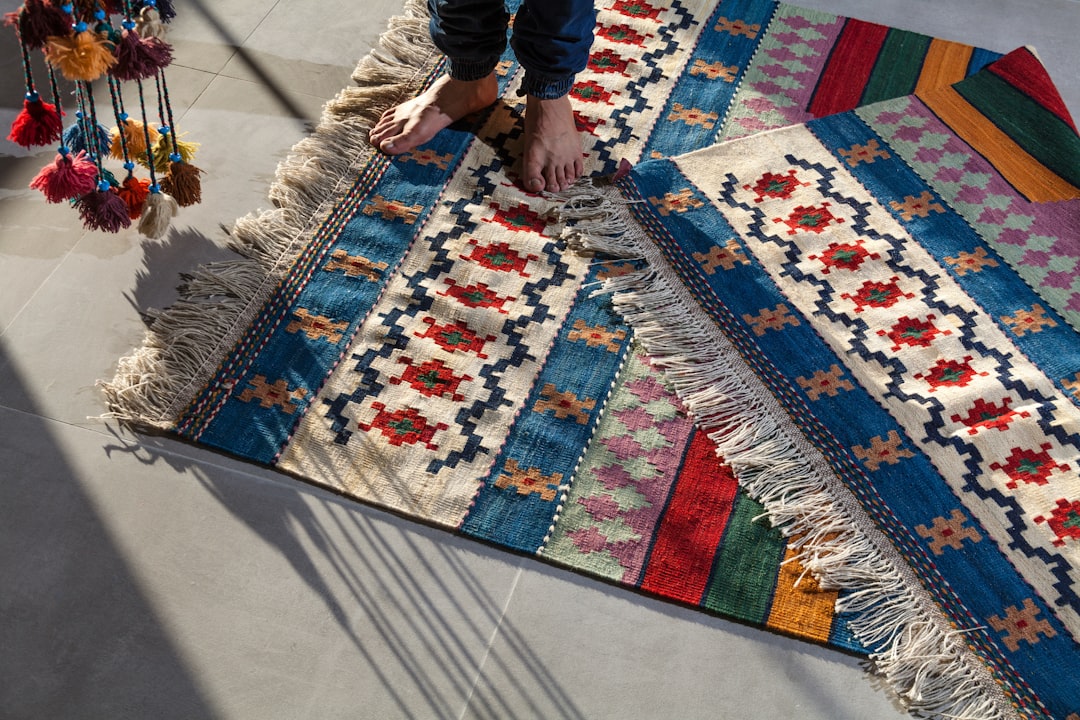
After close to two decades spent kneeling over rugs of every fiber and origin, I’ve learned that outdoor rugs present a completely different set of challenges than the wool Persians and silk Tabriz pieces I handle indoors. This outdoor rugs guide draws directly on years of field repairs, cleaning callbacks, and material testing to help you pick a rug that survives sun, rain, and foot traffic without falling apart in a season. You’ll find guidance here on fiber choice, weave construction, sizing for decks and patios, and the maintenance habits that actually extend a rug’s working life rather than just making promises on a product tag.
What Should You Know Before Buying an Outdoor Rug?
Before spending money on an exterior rug, you need to understand that “outdoor” is a spectrum, not a fixed standard. Some rugs are rated for covered porches only, while others are engineered to sit directly on grass or an open pool deck through freezing winters and 100°F summers without degrading. The single biggest mistake I see homeowners make is assuming any rug labeled “indoor/outdoor” can handle direct rain exposure, when many are only mildew-resistant, not truly waterproof.
Construction matters as much as fiber. A flatwoven polypropylene rug behaves differently under UV exposure than a tufted polyester rug with a latex backing, and the backing material is often the first thing to fail. I’ve replaced backings on rugs that were only two years old because builders used a low-grade adhesive that broke down under intermittent moisture and heat cycling.
- Check the fiber content tag for polypropylene, polyester, or solution-dyed acrylic — these are the three materials that dominate the exterior rug market.
- Look for a UV stabilizer rating; rugs without one can fade noticeably within 6-12 months of full sun exposure.
- Confirm whether the backing is open-weave (allows drainage) or solid (traps moisture underneath).
- Ask about mold and mildew resistance treatments, since humid climates like coastal Florida or the Gulf Coast punish untreated fibers within a single season.
How Does Climate Change What You Should Buy?
Climate dictates fiber choice more than style preference ever should. In arid, high-UV regions like Colorado’s Front Range, solution-dyed acrylic holds color better than polypropylene, which can go brittle after prolonged sun exposure at altitude where UV intensity is roughly 20% higher than at sea level.
In humid coastal zones, drainage and mold resistance take priority over color retention, since standing water under a rug in 80% humidity can produce visible mildew growth within 48-72 hours. I’ve pulled up rugs in Gulf Coast homes that looked fine on the surface but had a felted, sour-smelling underside from months of trapped moisture against a non-breathable deck surface.
What Are the Main Types of Outdoor Rugs Available?
The outdoor rug market breaks down into four dominant categories: flatwoven polypropylene, tufted polyester with latex backing, solution-dyed acrylic, and PVC or vinyl-based rugs. Each has a distinct feel, price point, and expected lifespan, and picking the wrong one for your specific setup — covered porch versus open patio versus poolside — is the most common regret buyers report.
Flatwoven polypropylene rugs, often styled after Moroccan or kilim patterns, dominate the budget-to-midrange tier at roughly $80-$300 for a 5×8 size. They’re lightweight, dry quickly, and resist staining, but they lack the plush hand-feel of a tufted rug and tend to show crushing in high-traffic zones within 12-18 months.
Which Fiber Performs Best for Best Outdoor Patio Rugs?
For most patio applications, solution-dyed acrylic delivers the best combined performance among the widely available fibers, because the color is embedded through the entire fiber rather than just coated on the surface, giving it a fade resistance rating that often exceeds 1,000 hours of accelerated UV testing under ASTM G155 standards. This matters directly when shopping for the best outdoor patio rugs, since color fastness is usually the first visible sign of wear.
Polyester rugs with a tufted pile feel closer to an indoor rug underfoot and are a strong choice for covered porches with limited direct sun, but they generally underperform acrylic in prolonged UV exposure, showing yellowing or fading within 18-24 months outdoors. PVC and vinyl rugs, by contrast, are essentially waterproof and wipe clean in seconds, making them the practical choice for pool decks and hot tub surrounds where standing water and chlorine splash are constant factors.
| Fiber Type | Water Resistance | UV Fade Resistance | Typical Lifespan | Price Range (5×8) |
|---|---|---|---|---|
| Polypropylene (flatwoven) | Moderate, dries fast | Fair, 6-18 months before fading | 2-4 years | $80-$300 |
| Polyester (tufted, latex-backed) | Moderate, absorbs some moisture | Fair to good, 18-24 months | 3-5 years | $150-$450 |
| Solution-dyed acrylic | Good, low absorption | Excellent, 3-5+ years | 5-8 years | $250-$700 |
| PVC/vinyl | Excellent, fully waterproof | Good with UV stabilizers | 4-7 years | $100-$350 |
How Do You Size and Style an Outdoor Rug for Your Space?
Sizing an exterior rug follows the same basic logic as indoor placement, but with wider tolerances since furniture footprints on patios and decks vary more than in a standard living room. As a working rule, leave 12-18 inches of exposed decking or stone between the rug edge and the perimeter walls or railing, which keeps the layout from feeling cramped while still anchoring the seating area visually.
For a typical four-chair patio dining set, a 6×9 or 8×10 rug usually covers all chair legs even when pulled out from the table, which prevents chair legs from constantly slipping off the rug edge onto uneven pavers. Smaller conversational seating groups around a fire pit often do better with a round rug between 6 and 8 feet in diameter, since it echoes the circular furniture arrangement rather than fighting it with hard rectangular lines.
Does Rug Pattern or Color Affect Practical Performance?
Yes, pattern and color choice genuinely affect how well a rug hides everyday wear and dirt, not just its aesthetic impact. Multi-tone patterns with medium-value colors — terracotta, charcoal, deep blue-green — camouflage pollen, dust, and foot traffic marks far better than solid ivory or pale gray, which show soil within days of outdoor use.
Busy geometric or Moroccan-inspired patterns also mask the subtle pile crushing that happens under patio furniture legs, an issue I inspect for constantly when clients bring in rugs claiming premature wear. If you’re drawn to a more restrained aesthetic indoors, the same principles used in minimalist decor rugs can translate outdoors, though I’d still steer clients toward a slightly busier weave for any rug placed under a dining table or grill station.
How Do You Clean and Maintain an Outdoor Rug?
Routine maintenance for an exterior rug centers on three habits: regular shaking or vacuuming, prompt spot cleaning, and periodic full rinsing with a hose or pressure washer on a low setting. Skipping these steps is the single fastest way to shorten a rug’s functional life, regardless of how good the fiber quality was at purchase.
I recommend shaking out or vacuuming a patio rug weekly during high-pollen seasons, since embedded pollen and dust act as an abrasive against synthetic fibers every time someone walks across the surface. A monthly hose-rinse, followed by propping the rug against a railing to air-dry for 4-6 hours, prevents the buildup of mildew spores that thrive in trapped organic debris.
- Shake or vacuum weekly to remove grit before it grinds into the fiber base.
- Spot-treat spills within 15-20 minutes using a mild dish soap and water solution, since sugary drinks and food residue attract insects if left overnight.
- Rinse thoroughly once a month with a garden hose at moderate pressure, working from the underside first to flush trapped debris outward.
- Air-dry fully, ideally propped at an angle, before returning the rug to the ground to avoid trapping moisture against pavers or decking.
- Rotate the rug 180 degrees every 2-3 months to even out UV exposure and foot-traffic wear patterns.
What’s the Difference Between Cleaning Waterproof Area Rugs and Standard Outdoor Rugs?
True waterproof area rugs, typically PVC or vinyl construction, can be hosed down, scrubbed with a soft brush, and even wiped with a diluted bleach solution without damaging the material, since the surface doesn’t absorb liquid at all. Standard synthetic-fiber rugs need gentler handling because the fibers themselves can absorb moisture even if the backing resists it, meaning aggressive scrubbing or harsh chemicals can degrade the dye lot over time.
For heavily soiled rugs, stubborn mildew staining, or pieces that have started to smell musty despite regular upkeep, a professional evaluation is often more cost-effective than replacement, particularly for higher-end acrylic rugs in the $400-$700 range. Our team’s Rug Cleaning service handles exactly this kind of deep restoration work, using extraction methods that pull embedded soil and mildew spores out of the fiber base rather than just surface-treating the pile.
What Are the Best Practices for Long-Term Outdoor Rug Care?
Long-term durability comes down to seasonal habits more than any single cleaning product. Storing a rug indoors or in a covered, ventilated space during harsh winter months adds measurably to its lifespan, since freeze-thaw cycling on a damp rug can crack backing adhesives and cause fibers to become brittle.
Rug pads designed for exterior use, made from breathable, mold-resistant materials rather than standard indoor felt, also reduce wear by cushioning the rug against rough concrete or stone and improving airflow underneath. I’ve seen rugs without a pad develop bald, thinned patches directly over high-traffic zones within a single summer, while padded rugs in the same household stayed intact for years longer.
- Store rugs rolled, not folded, to prevent permanent creasing in synthetic fibers that don’t recover shape as readily as wool.
- Use a breathable, mildew-resistant pad rather than a solid rubber mat that traps moisture against the rug’s underside.
- Inspect edges and fringe (on flatwoven styles) every season for fraying, since unraveling edges spread quickly once they start.
- Keep rugs at least 2-3 inches away from direct grill or fire pit heat sources to avoid melting or scorching synthetic fibers.
When Should You Repair Versus Replace an Outdoor Rug?
Repair generally makes sense when damage is localized — a torn edge, a small burn mark, or a section of unraveling flatweave — and the rest of the rug’s fiber and color remain in good condition. Replacement becomes the more sensible option once fading has spread evenly across the entire surface or the backing has separated in multiple areas, since patch repairs on a heavily degraded rug rarely hold up structurally.
For rugs with sentimental or design value, particularly patterned pieces styled after Moroccan Rugs or geometric Tribal Rugs, professional assessment through Rug Repair & Restoration often extends usable life by several more seasons at a fraction of full replacement cost. I’ve restored edge bindings and reinforced backing on rugs that clients assumed were finished, only to have them perform well for another three to four years.
My Experience with Outdoor Rugs Guide Recommendations in the Field
Over years of service calls across mountain towns and lower-elevation suburbs alike, I’ve noticed a consistent pattern: the rugs that fail early are almost never the cheapest ones, they’re the ones placed in the wrong micro-climate for their construction. A polypropylene flatweave that would have lasted five years on a shaded porch instead failed in fourteen months on an unshaded, south-facing deck at 8,000 feet elevation, where UV exposure and rapid temperature swings between day and night accelerated fiber breakdown far beyond what the manufacturer’s rating anticipated.
I’ve also learned to distrust “waterproof” claims on packaging until I’ve tested the backing myself. On more than one inspection, I’ve found rugs marketed as fully waterproof that had a woven, permeable backing rather than a sealed vinyl layer, meaning water passed straight through onto the decking below and created a mildew ring invisible from above until the rug was lifted. My advice to clients now is always to ask for the specific backing material by name, not just the marketing label, before buying for a genuinely wet environment like an uncovered patio or pool surround.
The most successful long-term outdoor rug setups I’ve serviced all share three traits: a breathable pad underneath, a consistent rinsing schedule tied to the local pollen or rain calendar, and rotation every few months to distribute wear. Clients who follow that routine are still using the same rug five, sometimes six, years later, while neighbors with an identical rug and no maintenance plan are often shopping for a replacement within half that time.
FAQ
Can outdoor rugs be left outside all year round?
Most synthetic outdoor rugs can technically stay outside year-round, but longevity improves significantly if you bring them indoors or into covered storage during freeze-thaw cycles, since repeated freezing of trapped moisture stresses backing adhesives and can cause cracking within one to two winters.
What’s the real difference between indoor/outdoor rugs and rugs made specifically for exterior use?
Indoor/outdoor rugs are usually a compromise designed for covered patios or three-season rooms with limited direct rain exposure, while dedicated exterior rugs use fully synthetic, non-absorbent fibers and reinforced backing built to withstand direct sun, rain, and temperature swings without structural breakdown.
How do you remove mildew smell from an outdoor rug without replacing it?
A solution of one part white vinegar to four parts water, applied with a scrub brush and followed by a full rinse and complete air-dry, resolves most mild mildew odor cases within a single treatment; persistent or deep-set mildew usually requires professional extraction cleaning to fully remove embedded spores.
Do outdoor rugs need a special pad, or will an indoor rug pad work?
Standard indoor felt pads trap moisture against the rug and accelerate mildew growth outdoors, so a breathable, mold-resistant outdoor-rated pad is worth the extra cost, typically adding $20-$60 to the total setup depending on rug size.
Are natural fiber rugs like jute or sisal ever appropriate outdoors?
Natural fibers such as jute perform poorly in fully exposed outdoor settings because they absorb moisture readily and mildew quickly, so they’re better suited to covered, dry porches rather than open patios, pool decks, or any area exposed to direct rainfall.
Choosing the right size ultimately comes down to your furniture layout, and for readers still working through proportions and placement, our earlier piece on Choosing the Perfect Living Room Rug Size for Your Space covers measuring principles that apply just as well to covered patios. If your outdoor space borrows design cues from a broader collection at home, browsing Contemporary & Modern Rugs can help you match indoor and outdoor palettes without the pieces feeling disconnected from each other.
Sources
ASTM International: ASTM G155 Standard Practice for Xenon-Arc Light Exposure
