


What Color Rug Goes With Black Furniture? A Rug Specialist’s Pairing Guide
November 9, 2026
What Color Rug Goes With Yellow Walls? A Rug Specialist’s Pairing Guide
November 12, 2026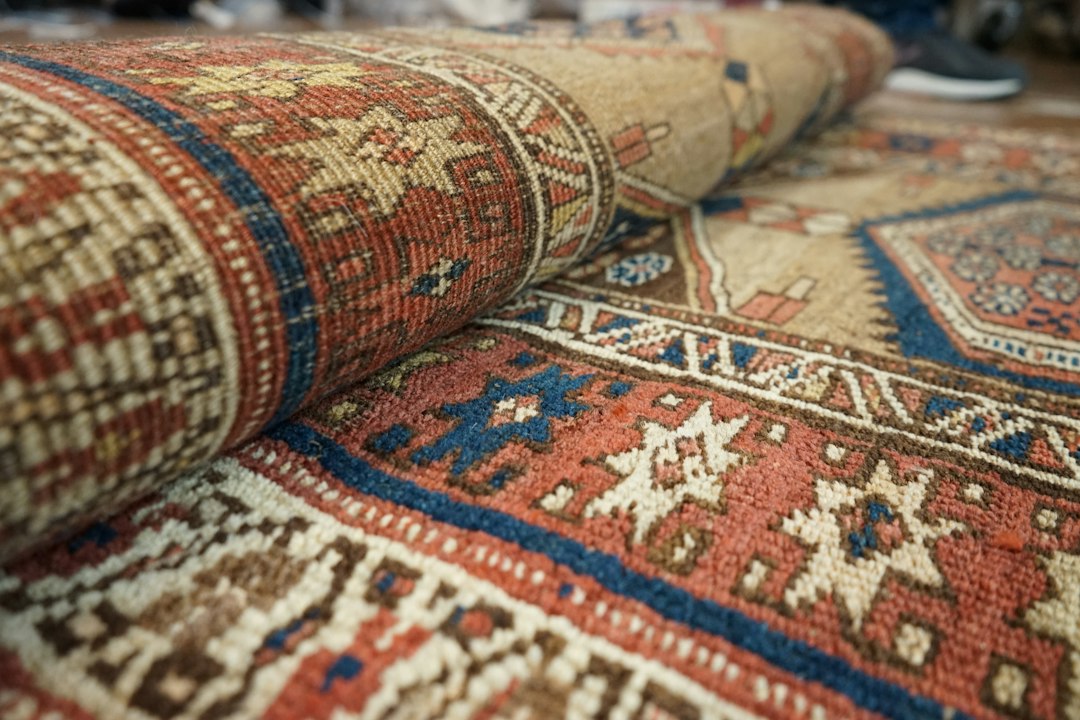
Rug repair brings a torn, moth-eaten, or unraveling rug back to sound condition through reweaving, patching, fringe replacement, and edge binding. After eighteen years of kneeling over damaged wool and silk on a workshop floor, I have learned that most rugs owners call ruined are fixable. Matching the method to the problem can rescue a valuable piece from the trash pile. Learn more about Rug Cleaning.
Key takeaways
- Most rugs that owners consider ruined can be fixed by matching the repair method to the specific type of damage.
- Rug damage falls into four groups: structural, edge and end, surface wear, and distortion, and each one needs a different technique.
- Turn the rug over to find the cause, since brown, dry threads on the back signal moisture rot that needs reinforcing first.
- Professional mending runs about $75 for fringe touch-ups to $800 or more for large reweaving jobs, with most falling between $150 and $450.
- Hand-knotted Oriental rugs can be repaired for a century or more, while tufted rugs often fail within 8-12 years.
This guide covers the common types of damage, the realistic costs and timelines, and the signs that a job needs a weaver with real reweaving experience. Kian Rug Company handles assessment, reweaving, and dye matching through its Rug Repair & Restoration service.
What Types of Damage Does Rug Repair Address?
Rug mending covers four categories of damage, and each category calls for a different technique. The right fix also depends on construction: hand-knotted, hand-tufted, flatwoven, or machine-made.
- Structural damage: holes, tears, and worn-through foundation; fixed by reweaving or patching
- Edge and end damage: unraveling fringe and broken selvage; fixed by fringe replacement or edge binding
- Surface wear: moth damage, pile loss, and stains that degraded the fiber; fixed by reknotting or reweaving
- Distortion: buckling, wavy edges, and pulled corners; fixed by blocking and re-stretching
Persian and Oriental rugs built by hand carry a cotton or wool foundation tied with thousands of individual knots per square inch. A well-constructed piece can be rewoven and repaired for a century or more while the foundation yarns stay intact. Tufted rugs behave differently. Their latex backing dries out, and the tufts shed and delaminate, usually within 8-12 years.
How Do You Diagnose the Cause of Rug Damage?
Rug damage traces back to three causes: insects, mechanical stress, and moisture. Moths and carpet beetles feed on wool. Furniture legs, foot traffic, and vacuum beater bars wear or snag the fibers. Floods, pet urine, and prolonged dampness rot the foundation.
- Moth or beetle damage: irregular, feathered edges with larvae casings nearby
- Mechanical damage: a clean, straight cut or a worn lane in the traffic path
- Moisture damage: brittle, discolored, or brown foundation threads along the edge
Turn the rug over before making any decision. The back reveals foundation problems that the face hides. Brown, dry threads signal dry rot from moisture exposure. That finding changes the plan, because you reinforce the structural weave first and rebuild pile on top of it afterward. A trained eye separates these causes within seconds.
Matching rugs
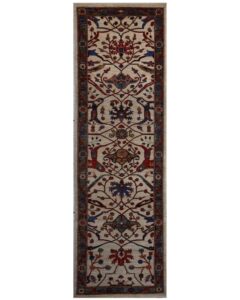
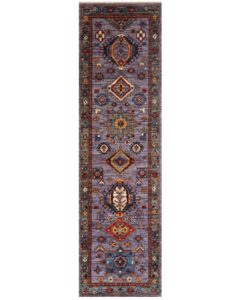
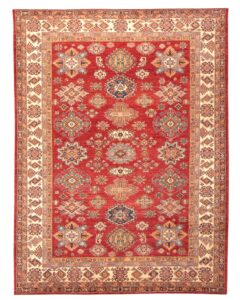
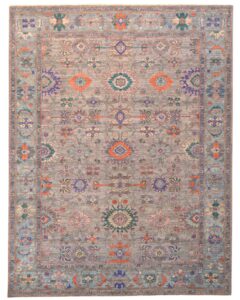
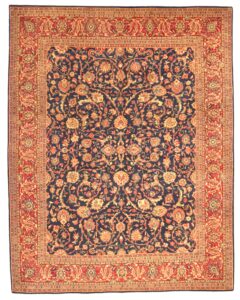
These durable hand-knotted styles are the kind of well-built pieces the article describes as worth repairing and keeping for generations.
Which Restoration Techniques Fix Which Rug Problems?
Five core techniques cover professional rug restoration: reweaving, patching, fringe repair, edge binding, and reknotting. Reweaving rebuilds a damaged section knot by knot to match the surrounding pile. Patching grafts in a donor piece to cover larger losses. Fringe repair and edge binding protect the vulnerable borders. Reknotting fills small areas where the pile has worn down to the foundation.
Choosing the wrong technique wastes time and material. A 2-inch moth hole in a 200 KPSI (knots per square inch) Persian Tabriz needs hand-reweaving with matching hand-spun wool. A 6-inch tear along a Kilim’s selvage calls for hand-stitched reinforcement with matching warp thread. Patching a fine Tabriz with machine-made donor material leaves a mismatch in color and knot density that never blends in.
At the bench, I apply four decision rules:
- Foundation intact, pile missing: reweave or reknot over the existing warp and weft
- Foundation destroyed: rebuild the warp and weft first, then weave the pile
- Loss larger than 6-8 inches on a hand-knotted rug: patch with donor material
- Fringe loose over a sound foundation: replace or reattach the fringe
What Does Repairing an Oriental Rug Involve?
Repairing an Oriental rug means reweaving, reknotting, or reinforcing a hand-knotted piece from Iran, Turkey, India, Pakistan, or the Caucasus. The weaver matches fiber content and dye lot as closely as possible, using wool, silk, or cotton. A skilled weaver ties roughly 400-800 knots per hour, so a palm-sized hole in a dense 300 KPSI rug can take 6-10 hours of reweaving alone.
Color matching adds a second layer of difficulty. Antique weavers used madder root for red, indigo for blue, and weld for yellow. These natural dyes shift with age and sun exposure. A technician often hand-dyes replacement wool to match a 60-year-old faded field instead of using off-the-shelf yarn. That dye work explains why professional restoration costs more than a quick patch at a carpet store, and why the finished repair nearly disappears.
How Much Does Professional Rug Mending Cost?
Professional rug mending costs about $75 for small fringe touch-ups and $800 or more for extensive reweaving on a large, high-knot-count Oriental rug. Most mid-sized jobs fall between $150 and $450. Treat every figure here as an estimate, because a written quote after inspection sets the real price.
Four cost drivers shape the final quote. Knot density multiplies labor: a 2-inch by 2-inch hole holds about 800 knots at 200 KPSI and about 1,200 knots at 300 KPSI. Fiber matters next, since a silk Qum or Nain repair can run 30-50% higher than an equivalent wool repair. Rug size and pattern reconstruction add hours. Foundation damage adds a full rebuilding stage before any pile work begins.
| Damage Type | Typical Cause | Recommended Repair Method | Approximate Cost Range |
|---|---|---|---|
| Moth holes (under 3 inches) | Carpet beetle or clothes moth larvae | Hand reweaving / reknotting | $150 – $400 |
| Fringe unraveling | Vacuum beater bar, foot traffic | Fringe repair or replacement | $75 – $250 |
| Torn or broken selvage edge | Furniture legs, pet chewing | Edge binding / overcasting | $100 – $300 |
| Large hole (4+ inches) | Water damage, severe moth infestation | Patching with donor material | $350 – $800+ |
| Color bleeding or dye run | Improper washing, flooding | Dye stabilization and spot re-dyeing | $120 – $350 |
| Buckling or wavy edges | Humidity changes, improper storage | Blocking and re-stretching | $80 – $220 |
A simple rule guides the repair-or-replace decision: compare the quote with the rug’s appraised value. A $300 repair on a rug appraised at $200 rarely makes sense unless the piece carries heirloom or sentimental value. A professional Rug Appraisal gives you that number before you commit.
Can a Home Kit Save Money on Fixing Your Rug?
A home repair kit handles only minor issues: a few loose fringe strands, a small snag, or a fraying corner. The kit typically contains latex adhesive, a curved needle, and generic yarn. That yarn rarely matches the wool grade or dye lot of your rug. No kit replicates hand-knotting, color-matched dyeing, or structural reweaving on a damaged foundation.
Homeowners sometimes use a store-bought kit on a moth hole. I have watched latex adhesive seep through to the face and stain the surrounding pile. Solvent work then had to undo the damage before the real repair could start. For anything beyond a loose thread, a professional assessment costs less in the end, because DIY attempts on valuable wool or silk often raise the final bill.
More matching rugs
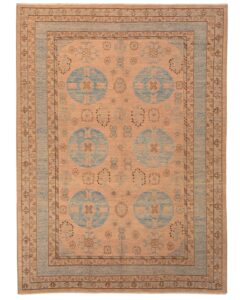
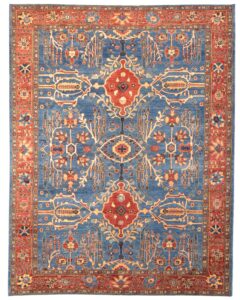
Another set of rugs that follow the same colors and style as this guide.
How Can Good Rug Care Prevent the Need for Reweaving?
Preventive rug care costs far less than fixing damage after the fact. Rotating a rug every 6-12 months evens out wear from furniture and foot traffic. Holding room humidity between 40-50% discourages mold and the brittle foundation fibers that tear.
Wool protein, specifically keratin, feeds clothes moth and carpet beetle larvae. An infestation can consume several square inches of pile within a few weeks in warm, dark, humid conditions. Insect damage is a common reason people search for rug repair near me. The Rug Moth Protection service at Kian targets that risk for wool pieces.
- Vacuuming: both sides every 1-2 weeks, with a straight suction attachment instead of a beater bar near the fringe
- Storage: rolled, never folded, in breathable cotton or kraft paper, not plastic sheeting
- Sunlight: no more than 4-6 hours a day of direct exposure, to limit dry rot and fading
- Padding: a quality rug pad to reduce friction against hardwood or tile
- Spills and pet urine: treat within 24-48 hours, before liquid reaches the foundation
Pet accidents demand the fastest response. A step-by-step method to clean dog pee from rug fibers removes urine before it weakens the foundation and forces reweaving later.
Does a Quality Rug Pad Prevent Wear and Costly Mending?
A quality rug pad reduces wear-related damage by cushioning the foundation against friction. It stops the slippage that curls and frays edges, and it lets air circulate so moisture does not build up underneath. A felt-and-rubber pad rated for the rug’s weight typically extends usable life by several years.
Without a pad, the back of a rug grinds against hardwood or tile with every step. Friction abrades the warp and weft threads of the foundation. In my workshop, rugs pulled up after a decade of padless use show backs that are nearly threadbare in the traffic lanes. The same style with a pad showed minimal wear over the same period. Kian’s Rug Padding options cover sizing and material choices for a new piece.
When Does a Damaged Rug Need a Professional Reweaver?
A professional reweaver should handle any damage that reaches the foundation threads, involves silk or fine wool with an intricate pattern, or covers more than a quarter-sized area. Anything larger moves beyond what a home fix can safely achieve.
Professionals hold matched wool stock, natural and synthetic dye libraries, and looms that keep correct tension during reweaving. Home kits offer none of these. Searching rug repair near me is a reasonable first step, but a shop that only cleans rugs and subcontracts the weaving may not control quality the way a shop with weavers on staff does.
Turnaround depends on the job. Straightforward fringe or edge work often takes 3-5 days, while full reweaving on a large area rug can take 2-4 weeks, depending on knot density and shop backlog.
Which Questions Reveal a Skilled Rug Weaver?
Ask whether the technician repairs by hand or leans on pre-made donor patches, since hand reweaving generally produces the more seamless and durable result on valuable rugs. The answer shows how the shop works before you hand over a piece.
- Experience: how many years the technician has spent reweaving by hand
- Dye matching: done on site or outsourced
- Evidence: before-and-after photos of comparable repairs on similar rug types
- Staffing: weavers on staff or repairs subcontracted out
Request a written estimate that separates labor, materials, and any cleaning needed before work begins. Hidden dirt and grit inside damaged fibers interfere with dye matching and stitching. A rug that needs both services should go through Rug Cleaning first, since built-up soil can mask the true extent of structural damage until it is removed.
Which Rug Types Respond Best to Restoration Work?
Hand-knotted wool rugs from Persia, Turkey, and the Caucasus hold up exceptionally well after repair. Their dense knot structure and natural wool fibers accept reweaving almost seamlessly.
Flatwoven Kilim Rugs also repair well because their construction is simpler. Matching the slit-tapestry technique, however, demands a skill set distinct from pile reweaving.
Tribal and village rugs, woven with irregular hand-spun wool, can be easier to repair invisibly than uniform city-workshop pieces. Minor inconsistencies in the original weave already camouflage a skilled repair. Buyers drawn to the bold geometric motifs of Tribal Rugs can study their construction before buying or restoring one.
Can Machine-Made Rugs Be Repaired at All?
Machine-made rugs respond worse to repair than knotted rugs. Their continuous backing and uniform synthetic fiber cannot be hand-rewoven the way a knotted foundation can. After a tear or delamination, the realistic fix is a patch or binding, and even that has limits. Tufted rugs with failing latex fall into the same category.
Clients hear me say outright when repair is not worth pursuing. If a $300 machine-made rug has major backing failure, replacement makes more financial sense than labor that could exceed its original price. Edge binding runs $100-$300 in the table above, so compare that figure with a replacement price before committing. Hand-knotted pieces almost always justify the investment, given their higher material quality and potential to appreciate in value.
My Experience Restoring and Reweaving Rugs
I started reweaving rugs as an apprentice under a Tabriz-trained master weaver who made me spend my first six months learning to tie a Persian knot correctly before I touched a client’s damaged rug. That patience paid off. My first solo job was a silk Qum with a cigarette burn the size of a dime, and I needed nearly nine hours to rebuild roughly 1,200 knots to match the surrounding sheen and density.
The repairs that stay with me are the ones owners almost abandoned. One client brought in a 9×12 antique Heriz with a dog-chewed corner nearly a foot across, and the foundation threads were gone in places. We spent three weeks rebuilding the warp and weft from scratch before starting the pile. Small batches of hand-dyed yarn brought us within a shade of the original madder red. That rug has stayed in daily use for over a decade.
Flood damage, not moths, causes the worst structural problems I see. Water that sits in a wool foundation for more than 48 hours without proper drying invites mold and fiber rot. I have rebuilt entire foundation sections on rugs that looked fine on the surface but crumbled underneath. My advice never changes: get unraveling, holes, or water exposure assessed quickly, because early action keeps a $200 repair from becoming a $600 reconstruction.
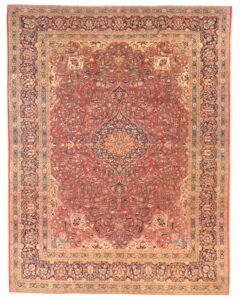
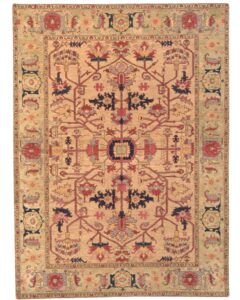
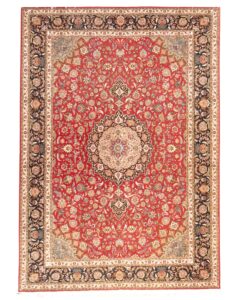
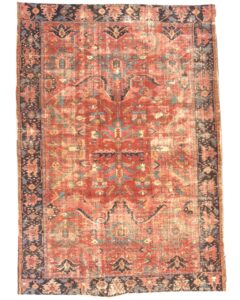
Final picks
One last row of rugs chosen to go with the ideas above.
Frequently Asked Questions About Fixing Rugs
Common questions about fixing rugs center on hole size, timelines, moth damage, color matching, and the order of cleaning and repair. The answers below reflect what I tell clients at the workbench, and each one stands alone.
Prices and timelines vary with knot density, fiber, and shop backlog, so treat every figure as an estimate. A written quote after an in-person inspection gives the number that counts.
Is a Large Hole in a Rug Fixable?
A rug with a large hole can be repaired through reweaving or patching, depending on construction and how much surrounding foundation remains. Holes up to several inches wide suit reweaving.
Holes larger than 6-8 inches on hand-knotted rugs typically need donor-material patching, which keeps costs reasonable while restoring structural integrity.
How Long Does Reweaving a Rug Take?
Reweaving a rug takes 3-5 business days for fringe reattachment or edge binding and 2-4 weeks for extensive work on densely knotted pieces.
Hand-dyeing matching wool or silk first can add several days to the timeline.
Is Moth Damage Always Repairable on a Wool Rug?
Moth damage on a wool rug is repairable in most cases, provided larvae have not consumed the foundation threads. Reweaving rebuilds pile over an intact warp and weft.
Once larvae eat through the foundation, the job becomes full structural reconstruction, which takes longer and costs more.
Will a Mended Rug Match the Rest of the Design?
A skilled hand repair on wool or silk can come close to invisible when the technician hand-dyes matching yarn and replicates the original knot density.
Antique pieces with unevenly faded dyes may show slight variation, though a well-executed repair is hard to spot without close inspection.
Should You Clean a Rug Before or After Repairing It?
Cleaning a rug before repairing it is the usual order, because hidden dirt obscures structural weakness and interferes with dye matching.
Actively unraveling or severely torn rugs are the exception and may need temporary stabilization stitching before washing.
Sources on Oriental Rug Construction and Repair
Wikipedia – Oriental Rug covers knot types, foundation materials, and regional weaving traditions.
Smithsonian Institution offers museum-grade background on textile history and care.
