


What Is the Real Difference Between a Rug and a Carpet?
September 19, 2026
What Do the Symbols in Tribal Rugs Really Mean?
September 19, 2026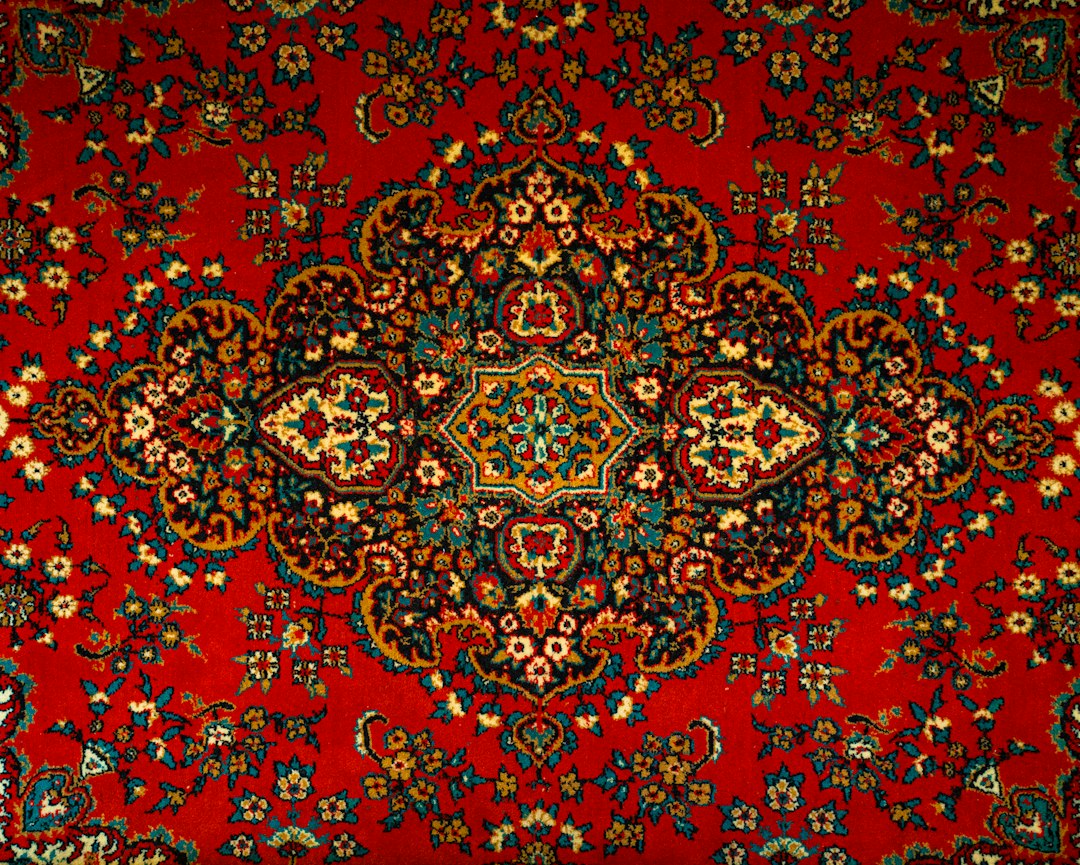
Few textiles carry as much cultural weight or technical sophistication as the Persian rug. After spending the better part of two decades handling these pieces on cleaning frames, in restoration workshops, and across appraisal tables, I still find something new to notice in nearly every knot count I examine. The history of Persian rugs stretches back roughly 2,500 years, rooted in the nomadic tribes of the Iranian plateau and later refined in royal court workshops under successive Persian dynasties. This article walks through that timeline, the regional weaving traditions that shaped it, the materials and techniques that define authentic pieces, and what all of this means for anyone who owns or is considering buying one of these rugs today. Learn more about What Is the Real Difference Between a Rug and a Carpet?.
What Are the Origins of Persian Rugs?
The origins of Persian rugs trace back to nomadic and pastoral tribes living across the plateau that is now modern-day Iran, who wove wool textiles for warmth, shelter, and trade well before any centralized Persian empire existed. The oldest known example, the Pazyryk carpet, was pulled from a frozen burial mound in Siberia in 1949 and dates to approximately the 5th century BCE, yet its knotting technique is so refined that historians believe rug weaving had already been developing in the region for centuries before it was made.
That single archaeological find reshaped scholarly understanding of the craft’s timeline. The Pazyryk carpet measures roughly 6 feet by 6.5 feet, uses a symmetrical knot structure still associated with Persian and Caucasian weaving, and features horse-and-rider motifs bordered by griffins and deer, iconography linked to Achaemenid Persian art. Because the piece was found so far from Iran, likely carried north through trade routes, it also confirms that finished carpets were already valuable export goods thousands of years ago, not just utilitarian floor coverings.
How Did Early Persian Carpet Weaving History Begin?
Early Persian carpet weaving history began with practical necessity among tribal groups who needed durable, insulating floor and tent coverings for harsh mountain winters and desert nights. Wool was the obvious material choice since sheep were already raised for food and clothing, and the vertical or horizontal ground looms used by these groups required no permanent structures, making them ideal for a semi-nomadic lifestyle.
These early weavers weren’t working from written pattern books. Motifs were passed down orally and by observation, often encoding tribal identity, protective symbolism, or nature-based imagery like the boteh (a teardrop-shaped motif some scholars link to a stylized cypress tree) that still appears in weaving regions today. As settlements grew more established, particularly around cities like Persepolis and later Isfahan, weaving gradually shifted from a purely nomadic craft into something practiced in village workshops as well, setting the stage for the more structured production seen in later centuries.
How Did Persian Rug History Develop Through the Major Dynasties?
Persian rug history developed most dramatically under the Safavid dynasty (1501-1736), when royal patronage transformed carpet weaving from a village and tribal craft into a state-sponsored art form produced in dedicated court workshops in cities such as Tabriz, Kashan, and Isfahan. Shah Abbas I, who ruled from 1588 to 1629, is widely credited with establishing royal ateliers that employed master designers, not just weavers, resulting in the intricate curvilinear medallion patterns still associated with fine Persian carpets today.
Before the Safavids, documentation is thinner, though Persian miniature paintings from the Timurid period (1370-1507) depict floor coverings with geometric patterns, suggesting a continuous weaving tradition that predates any surviving physical examples from that era. Surviving Safavid-era carpets, including the famous Ardabil Carpet completed around 1539 and now split between the Victoria and Albert Museum in London and the Los Angeles County Museum of Art, show knot densities exceeding 300 knots per square inch, a benchmark of technical mastery for hand-knotted textiles.
What Happened to Persian Carpet Production After the Safavid Era?
Production declined sharply after the fall of the Safavid dynasty in 1736, when Afghan invasions and political instability disrupted royal workshops and scattered skilled weavers back into village and tribal settings for nearly a century. Quality and volume didn’t recover meaningfully until the Qajar dynasty (1789-1925), when renewed trade with Europe and the opening of overland and sea routes created fresh commercial demand for Persian carpets as luxury exports.
By the late 19th century, European and American buyers were driving significant changes in production, including the introduction of synthetic aniline dyes around 1856 and larger commercial workshops in cities like Tabriz and Kerman built specifically to meet Western demand. This commercial period is also when many of the regional naming conventions still used in the trade today, such as Heriz, Bijar, and Sarouk, became standardized, tied to the specific towns and villages where those weaving styles originated.
What Are the Main Weaving Regions in Persian Carpet History?
The main weaving regions in Persian carpet history each developed distinct knotting techniques, color palettes, and motifs shaped by local wool sources, water quality for dyeing, and cultural influences from surrounding trade routes. Tabriz in the northwest became known for fine, tightly knotted medallion carpets, while Kerman in the southeast developed a reputation for pictorial and floral designs with softer, more pastel coloration.
Village and tribal weaving traditions ran alongside these urban workshop centers, often producing bolder, more geometric designs using entirely handspun wool and natural dyes. The Qashqai and Bakhtiari tribal confederations, for instance, wove rugs on portable looms using symmetrical knots and dense geometric patterns that contrast sharply with the curvilinear elegance of court-produced Isfahan or Nain carpets.
How Do Regional Persian Rug Styles Differ From Each Other?
Regional Persian rug styles differ primarily in knot type, motif structure, and color sourcing, with northwestern cities favoring the symmetrical (Turkish) knot and central and southern regions typically using the asymmetrical (Persian) knot, which allows for finer detail and higher knot counts. Wool quality also varies significantly by region, since sheep breeds and grazing conditions across the Zagros Mountains, the central desert plateau, and the Caspian coastal areas produce noticeably different fiber characteristics.
Buyers and collectors often use these regional distinctions to gauge quality and authenticity. Some of the most recognized regional categories include:
- Tabriz: fine wool or wool-silk blends, knot counts often between 250-500 KPSI, medallion and floral designs
- Isfahan: silk foundation with wool or silk pile, extremely fine detail, kork wool commonly used
- Kashan: dense wool pile, deep red and blue palettes, traditional medallion layouts
- Heriz: bold geometric medallions, coarser knotting around 60-100 KPSI, durable village-made construction
- Qashqai and Bakhtiari: tribal geometric motifs, handspun wool, symmetrical knots, garden and diamond patterns
- Nain: fine wool-silk combination, ivory and blue tones, dense curvilinear patterning
Anyone drawn to these tribal and geometric weaving traditions specifically will often find similar visual language in Tribal Rugs, which share the bold motif structure and handspun wool character of Qashqai and Bakhtiari work without necessarily carrying the same regional provenance.
What Materials and Techniques Define Traditional Persian Carpet Weaving History?
Traditional Persian carpet weaving history is defined by three core materials, hand-spun wool, silk, and cotton, combined through a knotting process that has changed remarkably little in over two thousand years despite modern tooling. Wool remains the dominant pile material because of its natural resilience, soil resistance, and ability to hold dye vibrantly, while cotton is typically reserved for the foundation warp and weft threads because of its strength and low stretch under tension.
Silk appears in two primary roles: as the entire pile in luxury pieces from weaving centers like Qum and Isfahan, or as a highlighting thread used to add sheen and definition to specific motifs within a primarily wool rug. Natural dyes historically came from sources such as madder root for red, indigo for blue, and pomegranate rind or weld for yellow, and while synthetic dyes have been standard since the mid-19th century, high-end workshops still use natural or chrome-mordanted dyes prized for their depth and gradual, even fading over decades.
What Knotting Techniques Are Used in Persian Rug Construction?
Persian rug construction relies primarily on the asymmetrical knot, sometimes called the Senneh knot, which wraps around one warp thread fully and loops around the adjacent one, allowing weavers to pack in more knots per square inch and render finer curved details than the symmetrical Ghiordes knot common in Turkish and Caucasian weaving. Knot density is measured in knots per square inch (KPSI), and it remains one of the clearest technical indicators of a rug’s fineness and the time invested in its production.
A coarser tribal piece might carry 40-80 KPSI and take a single weaver 2-3 months to complete, while a fine Isfahan or Qum silk rug can exceed 500-800 KPSI and require a year or more of continuous work. This is one reason knot density plays such a central role in valuation, alongside age, condition, and provenance. Readers wanting a deeper technical breakdown of how this measurement works can find it covered in detail in a companion piece on understanding rug knot density and KPSI.
| Weaving Region | Typical Knot Type | Approximate KPSI | Common Materials | Signature Motifs |
|---|---|---|---|---|
| Tabriz | Asymmetrical (Persian) | 250-500 | Wool, wool-silk blend | Medallion, floral |
| Isfahan | Asymmetrical (Persian) | 400-800 | Kork wool, silk | Curvilinear vine, palmette |
| Heriz | Asymmetrical (Persian) | 60-100 | Wool on cotton foundation | Bold angular medallion |
| Qashqai | Symmetrical (Turkish) | 80-150 | Handspun wool | Geometric, tribal diamond |
| Qum | Asymmetrical (Persian) | 500-800+ | Silk | Fine pictorial, tree of life |
How Can You Identify an Authentic Piece Tied to This Weaving Tradition?
Authenticity in a piece tied to this weaving tradition comes down to a handful of physical checks: examining the back of the rug for irregular knot patterns typical of handwork, checking for a visible warp fringe that’s an extension of the foundation rather than sewn on separately, and looking for slight asymmetries in pattern repeats that machine-made reproductions can’t replicate. Hand-knotted rugs also show a slightly different pile height and color variation from knot to knot, since no two hand-spun wool strands dye identically.
Weight and hand-feel matter too. Genuine wool pile rugs from major weaving regions typically weigh between 4-8 pounds per square yard depending on knot density and pile height, and the wool should feel slightly lanolin-rich rather than uniformly synthetic-smooth. For anyone actively shopping, a full walkthrough of these identification steps, including how to distinguish authentic pieces from Persian-style reproductions made in India, Pakistan, or through power-loom processes, is available in a dedicated guide on identifying an authentic Persian rug before you buy.
What Should Buyers Check Before Purchasing an Antique or Vintage Piece?
Buyers should check foundation material, dye consistency, and repair history before purchasing an antique or vintage piece, since these three factors most directly affect both structural integrity and resale value. A cotton foundation typically indicates production after roughly 1875, when cotton became widely available in weaving regions, while wool foundations are more often associated with earlier tribal work.
It also helps to inspect the rug under both natural and UV light, since UV exposure can reveal old repairs, re-piled sections, or chemical washing that isn’t visible under normal indoor lighting. Given how much variation exists between genuine antique pieces, later reproductions, and rugs that have been heavily restored, a formal evaluation is often worth the cost before any significant purchase, which is where a professional Rug Appraisal becomes a practical step rather than an optional extra.
My Experience with the History of Persian Rugs in the Workshop
Twenty-some years of handling these textiles on a daily basis teaches you things no reference book fully captures. I remember unrolling a Heriz carpet a client’s grandmother had brought over from Tabriz in the 1950s, and finding hand-spun wool so lanolin-rich it still resisted water beading decades later, something you almost never see in rugs produced after the 1970s once commercial washing became standard practice before export. That kind of detail tells you more about a piece’s true age than any paperwork attached to it.
I’ve also learned to read wear patterns as a kind of timeline. A Qashqai tribal rug with even, gradual pile wear across its entire surface almost always saw daily nomadic use on dirt or packed earth floors, while a court-produced Isfahan piece with pristine pile but slightly oxidized silk highlights usually spent most of its life displayed rather than walked on. Neither is inherently more valuable, but knowing the difference changes how I approach a cleaning or restoration plan, since kork wool and silk highlights demand a far gentler hand than the coarser, tougher wool typical of Heriz or Bakhtiari work.
The most common mistake I still see, even among rug owners who’ve done their homework, is assuming that age alone determines value. I’ve appraised 40-year-old Nain silk-highlight pieces worth considerably more than genuinely antique but poorly maintained tribal rugs from the same era, simply because knot density, dye quality, and condition carry more weight than the calendar. That’s the kind of nuance that only comes from handling hundreds of these pieces across a career, not from reading about them.
How Does Understanding This History Affect Rug Care and Long-Term Value?
Understanding the weaving history behind a Persian rug directly affects how it should be cleaned, stored, and repaired, since materials like natural dyes, silk highlights, and hand-spun wool foundations each respond differently to water, heat, and cleaning agents. A rug dyed with natural madder or indigo, for example, requires pH-balanced cleaning solutions and careful pretesting to avoid bleeding, while synthetic aniline-dyed pieces from the late 19th century onward can sometimes tolerate more aggressive treatment.
Foundation material matters just as much during restoration. Cotton foundations handle structural repairs like reweaving or fringe replacement differently than the wool foundations found in older tribal pieces, which tend to be more elastic and less prone to cracking but also more vulnerable to insect damage. This is precisely why generic carpet cleaning approaches fall short with these textiles, and why specialized Rug Cleaning and Rug Repair & Restoration methods matter so much for pieces carrying real historical and material complexity.
Why Do Older Persian Rugs Need Different Maintenance Than Modern Reproductions?
Older Persian rugs need different maintenance than modern reproductions because their natural fibers, vegetable dyes, and hand-knotted construction age and react to moisture, sunlight, and wear in ways that synthetic, machine-made rugs simply don’t. A hand-knotted wool piece from the early 20th century can typically be safely washed every 12-18 months depending on foot traffic, while power-loomed synthetic reproductions can often handle more frequent, harsher cleaning without structural concern.
Storage also differs significantly. A wool foundation antique needs breathable, acid-free wrapping and periodic inspection for moth larvae, which are drawn specifically to protein-based fibers like wool and silk rather than synthetic materials. Anyone storing one of these pieces long-term, whether during a move or a seasonal rotation, should look into proper Rug Storage and Rug Moth Protection rather than relying on standard plastic storage bins, which trap moisture and accelerate fiber breakdown.
FAQ
How old is the oldest known Persian-style rug?
The oldest known example connected to this weaving tradition is the Pazyryk carpet, dated to approximately the 5th century BCE and discovered in a Siberian burial mound in 1949. Its refined knotting technique suggests carpet weaving in the region was already well established centuries before it was made, though it isn’t strictly Persian in origin and is more broadly associated with early Central Asian and Persian weaving cultures.
What makes a rug specifically “Persian” rather than just “Oriental”?
A rug qualifies as Persian specifically when it’s hand-knotted within the geographic and cultural boundaries of modern-day Iran, using techniques, motifs, and materials tied to recognized regional traditions like Tabriz, Kashan, or Isfahan. “Oriental rug” is a broader umbrella term that includes Persian rugs alongside Turkish, Caucasian, Afghan, and Central Asian weaving traditions, which share some techniques but differ in knot type, motif style, and material sourcing.
Why did knot density become such an important measure of quality?
Knot density became a central quality measure because it directly reflects both the fineness of detail achievable in a design and the amount of time and skill invested in weaving the piece. A rug with 500+ KPSI can render curved floral and pictorial detail impossible to achieve at 60-80 KPSI, which is why knot count correlates so strongly with both technical mastery and market value.
Can a Persian rug’s pattern reveal where it was made?
Yes, in most cases pattern, color palette, and knot structure together can narrow down a rug’s likely region of origin fairly reliably, since weaving communities historically passed down specific motifs, layouts, and dye recipes within relatively isolated groups. A curvilinear medallion with pastel tones points toward Kerman or Isfahan, while bold geometric diamonds and madder-red tones are more typical of Qashqai or Bakhtiari tribal work, though overlapping trade and migration over centuries mean exceptions are common.
Do modern Persian rugs still follow the same weaving traditions?
Many modern workshops in cities like Tabriz, Kashan, and Isfahan still use hand-spun wool, traditional knotting techniques, and in some cases natural dyes, maintaining direct continuity with historical practice. Others have shifted toward synthetic dyes, mechanized spinning, and faster production methods to meet commercial demand, which is why buyers interested in traditional construction should ask specifically about materials and knotting method rather than assuming all rugs labeled “Persian” follow identical production standards. Those drawn to this traditional aesthetic in a new piece often explore Classic & Traditional Rugs as a starting point.
Sources
The Metropolitan Museum of Art – Carpets from the Islamic World
