


The History of Persian Rugs: Origins, Weaving Traditions, and Evolution
September 19, 2026Which Antique Rugs Qualify as True Investment Rugs?
September 21, 2026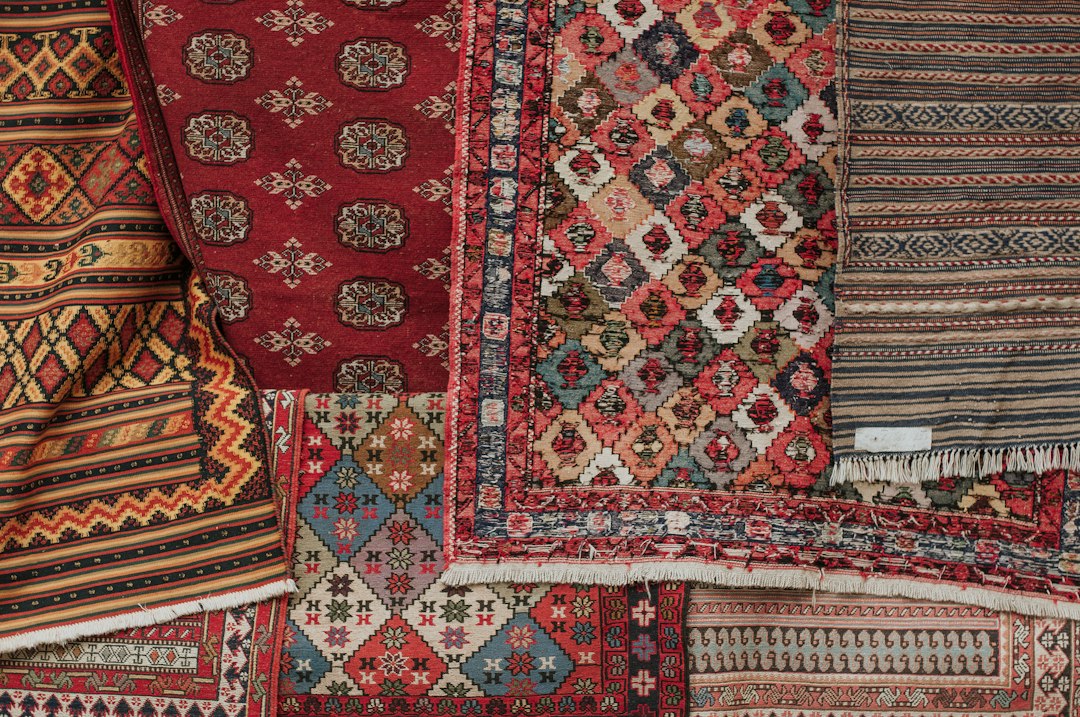
After years spent on my hands and knees examining worn foundations, reknotting missing corners, and washing decades of dust out of nomadic weavings, I still find myself pausing over certain motifs before I touch a single fiber. Symbols in tribal rugs are not decorative filler; they carry specific meanings passed down through generations of weavers who rarely wrote anything down, encoding beliefs, tribal identity, and daily concerns directly into wool and knots. This article walks through the most common tribal rug symbols, how to read geometric tribal rug patterns, what the meaning of rug symbols tends to be across different weaving regions, and what I’ve personally learned handling these pieces in the workshop.
What Is the Meaning of Rug Symbols in Tribal Weaving?
The meaning of rug symbols in tribal weaving comes from a combination of tribal memory, regional belief systems, and practical concerns like protection from illness or bad luck. Unlike city workshop rugs produced from a fixed cartoon or paper pattern, tribal pieces are usually woven from memory, so a weaver from the Qashqai confederation or a Baluch family in eastern Iran draws on motifs she learned from her mother and grandmother, adapting them slightly with each rug. That personal transmission is exactly why no two tribal rugs, even with the same motif, are ever truly identical.
Motifs generally fall into a handful of categories: protective symbols meant to ward off the “evil eye,” fertility and life symbols tied to agriculture or childbirth, animal figures representing strength or guardianship, and abstract geometric shapes that mark tribal or clan affiliation. A single Gabbeh rug from the Zagros Mountains might combine three or four of these categories in one field, which is part of why reading a nomadic weaving accurately takes real study rather than guesswork.
How Did These Symbols Originate in Nomadic Cultures?
Most tribal symbols originated as pictographic shorthand for concerns central to pastoral, migratory life: livestock health, safe childbirth, rainfall, and protection during long seasonal treks between summer and winter pastures. Groups like the Qashqai, Bakhtiari, and various Baluch tribes moved herds across Iran’s mountain corridors for centuries, and their portable art form — the rug — became a way to carry religious and cultural symbolism without needing permanent structures or written records.
Scholars researching Turkmen, Kurdish, and Persian nomadic weaving generally agree that many motifs predate Islam and trace back to shamanistic or Zoroastrian symbolism, later adapted and layered with Islamic-era meanings. A tree motif, for instance, may reference the ancient Tree of Life concept found across Persian, Anatolian, and Central Asian cultures long before it appeared in a specific tribal rug’s border.
What Are the Main Types of Symbols in Tribal Rugs?
The main categories of tribal rug symbolism include animal motifs, protective devices, fertility symbols, and geometric tribal rug patterns representing clan identity or cosmology. Each category tends to cluster in particular weaving regions, so recognizing the symbol type is often the first clue to a rug’s origin before you even check the knot structure or dye palette.
Animal figures are among the easiest motifs to spot and among the most consistently interpreted across regions. A stylized scorpion or spider often functions as a protective device rather than a literal warning, believed to frighten away the very creature it depicts. Birds, particularly peacocks and roosters, commonly signal watchfulness, spiritual connection, or good fortune depending on the weaving group.
- Boteh (paisley-like teardrop): associated with fertility, the cypress tree, or a flame, depending on region; extremely common in Persian and Kashmiri-derived tribal work.
- Tree of Life: vertical branching motif symbolizing rebirth, connection between earth and heaven, and continuity across generations.
- Ram’s horn (Baluch and Turkmen work): fertility and masculine strength, often rendered as a hooked, curling geometric shape.
- Scorpion and spider motifs: protective, meant to repel the actual pest through sympathetic magic.
- Hands (khamsa-adjacent forms): protection against the evil eye, seen in some Baluch and Turkish tribal borders.
- Star and diamond medallions (gul): clan or tribal identifiers, especially prominent in Turkmen weaving, where each tribal confederation historically used a distinct gul design.
Which Geometric Tribal Rug Patterns Appear Most Often?
The geometric tribal rug patterns that appear most consistently are the octagonal gul, the latch-hook (dyrnak) border, stepped diamonds, and reciprocal triangle bands running along the edges. These forms exist because tribal looms — typically horizontal ground looms or simple vertical frames without a fixed cartoon — favor angular shapes that are easier to count and repeat from memory than curved lines.
The Turkmen gul is probably the best-documented example of geometric symbolism functioning as an identity marker. Tribes such as the Tekke, Salor, Yomut, and Ersari each historically used variations of the octagonal gul with slightly different proportions and secondary ornamentation, allowing textile historians to attribute a rug to a specific tribal group decades or even a century after it was woven, purely from the geometry of its central medallion.
How Do You Identify Symbols in Tribal Rugs by Region?
Identifying tribal rug symbols by region starts with looking at three things together: the motif itself, the color palette used to render it, and the overall structure of the field and border. A ram’s horn rendered in madder red and indigo on an ivory ground reads very differently in origin than the same shape woven in deep burgundy wool on a Baluch prayer rug with a mihrab arch.
Persian tribal groups — Qashqai, Bakhtiari, Afshar, and Khamseh confederation weavers — tend toward dense, small-scale repeating motifs with birds, boteh, and stylized flowers scattered across the field. Caucasian tribal weaving, including Kazak and Shirvan pieces, leans toward bold, large-scale geometric medallions with high-contrast color blocking. Central Asian Turkmen work is the most codified, built almost entirely around repeating gul rows with minimal figurative imagery.
What Role Does Color Play in Reading These Motifs?
Color functions as a second layer of meaning on top of the motif itself, since the same symbol dyed differently can shift its emphasis from protection to celebration or mourning. Deep red from madder root traditionally signals joy, courage, or life force in many Persian and Caucasian tribal traditions, while indigo blue often carries associations with protection, the sky, or spiritual depth.
Natural dye sourcing also affects how confidently a specialist can date and attribute a piece. Rugs using walnut husk browns, pomegranate rind yellows, and cochineal or madder reds typically predate the widespread arrival of synthetic aniline dyes in the region during the 1870s-1890s. When I’m asked to appraise an older tribal weaving, checking dye behavior under raking light alongside the symbolism gives a far more reliable read than the motif alone — a service we handle formally through Rug Appraisal when clients want documentation for insurance or resale.
How Do Symbols in Tribal Rugs Differ From Gabbeh Rug Motifs?
Symbols in classic tribal weavings tend toward precise, densely packed geometric repetition, while Gabbeh rug motifs are looser, sparser, and more spontaneous, often floating in open fields of solid color. Gabbeh rugs, woven primarily by Qashqai and Luri weavers in the Zagros Mountains, use a thicker pile and a much lower knot count than finer tribal city-adjacent work, which naturally limits how detailed a motif can be.
Where a Turkmen gul might repeat with mathematical precision across dozens of rows, a Gabbeh weaver often places a single stylized animal, tree, or human figure almost playfully within an open field, sometimes asymmetrically. This looseness isn’t a lack of skill; it reflects a different weaving philosophy that prioritizes improvisation and personal expression over strict pattern replication. Collectors interested in this specific style can browse Gabbeh Rugs to see how varied the motif placement becomes even within a single production region.
Why Do Some Tribal Rugs Show Human Figures While Others Avoid Them?
Some tribal weaving traditions include stylized human figures freely, while others avoid figurative representation almost entirely due to regional interpretations of Islamic aniconism. Baluch and certain Turkmen groups lean heavily geometric and abstract, whereas Qashqai and Luri Gabbeh weavers are comparatively more relaxed, occasionally including simplified human or animal figures, sometimes depicting daily scenes like a shepherd with sheep.
This variance also reflects generational shifts. Older pieces from the early-to-mid 20th century sometimes show more figurative freedom than rugs woven after certain religious revival movements influenced tribal communities in the latter part of that century. When dating a rug for a client, I weigh this stylistic evolution against wear patterns and foundation material rather than relying on figuration alone.
What Should You Know Before Buying or Caring for a Symbol-Rich Tribal Rug?
Before buying a tribal rug with heavy symbolic content, verify the weave structure, dye type, and regional attribution, since these three factors determine both authenticity and long-term durability. A genuine hand-knotted tribal piece from Iran, Afghanistan, or the Caucasus will show irregularities in knot spacing and slight motif asymmetry that machine-made reproductions cannot replicate convincingly.
Caring for these rugs also requires more attention than a mass-produced rug because natural dyes and hand-spun wool respond differently to moisture, sunlight, and cleaning agents than synthetic fibers do. I’ve seen well-meaning owners scrub a vegetable-dyed Baluch rug with an off-the-shelf carpet shampoo and strip color from a century-old boteh motif within minutes — damage that’s often irreversible.
| Feature | Classic Tribal Rug (Turkmen/Baluch) | Gabbeh Rug |
|---|---|---|
| Typical knot count | 100-250 KPSI | 25-80 KPSI |
| Pile height | 0.25-0.5 inches | 0.5-1 inch |
| Motif density | High, repeating geometric guls | Sparse, scattered figures |
| Common dyes | Madder, indigo, walnut husk | Madder, indigo, occasional synthetic |
| Typical origin | Turkmenistan, Afghanistan, NE Iran | Zagros Mountains, southern Iran |
How Should These Rugs Be Cleaned and Preserved Long-Term?
Tribal rugs with natural dyes and hand-spun foundations should be cleaned using pH-balanced, low-moisture methods specifically calibrated for the fiber and dye combination present, never generic carpet shampoo or high-heat steam extraction. Our team handles this through a dedicated Rug Cleaning process that tests colorfastness on a hidden corner before any wet cleaning begins, which matters enormously for pieces with vegetable dyes prone to bleeding.
Long-term preservation also depends on storage conditions and periodic professional inspection for insect activity, since wool fibers in tribal weavings are a preferred food source for clothes moths and carpet beetles. Rotating rugs out of direct sunlight, maintaining humidity between roughly 40-50%, and scheduling inspections every 12-18 months will extend the life of a symbol-rich piece by decades compared to rugs left untouched in storage.
My Experience with Symbols in Tribal Rugs
Over close to two decades restoring and cleaning nomadic weavings, I’ve handled Baluch prayer rugs with mihrab arches flanked by tiny bird figures, Qashqai Gabbeh pieces with a single lopsided camel woven off-center, and Turkmen bag faces where the gul had been reworked mid-weaving because the weaver apparently changed her mind about the proportions. Each one taught me something the reference books didn’t fully capture.
One rug that stays with me was a mid-century Bakhtiari piece brought in for reweaving after moth damage had eaten through a section containing a ram’s horn motif near the border. The owner assumed we’d simply patch the hole with plain wool, but reconstructing that specific horn shape correctly required matching the original spin direction and dye lot as closely as possible, since an inaccurate repair would have broken the visual logic of the surrounding pattern. That project alone took nearly 40 hours of hand reweaving, and it reinforced how seriously original weavers treated their motifs — nothing was placed carelessly, even in rugs meant for daily nomadic use rather than display. For rugs in that kind of condition, our Rug Repair & Restoration team treats motif accuracy as a non-negotiable part of the reweaving process, not a cosmetic afterthought.
I’ve also learned to distrust quick online identification guides that claim every scorpion motif means the exact same thing across every tribe. In practice, meaning shifts with region, generation, and even individual family tradition, which is why I always cross-reference motif, dye, and structural details rather than relying on a single symbol chart. If you’re drawn to this weaving style generally, browsing a curated Tribal Rugs collection alongside some background reading on regional attribution will serve you far better than memorizing a symbol glossary in isolation.
FAQ
Do all tribal rugs use the same symbols with the same meanings?
No. Meaning shifts by region, tribal confederation, and even individual family tradition, so a motif common among Baluch weavers may carry a different emphasis when it appears in Caucasian or Anatolian tribal work.
Can synthetic dyes affect the authenticity of a symbolic motif?
Synthetic aniline dyes don’t change the symbol’s meaning, but their presence typically indicates a rug woven after the 1870s-1890s, which matters for dating and appraisal rather than for interpreting the motif itself.
Is it safe to clean a tribal rug with visible dye bleeding at home?
It’s not advisable, since home cleaning can worsen existing bleeding; professional colorfastness testing and controlled washing methods are needed to stabilize dyes before any deep cleaning, a process covered in detail in our guide on color bleeding in rugs.
How can I tell if a geometric medallion identifies a specific tribe?
Compare the medallion’s proportions, secondary ornamentation, and color placement against documented tribal gul catalogs; Turkmen guls in particular have been mapped extensively by tribal group, making this one of the more reliable attribution methods available.
Should moth-damaged tribal rugs with symbolic borders be repaired or replaced?
Repair is almost always preferable when the foundation is sound, since reweaving preserves the original motif and value; our Rug Moth Protection service also helps prevent recurring damage to vulnerable wool areas going forward.
Sources:
The Metropolitan Museum of Art: Carpets from the Islamic World
