



Do Rugs Help with Acoustics? A Rug Specialist Explains Sound Absorption
September 13, 2026
Can You Put an Area Rug Over Wall-to-Wall Carpet?
September 19, 2026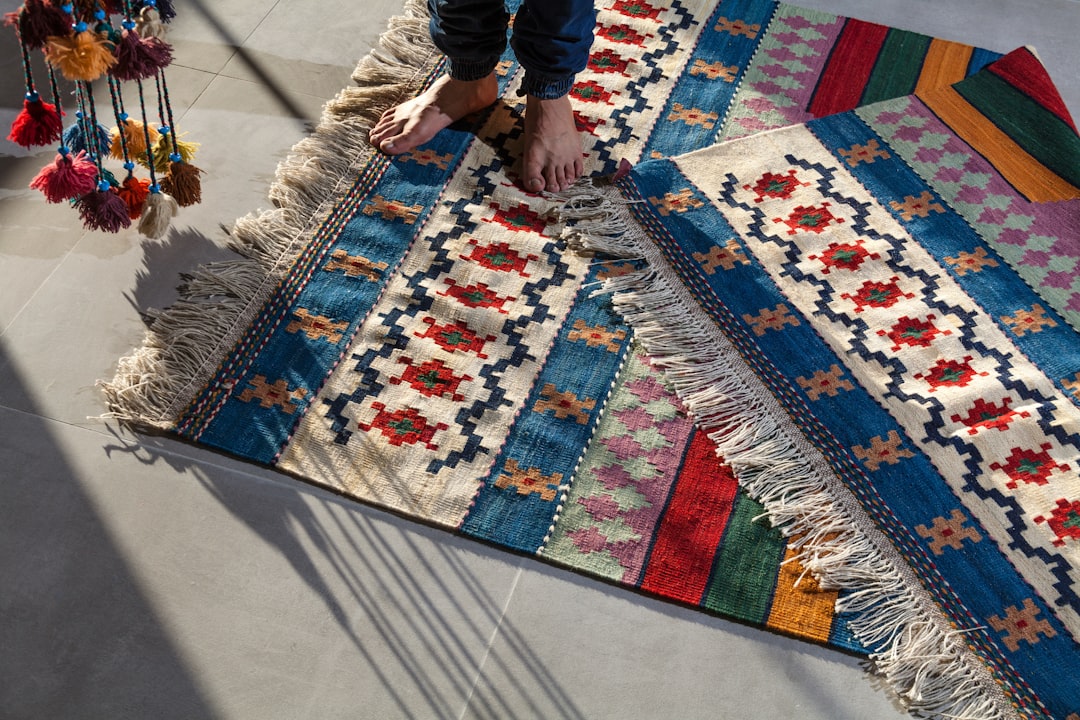
After nearly two decades spent on my knees pulling padding away from wool and wall-to-wall carpet, testing dust samples, and explaining to sneezing clients why their “clean” rug is still triggering symptoms, I can tell you that hypoallergenic rugs are one of the most misunderstood purchases in home textiles. People assume any rug labeled “hypoallergenic” is automatically safe for allergy or asthma sufferers, but the reality involves fiber chemistry, weave density, and cleaning frequency working together. This article walks through what actually makes a rug allergen-resistant, which materials and constructions perform best, how to maintain them, and where the marketing claims fall short of the science. Learn more about Do Rugs Help with Acoustics? A Rug Specialist Explains Sound Absorption.
What Makes a Rug Hypoallergenic?
A rug earns the label “hypoallergenic” when its fiber and construction resist trapping dust mites, pet dander, mold spores, and pollen, while also releasing fewer synthetic volatile organic compounds (VOCs) into indoor air. No rug eliminates allergens completely, but tight, low-pile weaves made from natural or specially engineered fibers dramatically reduce the reservoir effect that traps particles deep in the pile.
The reservoir effect is the technical term rug specialists use to describe how a floor covering holds onto microscopic debris until it’s disturbed by foot traffic or airflow. Long, loose pile with a high stitch gap acts like a filter that never gets emptied, while flat weaves and dense wool piles shed particulate matter back onto the surface, where a vacuum with a HEPA filter can actually remove it.
Fiber Chemistry and Allergen Binding
Natural wool fibers have a scaly outer cuticle that resists static buildup, which matters because static charge is part of what pulls dust and dander deep into synthetic pile. Wool also contains lanolin, a natural wax that has mild antimicrobial properties and slows mold and dust mite colonization compared to untreated cotton or jute.
Synthetic fibers such as polypropylene and nylon are often marketed as hypoallergenic because they don’t harbor moisture the way natural fibers can, but lower-grade synthetics off-gas VOCs for the first 30 to 60 days after manufacturing, which can aggravate asthma in sensitive individuals during that window. Higher-end solution-dyed nylon and polyester blends test lower for VOC emission under ASTM D5116 chamber testing than budget synthetic looped carpet tile.
Which Rug Materials Rank Best for Allergy Sufferers?
Wool, silk-wool blends, and tightly woven flat weaves like kilims consistently perform best among the materials I’ve tested and cleaned professionally over the years. These options combine low static, minimal fiber shedding, and dense construction that keeps allergens near the surface rather than buried in the pile base.
Cotton dhurries and jute-based weaves fall into a middle category — breathable and low in synthetic chemical content, but more absorbent, which means they need more frequent cleaning in humid climates to prevent mold spore growth. Viscose, while visually appealing for its silk-like sheen, tends to trap moisture and is generally a poor choice for anyone managing dust mite allergies or asthma.
Best Rugs for Allergies by Weave Type
Flat-woven rugs, hand-knotted wool pieces with pile heights under half an inch, and rugs that don’t shed synthetic or wool fibers onto the floor tend to top the list recommended by allergists and indoor air quality consultants. Shedding fiber itself becomes airborne particulate that can settle into HVAC filters and bedding, compounding allergy symptoms over time.
- Kilim and flat weaves: No pile to trap dust; easy to shake out or vacuum fully; typically 100% wool or cotton warp and weft.
- Hand-knotted wool rugs with short pile (under 0.5 inch): Dense knot count, often 100-300 knots per square inch, resists deep allergen penetration.
- Natural rubber or felt-backed rugs: Avoid PVC backing, which off-gases and can trap moisture against flooring.
- Low-pile synthetic rugs with solution-dyed fibers: Reduced VOC emission and resistance to moisture absorption.
- Rugs certified under GREENGUARD Gold or OEKO-TEX Standard 100: Independently tested for low chemical emissions and safe material composition.
Gabbeh rugs, hand-knotted with a slightly thicker but still manageable pile and traditionally washed with natural dyes, are another option many allergy-conscious households appreciate for their durability and relatively easy maintenance. If you’re shopping for a piece that balances texture with allergen control, browsing Gabbeh Rugs alongside flatter weaves gives a useful side-by-side comparison of pile height and material weight.
How Do You Compare Hypoallergenic Rug Options Before Buying?
Comparing hypoallergenic rug candidates comes down to four measurable factors: pile height, fiber type, backing material, and certification status. Rugs scoring well across all four categories consistently show lower dust retention in the fiber-shake tests we run in the workshop, where a rug is agitated for 60 seconds over a clean white sheet to visually assess particulate release.
Price often tracks with quality here, though not always — a well-constructed flat weave at $400 can outperform a plush synthetic rug at $900 if the synthetic option uses a loose, high-pile construction. The table below summarizes how common rug types compare on the metrics that matter most for allergy and asthma management.
| Rug Type | Typical Pile Height | Dust Retention Risk | VOC Emission Level | Recommended Cleaning Frequency |
|---|---|---|---|---|
| Wool Kilim (flat weave) | 0 in (no pile) | Low | Very Low | Every 12-18 months |
| Hand-knotted Wool (short pile) | 0.25-0.5 in | Low-Moderate | Low | Every 12-24 months |
| Gabbeh Wool | 0.5-0.75 in | Moderate | Low | Every 12 months |
| Solution-Dyed Synthetic (low pile) | 0.25-0.4 in | Low-Moderate | Low-Moderate | Every 6-12 months |
| Viscose or Loose-Pile Synthetic | 0.5-1 in | High | Moderate-High | Every 6 months |
Rugs That Don’t Shed and Why That Matters
Rugs that don’t shed retain their allergen-resistance rating far longer than rugs shedding loose fibers, because shed fibers themselves become one of the primary carriers of dust and dander in a room. A rug losing fiber at a high rate essentially manufactures its own new allergen source every time someone walks across it or a ceiling fan stirs the air.
Hand-knotted construction, where each strand is individually secured to the foundation rather than tufted and glued, sheds significantly less over its lifespan than machine-tufted rugs with latex backing. Latex backing can also degrade after 5 to 8 years, releasing fine particulate and occasionally a chemical odor that irritates sensitive respiratory systems.
How Should You Maintain a Hypoallergenic Rug Over Time?
Maintaining a hypoallergenic rug requires vacuuming at least twice weekly with a HEPA-filtered vacuum, professional deep cleaning every 12 to 18 months, and immediate attention to spills or moisture before mold spores can establish themselves in the foundation fibers. Skipping these steps allows even a well-constructed wool rug to accumulate the same allergen load as a poorly chosen synthetic one within two to three years.
Humidity control matters as much as vacuuming schedule. Indoor relative humidity above 60% creates conditions where dust mites reproduce rapidly, so a rug in a bathroom-adjacent hallway or a basement family room needs closer monitoring than one in a dry, climate-controlled living room.
Professional Cleaning Versus At-Home Care
At-home vacuuming removes surface-level dust and light dander, but it cannot extract allergens embedded near the foundation knots or backing, which is why a full immersion or hand-wash cleaning method performed by a trained technician matters for anyone managing moderate to severe allergies. Steam cleaning alone, without proper rinsing, can actually leave detergent residue that attracts more dust over time.
Our shop uses a multi-step wash process — dusting, pre-treatment, hand or immersion washing, controlled rinsing, and slow climate-controlled drying — specifically because rushed or incomplete rinsing is the most common reason a “cleaned” rug still smells musty or triggers symptoms within weeks. Scheduling routine Rug Cleaning on a fixed calendar, rather than waiting until a rug looks visibly dirty, is the single biggest factor separating clients whose allergy symptoms improve from those whose symptoms plateau.
Rug padding also plays a supporting role that’s easy to overlook. A breathable, moisture-wicking pad prevents trapped humidity underneath the rug, which otherwise creates a hidden mold environment invisible from above; exploring options in Rug Padding is worth doing at the same time you invest in an allergy-conscious rug.
What Are the Best Hypoallergenic Rug Choices for Different Rooms?
Bedrooms benefit most from short-pile wool or flat-woven kilim rugs, since bedding already accumulates dust mites and a low-allergen floor covering reduces the overall particulate load in the room where people spend 6 to 9 hours a night. Living rooms and high-traffic hallways do better with slightly more durable hand-knotted wool, since foot traffic naturally shakes loose surface dust that a HEPA vacuum can then remove.
Basements and rooms near plumbing require extra caution regardless of fiber choice, because ambient moisture is the real allergen driver in those spaces, not the rug material itself. In these areas, I generally steer clients toward wool or synthetic blends with moisture-resistant backing rather than natural fiber weaves like jute, which absorb and hold humidity readily.
Choosing Between Wool and Synthetic for Allergy-Prone Households
Wool remains the top recommendation for most allergy-prone households because of its natural resistance to dust mites and low static charge, but a well-made, solution-dyed synthetic rug with a tight, low-pile weave is a reasonable second choice, particularly for households managing budget constraints or specific wool sensitivities. A small percentage of people have a genuine lanolin sensitivity, in which case a certified low-VOC synthetic or a washed cotton flat weave becomes the more sensible option.
For households drawn to pattern and texture without sacrificing allergen control, tightly woven pieces from Kilim Rugs or Tribal Rugs collections tend to combine flat or low-pile construction with the visual richness people want in a main living space. Both categories generally use dense, hand-woven techniques that avoid the loose backing and high pile associated with higher dust retention.
My Experience with Hypoallergenic Rugs
I started paying close attention to allergen behavior in rugs about twelve years ago, after a client with severe dust mite allergy asked why her symptoms hadn’t improved despite buying an expensive “allergy-friendly” synthetic rug online. When we tested it in the shop, the pile height measured almost an inch, well above what I’d recommend, and the backing was a glued latex construction already beginning to break down after less than three years of use.
We replaced it with a hand-knotted wool kilim at roughly a third of the pile height, paired with a proper moisture-wicking pad, and had her commit to a twice-weekly HEPA vacuuming routine along with professional cleaning every 14 months. Her reported symptoms — morning congestion and occasional wheezing — improved noticeably within about six weeks, which lines up with what I’ve since observed across dozens of similar cases.
One pattern I’ve seen repeatedly in the workshop involves clients with pets. Pet dander is smaller and lighter than typical dust particles, so it becomes airborne more easily and settles deep into looser pile. In households with cats or dogs, I almost always recommend a denser, shorter pile wool or a true flat weave over anything plush, along with more frequent cleaning intervals — closer to every 9 to 12 months rather than the standard 18-month window.
FAQ
Are wool rugs actually hypoallergenic, or is that a marketing claim?
Wool rugs are not allergen-free, but they are genuinely lower-risk than many synthetic alternatives due to wool’s natural resistance to static, lower moisture retention when properly maintained, and dense fiber structure that limits how deeply dust and dander penetrate. The claim holds up when paired with regular cleaning; without maintenance, even wool accumulates allergens over time.
Do hypoallergenic rugs need to be replaced more often than regular rugs?
No, well-constructed hypoallergenic rugs, particularly hand-knotted wool and flat weaves, often last 15 to 25 years or longer with proper care, actually outlasting many synthetic rugs whose backing degrades within 5 to 10 years. Longevity depends more on construction quality and maintenance schedule than on the allergen-resistant label itself.
Can a regular rug be made more hypoallergenic without replacing it?
Yes, switching to a breathable rug pad, increasing vacuum frequency with a HEPA-filtered machine, and scheduling professional deep cleaning every 12 to 18 months significantly reduces allergen load in an existing rug. In cases of visible mold, moth larvae, or deteriorated backing, replacement becomes the more practical option; a specialist can assess whether Rug Repair & Restoration can restore the piece or whether it’s beyond a reasonable repair threshold.
How do I know if my rug is contributing to my allergy symptoms?
A simple test involves pressing a clean white cloth firmly into the rug pile and checking for dust or fiber residue, alongside noting whether symptoms worsen specifically when near the rug or after vacuuming disturbs it. Persistent musty odor, visible discoloration, or a noticeably increased symptom pattern in that room are strong indicators the rug needs professional evaluation.
Is it worth getting a rug moth-proofed if allergies are the main concern?
Moth larvae themselves aren’t a primary allergen source, but the frass and shed casings they leave behind do contribute to indoor particulate load, and an active infestation typically coincides with other maintenance issues that also raise allergen levels. For wool rugs stored seasonally or kept in humid regions, investing in Rug Moth Protection supports the same fiber integrity that keeps allergen levels low.
