


Which Hypoallergenic Rugs Actually Help With Allergies and Asthma?
September 14, 2026
What Is the Real Difference Between a Rug and a Carpet?
September 19, 2026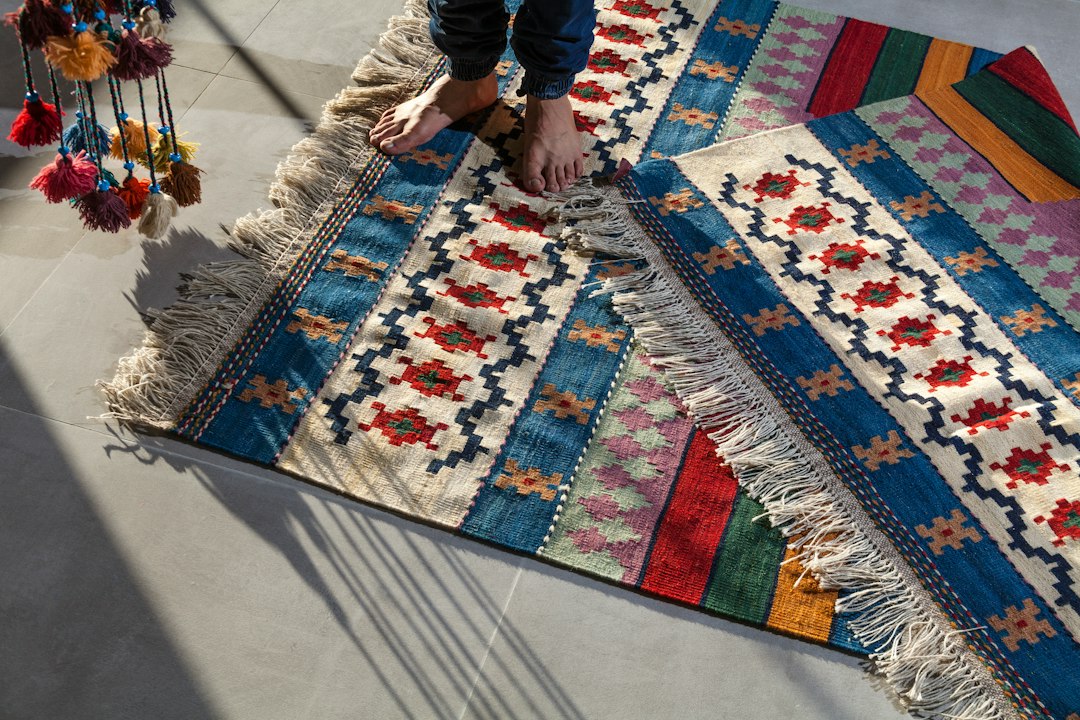
Clients ask me this question almost every week, usually while standing in a living room with worn-out beige carpet they’re not ready to replace. Placing rugs over carpet is one of the most common layering questions I encounter in the field, and the honest answer is yes, in most cases, but the outcome depends heavily on carpet pile height, rug backing material, padding choice, and the amount of foot traffic the room sees. This article walks through the mechanics of putting an area rug over carpet, the situations where layering rug on carpet works beautifully, the cases where it causes real damage, and the specific products and techniques that separate a stable, attractive result from a slipping hazard or a mildew problem waiting to happen.
Why Do People Put Rugs Over Carpet in the First Place?
People layer rugs over existing carpet mainly to define a seating or dining zone, add color and pattern on top of a neutral wall-to-wall installation, or extend the life of worn carpet without a full replacement. It’s a design solution as much as a practical one, especially in rental units where tearing out carpet isn’t an option.
In my own service calls, I’d estimate that roughly a third of the rug placements I inspect each year sit on top of some form of carpet rather than hardwood or tile. Renters lean on this technique constantly because most leases prohibit removing builder-grade carpet, so a 5×8 or 8×10 wool rug becomes the fastest way to introduce texture and personality into a space that otherwise looks generic. Homeowners use the same trick in transitional spaces between renovations, buying themselves a year or two before they commit to hardwood flooring underneath.
What Design Goals Does Layering Rug on Carpet Achieve?
Layering accomplishes three things at once: it anchors furniture groupings, introduces a secondary pattern or color palette, and softens the visual monotony of solid-color broadloom carpet that stretches wall to wall. A 9×12 Moroccan-style rug placed over neutral berber carpet, for example, can make a living room feel intentionally designed rather than half-furnished.
The technique also shows up frequently in staged homes and short-term rentals, where property managers need a quick visual upgrade without the cost of replacing carpet across an entire unit. A rug with a bold geometric pattern, like something from the Abstract Rugs collection, draws the eye downward and distracts from dated carpet color while photography or showings are underway.
How Does Putting an Area Rug Over Carpet Actually Work?
Putting an area rug over carpet works by adding a secondary textile layer whose weight, backing, and pad combination must overcome the natural cushioning and grip loss created by the carpet underneath. Carpet fibers compress under a rug’s weight, and that compression is what causes bunching, wrinkling, and slippage if the setup isn’t handled correctly.
The physics are straightforward once you’ve seen enough of these installations fail. Wall-to-wall carpet padding is typically 3/8 inch to 7/16 inch of foam or rebond material with a density around 6 to 8 pounds per cubic foot. When you set a rug directly on that surface, you’re stacking two soft layers with very little friction between them, which is exactly the recipe for a rug that creeps forward every time someone walks across it.
What Physical Factors Determine Whether Layering Rug on Carpet Succeeds?
Success depends on carpet pile height, the rug’s backing construction, and whether a grip layer is inserted between the two. Carpet under 1/2 inch pile height, paired with a flatweave or low-pile rug and a breathable grip pad, produces the most stable result.
Higher pile carpets, particularly plush or frieze styles running 3/4 inch or taller, create instability because the rug has nothing solid to rest against; it essentially floats on a bed of fiber. I’ve measured shag carpets at nearly 1.5 inches of pile depth, and no amount of padding fully compensates for that kind of cushioning when a heavier hand-knotted rug sits on top. In those situations, I generally advise clients to choose a lightweight kilim or flatweave instead of a thick pile rug, since the reduced bulk keeps the combined stack from feeling unstable underfoot.
- Low-pile carpet (under 1/2 inch): excellent candidate for layering, minimal shifting risk
- Medium-pile carpet (1/2 to 3/4 inch): workable with a quality non-slip pad and a rug weighing at least 3 pounds per square yard
- High-pile or shag carpet (over 3/4 inch): poor candidate; rug edges tend to curl and traction is minimal
- Berber or looped carpet: generally stable, but snagging risk increases with rugs that have fringe or loose weave
- Carpet tiles: variable results depending on tile seam placement under the rug
What Are the Main Risks of Putting an Area Rug Over Carpet?
The primary risks are moisture entrapment, reduced airflow that invites mold and dust mite activity, slippage that creates a trip hazard, and visible pile crushing on the carpet beneath the rug’s edges. None of these are minor cosmetic issues; they affect indoor air quality and household safety directly.
Moisture is the risk I see cause the most long-term damage. Carpet fibers naturally trap humidity, and when a rug sits on top without airflow, that moisture has nowhere to evaporate. I’ve pulled up rugs after eighteen months of a client not rotating them and found a distinct ring of dark discoloration and a musty smell embedded in the carpet backing, which usually means mold spores have already colonized the jute or latex layer underneath.
How Serious Is the Slippage Hazard When Layering Rug on Carpet?
Slippage is a genuine safety hazard, particularly for households with elderly residents, young children, or pets, because a rug without proper grip can shift several inches with a single misstep. The Consumer Product Safety Commission has documented rug-related falls as a recurring cause of home injury, especially among adults over 65.
I’ve responded to more than a few calls where a client tripped because a rug edge had folded under itself after weeks of foot traffic pushing it toward a doorway. The fix is almost always the same: remove the rug, install a proper rug pad rated for use over carpet, and reset the rug with the pad’s grip side facing down toward the carpet fibers. If the rug shows fraying or edge damage from repeated shifting, it may also need attention from a service specializing in Rug Repair & Restoration before it goes back down.
What Type of Rug Pad Works Best Over Carpet?
The best rug pad for use over carpet is a thin, breathable, grip-based pad rather than a thick cushioned pad, since the carpet itself already provides softness and additional padding only increases instability. A pad thickness of 1/8 inch to 1/4 inch with an open-weave or perforated design allows airflow while still providing traction on both sides.
Waffle-weave rubber pads and PVC-coated mesh grids tend to perform the most reliably in my experience, especially when the rug weighs less than 15 pounds. Heavier wool or hand-knotted rugs, which can weigh 40 pounds or more for a 9×12 size, benefit from a slightly denser pad, but I still avoid the thick felt-and-rubber combination pads meant for hardwood floors, since they trap far too much heat and moisture against carpet fibers.
Which Rug Pad Materials Should You Avoid on Top of Carpet?
Avoid solid rubber pads, adhesive-backed pads, and any pad marketed strictly for hardwood or tile use, because these materials block airflow almost entirely and can leave a sticky residue on carpet fibers after removal. Solid rubber in particular tends to yellow and degrade carpet fibers within a year or two of continuous contact.
I’ve also seen double-sided carpet tape used as a shortcut, and it’s one of the worst choices available. The adhesive breaks down carpet backing fibers, leaves a gummy residue that attracts dirt, and often requires professional extraction to remove completely. If a rug pad is already showing signs of degradation, or the rug itself has started curling at the corners from improper support, it’s worth reading through a guide on rug pad benefits before selecting a replacement.
| Pad Type | Thickness | Airflow | Grip Level | Best For |
|---|---|---|---|---|
| Waffle-weave rubber | 1/8 in – 1/4 in | High | Excellent | Low to medium pile carpet, rugs under 25 lbs |
| PVC mesh grid | 1/16 in – 1/8 in | Very High | Good | Light rugs, high-humidity climates |
| Felt-rubber combo | 1/4 in – 3/8 in | Low | Very Good | Hardwood or tile only, not recommended over carpet |
| Double-sided carpet tape | N/A | None | Temporary | Not recommended; damages carpet backing |
| Solid rubber sheet | 1/8 in – 1/4 in | Very Low | Excellent | Avoid on carpet; traps moisture and heat |
Which Rug Types Handle Layering Over Carpet the Best?
Flatweave and low-pile rugs handle carpet layering best because they add minimal bulk and settle more predictably than thick, high-pile constructions. Kilim, dhurrie, and Navajo-style flatweaves under 1/4 inch thick are consistently my top recommendation for this kind of installation.
Hand-knotted wool rugs can also work well, provided the pile height stays under 1/2 inch and the foundation is a tightly woven cotton or wool warp rather than a loosely tufted latex-backed construction. Tufted rugs with a heavy latex backing are actually the poorest performers in this scenario, since the latex layer doesn’t breathe and tends to trap moisture against the carpet even faster than a solid rubber pad would on its own.
Are Flatweave Rugs Really Better Than Pile Rugs for This Purpose?
Flatweave rugs generally outperform pile rugs when layered over carpet because their thin profile reduces the combined stack height and keeps the overall look proportional rather than bulky. A flatweave sitting at roughly 1/8 inch thick barely registers as an additional layer, while a plush 3/4-inch pile rug can make a room feel like it has a step-up threshold.
Handwoven options from regions like Turkey, Morocco, and the American Southwest tend to fall into this favorable category. A piece from the Kilim Rugs collection or a design drawn from Navajo & Flat Weave Rugs both bring the low-profile, tightly woven construction that performs reliably on top of low or medium pile carpet, without the bulk that heavier pile rugs introduce.
How Should You Maintain a Rug That Sits on Top of Carpet?
Maintaining a layered rug requires more frequent lifting and inspection than a rug placed on hardwood, since trapped moisture and debris aren’t visible until you pull the rug back. I recommend lifting the rug fully every 60 to 90 days to vacuum both the rug’s underside and the carpet section beneath it.
Rotating the rug 180 degrees every three to four months also helps distribute wear evenly and prevents one edge from taking the brunt of foot traffic and sun exposure. Rugs placed near south-facing windows are especially prone to uneven fading, and pairing that rotation schedule with guidance on sun fading on rugs extends the useful life of both the rug and the carpet section it covers.
How Often Should a Rug Over Carpet Be Professionally Cleaned?
A rug sitting on top of carpet should generally be professionally cleaned every 12 to 18 months, slightly more often than the 18-to-24-month interval typical for rugs on hardwood, because reduced airflow accelerates soil and allergen buildup. Wool rugs in this setup also benefit from professional attention sooner if you notice any musty odor developing.
Vacuuming alone won’t reach embedded soil that’s worked its way down through both layers, and DIY spot cleaning can push moisture further into the carpet pad rather than lifting it out. A full-service Rug Cleaning appointment uses controlled water extraction and drying methods that prevent the double-layer moisture problem I described earlier, and it’s also the right time to have a technician check the rug’s backing for early signs of dry rot or fiber breakdown.
My Experience with Rugs Over Carpet
Over the years, I’ve inspected hundreds of layered rug setups, and the pattern that stands out most is how often the problem traces back to the pad, not the rug itself. I once worked on a case involving a hand-knotted Persian rug that a client had placed directly on plush carpet with no pad at all; within four months, the rug had developed a permanent crease along one edge from constant folding underfoot, and the carpet beneath showed a visible imprint that took nearly a year to relax back to its normal pile height.
Another memorable job involved a dining room where a family had layered a wool rug over medium-pile carpet using adhesive tape strips instead of a breathable pad. When we lifted the rug for a scheduled cleaning, the carpet backing had yellowed in a grid pattern matching the tape placement, and portions of the latex backing had started to disintegrate. That job required both a full rug cleaning and a carpet section replacement, which could have been avoided entirely with an $30 to $60 grip pad instead of a roll of tape.
The lesson I share with every client now is that layering itself isn’t the problem; the shortcuts taken during setup are. A rug matched to the right pile height, paired with a breathable pad and a realistic maintenance schedule, can sit comfortably over carpet for 5 to 10 years without incident. I’ve also started recommending that clients considering a heavier antique or vintage piece have it evaluated first, since older foundations sometimes need reinforcement before they’re subjected to the added stress of a carpet layering setup; a quick Rug Appraisal often reveals structural details that aren’t obvious just from looking at the rug’s surface.
What Alternatives Exist If Layering Rug on Carpet Isn’t Ideal?
If your carpet’s pile height or condition makes layering risky, the most reliable alternatives are removing a section of carpet entirely, using carpet tiles in the rug’s footprint, or choosing a smaller, lighter rug that reduces the overall stress on the carpet beneath it. None of these require a full flooring renovation.
Some homeowners opt to have a carpet installer cut out and bind the exact footprint where the rug will sit, exposing the subfloor or hardwood underneath and eliminating the double-layer problem altogether. It’s a more permanent solution, but it also means the rug can be sized and placed with far more flexibility, including options explored through Rug Resizing if the existing rug doesn’t quite fit the newly exposed area.
Is Removing Carpet Under the Rug Worth the Effort?
Removing carpet under a rug’s footprint is worth the effort primarily in high-traffic rooms like entryways and dining areas, where slippage risk and moisture buildup are highest. In lower-traffic spaces like formal living rooms, layering with a proper pad is usually sufficient and far less invasive.
Cost is often the deciding factor. Cutting and binding a carpet section typically runs $75 to $200 depending on room size and labor rates in your area, while a quality rug pad costs a fraction of that. For most of my clients, the pad-and-rotation approach wins out unless the carpet is already due for replacement anyway.
FAQ
Can you put any area rug over any type of carpet?
No, compatibility depends on pile height and backing type. Low-pile carpet under 1/2 inch paired with a flatweave or low-pile rug and a breathable grip pad works reliably, while high-pile shag carpet over 3/4 inch generally produces an unstable, unattractive result regardless of rug choice.
Do you need a rug pad when putting an area rug over carpet?
Yes, a thin breathable grip pad is essential. It prevents slippage, reduces friction damage to both the rug’s underside and the carpet fibers, and allows airflow that limits moisture buildup between the two layers.
Will layering a rug on carpet damage the carpet underneath?
It can, particularly if moisture becomes trapped or an adhesive pad is used instead of a breathable one. Regular lifting, vacuuming, and rotation every 60 to 90 days significantly reduce the risk of permanent pile crushing or discoloration.
How long can a rug safely stay on top of carpet before needing inspection?
Most rugs can stay layered for 60 to 90 days between inspections, with a full professional cleaning recommended every 12 to 18 months. Signs like musty odor, visible discoloration at the rug’s edges, or a spongy feel underfoot mean it’s time to check sooner.
Does layering a rug on carpet help with sound or insulation?
It can add a modest acoustic benefit by adding another soft surface that absorbs footstep noise and reduces echo, though the effect is smaller than what a rug placed directly on hardwood provides. More detail on how soft flooring surfaces affect sound is covered in this piece on rugs for acoustics.
