
Which Antique Rugs Qualify as True Investment Rugs?
September 21, 2026
How to Roll and Pack an Area Rug for a Move Without Damaging It
September 27, 2026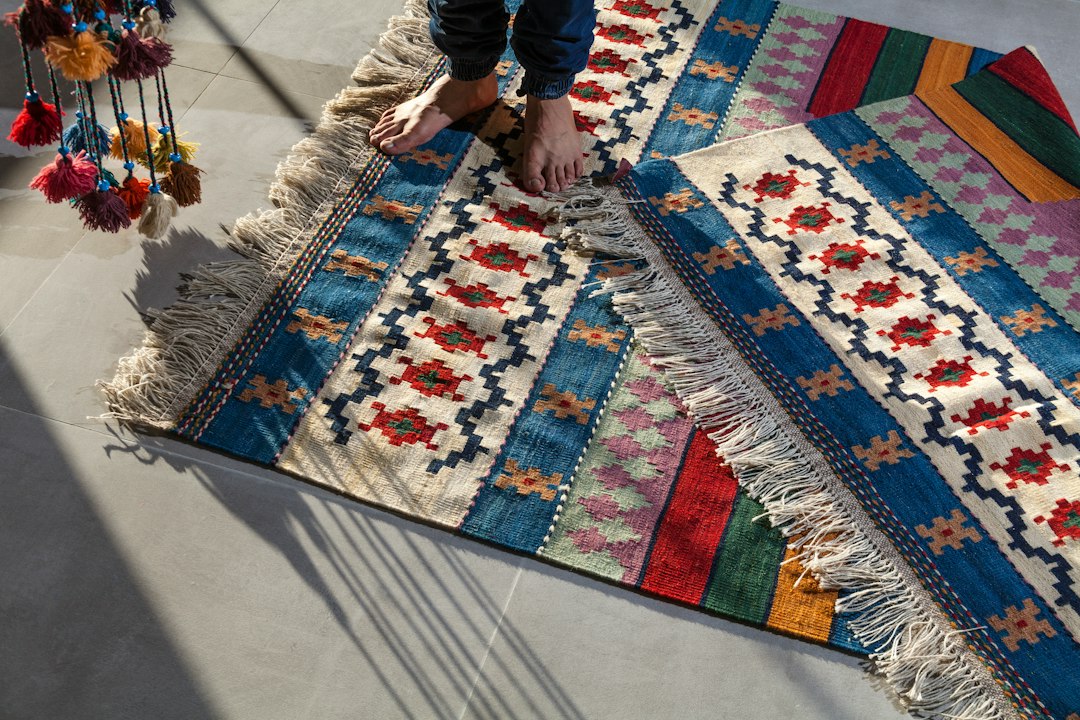
After two decades of pulling rugs off trucks, unrolling them in client living rooms, and later scrubbing years of grime out of their fibers in my own wash facility, I have developed a strong opinion about what actually makes a rug good for the planet and good for a household. Eco friendly rugs are not simply rugs with a leafy label stuck on the tag. They are pieces built from renewable or biodegradable materials, dyed with low-impact processes, and constructed in ways that hold up for decades instead of ending up in a landfill after three years. This guide walks through what genuinely qualifies as sustainable, how natural fiber rugs are made, how to judge quality and durability, and how to keep one of these rugs performing well for the long haul.
What Are Eco Friendly Rugs Made From?
Eco friendly rugs are typically woven from renewable plant fibers like jute, sisal, seagrass, and organic cotton, or from animal fibers such as wool and undyed alpaca that are biodegradable and harvested through low-impact farming. Some manufacturers also use recycled materials, including reclaimed cotton, recycled PET (plastic bottle fiber), and reused wool from post-consumer textiles. The defining feature is a low environmental footprint across the fiber’s full life cycle, from raw material to eventual decomposition.
Wool remains the gold standard among natural fiber rugs because sheep are a renewable resource, the fiber is naturally flame-resistant, and a well-made wool pile rug can last 20 to 30 years with proper care. Jute and sisal, by contrast, grow quickly (jute can be harvested in about 120 days) and require far less water than cotton cultivation, which makes them attractive for flatweaves and casual textures. Seagrass is harvested from coastal wetlands and pressed into tight, moisture-resistant strands, giving it a slightly different hand-feel than jute but similar sustainability credentials.
How Do Natural Dyes Factor Into Sustainable Area Rugs?
Natural dyes derived from madder root, indigo, walnut husks, and pomegranate rind are a hallmark of genuinely sustainable area rugs because they avoid the heavy metals and synthetic solvents found in some commercial dye baths. These plant-based dyes were the standard in rug weaving for centuries before synthetic aniline dyes became widespread in the late 1800s, and many artisan cooperatives in regions like Anatolia and the Iranian plateau still use them today.
Low-impact synthetic dyes certified under standards like OEKO-TEX Standard 100 or GOTS (Global Organic Textile Standard) offer a middle ground, since they meet strict limits on azo compounds, formaldehyde, and heavy metal residue while still allowing for a broader color range than plant dyes alone. Readers curious about how dye chemistry affects a rug’s long-term appearance and colorfastness may find it useful to compare this with the mechanics covered in our piece on natural vs synthetic rug dyes, which breaks down bleeding risk and fade patterns in more technical detail.
How Do Sustainable Area Rugs Compare to Conventional Synthetic Rugs?
Sustainable area rugs generally outperform conventional synthetic rugs in biodegradability, indoor air quality, and long-term durability, though synthetic options can offer lower upfront cost and higher stain resistance in some cases. A polypropylene rug might sell for $80 to $150 in a standard 8×10 size, but it typically off-gasses volatile organic compounds (VOCs) for the first several weeks after unboxing and rarely lasts past 5 to 8 years of daily foot traffic before flattening or shedding.
Natural fiber rugs made from wool or jute cost more upfront, often $300 to $1,200 for a comparable 8×10 depending on weave density and origin, but the cost per year of use tends to be lower because the fibers resist crushing, resist static buildup, and can be re-dyed or repaired rather than discarded. I have restored 40-year-old wool Persian pieces that still had more resilience in the pile than a synthetic rug that was only five years old.
| Feature | Wool / Natural Fiber Rugs | Synthetic (Polypropylene/Nylon) Rugs |
|---|---|---|
| Biodegradability | Fully biodegradable in 1-5 years depending on fiber | Takes 20-200+ years to break down in landfill |
| Typical Lifespan | 20-30 years with proper care | 5-8 years before matting or fiber breakdown |
| VOC Off-Gassing | Minimal to none | Present for 2-6 weeks after production |
| Renewability of Raw Material | Renewable (sheep, jute, sisal crops) | Petroleum-derived, non-renewable |
| Average Price (8×10 ft) | $300-$1,200 | $80-$300 |
| Stain Resistance | Moderate (wool has natural lanolin repellency) | High (especially treated nylon) |
What Certifications Should Shoppers Look For?
Shoppers evaluating eco friendly rugs should look for GOTS certification for organic fiber content, OEKO-TEX Standard 100 for chemical safety, and GoodWeave certification, which verifies that no child labor was used in the weaving process. These third-party certifications matter because “natural” and “eco-friendly” are not regulated marketing terms in the United States, so a label alone does not guarantee a rug meets any specific environmental threshold.
Fair Trade certification is another marker worth checking, particularly for hand-knotted pieces coming out of weaving cooperatives in India, Nepal, and Turkey. A rug carrying two or more of these certifications, along with a clear country-of-origin disclosure, is far more likely to hold up to scrutiny than one relying on vague packaging language alone.
How Do You Clean and Maintain Eco Friendly Rugs Without Damaging the Fibers?
Natural fiber rugs require gentler handling than synthetic ones because plant fibers like jute and sisal lose strength when saturated with water, and wool fibers can felt or shrink under high heat and aggressive agitation. Weekly vacuuming with a suction-only setting (no beater bar on jute or sisal) and professional cleaning every 12 to 18 months keeps grit from cutting into the fiber structure over time.
Spot cleaning matters more with natural fibers than most people expect, because a spill left untreated for even a few hours can wick deep into a jute weave and cause a permanent water ring that no amount of surface cleaning will lift. For wool pieces specifically, I always recommend blotting rather than rubbing, using a pH-neutral solution, and never applying steam directly, since heat above 120°F can cause localized shrinkage in the pile.
When Should a Sustainable Natural Fiber Rug Go to a Professional?
A natural fiber rug should go to a professional whenever there is a large spill, visible mold or mildew odor, deep-set pet odor, or any sign of moth larvae in the pile, since these issues require controlled water extraction and specialized treatment that household tools cannot safely replicate. Attempting a full wet-wash of a jute or seagrass rug at home almost always results in uneven drying, cellulosic browning, or fiber breakdown along the weave lines.
I have seen well-meaning homeowners try to shampoo a wool dhurrie in the bathtub, only to end up with a rug that shrank two inches on one side because the water temperature was inconsistent across the pile. Our Rug Cleaning process uses controlled-temperature immersion and slow, monitored drying specifically calibrated for wool, jute, and cotton blends, which protects both the fiber integrity and any natural dye work in the piece. For rugs that develop odor issues from moisture exposure or pet accidents, the guidance in our article on removing musty odors from area rugs covers the early warning signs worth watching for.
What Are the Main Types and Weaves of Sustainable Area Rugs?
The main types of sustainable area rugs include flatweave jute and sisal rugs, hand-knotted wool pile rugs, hand-tufted wool rugs, and blended cotton-wool dhurries, each suited to different rooms and traffic levels. Flatweaves work best in low-to-moderate traffic areas like dining rooms or layered under a sofa, while dense hand-knotted wool holds up in hallways and living rooms where daily footsteps and furniture legs put continuous pressure on the pile.
Weave density plays a direct role in longevity, and this is where knot count becomes relevant even outside the antique rug world. A hand-knotted wool rug with 80 to 150 knots per square inch will typically outlast a lower-density weave by a decade or more, because tighter knotting distributes weight and abrasion across more fiber contact points.
- Jute flatweaves: lightweight, budget-friendly, best for low-moisture rooms
- Sisal blends: coarser texture, strong wear resistance, good for entryways
- Hand-knotted wool: highest durability, 20+ year lifespan, ideal for heirloom pieces
- Wool-cotton dhurries: reversible, lightweight, easy to rotate for even wear
- Recycled PET rugs: synthetic but made from reclaimed plastic bottles, useful for outdoor spaces
Which Rug Styles Pair Naturally With Sustainable Materials?
Flatweave and hand-knotted construction styles associated with tribal, kilim, and gabbeh weaving traditions pair naturally with sustainable natural fiber rugs because these techniques were developed around wool and plant fiber availability long before synthetic materials existed. Our Kilim Rugs collection reflects this heritage directly, since kilims are flatwoven entirely from wool or wool-cotton blends using techniques passed down through generations of nomadic weavers.
Gabbeh rugs, woven primarily by tribal groups in the Zagros Mountains of Iran, use thick-piled, hand-spun wool that is intentionally left minimally processed, preserving lanolin content that adds natural soil resistance. For homeowners drawn to bold pattern work with strong sustainability roots, our Tribal Rugs selection includes several pieces woven with these same low-impact, hand-spun techniques.
My Experience with Eco Friendly Rugs
Over the years I have handled hundreds of natural fiber pieces come through the workshop, and the pattern that stands out most is how differently jute and wool age compared to synthetic blends. I remember a seagrass runner that came in from a client’s mudroom, badly water-stained from years of wet boots; because seagrass has almost no give once it absorbs moisture, we had to carefully dry it in stages over 36 hours using fans positioned at low angles to avoid warping the weave.
Wool tells a different story. I once restored a hand-knotted wool dhurrie that had been folded in a closet for nearly fifteen years, and despite deep creasing, the natural lanolin in the fibers meant the pile bounced back almost fully after a controlled humidification and flattening process. That resilience is something I rarely see in synthetic rugs of any age, and it is the main reason I steer clients toward wool and plant-fiber options whenever budget allows. What surprises most first-time buyers is how much the backing material matters too; a jute-backed wool rug breathes and ages far better than one backed with synthetic latex, which can crack and release odor within a decade.
How Do You Choose the Right Eco Friendly Rug for Your Home?
Choosing the right eco friendly rug depends on matching fiber type to room function, since moisture-prone areas need different materials than dry, low-traffic spaces. A jute rug placed near a kitchen sink or entryway will absorb spills and stain permanently within hours, while that same jute rug performs beautifully in a bedroom or home office where liquid exposure is rare.
Sizing and pad selection also affect how long a sustainable rug performs well underfoot. A natural fiber rug without adequate cushioning wears unevenly and can develop bald patches within 3 to 4 years in high-traffic zones, so pairing it with a felt or natural rubber pad extends both comfort and lifespan considerably.
- Identify the room’s moisture exposure and traffic level before selecting a fiber
- Check for GOTS, OEKO-TEX, or GoodWeave certification on any “eco” labeled rug
- Choose a knot density of 80+ KPSI for wool pieces expected to see daily use
- Pair the rug with a natural fiber or rubber pad rated for its specific weight
- Plan for professional cleaning every 12-18 months rather than frequent DIY washing
Our Rug Padding service helps match pad thickness and material to the specific fiber composition of a natural rug, which matters more here than with synthetic pile since natural backing materials transfer pressure differently across a hardwood or tile subfloor. For anyone furnishing a room from scratch, our Moroccan Rugs collection includes several hand-knotted wool options woven using traditional Berber techniques that align closely with sustainable sourcing practices.
How Should You Store or Protect a Natural Fiber Rug Long-Term?
Natural fiber rugs should be stored rolled (never folded), kept away from humidity above 55%, and protected from moths through cedar blocks or professional treatment, since wool and other animal fibers are a food source for larvae. Folding creates permanent creases in wool pile and can crack the foundation threads in flatwoven jute over time.
Seasonal storage is common for rugs used only in guest rooms or vacation properties, and our Rug Storage facility maintains climate control specifically to prevent the humidity swings that cause mildew in natural fibers. For households with active wool moth concerns, particularly in older homes, our Rug Moth Protection treatment addresses larvae before they cause the kind of irregular chewing damage that can require reweaving to repair.
FAQ
Are eco friendly rugs actually better for indoor air quality?
Yes, natural fiber rugs made from wool, jute, or organic cotton release far fewer volatile organic compounds than synthetic rugs, since they skip the petroleum-based backing and adhesives commonly used in polypropylene and nylon construction.
Do sustainable area rugs cost significantly more than synthetic ones?
Upfront cost is usually higher, often two to four times more than a comparable synthetic rug, but the longer 20 to 30 year lifespan of wool and other natural fibers typically brings the cost per year of ownership below that of a synthetic rug replaced every 5 to 8 years.
Can eco friendly rugs be professionally repaired instead of replaced?
Yes, natural fiber rugs are generally easier to repair than synthetic ones because techniques like reweaving, reknotting, and edge binding work directly with wool and cotton fibers; readers can see how this plays out financially in our breakdown of is rug repair worth it.
What is the most durable natural fiber for a high-traffic room?
Hand-knotted wool with a knot density above 100 KPSI is the most durable natural fiber option for high-traffic rooms, since the tight weave structure resists crushing and the wool’s natural resilience allows the pile to recover between periods of heavy foot traffic.
Do natural fiber rugs help with allergies compared to synthetic rugs?
Wool naturally resists dust mites and traps allergens near the surface rather than releasing them into the air, making it a reasonable choice for allergy-sensitive households; more detail on which materials perform best is covered in our guide to hypoallergenic rugs.
Sources
Global Organic Textile Standard (Wikipedia)
