



Pet-Proof Rugs: Best Materials, Weaves, and Patterns for Homes with Pets
November 21, 2026
Searching for what color rug goes with sage green walls starts with one fact: the answer depends on the undertone of your green, the light in the room, and the visual weight you want underfoot. I have unrolled hundreds of rugs against sage paint in client homes, and the same patterns repeat. This guide covers the rug colors that succeed, the ones that fight the wall, and how to read the gray or yellow bias hiding in your paint. A comparison table and a shortlist of constructions follow. Professional Rug Cleaning then keeps a pale rug true to its wall for years.
Key takeaways
- The best rug color for sage green walls depends on the paint’s undertone, the room’s light, and how much visual weight you want underfoot.
- Match the rug’s warm or cool bias to the wall, using white and kraft paper held against the wall to test it.
- Cream, ivory, and oatmeal rugs are the lowest-risk pairing, while brilliant bleached white exposes the gray in the paint and looks dirty.
- Rust, terracotta, and blush rugs complement sage because they are muted opposites of green, adding energy without strain.
- Slate blue, charcoal, and silver gray sharpen cool sage, while bright kelly green and high-contrast black-and-white geometrics compete with the paint.
How Does Undertone Shape the Best Rug Color for Sage Green Walls?
Sage green is a desaturated green built on a gray base, so undertone decides which rug looks right. Every paint formula tips toward yellow, blue, or pure gray. A rug whose bias agrees with that tilt makes the wall look clean. A rug that pulls the opposite way makes the wall look muddy or cold. Learn more about Rug Cleaning.
Paint names reveal a lot once you know the codes. Benjamin Moore Saybrook Sage HC-114 reads warm and slightly golden. Sherwin-Williams Evergreen Fog SW 9130 leans gray with a blue edge. Farrow & Ball Vert de Terre No. 234 sits between them with an earthy, olive cast. Two ivory rugs can look right and wrong in the same room because one carries a touch of yellow and the other a touch of blue.
A simple decision rule follows from this. Match the rug’s bias to the wall’s bias, then adjust for the mood you want:
- Warm, yellow-leaning sage: cream, rust, terracotta, or camel rugs.
- Cool, blue-leaning sage: indigo, slate, charcoal, or silver-gray rugs.
- Neutral, earthy sage: unbleached ivory, oatmeal, or blush rugs.
How Can You Tell Whether Sage Walls Lean Warm or Cool?
A white-paper and kraft-paper test shows the bias of sage walls in thirty seconds. Hold a sheet of white printer paper and a scrap of brown kraft paper flat against the wall at midday. If the paint looks greener beside the white and grayer beside the kraft, it leans cool. If the reverse happens, it leans warm. Repeat the test under your evening lamps.
Lighting shifts the result more than most people expect. A 2700K warm LED bulb pushes sage toward yellow-olive after dark. A 4000K bulb drains the yellow and leaves a stony gray-green. North-facing rooms receive cooler daylight all year, so a sage that looked soft in a south-facing showroom can turn flinty at home. Bulbs with a Color Rendering Index (CRI) of 90 or higher show hand-knotted dyes accurately.
Which Rug Colors Pull Sage Green Walls Warmer or Cooler?
Rust, terracotta, camel, and antique gold pull sage walls warmer and make the room feel cozy. Slate blue, charcoal, and silver gray sharpen the gray in the paint and make the walls feel crisper. Cream and undyed ivory stay neutral and let the wall set the mood. Choose by deciding whether the green should recede or lead.
Complementary color theory explains the warm option. Green sits opposite red on the color wheel, so a muted red creates natural vibration without the harshness of a primary. Madder-dyed rust in Persian and Turkish village rugs is the classic example. My guide on what color rug goes with red curtains applies the same logic in reverse, with the wall as the cool partner and the rug supplying warmth.
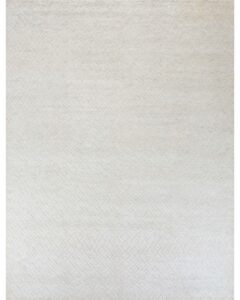
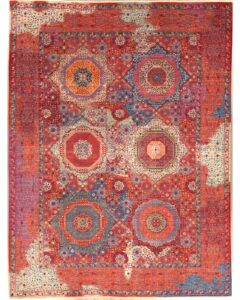
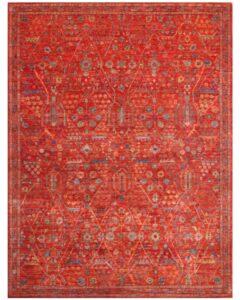
Matching rugs
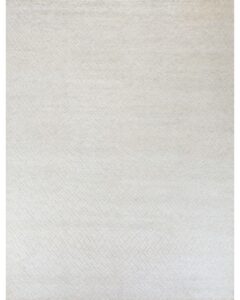
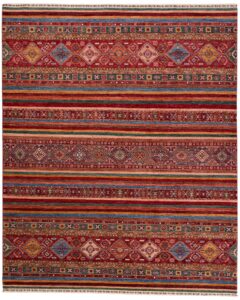
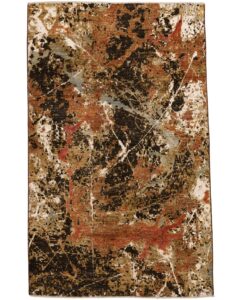
These rugs in warm neutrals and muted earthy tones fit the pairings described for sage green walls.
Which Rug Colors Suit a Sage Green Living Room Best?
A cream or ivory rug with a restrained pattern is the most reliable choice for a sage living room. A rust or terracotta rug gives deliberate contrast. A navy or charcoal rug with lighter secondary colors grounds a large seating area. Bright kelly green, stark optic white, and high-contrast black-and-white geometrics compete with the paint, so skip them.
Scale affects color as much as hue. An 8 by 10 foot rug (244 by 305 cm) under a sofa and two chairs lightens the room more than a 5 by 8 foot piece floating mid-floor, because more pale surface reflects daylight upward. Seat the front legs of every sofa and chair on the rug. Leave 12 to 18 inches (30 to 46 cm) of bare floor between the rug edge and the wall.
Are Cream, Ivory, and Oatmeal Rugs the Safest Match for Sage Walls?
Cream, ivory, and oatmeal rugs are the lowest-risk pairing for sage walls. Undyed wool carries a faint natural yellow, and almost every sage formula carries the same yellow. The two surfaces read as one family. Only a brilliant bleached white fails, because it exposes the gray in the paint and makes the wall look dirty.
Hand-knotted Beni Ourain pieces from the Middle Atlas are my favorite example. The wool stays natural ivory, and its lanolin gives a soft sheen that catches lamplight in a green room. You can browse this construction among our Moroccan Rugs, usually with a loose black or brown diamond lattice. Pale undyed wool shows traffic lanes sooner than patterned wool, so plan on washing it more often in a busy room.
Do Terracotta, Rust, and Blush Rugs Complement Sage Green Walls?
Terracotta, rust, and blush rugs complement sage green walls well. Rust and terracotta are muted complements of green, so the eye registers energy without strain. Blush delivers the same effect at a quieter volume, which suits bedrooms and small rooms. Keep the red family dusty rather than saturated, and the match holds in daylight and lamplight.
Older rugs do this better than new ones. A Persian Heriz or a Turkish Oushak with a madder field has softened through decades of use, and that mellowed brick tone sits more comfortably beside sage than a freshly dyed synthetic rust. Our Antique & Vintage Rugs collection often carries exactly this weathered warmth. Condition, age, and knot density drive the price, so compare pieces individually.
Can Navy, Charcoal, or Slate Anchor Sage Walls Without Looking Heavy?
Navy, charcoal, and slate rugs anchor sage walls when a lighter secondary color covers roughly a third of the field. Ivory, sand, or pale gray all work. A solid dark slab under a mid-tone green wall drags the room downward. Indigo pairs especially well, since indigo and sage share a gray base and read as cousins.
Low-pile wool and flatweaves deliver this combination with the least bulk. Many designs in our Contemporary & Modern Rugs range use a charcoal ground with broken ivory lines that keep the surface airy. Choose a pile height under half an inch if the rug sits near doors or dining chairs.
How Do the Main Rug Colors Compare Against Sage Paint?
Six color families cover nearly every sage room, and each behaves differently against the paint. The table below summarizes the effect, the best undertone match, typical constructions, and a cleaning interval. The intervals are rule-of-thumb estimates for a lived-in room, not guarantees, and pets or direct sun shorten them.
Read the table from left to right. Pick the effect you want first, confirm the undertone match second, and consider upkeep last. Pale rugs look best against sage but demand the most maintenance.
| Rug color family | Effect on sage walls | Best sage undertone match | Typical construction examples | Soil visibility and cleaning interval (estimate) |
|---|---|---|---|---|
| Cream, ivory, oatmeal | Neutral; lets the green lead | Any, if the ivory is unbleached | Beni Ourain, ivory-field Oushak, undyed wool loop | High; every 12-18 months |
| Rust, terracotta, brick | Warms the room; complementary contrast | Warm or neutral sage | Antique Heriz, madder-dyed Oushak, Gabbeh | Low; every 2-3 years |
| Blush, dusty rose | Softens and quiets the green | Gray-leaning sage | Vintage overdyed Persian, pale kilim | Medium; every 18-24 months |
| Navy, indigo | Grounds and sharpens; calm contrast | Cool or gray sage | Indigo flatweave, Baluch, modern wool with ivory accents | Low; every 2-3 years |
| Charcoal, slate gray | Makes walls crisper and more modern | Cool sage only | Low-pile wool, hand-loomed blends | Low to medium; about every 2 years |
| Camel, honey, mustard | Adds golden warmth; risks reading olive | Warm sage with yellow bias | Natural-dyed Gabbeh, jute and wool blends | Medium; every 18-24 months |
More matching rugs
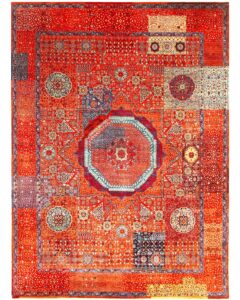
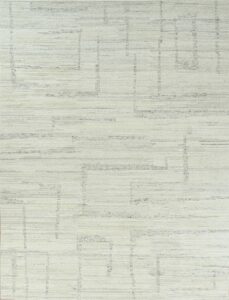
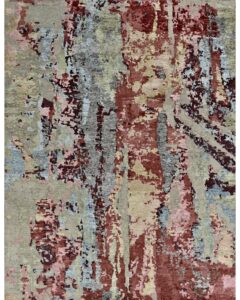
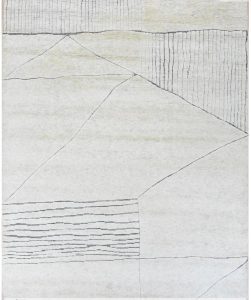
Another set of rugs that follow the same colors and style as this guide.
What Rug Color Works When the Walls Run Deeper Than Sage?
Olive, forest, and emerald walls call for a lighter and simpler rug. Ivory, warm sand, pale beige, or a tone-on-tone green two or three steps lighter than the wall all work. Keep pattern minimal so the floor rests the eye. Deep greens absorb so much light that the rug becomes the brightest surface in the room, and anything busy on it will shout.
The sage guidance shifts as the paint darkens. Farrow & Ball Studio Green No. 93 reflects far less light than a typical sage. Rust that looked balanced beside sage turns brown and heavy beside it, and navy nearly disappears. As a rule, the lighter and grayer the wall, the more freedom you have with dark or saturated rugs.
Why Do Online Photos of Sage Rooms Look Different in Your Home?
Online photos of sage rooms look different at home because of studio lighting, exposure editing, and wide-angle lenses. Photographers shoot with high-CRI light, lift the exposure, and stretch the rug’s apparent size. Colors on screen look cleaner and proportions more generous than anything achievable with ordinary bulbs. Many of those walls are also mint or eucalyptus that a caption labeled sage.
Treat saved images as a direction rather than a target. Screenshot the rooms you like, note whether each rug reads warm or cool, and then audition a real rug in your own light. Our Try Rugs at Home service exists for this reason, since a trial in the actual room reveals undertone conflicts no photo can show.
Which Rug Patterns and Materials Suit Walls Painted Sage Green?
Wool suits sage walls best, because its matte finish and slight yellow cast harmonize with gray-greens. The most dependable patterns are loose geometrics, faded florals, and tone-on-tone textures with no more than three dominant colors. Viscose and polyester shine too much, and their cool highlights make sage look chalky.
Dye source matters more than knot density here. Vegetable-dyed wool using madder, indigo, and walnut husk ages gracefully and keeps its relationship with the wall. Some cheap synthetic dyes shift toward orange or purple under strong sun. A shortlist of constructions that work:
- Beni Ourain or Azilal: undyed ivory wool, sparse diamond lattice, pile around 1 inch (2.5 cm).
- Turkish Oushak: cream or apricot field, large stylized florals in muted rust and soft blue.
- Kilim Rugs: flat weave, terracotta, cream, and indigo stripes, ideal under doors and dining chairs.
- Persian Gabbeh: single-color field in honey, brick, or pale green, hand-spun wool, minimal motifs.
- Overdyed vintage Persian: dusty rose or charcoal, with the original pattern faintly visible.
- Jute or sisal with a wool border: casual, textural, and neutral against any sage undertone.
My Experience Pairing Rugs With Sage Green Walls
After two decades of cleaning, repairing, and reweaving rugs in people’s homes, I have watched sage walls become one of the most common colors in the rooms I visit. The rugs that arrive from those rooms tell a consistent story about which pairings last. Combinations that look best on day one are not always the ones that still look right ten years later.
A client in Boulder painted her living room Saybrook Sage in 2019 and bought a bright optic-white polypropylene rug to go with it. Within eighteen months she called me because the room felt cold and the rug looked gray, even though it was clean. The fiber was fine. The blue-white of the synthetic exposed the gray in her paint. We swapped it for a natural ivory Oushak with a faint apricot border, and the same walls looked warm again under the same bulbs.
What Does Cleaning Rugs From Sage Rooms Teach About Color Choice?
Pale rugs from sage rooms reach my workshop for washing more often than any other color. The walls are so calm that every traffic lane and coffee ring stands out. The wall does not soil the rug, but it removes the visual noise that would otherwise hide the soil. Patterned rust and indigo rugs from similar households wait much longer between washes.
That pattern shapes my advice. A household with a dog, children, or a front door opening straight into the sage room should choose a medium-value rug with at least two colors in the field. Either option stays correct beside the walls with proper cold-water immersion and pH-neutral detergent, which cleans without stripping lanolin or lifting dye.
How Do Fading and Wear Change a Sage Rug Pairing Over Time?
Natural-dyed rust softens toward apricot over many years in a sunlit room. Indigo lightens unevenly into the soft banding called abrash, and walnut-husk browns barely move. A rust rug chosen to contrast with sage will therefore drift toward harmony, while a brown rug stays put. Knowing this lets you pick a pairing that improves with age.
Synthetic dyes behave less predictably. I repaired a machine-made rug whose terracotta field had turned a flat salmon beside a south-facing window in a sage bedroom, and the owner no longer liked it against the walls. Rotating a rug 180 degrees every six months, fitting UV-filtering window film, and holding relative humidity between 40 and 55 percent all slow the drift.
Final picks
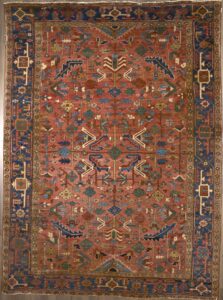
One last row of rugs chosen to go with the ideas above.

How Should You Audition a Rug Color Against Sage Walls Before Buying?
Bring the actual rug, or a corner sample of at least 12 by 12 inches (30 by 30 cm), into the room before buying. View it at three times of day, once beside the sofa and once beside your floor or trim. Sage shifts between morning and evening light more than almost any other wall color. A rug that passes all three checks keeps passing. Showroom lighting is not your lighting.
Floor and trim change the verdict. Warm oak or walnut floors push a sage room toward olive, and a rug that balanced the wall alone can tip the palette too yellow once the floor joins in. Gray-washed oak, slate, or concrete does the opposite and may leave a cream rug as the warmest thing in the room, which is sometimes the goal.
What Steps Test a Rug Against Sage Paint Most Reliably?
A fixed six-step routine tests a rug against sage paint reliably, because it compares like with like. Test the undertone first, view in daylight, view under lamps, check against upholstery, and judge pattern scale last. Most mistakes happen when people fall for a pattern first and discover the undertone clash after the rug is down.
Buying this way takes a week instead of an afternoon. It saves the far longer process of rescuing a wrong rug with throws and pillows. I have rarely seen a pairing that passed every step come back as a complaint. The sequence I use on site:
- Confirm the wall’s bias with the white-paper and kraft-paper test, and write it down.
- Unroll the rug at 11 a.m. with lamps off and curtains open, and stand at the doorway.
- Repeat the look at 7 p.m. with your normal lamps on, noting whether the rug gains yellow or gray.
- Lay a sofa cushion and a curtain swatch on the rug to see all three together.
- Step back 10 to 12 feet and squint; the rug should merge into one even tone distinct from the wall.
- Leave the rug in place for at least 48 hours, because first impressions in a freshly painted room mislead.
Which Mistakes Spoil a Sage Green Wall and Rug Combination?
Four mistakes spoil most sage wall and rug combinations. Buyers match the rug to the wall in the same green, choose a bleached white, pick a glossy viscose that throws blue light, or forget the curtains. Each error is easy to avoid once you know to look for it. A rug in the same green as the wall simply flattens the room.
Curtains deserve special attention because they fill so much vertical space between wall and floor. A sage room with mustard or butter drapes needs a rug that bridges green and yellow, usually cream or terracotta. The reasoning in my guide on what color rug goes with yellow curtains carries over almost unchanged. Treat wall, window treatment, and floor as one three-part composition.
FAQ About Rug Colors for Sage Green Walls
Clients bring the same handful of questions into my workshop when they pair a rug with sage paint. The answers below stay short and specific.
Each one assumes a wool rug in a typical lived-in room with mixed daylight and lamp light.
Which Rug Color Makes Sage Green Walls Feel Warm?
Rust, terracotta, camel, and antique Persian rugs with a madder-red field make sage walls feel warm. These muted reds complement green without harsh contrast.
Vegetable-dyed versions soften gracefully beside the paint as the years pass.
Does a Gray Rug Work With Sage Green Walls?
A warm greige rug or a charcoal rug with ivory accents works with sage walls, especially cool sages such as Evergreen Fog. A flat blue-gray tends to dull the paint.
Test a sample under your own lamps before committing.
Should a Rug Be Lighter or Darker Than Sage Walls?
A rug lighter than sage walls keeps most living rooms airy. A darker rug suits large rooms with strong daylight.
Give a dark rug a lighter secondary color across about a third of its surface to avoid a bottom-heavy look.
What Rug Color Suits Sage Green Walls in a Bedroom?
Blush, dusty rose, oatmeal, or a pale tone-on-tone green suit a sage bedroom. Softer contrast keeps the room restful.
A low-pile wool or flatweave kilim in those shades also vacuums easily under a bed frame.
